1/ Russia's economic crisis is deepening, with mass layoffs at public sector organisations and heavily indebted state corporations. It's a further sign of the severe strain on the Russian government's finances caused by the Ukraine war, and is a major political risk for Putin. ⬇️ 
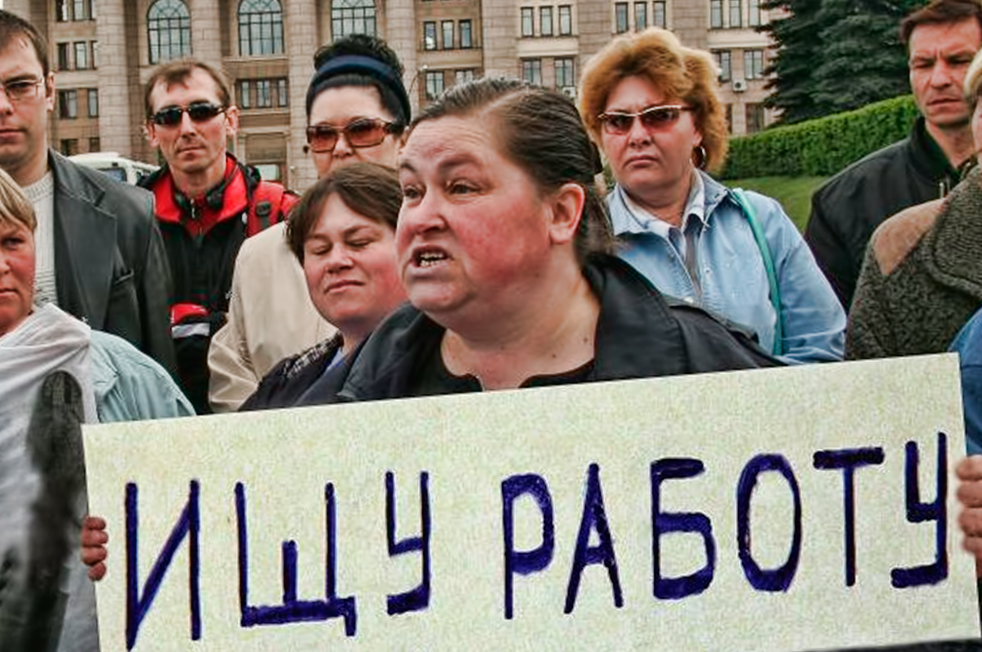
2/ The 'Political Report' Telegram channel highlights the growing scale of the crisis in Russia's state-run bodies. It also notes the political risks that this is creating for the Russian government, which faces growing public hostility towards its policies:
3/ "Russia is plunging into a massive wave of layoffs and reductions, which is hitting public sector employees and state corporations particularly hard.
4/ "Those who eked out a secure position for decades, counting on a guaranteed pension, are now finding themselves on the sidelines: without in-demand skills, digital literacy, and competitive ability; they are becoming a burden for organisations forced to cut costs at any cost.
5/ "According to Rostrud [the Federal Service for Labour and Employment], as of 1 April 2026, 105,147 people have already been recommended for layoffs—a 43% increase from ten months earlier. This increase has been consistent since last summer, when the figure stood at 73,572.
6/ "In the fourth quarter of 2025, actual layoffs due to staff reductions increased by 59% compared to the previous year, reaching 32,600 people, and almost 40% of these were public sector employees: doctors, teachers, social service workers, and government officials.
7/ "State-owned giants are setting the tone. In March, Russian Railways announced the layoff of 6,000 employees—15% of its central office and branch managers. The reason: a collapse in freight traffic, billions in losses, and the need to save 74 billion rubles [$990 million].
8/ "In St. Petersburg, train drivers are already being deprived of bonuses under the pretext of "insufficient passenger numbers," while in the regions, forced unpaid leave is being implemented.
9/ "Gazprom has gone even further: its central office has been cut almost in half—from over 4,000 to 2,500. Russian Post officially denies "mass layoffs," but by 2025, about 40,000 employees have resigned "voluntarily," and the forecast for the end of 2026 is up to 60,000.
10/ "Branches are closing, and the workload for those remaining is growing.
In the regions, the situation is even more dire. Moscow and the Moscow region are cutting 15% of their civil servants and managers in executive bodies.
In the regions, the situation is even more dire. Moscow and the Moscow region are cutting 15% of their civil servants and managers in executive bodies.
11/ "Due to a 19.8 billion ruble [$265 million] budget deficit, Novosibirsk is cutting positions at youth centers and social institutions. The Omsk and Irkutsk regions and the Krasnoyarsk Territory are expecting the largest waves of layoffs.
12/ "The authorities are blaming this on optimisation and digitalisation, but in reality, this is the price paid for years of bloated staffing and an economic model in which the public sector was not a driving force, but a place to sit out retirement.
13/ "Politically, this is an explosive cocktail. People raised on the Soviet myth of a "stable" civil service suddenly find that their loyalty and seniority no longer protect them.
14/ "They cannot retrain quickly: the average age of public sector employees and monopoly workers is over 45, and the market demands completely different competencies.
15/ "The result is rising hidden unemployment, declining trust in the government, and the potential for social discontent among precisely those groups traditionally considered the backbone of the system.
16/ "Instead of a smooth transition to market efficiency, the country is experiencing a sharp breakdown in the social contract: the state, which for years promised protection, is now pushing people out onto the streets.
17/ "The wave is only gaining momentum. If real retraining and support programs, rather than mere rhetoric about "efficiency," don't emerge in the coming months, by autumn we'll see not Rostrud statistics,…
18/ …but actual queues at employment centres and growing frustration in the regions. Budget savings on paper will result in political costs that will be very difficult to offset." /end
Source:
t.me/polit_doklad/3…
Source:
t.me/polit_doklad/3…
• • •
Missing some Tweet in this thread? You can try to
force a refresh