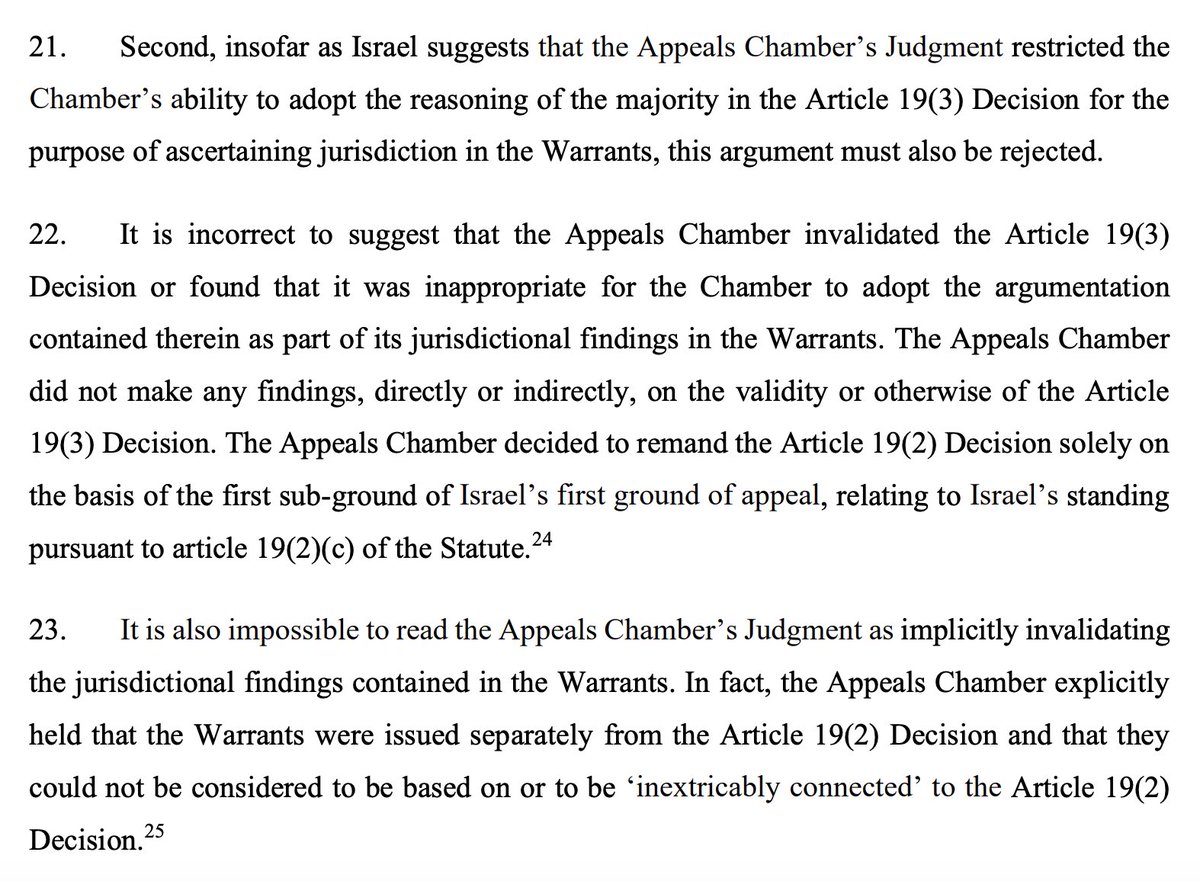
The U.S. State Department published its legal defense of the war against Iran on Tuesday.
A few observations 🧵
1. As a matter of public diplomacy, it's notable that collective self-defense of Israel comes first, individual self-defense of the United States comes second.
A few observations 🧵
1. As a matter of public diplomacy, it's notable that collective self-defense of Israel comes first, individual self-defense of the United States comes second.

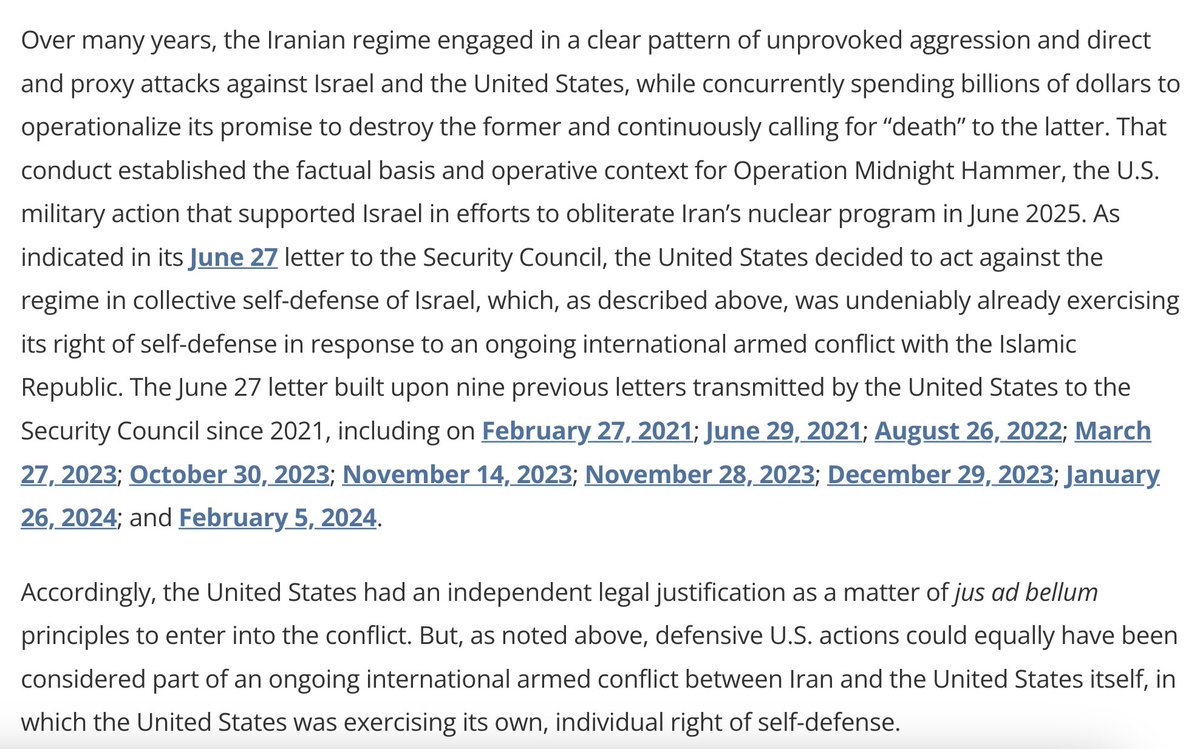
2. The statement concedes that the U.S. and Israel were *not* responding to an actual or imminent armed attack by Iran on Feb. 28.
Instead, they were already in an armed conflict with Iran, and were therefore free to attack Iran, any time, at will.
Instead, they were already in an armed conflict with Iran, and were therefore free to attack Iran, any time, at will.

3. When did this armed conflict begin?
It’s hard to say.
Maybe June 2025.
Maybe April 2024.
Maybe 2019.
Maybe earlier.
Maybe we have always been at war with Eastasia.
It’s hard to say.
Maybe June 2025.
Maybe April 2024.
Maybe 2019.
Maybe earlier.
Maybe we have always been at war with Eastasia.
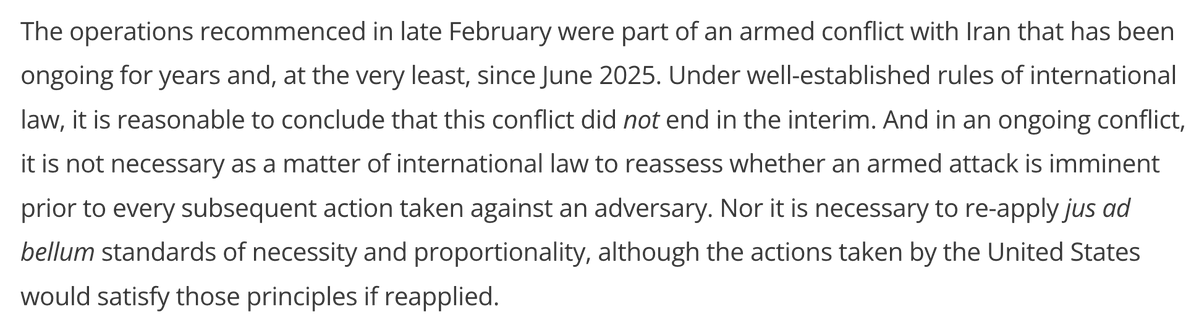
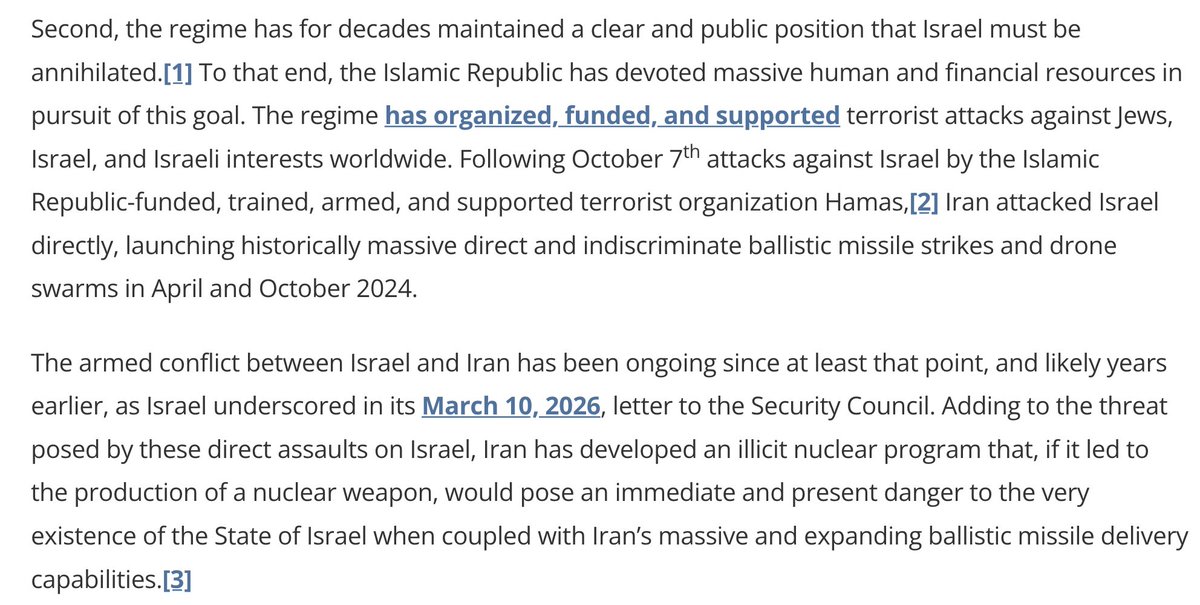
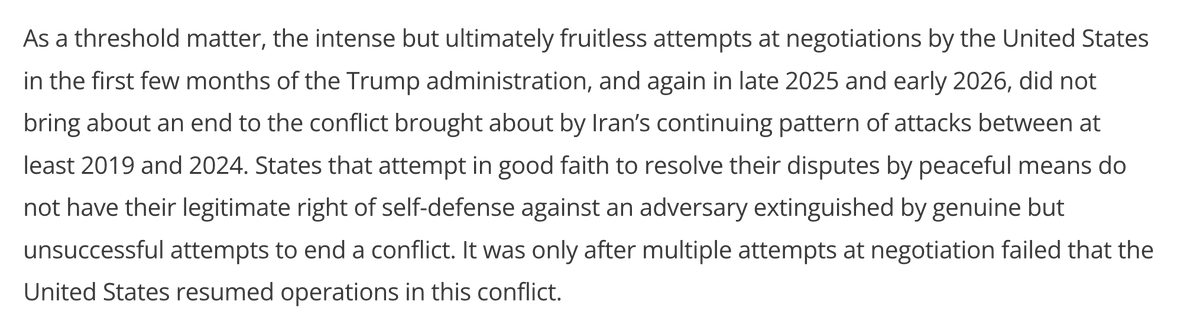
4. Factually, in June 2025, we attacked Iran.
In April 2024, Israel bombed an Iranian consular building in Damascus (unlawfully), Iran retaliated (unlawfully), Israel retaliated again (unlawfully) and both sides decided to leave it there.
In April 2024, Israel bombed an Iranian consular building in Damascus (unlawfully), Iran retaliated (unlawfully), Israel retaliated again (unlawfully) and both sides decided to leave it there.
5. Sporadic attacks by Iran-backed militias in Iraq hardly explain bombing petrochemical factories outside Tehran.
6. Legally, the argument conflates two ideas: armed conflict and armed attack.
The protective rules of IHL apply throughout an armed conflict, even during lulls in fighting.
For example, you should take ‘passive precautions’ to protect civilians in case fighting resumes.
The protective rules of IHL apply throughout an armed conflict, even during lulls in fighting.
For example, you should take ‘passive precautions’ to protect civilians in case fighting resumes.

7. In contrast, the UN Charter prohibits the use of force except in response to an ongoing or imminent armed attack, including after a prior attack has clearly ended.
The point is to *prevent* a resumption of hostilities.
The point is to *prevent* a resumption of hostilities.
8. As the U.S. concedes, there was no ongoing or imminent armed attack by Iran.
So the U.S.-Israeli attack on Iran is illegal.
Simple as that.
So the U.S.-Israeli attack on Iran is illegal.
Simple as that.
10. Israel made similar arguments in June 2025, to which I offered a similar response:
justsecurity.org/115010/israel-…
justsecurity.org/115010/israel-…
• • •
Missing some Tweet in this thread? You can try to
force a refresh