Zinc can rapidly and potently reduce cortisol - shown in an astonishing clinical trial.
(🧵1/8)
(🧵1/8)
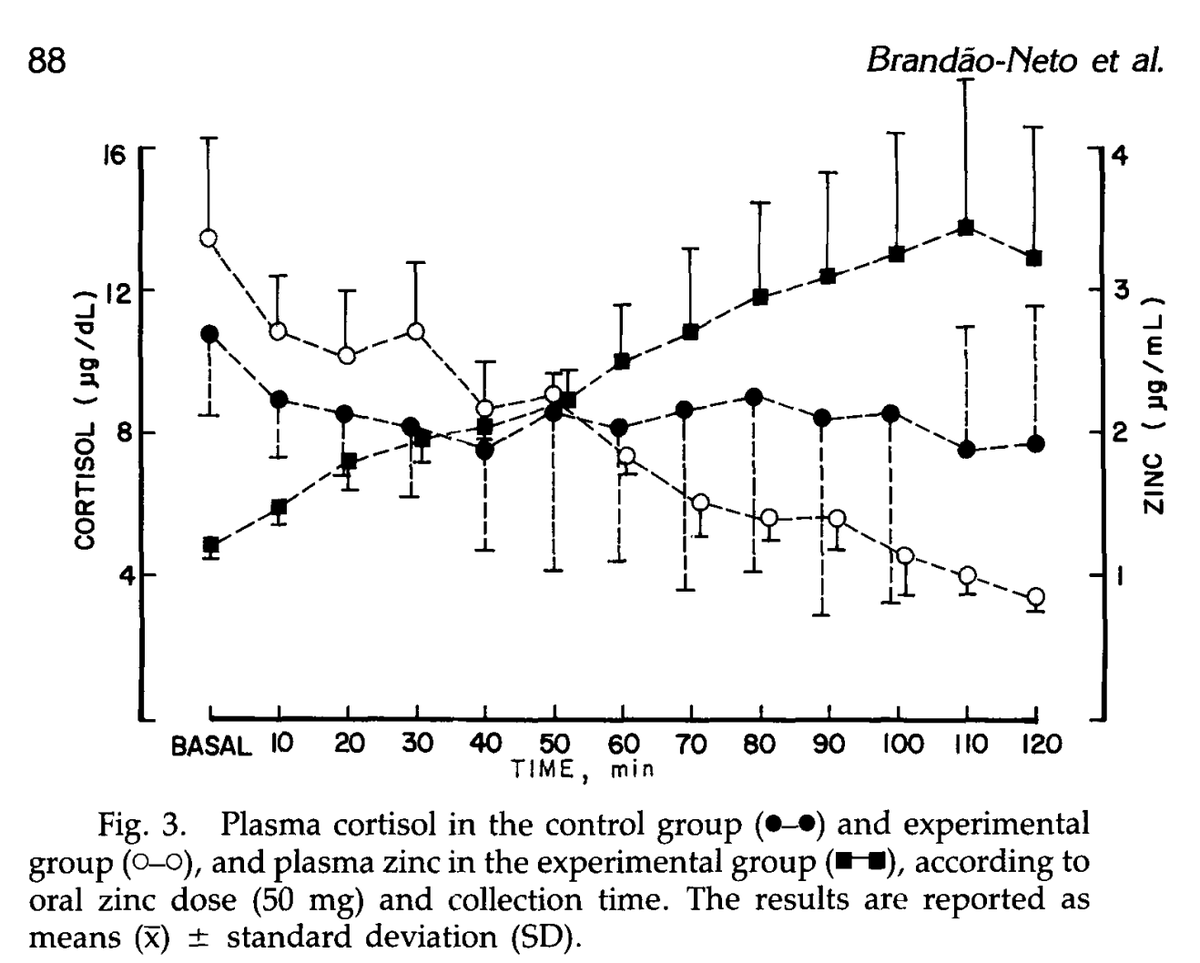
This study was a small one published in 1990.
Despite that, it gives us key insight into the role of zinc and how it regulates stress.
Despite that, it gives us key insight into the role of zinc and how it regulates stress.
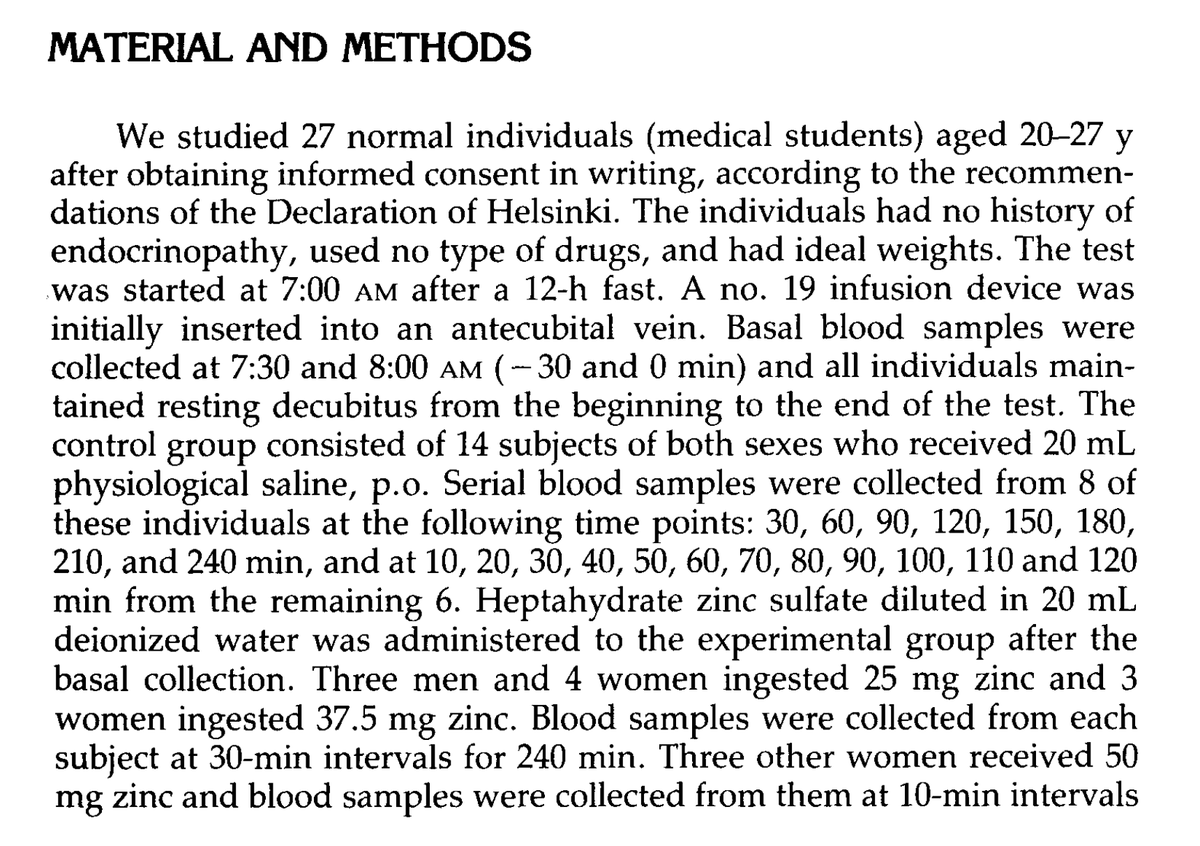
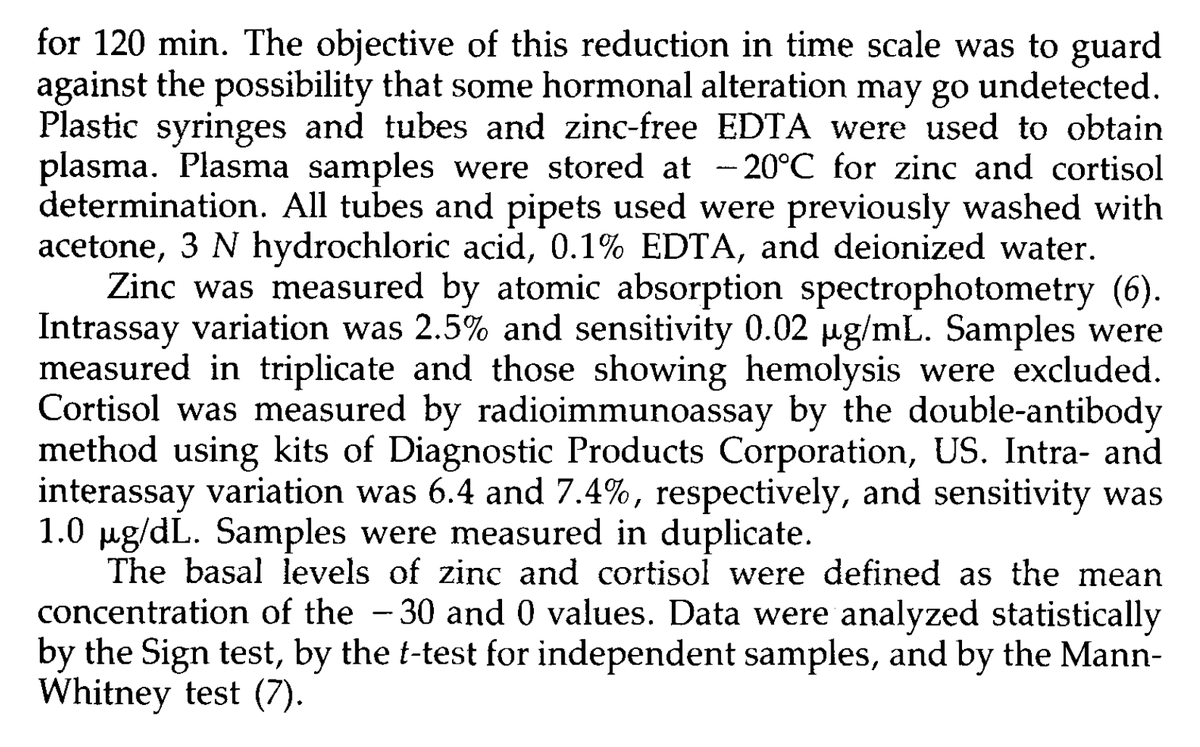
Zinc markedly lowered cortisol in a rapid fashion.
Here's the 25 mg result, those white circles show the cortisol response over the time.
As you can see, by 2 hours, cortisol dropped by about half.
Here's the 25 mg result, those white circles show the cortisol response over the time.
As you can see, by 2 hours, cortisol dropped by about half.
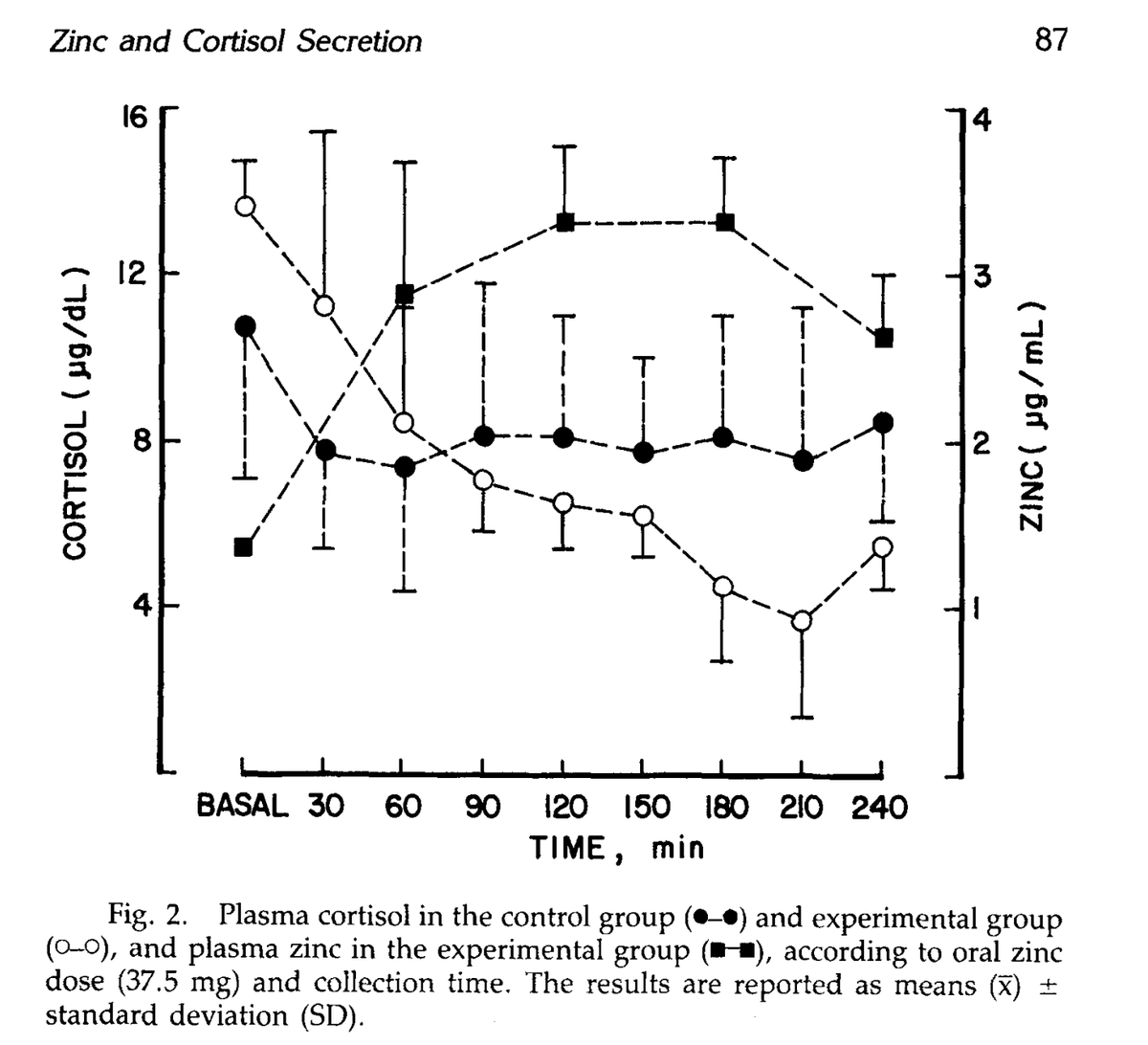
The effect was even more dramatic in the group receiving 37.5 mg of zinc.
Their cortisol dropped like a rock, from ~14 ug/dL down to under 4 within a few hours.
Their cortisol dropped like a rock, from ~14 ug/dL down to under 4 within a few hours.
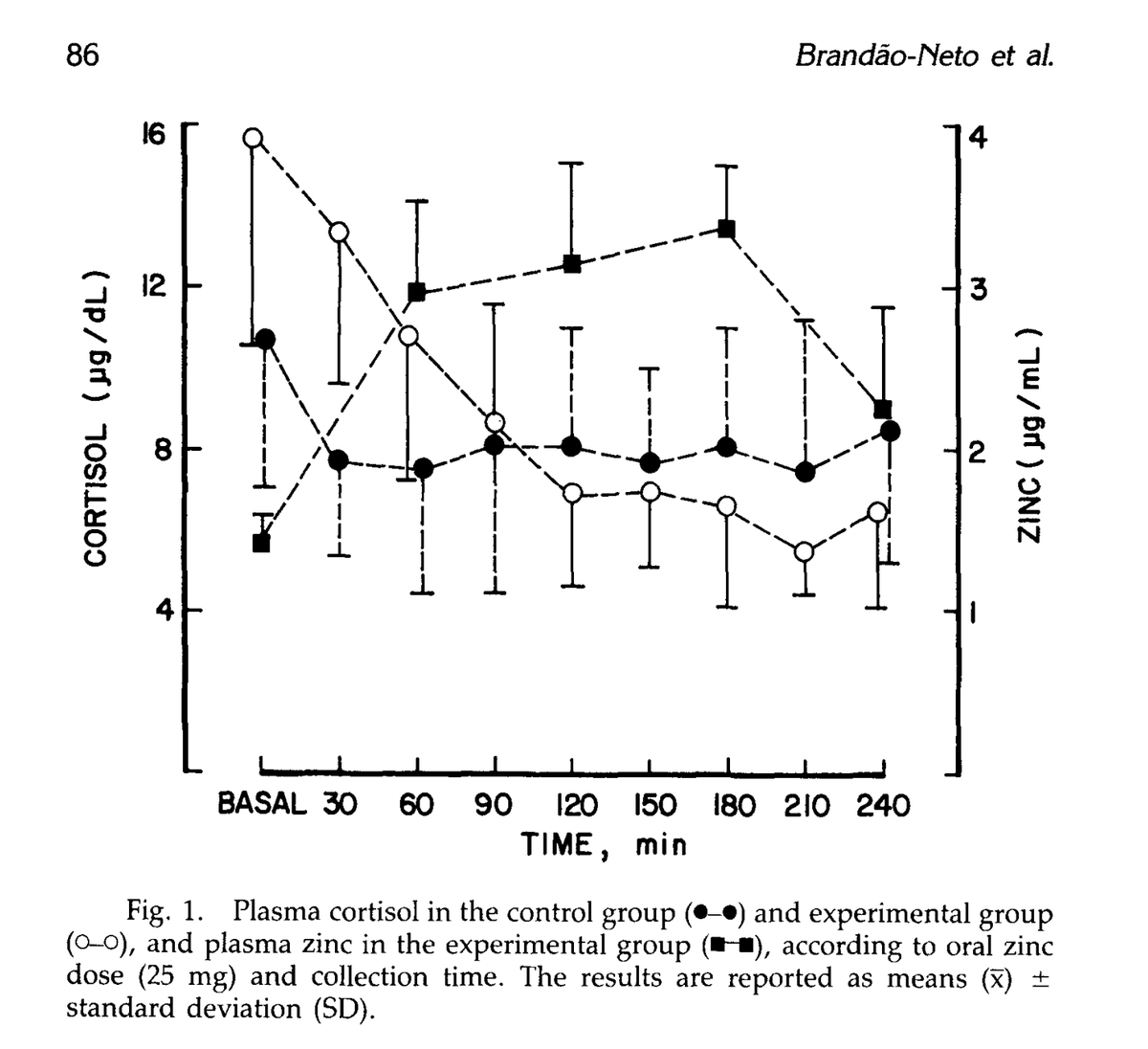
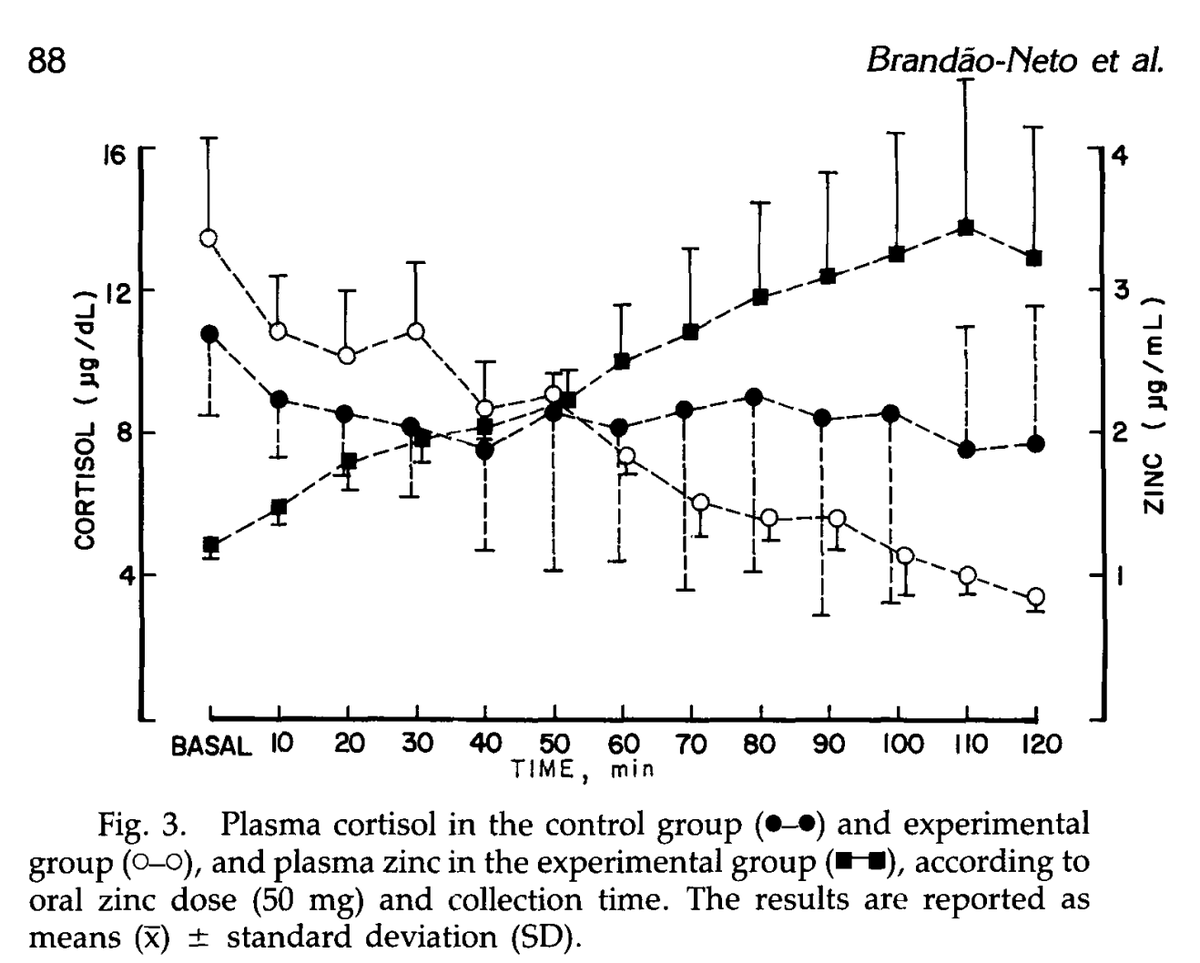
This was the result from the 50 mg dose, showing a similar massive drop, but even faster.
This time cortisol dropped by >75% within 2 hours.
Insane.
This time cortisol dropped by >75% within 2 hours.
Insane.
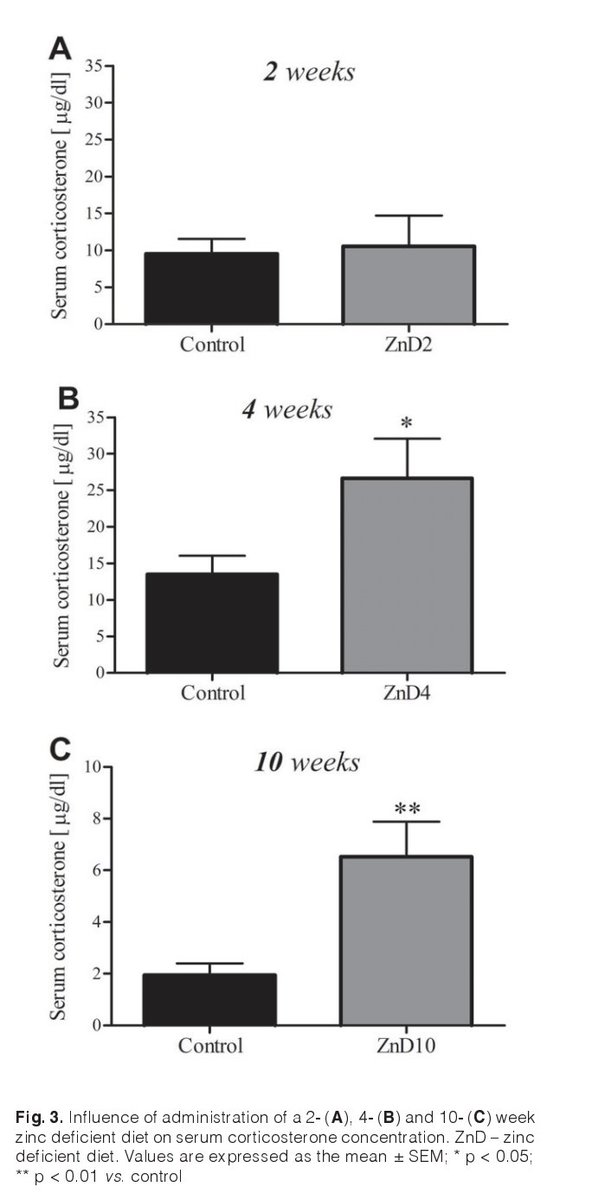
There isn't a ton of work done on this topic,
but some animal studies tell us that the more zinc deficient animals are, the higher their cortisol becomes.
This happens in a time dependent fashion, so here the longer the zinc deficiency persists, the higher the cortisol becomes.
but some animal studies tell us that the more zinc deficient animals are, the higher their cortisol becomes.
This happens in a time dependent fashion, so here the longer the zinc deficiency persists, the higher the cortisol becomes.
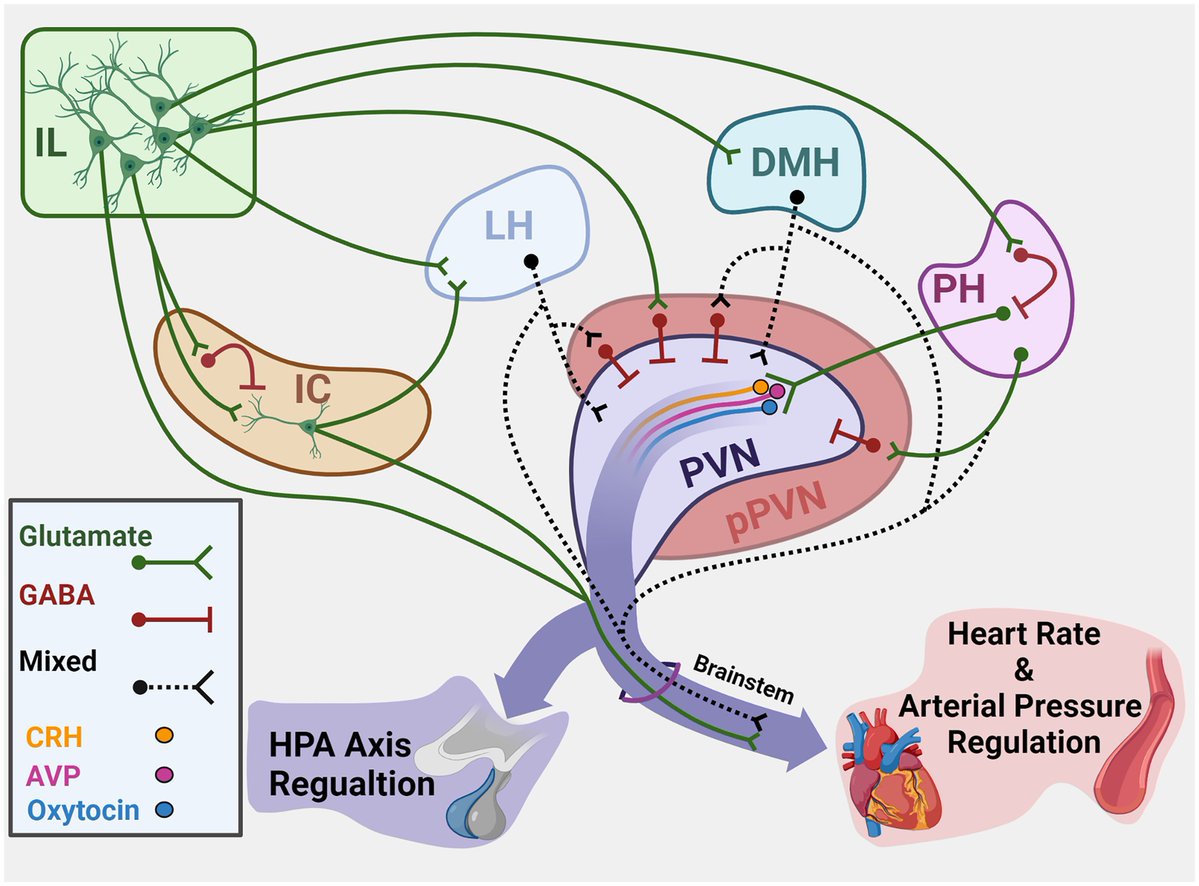
There's a few reasons why zinc has this effect on cortisol.
It really starts in the paraventricular nucleus (PVN) of the brain's hypothalamus.
This is ground zero for cortisol secretion, since this produces CRH, the original signal which ends up in cortisol secretion from the adrenals.
1. When the PVN is under great amounts of reactive oxygen species / oxidative stress, it reflexively puts out more CRH, which in turn leads to more cortisol secretion.
Zinc is a critical cofactor for the antioxidant defense enzyme superoxide dismutase, which lowers this oxidative stress and prevents CRH release.
The same goes for inflammation - this can also trigger CRH release in the brain.
Zinc also acts as an inhibitor of the master inflammatory nuclear protein, NF-κB.
2. Glutamate is the brain's excitatory neurotransmitter, allowing calcium influx into neurons to "turn them on."
Excessive glutamate is also associated with a stressed hyperactive state in the brain.
When this happens in the PVN, it stimulates the release of CRH as well.
Zinc is one of the body's major blockers of the glutamate NMDA receptor, which also will help regulate this.
It really starts in the paraventricular nucleus (PVN) of the brain's hypothalamus.
This is ground zero for cortisol secretion, since this produces CRH, the original signal which ends up in cortisol secretion from the adrenals.
1. When the PVN is under great amounts of reactive oxygen species / oxidative stress, it reflexively puts out more CRH, which in turn leads to more cortisol secretion.
Zinc is a critical cofactor for the antioxidant defense enzyme superoxide dismutase, which lowers this oxidative stress and prevents CRH release.
The same goes for inflammation - this can also trigger CRH release in the brain.
Zinc also acts as an inhibitor of the master inflammatory nuclear protein, NF-κB.
2. Glutamate is the brain's excitatory neurotransmitter, allowing calcium influx into neurons to "turn them on."
Excessive glutamate is also associated with a stressed hyperactive state in the brain.
When this happens in the PVN, it stimulates the release of CRH as well.
Zinc is one of the body's major blockers of the glutamate NMDA receptor, which also will help regulate this.
Zinc bisglycinate is a well absorbed form you can get on our website.
The doses used in this study are relatively high, so if you're doing something like 50 mg a day you wouldn't want to long term.
Lower doses, or using these doses short term, are good strategies.
analyzeandoptimize.io/shop#ZincB
The doses used in this study are relatively high, so if you're doing something like 50 mg a day you wouldn't want to long term.
Lower doses, or using these doses short term, are good strategies.
analyzeandoptimize.io/shop#ZincB
If you want to get some personalized help from us with ANY of your health goals, we’re taking clients virtually worldwide every day at PRISM. Book a free call here for more: go.prism.miami/consultation
• • •
Missing some Tweet in this thread? You can try to
force a refresh