1/ A new Russian anti-drug law is leading to drug warnings being added to classic works of Russian literature by Gogol, Pushkin, Bulgakov and other classic authors, due to mentions of drug use. It's a sign of how censorship is reaching increasingly deeply into Russian life. ⬇️
2/ Verstka reports that Russian online bookshops are adding warnings to both the text and audiobook versions of classic works such as Gogol's stories "The Nose" and "Viy," children's stories by Tolstoy, and works by Bulgakov such as "The Master and Margarita".
3/ It comes after the introduction into effect on 1 March 2026 of a new law banning "drug propaganda" in literature, film, media, and the Internet.
4/ "Propaganda" is defined as "the dissemination of information about the methods of production, storage, shipment, distribution, and locations of drug purchase, as well as the appeal and justification of drug use as a generally accepted norm of behavior."
5/ Violations can lead to fines ranging from 2,000 to 1.5 million rubles ($26-$20,000). Repeated violations can lead to criminal liability. To comply with censorship, publishers block out offending words or replace them with symbols.
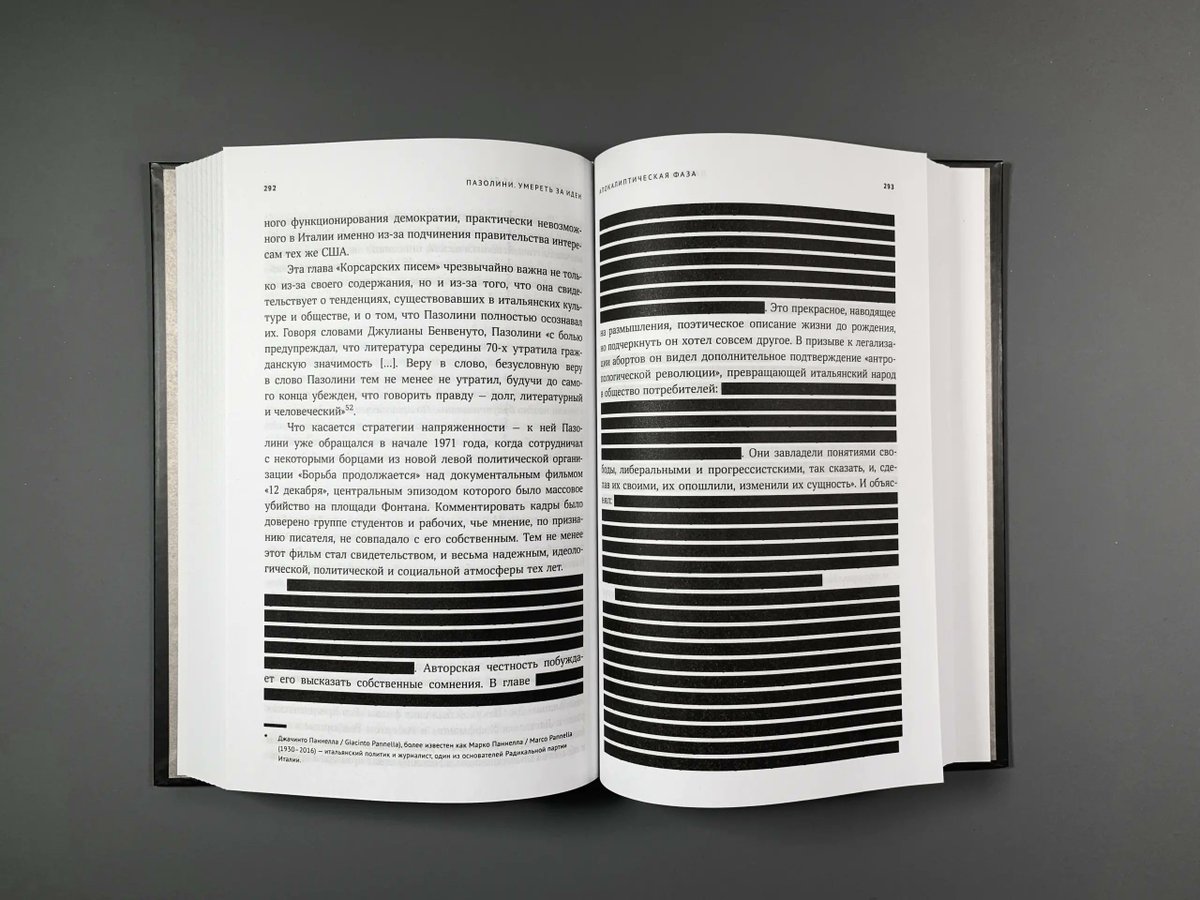
6/ Books deemed to be "drug propaganda" must be marked 18+ and may incur higher VAT (22%). They require special labeling (a warning triangle/exclamation mark plus the text: "Illegal consumption of narcotic drugs... causes harm to health, their illegal trafficking is prohibited.")
7/ In this particular case, the labelling is likely the result of automated censorship software flagging isolated mentions of drugs (such as using morphine to treat a wounded soldier). It highlights how the government is indiscriminately decreasing freedom of speech in Russia.
8/ While books published prior to 1990 are supposed to be exempt – thus classic literature should not be affected – the AI-driven censorship system developed by the government is clearly generating many false positives.
9/ In a similar example, the writer Denis Dragunskiy has been censored because automatic systems think his name includes the word "drug", rather similar to how US-made Internet censorship software used to censor the British placename Scunthorpe for containing a rude word.
10/ Many Russian and Western authors have been subjected to "drug propaganda" censorship, including Viktor Pelevin, Sergei Lukyanenko, Stephen King, Chuck Palahniuk, John Steinbeck ("East of Eden"), Erich Maria Remarque ("Three Comrades"), Truman Capote, and others. /end
1/ The Russian government's lackdaisical response to Ukrainian drone strikes on Tuapse, which have caused an environmental disaster, has caused growing anger among Russian commentators. They foresee "the beginning of a major logistical collapse." ⬇️
2/ A scathing commentary on the 'Federation Towers' Telegram channel ('Towers' is a euphemism for the Kremlin's factions) blames the increasingly disastrous situation in Tuapse and elsewhere on official buck-passing, corruption, cover-ups, and a reluctance to take responsibility:
3/ "Burning oil on the streets of Tuapse and ten thousand square meters of fuel oil in the Black Sea are more than just an environmental disaster. They are the direct cost of bureaucratic negligence and the desire to profit from the budget.
1/ Even as Ukraine ramps up its use of unmanned ground vehicles, demand for Russian UGVs has reportedly collapsed and all of their developers are facing bankruptcy for lack of demand. The reason is the blocking of Starlink for the Russian side. ⬇️
2/ Russian drone developer Alexey Chadayev writes about the currently disastrous state of Russian UGV deployments, which were reliant on Starlink access but can no longer be used effectively since the cutoff in February:
3/ "In short: while the enemy is ramping up their use, the Russian Armed Forces are scaling back. And it’s not because they’re in short supply—there are thousands of them sitting in the military depots.
1/ As another Russian oil installation goes up in flames, Russian warbloggers are frustrated at the continued failure of their air defences. 'Fighterbomber' says that the scaling back of the Moscow May Day Parade shows their lack of reliability. ⬇️
2/ 'Fighterbomber' is scornful of the anodyne tone of an official announcement about the attack:
"One fucking drone—its debris, naturally—caused a bit of a Armageddon in Perm. If there had been two, it’s too scary to imagine what would have happened."
3/ "And so the official basically wrote that the country’s entire air defence system couldn’t handle a single drone. In other words, drag him to the chopping block where they chop off the heads of those who discredit the regime.
1/ One of Israel's largest grain importers has been identified as the customer for 26,000 tons of stolen Ukrainian grain currently aboard the ship Panormitis. Zenziper says it did not know the grain was stolen and is waiting for government instructions. ⬇️
2/ The Israeli news website The Marker reports that Zenziper, the leading player in Israel’s grain import market, has a sales agreement with a Russian company to buy an estimated $7 million worth of grain aboard the Panormitis, which is currently waiting to dock off Haifa.
3/ The company says that "we have a sales agreement to purchase wheat, and if we violate it, the Russian supplier will sue us and win. If there is a [Israeli] government directive not to unload the goods, that will change the situation."
1/ Tuapse is on fire again, and once again Russians are asking why their air defences are so inadequate. Prominent Russian drone developer Alexey Chadayev blames the lack of any clearly defined responsibility for air defence.
2/ Chadayev is the head of the Ushkuynik Research and Production Centre, a leading Russian drone development group. In a commentary on his Telegram channel, he highlights how disorganisation and unclear responsibilities are undermining Russian air defences.
3/ This is in marked contrast to Ukraine, where the Ukrainian Air Force is responsible for a highly organised, multi-layered, hybrid system which incorporates sophisticated detection systems with dispersed and mobile countermeasures. Russia has never been able to replicate this.
1/ The Russian officer who oversaw the occupation of Bucha in 2022, during which an estimated 458 Ukrainians were murdered, has been targeted by a bomb attack in the Russian Far East. Major General Azatbek Omurbekov's condition is currently unknown; another officer was killed. ⬇️
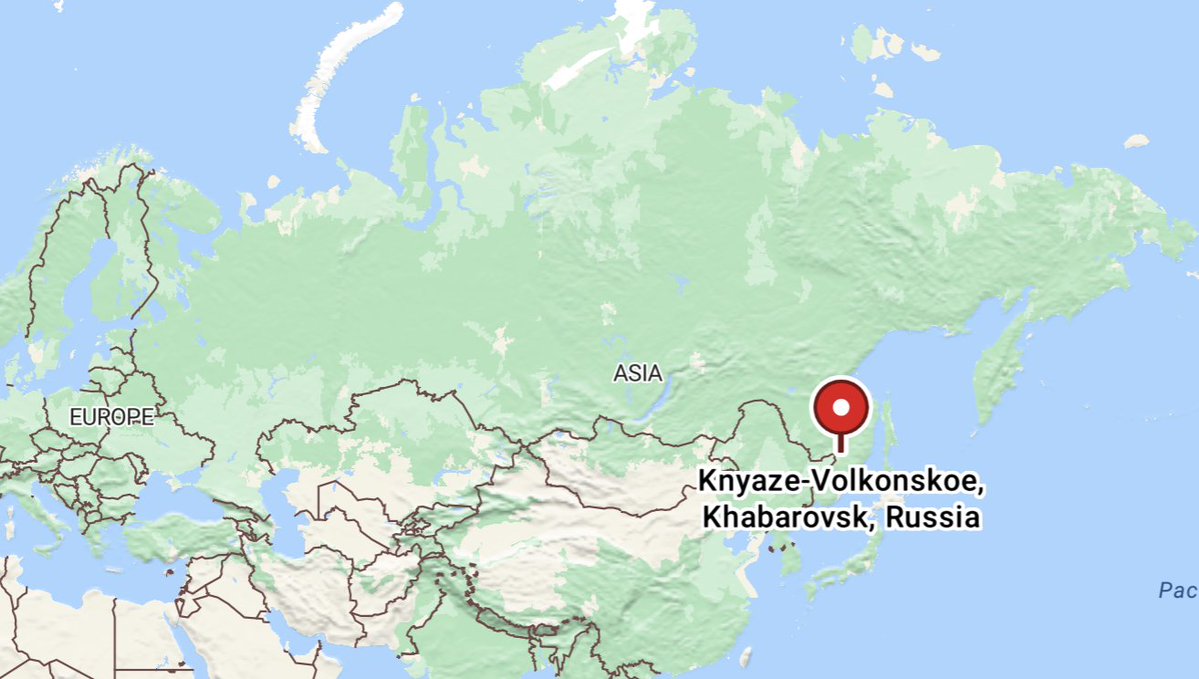
2/ According to VChK-OGPU, the attack took place on 28 April at a military garrison located in the village of Knyaze-Volkonskoye-1 in the Khabarovsk Krai. A bomb exploded in a mailbox, killing Lieutenant Colonel Kuzmenko, the commander of the training communications battalion.
3/ The target appears to have been Major General Azatbek Omurbekov, who has been the head of the 392nd District Training Centre for Junior Specialists of the Eastern Military District since 2023.