1/ A new Russian anti-drug law is leading to drug warnings being added to classic works of Russian literature by Gogol, Pushkin, Bulgakov and other classic authors, due to mentions of drug use. It's a sign of how censorship is reaching increasingly deeply into Russian life. ⬇️
2/ Verstka reports that Russian online bookshops are adding warnings to both the text and audiobook versions of classic works such as Gogol's stories "The Nose" and "Viy," children's stories by Tolstoy, and works by Bulgakov such as "The Master and Margarita".
3/ It comes after the introduction into effect on 1 March 2026 of a new law banning "drug propaganda" in literature, film, media, and the Internet.
4/ "Propaganda" is defined as "the dissemination of information about the methods of production, storage, shipment, distribution, and locations of drug purchase, as well as the appeal and justification of drug use as a generally accepted norm of behavior."
5/ Violations can lead to fines ranging from 2,000 to 1.5 million rubles ($26-$20,000). Repeated violations can lead to criminal liability. To comply with censorship, publishers block out offending words or replace them with symbols.
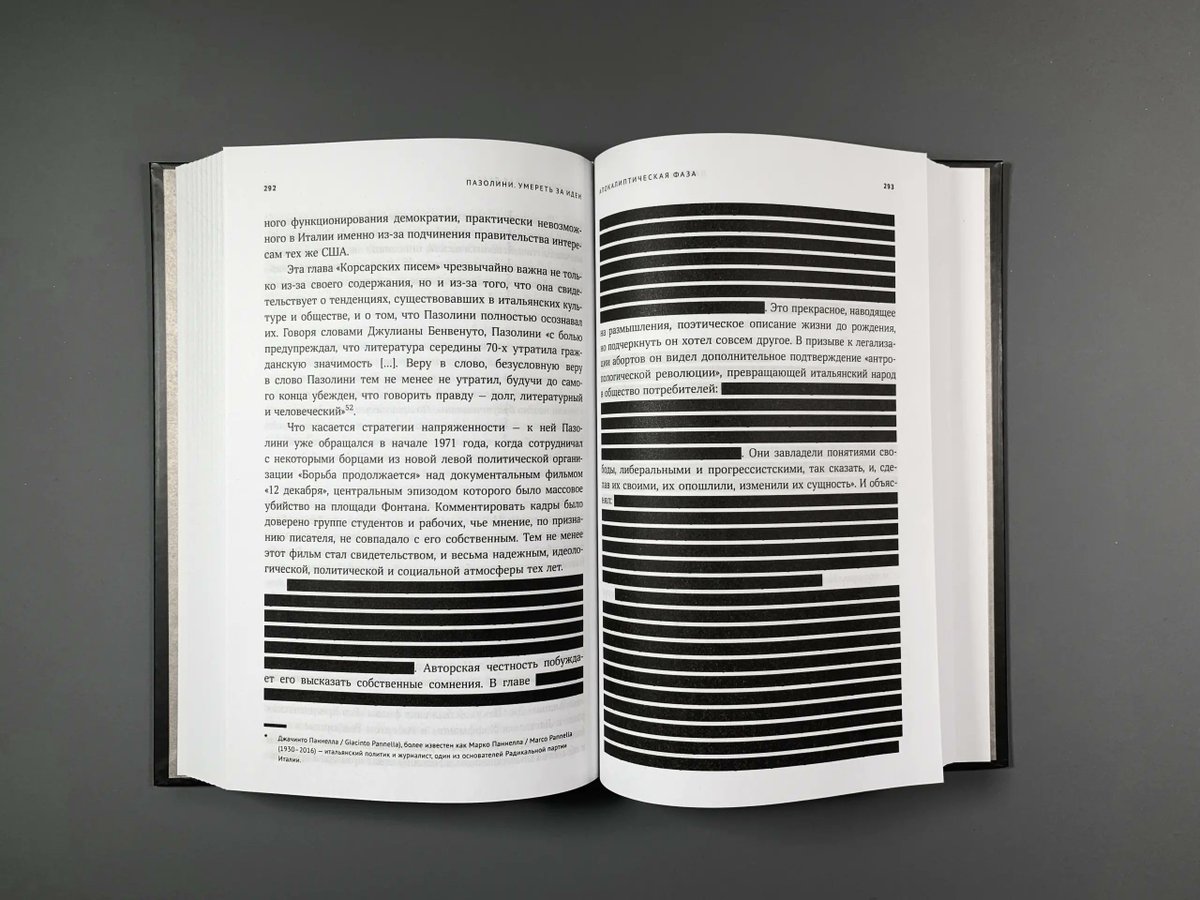
6/ Books deemed to be "drug propaganda" must be marked 18+ and may incur higher VAT (22%). They require special labeling (a warning triangle/exclamation mark plus the text: "Illegal consumption of narcotic drugs... causes harm to health, their illegal trafficking is prohibited.")
7/ In this particular case, the labelling is likely the result of automated censorship software flagging isolated mentions of drugs (such as using morphine to treat a wounded soldier). It highlights how the government is indiscriminately decreasing freedom of speech in Russia.
8/ While books published prior to 1990 are supposed to be exempt – thus classic literature should not be affected – the AI-driven censorship system developed by the government is clearly generating many false positives.
9/ In a similar example, the writer Denis Dragunskiy has been censored because automatic systems think his name includes the word "drug", rather similar to how US-made Internet censorship software used to censor the British placename Scunthorpe for containing a rude word.
10/ Many Russian and Western authors have been subjected to "drug propaganda" censorship, including Viktor Pelevin, Sergei Lukyanenko, Stephen King, Chuck Palahniuk, John Steinbeck ("East of Eden"), Erich Maria Remarque ("Three Comrades"), Truman Capote, and others. /end
1/ The arrival of Ukrainian drones over the Urals for the first time has left Russian scrambling to explain why Russia's air defences seem to be unable to cope. Russian conspiracy theorists claim the drones are actually being flown from Kazakhstan. ⬇️
2/ Writing on his 'Ramsay' Telegram channel, Russian journalist Vladislav Shurygin says:
"I'll answer all the questions about how Ukrainian drones reached Chelyabinsk, 1,800 km from the Ukrainian border, very briefly, and probably for the hundredth time."
3/ "Their range is a consequence of the constant modernisation of enemy air attack capabilities. Over the past three years, Ukrainian drones have increased their range from 700 to 1,800 km, and potentially to 2,500 km. These technologies are now available to NATO countries.
1/ Today's British newspaper headlines show a unified wall of outrage against Donald Trump, across the political spectrum. It's a sign of how a reported plan to punish the UK by 'reassessing the status of the Falkland Islands' has crossed a line that's redder than red. ⬇️
2/ Reuters reported yesterday that an internal Pentagon memo, said to have been written by Under Secretary of War [sic] for Policy Elbridge Colby, suggests reviewing US support for Britain's claim to the Falkland Islands.
3/ The Falkland Islands were invaded in 1982 by Argentina, which claims the islands for itself, and recovered by the UK in a ten-week war which cost about 900 lives. The islanders are a British Overseas Territory whose inhabitants have voted overwhelmingly to stay with the UK.
1/ With the quality of life in Russia steadily deteriorating, Russian warblogger Alex Kartavykh is keen to raise morale. He has asked his followers on Telegram: "What's good in our country?" The answers have an element of clutching at straws. ⬇️
2/ – They allow you to put square number plates on the front of your car. Since about three years ago.
– There’s loads of snow in winter; it crunches poetically underfoot.
3/ – They transcribed the voice messages on Max [the state-sponsored messenger app]! I only noticed that today
– I finished Pragmata today. It’s properly positive, not just a [video] game.
1/ The news that Ukrainian drones are now reaching the Urals – as far away from Ukraine as England – has been met with dismay by Russian warbloggers. They say that Russia's air defence system is chronically disunited and coordinated action is difficult. ⬇️
2/ 'Fighterbomber' appears to have realised that the strike shows, in spite of claims to the contrary from many Russian propagandists, that the Ukrainians don't need to use the Baltic States' airspace to attack Russia's Baltic ports:
3/ "Early this morning, the Ukrainians launched yet another strike using aircraft-type drones against a target deep behind enemy lines, deep within Russia.
Or rather, they attempted to launch one. Or attacked, to be precise. Plus or minus 1,800 km. An 8–10-hour flight."
1/ Growing discontent about Russian government policies is reflected in an increasing willingness by Russian commentators to directly attack Vladimir Putin – still a very risky move. Warblogger Egor Guzenko calls Putin a liar over Internet shutdowns. ⬇️
2/ Writing on his channel 'Thirteenth', Guzenko – a veteran Russian nationalist who has been fighting in Ukraine from 2014 onwards – ignores the ever-present threat of the FSB and gives Putin both barrels:
3/ "You'll have to forgive me, but you know, Comrade Supreme Commander-in-Chief, what you're saying now is a blatant lie."
1/ The developers of the Russian heavy bomber drone 'Kukushka' have been sent to their deaths en masse, according to the father of one of the men. He says they were deliberately killed as they were regarded as 'inconveniences' by their commanders. ⬇️
2/ Alexander Igorevich Anorin has recorded a video accusing commanders in the 102nd Motorised Rifle Regiment (military unit 91706) of sending a group of UAV developers to their deaths in assaults against Ukrainian positions.
3/ He says the commander of the regiment's 2nd Batallion, Boris Borisovich Kravchenko, call sign "Azak," and the regiment's deputy political officer, Samvel Karapetyan, sent the drone developers to die in an assault near Poltavka in the Zaporizhzhia region in July 2025.