🧵 [1/5] Have you ever wondered why “apostates” from the radical Left and other totalitarian regimes treated like traitors who deserve destruction, the same way radical Islamists treat anyone who leaves their faith?
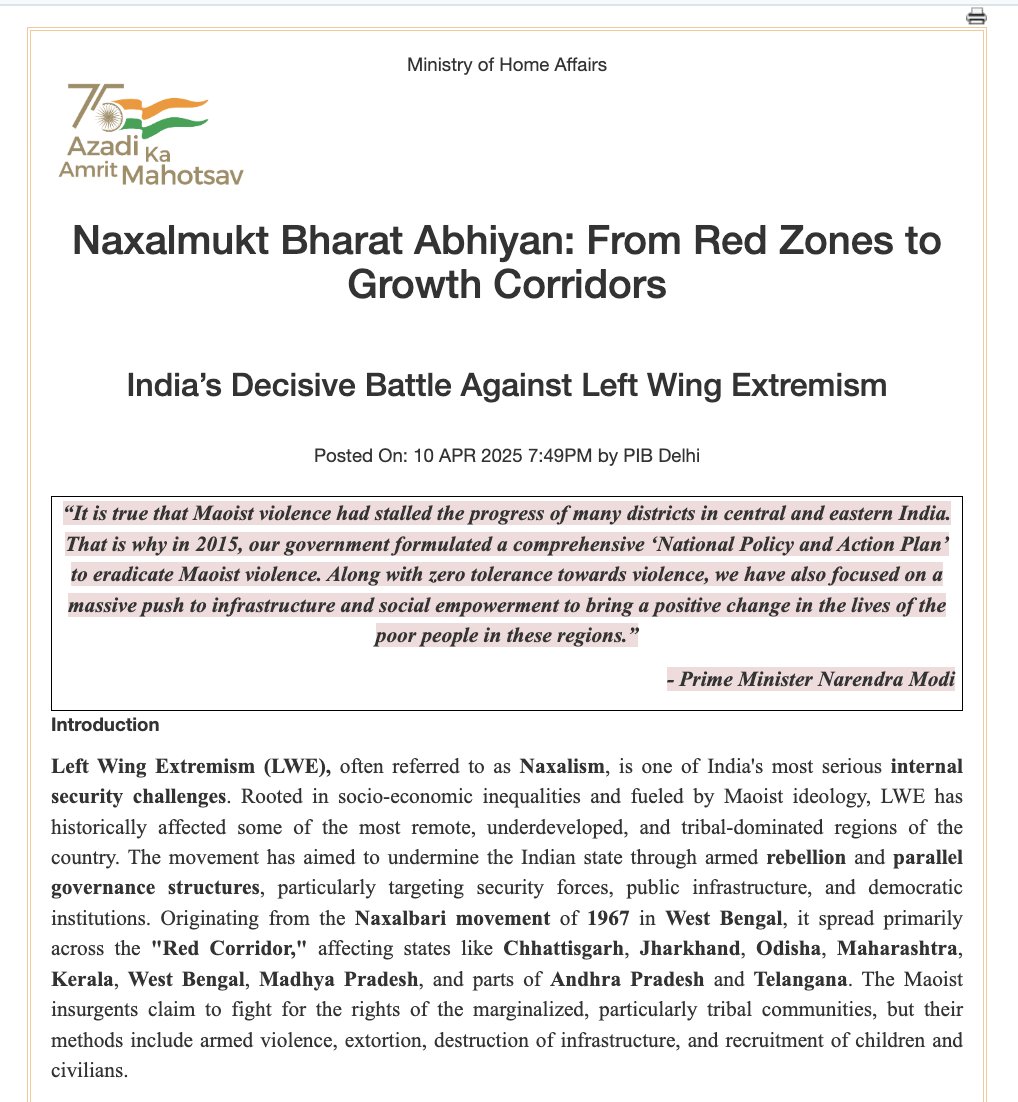
Both ideologies have a death sentence for dissenters.
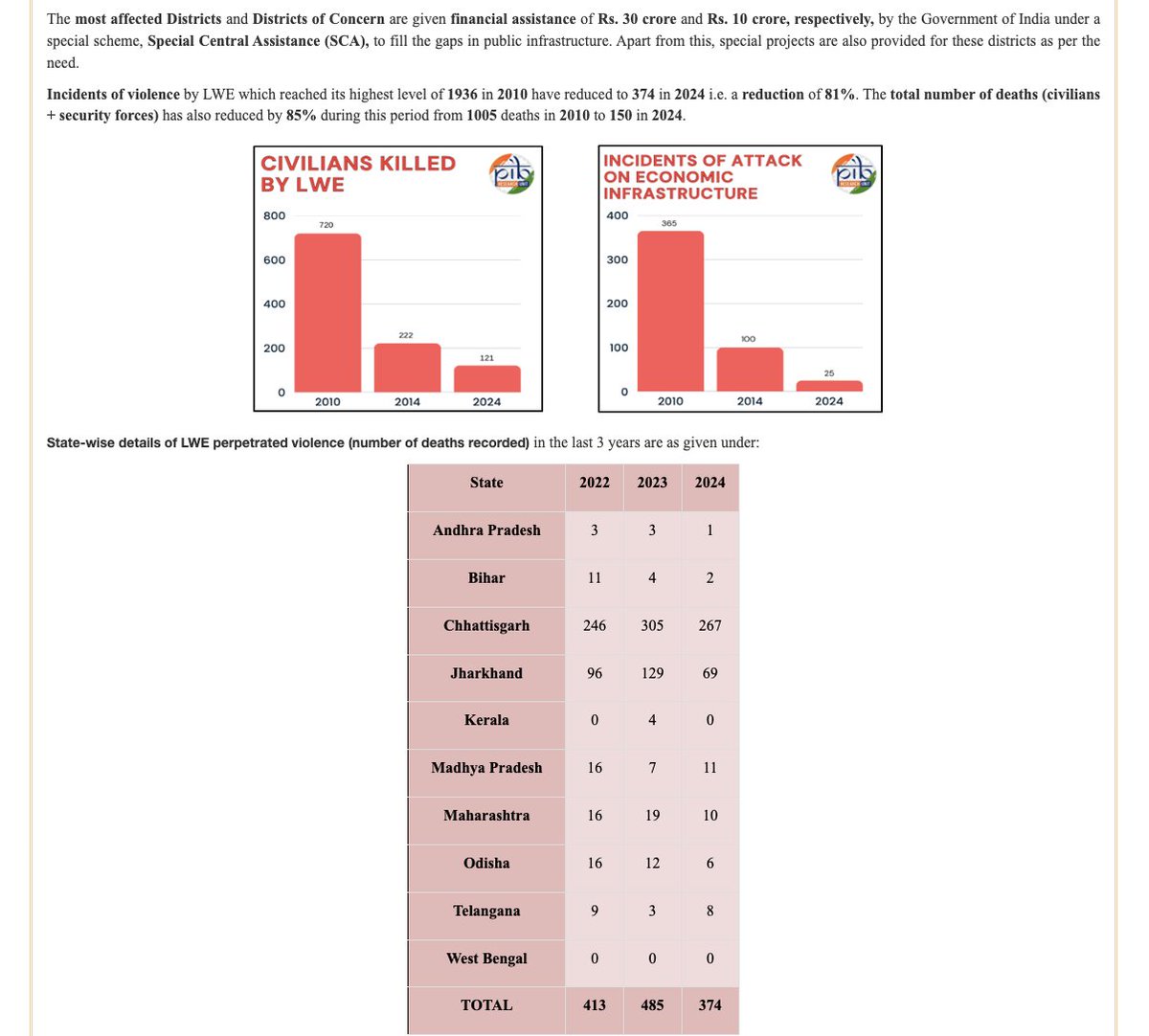
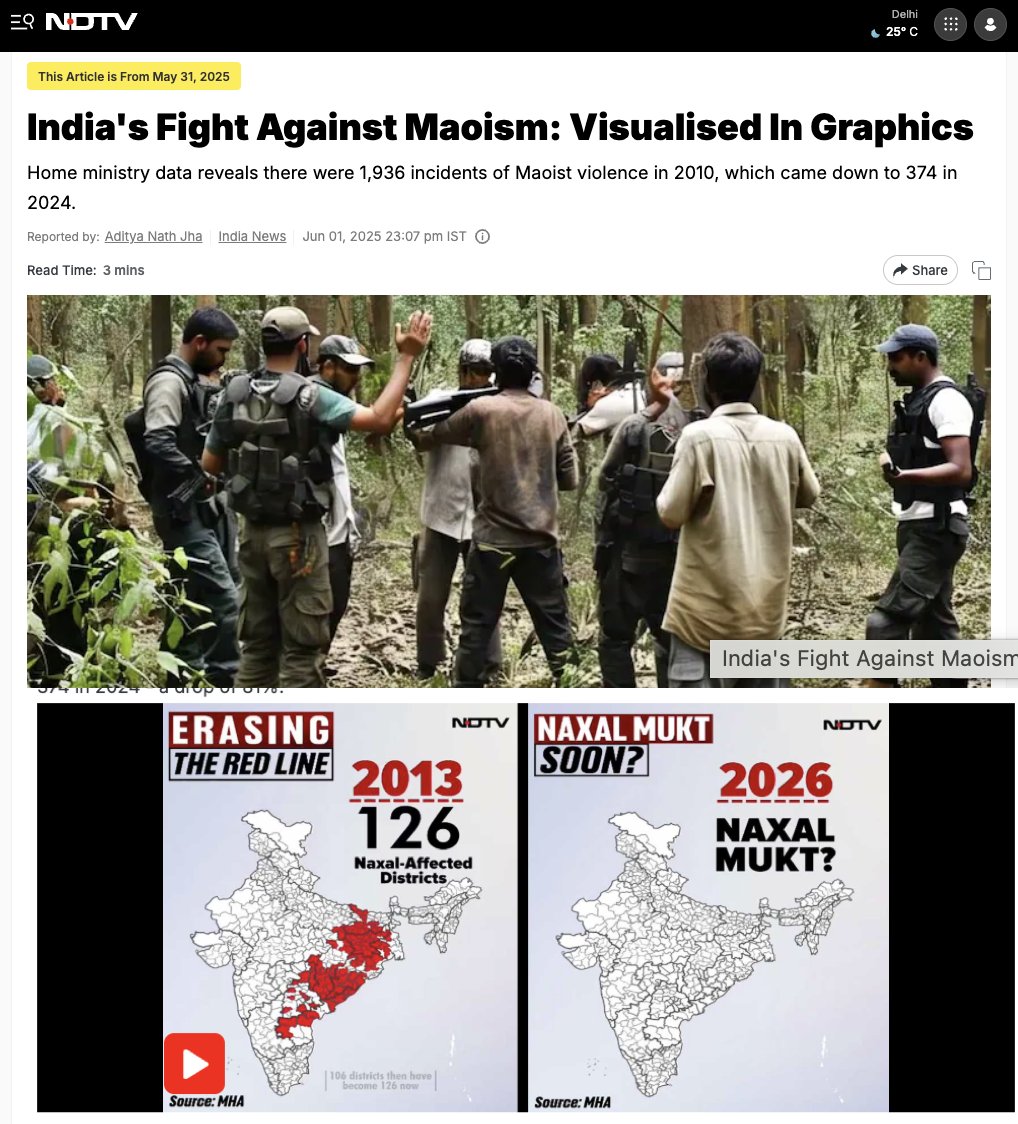
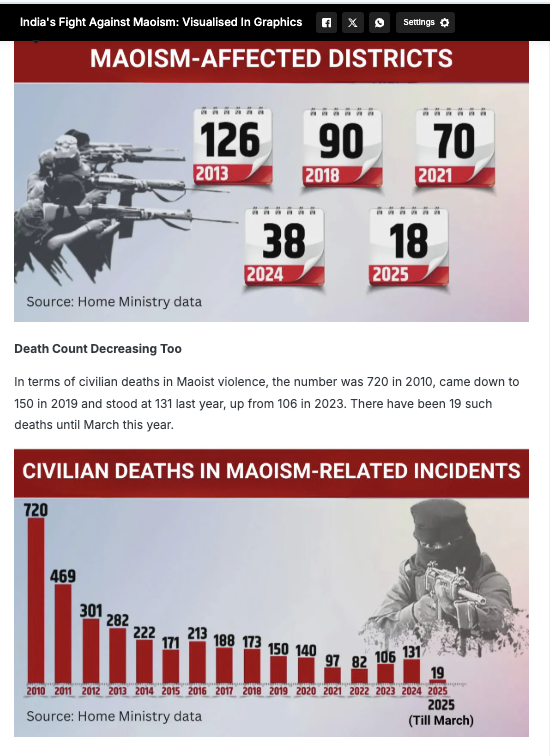
It’s not a bug.
It’s the feature.
History has lessons for us.
In this thread 🧵, we dive deep into this.
Communism has always crushed “ideological deviation” with the same brutality radical Islamists reserve for "riddah" (apostasy).
Let's look at the Red (radical Left/Communism) first.
Remember the Stalin’s Great Purge (1936–38)? Stalin executed the old Bolsheviks themselves. Lifelong revolutionaries such as Bukharin, Zinoviev, and Kamenev were shot or gulaged for the crime of “deviating” from the party line.
Leon Trotsky, founder of the Red Army, was hunted across continents and murdered in Mexico in 1940 with an ice pick.
Mao’s Cultural Revolution turned children into execution squads against teachers, parents, and party veterans guilty of “bourgeois” or “revisionist” thoughts.
Today, ex-leftists who break ranks face doxxing, career annihilation, and social exile.
“Cancel culture” is the Western gulag.
Now let’s turn to the Green (Radical Islamism).
Apostasy is explicitly a capital crime in classical Islamic jurisprudence, backed by hadiths: “Whoever changes his religion, kill him.”
The Ridda Wars after Muhammad’s death slaughtered tribes trying to leave Islam.
Today, 13 countries still prescribe death for leaving the faith. In nations such as Pakistan, the Islamic Republic of Iran, and others, the punishment for apostasy is death, and thousands have been executed or killed under these laws and proxy charges like blasphemy and “enmity against God.”
Ex-Muslims live under fatwas, in hiding, or are murdered (think Rushdie or honour killings).
Note: The attached image is the cover of the book Icon of Evil: Hitler’s Mufti and the Rise of Radical Islam by David G. Dalin and John F. Rothmann, showing Grand Mufti Haj Amin al-Husseini in private conversation with Adolf Hitler, a chilling historical snapshot of the alliances that still echo in today’s Red-Green axis.
Both ideologies have a death sentence for dissenters.
It’s not a bug.
It’s the feature.
History has lessons for us.
In this thread 🧵, we dive deep into this.
Communism has always crushed “ideological deviation” with the same brutality radical Islamists reserve for "riddah" (apostasy).
Let's look at the Red (radical Left/Communism) first.
Remember the Stalin’s Great Purge (1936–38)? Stalin executed the old Bolsheviks themselves. Lifelong revolutionaries such as Bukharin, Zinoviev, and Kamenev were shot or gulaged for the crime of “deviating” from the party line.
Leon Trotsky, founder of the Red Army, was hunted across continents and murdered in Mexico in 1940 with an ice pick.
Mao’s Cultural Revolution turned children into execution squads against teachers, parents, and party veterans guilty of “bourgeois” or “revisionist” thoughts.
Today, ex-leftists who break ranks face doxxing, career annihilation, and social exile.
“Cancel culture” is the Western gulag.
Now let’s turn to the Green (Radical Islamism).
Apostasy is explicitly a capital crime in classical Islamic jurisprudence, backed by hadiths: “Whoever changes his religion, kill him.”
The Ridda Wars after Muhammad’s death slaughtered tribes trying to leave Islam.
Today, 13 countries still prescribe death for leaving the faith. In nations such as Pakistan, the Islamic Republic of Iran, and others, the punishment for apostasy is death, and thousands have been executed or killed under these laws and proxy charges like blasphemy and “enmity against God.”
Ex-Muslims live under fatwas, in hiding, or are murdered (think Rushdie or honour killings).
Note: The attached image is the cover of the book Icon of Evil: Hitler’s Mufti and the Rise of Radical Islam by David G. Dalin and John F. Rothmann, showing Grand Mufti Haj Amin al-Husseini in private conversation with Adolf Hitler, a chilling historical snapshot of the alliances that still echo in today’s Red-Green axis.
https://x.com/DrSonuBhaskar/status/2047904405677359254

🧵 [2/5] Red and Green are married: a toxic alliance of convenience.
They march together, share platforms, fund causes, and scream “solidarity” against the West, Israel, and liberal democracy.
The radical Left defends Islamist grievances and imports Islamist voters while ignoring Sharia’s stance on apostasy, gays, and women.
Islamists adopt leftist “oppression” language as camouflage.
This isn’t new.
History is littered with Red-Green pacts, tactical marriages of sworn enemies against a common foe.
Let's start with the 1920 Baku Congress.
Soviet leaders (Zinoviev and others) summoned Muslim delegates to a “true people’s holy war” against British imperialism, an explicit early attempt to fuse communist revolution with jihad.
Then there’s the Grand Mufti of Jerusalem’s Nazi ties and enduring legacy. Haj Amin al-Husseini forged a direct alliance with Nazi Germany.
Contacts began in 1933 when he praised Hitler’s anti-Jewish policies. In 1941, after backing the pro-Axis coup in Iraq that sparked the Farhud pogrom against Baghdad’s Jews, he fled to Berlin as Hitler’s honored guest.
On November 28, 1941, he met the Führer and declared that Arabs and Nazis shared the same enemies: the English, the Jews, and the Communists.
He broadcast vicious anti-Jewish and anti-Allied propaganda across the Arab world via Radio Berlin, recruited thousands of Bosnian Muslims into the Waffen-SS “Handschar” division, and lobbied relentlessly to block Jewish emigration from Europe to Palestine.
His influence extended far beyond 1945.
The Mufti escaped to Egypt (via French protection) and continued shaping Palestinian rejectionism from exile in Cairo.
He opposed the 1947 UN Partition Plan, formed the Army of the Holy War militia, and in September 1948 presided over the short-lived All-Palestine Government in Egyptian-ruled Gaza, a symbolic rejectionist entity he led as president.
The government relocated to Cairo as a government-in-exile in late October 1948.
In the 1950s, from his villa in Heliopolis, Cairo, the Mufti directed the increasingly fragmented Arab Higher Committee, issued anti-Israel statements, supported "fedayeen guerrilla" activities against the Jewish state, and rallied Arab opposition to any compromise or peace with Israel.
By the 1960s, after leaving Egypt for Beirut in 1959, his once-dominant Cairo-based influence had sharply declined under Nasser’s secular pan-Arab regime and the rise of newer Palestinian leadership. He was increasingly sidelined and discredited after the 1948 defeat, yet he remained a vocal symbolic figure of uncompromising rejectionism, issuing statements against Israel and any negotiated settlement until his death in 1974.
Though his direct political power waned, his uncompromising fusion of Islamist anti-Semitism, Arab nationalism, and total rejection of Jewish sovereignty shaped the Palestinian cause for generations.
Not to also forget the Mufti’s influence on Arafat. Yasser Arafat, his distant relative and “spiritual godson”, explicitly carried forward this legacy. Arafat was the founding member of the Fatah political party which he led from 1959 until 2004, chairman of the Palestine Liberation Organization from 1969 to 2004, President of Palestine from 1989 to 2004, and President of the Palestinian Authority from 1994 to 2004.
Arafat, who mourned the Mufti as chief mourner at his 1974 Beirut funeral, inherited the PLO leadership and the core rejectionist stance.
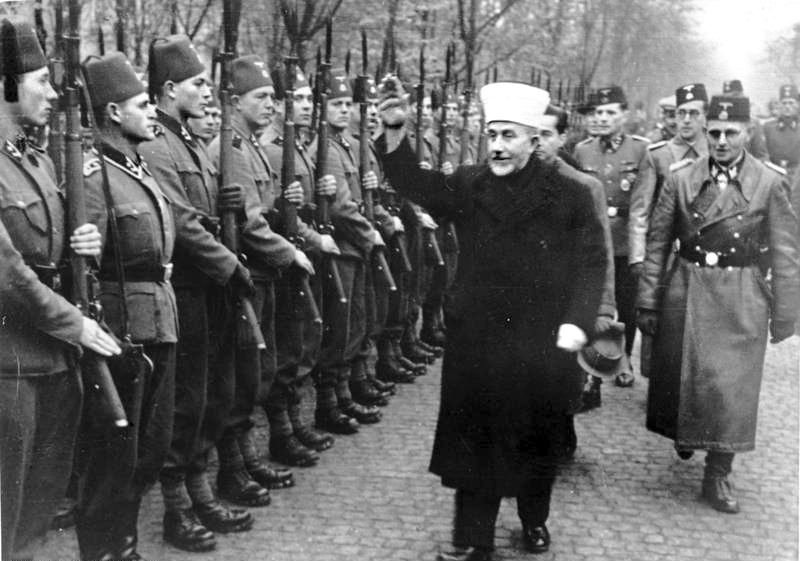
Note: This image is from November 1943: Grand Mufti Haj Amin al-Husseini greeting Bosnian Muslim volunteers of the Waffen-SS “Handschar” division with a Nazi salute. At right is SS General Karl-Gustav Sauberzweig, chilling proof of the Mufti’s direct role in recruiting thousands of Muslims into Hitler’s elite SS units as part of the Nazi-Islamist alliance.
They march together, share platforms, fund causes, and scream “solidarity” against the West, Israel, and liberal democracy.
The radical Left defends Islamist grievances and imports Islamist voters while ignoring Sharia’s stance on apostasy, gays, and women.
Islamists adopt leftist “oppression” language as camouflage.
This isn’t new.
History is littered with Red-Green pacts, tactical marriages of sworn enemies against a common foe.
Let's start with the 1920 Baku Congress.
Soviet leaders (Zinoviev and others) summoned Muslim delegates to a “true people’s holy war” against British imperialism, an explicit early attempt to fuse communist revolution with jihad.
Then there’s the Grand Mufti of Jerusalem’s Nazi ties and enduring legacy. Haj Amin al-Husseini forged a direct alliance with Nazi Germany.
Contacts began in 1933 when he praised Hitler’s anti-Jewish policies. In 1941, after backing the pro-Axis coup in Iraq that sparked the Farhud pogrom against Baghdad’s Jews, he fled to Berlin as Hitler’s honored guest.
On November 28, 1941, he met the Führer and declared that Arabs and Nazis shared the same enemies: the English, the Jews, and the Communists.
He broadcast vicious anti-Jewish and anti-Allied propaganda across the Arab world via Radio Berlin, recruited thousands of Bosnian Muslims into the Waffen-SS “Handschar” division, and lobbied relentlessly to block Jewish emigration from Europe to Palestine.
His influence extended far beyond 1945.
The Mufti escaped to Egypt (via French protection) and continued shaping Palestinian rejectionism from exile in Cairo.
He opposed the 1947 UN Partition Plan, formed the Army of the Holy War militia, and in September 1948 presided over the short-lived All-Palestine Government in Egyptian-ruled Gaza, a symbolic rejectionist entity he led as president.
The government relocated to Cairo as a government-in-exile in late October 1948.
In the 1950s, from his villa in Heliopolis, Cairo, the Mufti directed the increasingly fragmented Arab Higher Committee, issued anti-Israel statements, supported "fedayeen guerrilla" activities against the Jewish state, and rallied Arab opposition to any compromise or peace with Israel.
By the 1960s, after leaving Egypt for Beirut in 1959, his once-dominant Cairo-based influence had sharply declined under Nasser’s secular pan-Arab regime and the rise of newer Palestinian leadership. He was increasingly sidelined and discredited after the 1948 defeat, yet he remained a vocal symbolic figure of uncompromising rejectionism, issuing statements against Israel and any negotiated settlement until his death in 1974.
Though his direct political power waned, his uncompromising fusion of Islamist anti-Semitism, Arab nationalism, and total rejection of Jewish sovereignty shaped the Palestinian cause for generations.
Not to also forget the Mufti’s influence on Arafat. Yasser Arafat, his distant relative and “spiritual godson”, explicitly carried forward this legacy. Arafat was the founding member of the Fatah political party which he led from 1959 until 2004, chairman of the Palestine Liberation Organization from 1969 to 2004, President of Palestine from 1989 to 2004, and President of the Palestinian Authority from 1994 to 2004.
Arafat, who mourned the Mufti as chief mourner at his 1974 Beirut funeral, inherited the PLO leadership and the core rejectionist stance.
Note: This image is from November 1943: Grand Mufti Haj Amin al-Husseini greeting Bosnian Muslim volunteers of the Waffen-SS “Handschar” division with a Nazi salute. At right is SS General Karl-Gustav Sauberzweig, chilling proof of the Mufti’s direct role in recruiting thousands of Muslims into Hitler’s elite SS units as part of the Nazi-Islamist alliance.
🧵 [3/3] Nazi ties to Arab nationalists ran even deeper.
The Mufti (Haj Amin al-Husseini) closely allied with Iraqi Prime Minister Rashid Ali al-Gaylani, whose 1941 “Golden Square” pro-Axis coup (backed by Nazi Germany and Fascist Italy) briefly installed a Nazi-friendly regime in Baghdad before British forces crushed it.
Both men fled to Berlin. In Berlin, Rashid Ali was received by Hitler, recognised as the leader of an Iraqi government-in-exile, and collaborated with the Mufti on anti-British and anti-Jewish propaganda while working to rally Arab support for the Axis powers.
They appeared together at events, and Nazi Germany tailored radio broadcasts that fused Koranic verses with Nazi-style anti-Semitism, framing the war as a jihad against Jews, Britain, and Bolshevism.
Another key figure was Fawzi al-Qawuqji, a prominent Syrian Arab nationalist and military commander who fought in the 1936–39 Arab Revolt in Palestine.
After fleeing British pursuit, al-Qawuqji too found refuge in Nazi Germany. Here, he was commissioned as a colonel in the Wehrmacht, recovered from wounds sustained in Iraq, and collaborated closely with the Mufti and Rashid Ali on propaganda and recruitment efforts.
Post-war, al-Qawuqji was appointed field commander of the Arab League’s Arab Liberation Army (ALA) during the 1948 Palestine War, leading volunteer forces in northern Palestine against the nascent Jewish state.
This is another direct link in the chain of Nazi-Arab nationalist collaboration extending into the fight against Israel.
Broader Nazi strategy cultivated Arab nationalists across the region.
Nazis exploited anti-British and anti-Zionist sentiment, supporting pan-Arab movements and recruiting Muslim volunteers while building on earlier German-Ottoman alliances from World War I.
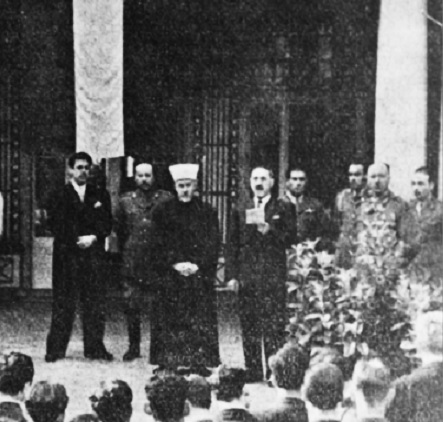
Note: This image is from Berlin during the Second World War, showing Rashid Ali al-Gaylani, the pro-Axis former Iraqi prime minister, and Haj Amin al-Husseini, the Grand Mufti of Jerusalem, speaking at an anniversary event commemorating the 1941 pro-Axis coup in Iraq. They are pictured before black-white-green banners, symbolically linking Arab nationalist politics with Axis propaganda networks in wartime Germany.
The Mufti (Haj Amin al-Husseini) closely allied with Iraqi Prime Minister Rashid Ali al-Gaylani, whose 1941 “Golden Square” pro-Axis coup (backed by Nazi Germany and Fascist Italy) briefly installed a Nazi-friendly regime in Baghdad before British forces crushed it.
Both men fled to Berlin. In Berlin, Rashid Ali was received by Hitler, recognised as the leader of an Iraqi government-in-exile, and collaborated with the Mufti on anti-British and anti-Jewish propaganda while working to rally Arab support for the Axis powers.
They appeared together at events, and Nazi Germany tailored radio broadcasts that fused Koranic verses with Nazi-style anti-Semitism, framing the war as a jihad against Jews, Britain, and Bolshevism.
Another key figure was Fawzi al-Qawuqji, a prominent Syrian Arab nationalist and military commander who fought in the 1936–39 Arab Revolt in Palestine.
After fleeing British pursuit, al-Qawuqji too found refuge in Nazi Germany. Here, he was commissioned as a colonel in the Wehrmacht, recovered from wounds sustained in Iraq, and collaborated closely with the Mufti and Rashid Ali on propaganda and recruitment efforts.
Post-war, al-Qawuqji was appointed field commander of the Arab League’s Arab Liberation Army (ALA) during the 1948 Palestine War, leading volunteer forces in northern Palestine against the nascent Jewish state.
This is another direct link in the chain of Nazi-Arab nationalist collaboration extending into the fight against Israel.
Broader Nazi strategy cultivated Arab nationalists across the region.
Nazis exploited anti-British and anti-Zionist sentiment, supporting pan-Arab movements and recruiting Muslim volunteers while building on earlier German-Ottoman alliances from World War I.
Note: This image is from Berlin during the Second World War, showing Rashid Ali al-Gaylani, the pro-Axis former Iraqi prime minister, and Haj Amin al-Husseini, the Grand Mufti of Jerusalem, speaking at an anniversary event commemorating the 1941 pro-Axis coup in Iraq. They are pictured before black-white-green banners, symbolically linking Arab nationalist politics with Axis propaganda networks in wartime Germany.
🧵 [4/5] Then came the Cold War Arab-Soviet axis.
The USSR poured weapons, training, and propaganda into “Islamic socialist” regimes and Palestinian fedayeen.
Groups like the PLO became a Red-Green hybrid.
Yasser Arafat (who admired the Mufti) worked hand-in-glove with Soviet intelligence while Islamist networks operated alongside.
And don’t forget the 1979 Iranian Revolution.
Marxists (Tudeh Party, Fedayeen) and Islamists united to topple the Shah.
Once victorious, Khomeini’s Green faction purged their Red allies. Thousands of communists executed or imprisoned as “enemies of God.”
This is the Molotov-Ribbentrop Pact of our era.
Signed on August 23, 1939, by Nazi Foreign Minister Joachim von Ribbentrop and Soviet Foreign Minister Vyacheslav Molotov, the Molotov-Ribbentrop Pact was a non-aggression treaty between two mortal ideological enemies, National Socialism and Communism.
It included a secret additional protocol that carved up Eastern Europe into spheres of influence: Germany would take western Poland, the Soviets eastern Poland, the Baltic states, Finland, and Bessarabia.
The cynical deal enabled Hitler’s invasion of Poland on September 1, 1939, with Soviet forces invading from the east on September 17, triggering World War II.
The “alliance of convenience” lasted less than two years.
On June 22, 1941, Hitler launched Operation Barbarossa and betrayed Stalin, invading the USSR.
The two totalitarian regimes shook hands against the liberal West, shared tactics of terror, propaganda, and Manichaean “us vs. them” framing.
But, they despised each other’s core ideology.
When the common enemy was sufficiently weakened, the knives came out.
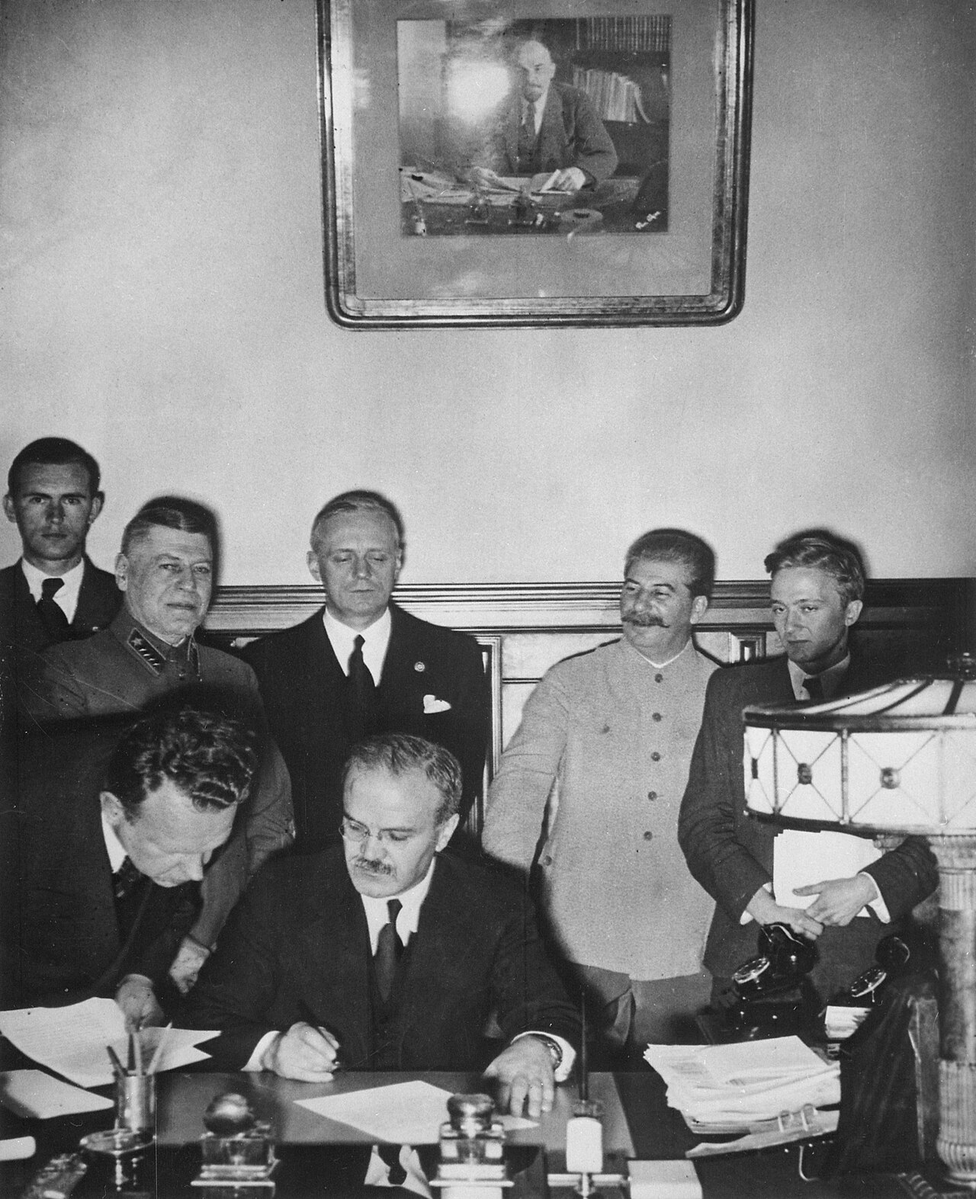
Note: This (attached) image shows Soviet Foreign Minister Vyacheslav Molotov signing the German–Soviet Treaty of Friendship in Moscow on September 28, 1939, shortly after Nazi Germany and the Soviet Union had jointly dismantled Poland under the Molotov–Ribbentrop Pact. Standing behind him are key Nazi and Soviet officials, including Joachim von Ribbentrop and Joseph Stalin, symbolizing one of the most consequential and cynical diplomatic alignments of the early Second World War. The agreement formalized cooperation between two totalitarian regimes and helped redraw the map of Eastern Europe before the Nazi–Soviet alliance collapsed in 1941.
The USSR poured weapons, training, and propaganda into “Islamic socialist” regimes and Palestinian fedayeen.
Groups like the PLO became a Red-Green hybrid.
Yasser Arafat (who admired the Mufti) worked hand-in-glove with Soviet intelligence while Islamist networks operated alongside.
And don’t forget the 1979 Iranian Revolution.
Marxists (Tudeh Party, Fedayeen) and Islamists united to topple the Shah.
Once victorious, Khomeini’s Green faction purged their Red allies. Thousands of communists executed or imprisoned as “enemies of God.”
This is the Molotov-Ribbentrop Pact of our era.
Signed on August 23, 1939, by Nazi Foreign Minister Joachim von Ribbentrop and Soviet Foreign Minister Vyacheslav Molotov, the Molotov-Ribbentrop Pact was a non-aggression treaty between two mortal ideological enemies, National Socialism and Communism.
It included a secret additional protocol that carved up Eastern Europe into spheres of influence: Germany would take western Poland, the Soviets eastern Poland, the Baltic states, Finland, and Bessarabia.
The cynical deal enabled Hitler’s invasion of Poland on September 1, 1939, with Soviet forces invading from the east on September 17, triggering World War II.
The “alliance of convenience” lasted less than two years.
On June 22, 1941, Hitler launched Operation Barbarossa and betrayed Stalin, invading the USSR.
The two totalitarian regimes shook hands against the liberal West, shared tactics of terror, propaganda, and Manichaean “us vs. them” framing.
But, they despised each other’s core ideology.
When the common enemy was sufficiently weakened, the knives came out.
Note: This (attached) image shows Soviet Foreign Minister Vyacheslav Molotov signing the German–Soviet Treaty of Friendship in Moscow on September 28, 1939, shortly after Nazi Germany and the Soviet Union had jointly dismantled Poland under the Molotov–Ribbentrop Pact. Standing behind him are key Nazi and Soviet officials, including Joachim von Ribbentrop and Joseph Stalin, symbolizing one of the most consequential and cynical diplomatic alignments of the early Second World War. The agreement formalized cooperation between two totalitarian regimes and helped redraw the map of Eastern Europe before the Nazi–Soviet alliance collapsed in 1941.
🧵 [5/5] Fast forward to current times, especially after the October 7 deadly massacre committed by Hamas against the Jewish people.
Red and Green are doing the same: two totalitarian systems shaking hands against their common foe (America, Israel, capitalism, freedom).
They share tactics (propaganda, street agitation, and Manichaean “oppressor vs. oppressed” framing) but despise each other’s core (atheism vs. theocracy).
The alliance is tactical, not genuine.
When the common enemy weakens, the knives come out.
We’ve already seen it in Iran.
We see it today in “Queers for Palestine” marches, BDS campaigns, campus encampments, European far-left parties marching with Islamist networks, and even modern "Red-Green-Brown" overlaps where Islamists, communists, and far-right fringes converge in a toxic alliance of anti-Western, anti-Israel, anti-Jewish, and anti-India/Hindu hatred.
The bottomline is:
Totalitarian minds, Red or Green, cannot tolerate exit.
They need heretics to hunt.
The only real question is: when the common enemy is gone, who gets the ice pick first?
If you found this thread 🧵useful and want more such deep dives, follow, share, and leave your comments or additional references below.
FACTS >>> NARRATIVES.
Note: This (attached image) 1938 satirical illustration, “Carriers of the New Black Plague” by William Cotton, warns of a “Totalitarian Eclipse” threatening democracy. Using the metaphor of a “black plague,” Cotton portrays dictatorships and authoritarian regimes as a contagion threatening free societies through censorship, intimidation, and state control.
Red and Green are doing the same: two totalitarian systems shaking hands against their common foe (America, Israel, capitalism, freedom).
They share tactics (propaganda, street agitation, and Manichaean “oppressor vs. oppressed” framing) but despise each other’s core (atheism vs. theocracy).
The alliance is tactical, not genuine.
When the common enemy weakens, the knives come out.
We’ve already seen it in Iran.
We see it today in “Queers for Palestine” marches, BDS campaigns, campus encampments, European far-left parties marching with Islamist networks, and even modern "Red-Green-Brown" overlaps where Islamists, communists, and far-right fringes converge in a toxic alliance of anti-Western, anti-Israel, anti-Jewish, and anti-India/Hindu hatred.
The bottomline is:
Totalitarian minds, Red or Green, cannot tolerate exit.
They need heretics to hunt.
The only real question is: when the common enemy is gone, who gets the ice pick first?
If you found this thread 🧵useful and want more such deep dives, follow, share, and leave your comments or additional references below.
FACTS >>> NARRATIVES.
Note: This (attached image) 1938 satirical illustration, “Carriers of the New Black Plague” by William Cotton, warns of a “Totalitarian Eclipse” threatening democracy. Using the metaphor of a “black plague,” Cotton portrays dictatorships and authoritarian regimes as a contagion threatening free societies through censorship, intimidation, and state control.

@threadreaderapp unroll, danken!
• • •
Missing some Tweet in this thread? You can try to
force a refresh