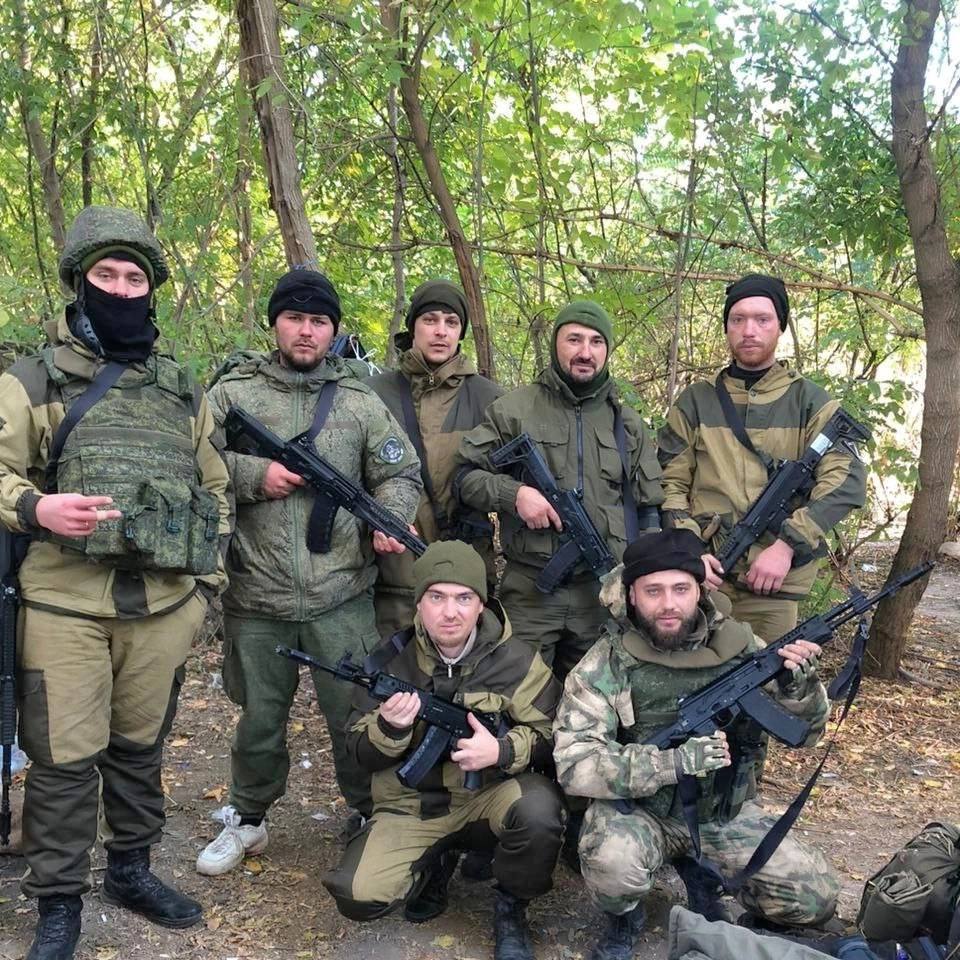
1/ Russian drone developers are complaining that because of bureaucratic restrictions, they are having to use firecrackers as the warheads on interceptor drones, or rely solely on kinetic methods instead of explosive warheads. ⬇️ 

2/ The Russian warblogger 'UAV Developer' shows a photo of two firecrackers and asks:
"Do you know what this is?
It's the warhead of an interceptor drone."
"Do you know what this is?
It's the warhead of an interceptor drone."
3/ "While those Ukrainian drones are hitting a house in Yekaterinburg, smashing a landing craft in Crimea with shrapnel, and killing a dozen civilians along the way, the developers of interceptor drones are trying to somehow circumvent the restrictions of the mad printer…
4/ …[i.e. the State Duma] by inventing air defence systems out of shit and sticks.
One solution is to install a FIRECRACKER on board!
Because you can't put anything else on board. Not even a fucking 50-gram block of TNT.
Because it's peacetime and nothing's happening.
One solution is to install a FIRECRACKER on board!
Because you can't put anything else on board. Not even a fucking 50-gram block of TNT.
Because it's peacetime and nothing's happening.
5/ "Because you can't use IEDs behind the line of contact.
Because it's dangerous. Therefore, the Yolka and similar drones are "kinetic" weapons (they poke their snouts at something in the hopes of knocking it over or triggering a self-detonation).
Because it's dangerous. Therefore, the Yolka and similar drones are "kinetic" weapons (they poke their snouts at something in the hopes of knocking it over or triggering a self-detonation).
6/ "With limited effectiveness, to put it mildly.
But enemy drones have highly effective warheads and can shoot down up to 70% of Geran [drones].
But enemy drones have highly effective warheads and can shoot down up to 70% of Geran [drones].
7/ "Is there another example in world history of citizens defending their country despite the government's efforts and prohibitions?
I'm just curious."
I'm just curious."
8/ The Yolka drone mentioned above is a kinetic interceptor which has severe operational limitations, as the thread linked below highlights.
https://x.com/GrandpaRoy2/status/2034446026791333927
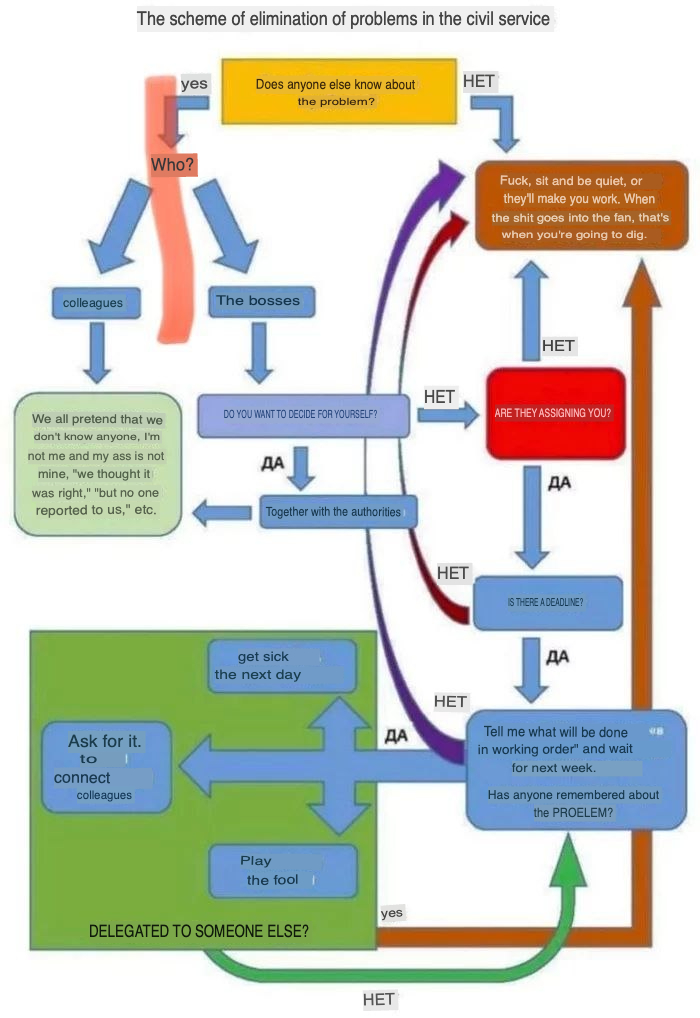
9/ Alex Kartavykh is furious at the way that bureaucracy is hampering drone development, and helpfully provides a flowchart illustrating how workflow operates in the Russian civil service:
10/ "We have one problem, globally. And it's not a lack of money, people, or brains. It's INTERDEPARTMENTAL IMPOTENCE. Where each respected agency vigilantly guards its feudal and bureaucratic privileges and takes no more than the bare minimum.
11/ "That's why NO ONE IS PERSONALLY RESPONSIBLE for most of what happens in the country, because it's located at the intersection of departments and services. At these intersections, there are standard gaps, still unresolved in the fifth year of the Special Military Operation.
12/ "Everything gets stuck and stalls there. INTERDEPARTMENTAL MEETINGS are convened. At them, everyone grumbles about everything good and everything bad, jerks off to each other, and the money goes in the cup.
13/ "Like in the old meme:
Sit and shut up, or they'll make you work. When the shit hits the fan, that's when you'll start making a move.
Sit and shut up, or they'll make you work. When the shit hits the fan, that's when you'll start making a move.
14/ "We all pretend we don't know shit, it's not me and it's not my ass, we thought it was supposed to be that way, no one reported it to us, etc.
And it usually works.
And it usually works.
15/ "Incidentally, Telegram has occasionally solved this problem through media coverage. The crap would hit the fan, and everyone involved would suddenly stop being stupid and heroically solve the problem. It's a shame Telegram got banned, of course.
16/ "So now, perhaps, our domestic bureaucracy needs to invent a nanotechnology called PERSONAL RESPONSIBILITY. Appoint these very same personal accountability officers (not scapegoats, but straight from the top of respected agencies), give them deadlines and KPIs.
17/ "And then BEAT THEM WITH A STICK when they still can't agree on anything. In other words, we need to shift logic from bureaucratic (where "sit and don't talk") to feudal (where "either in the crosses or in the bushes"). There's a war going on, dumbass.
18/ "Tuapse is burning, Ust-Luga is being fucked. What firecrackers, are you kidding me?" /end
Sources:
🔹 t.me/UAVDEV/11173
🔹 t.me/AlexCarrier/15…
🔹 t.me/AlexCarrier/15…
Sources:
🔹 t.me/UAVDEV/11173
🔹 t.me/AlexCarrier/15…
🔹 t.me/AlexCarrier/15…
• • •
Missing some Tweet in this thread? You can try to
force a refresh