The Invisible Wall
Modern battlefields are becoming transparent. Cheap drones now hover over front lines for hours, feeding live video to operators who can call in artillery, direct strike teams, or simply watch and wait. The result is something military analysts are only beginning to fully reckon with: a battlefield where being seen has become nearly as dangerous as being shot.
This is the invisible wall. Not a physical barrier, but a detection threshold — the point at which massing enough troops in one place to actually attack becomes suicidally expensive. You can move. You just can't concentrate.
Modern battlefields are becoming transparent. Cheap drones now hover over front lines for hours, feeding live video to operators who can call in artillery, direct strike teams, or simply watch and wait. The result is something military analysts are only beginning to fully reckon with: a battlefield where being seen has become nearly as dangerous as being shot.
This is the invisible wall. Not a physical barrier, but a detection threshold — the point at which massing enough troops in one place to actually attack becomes suicidally expensive. You can move. You just can't concentrate.
The Exposure Problem
The most important thing drones do isn't destroy — it's reveal. A drone that spots a column of vehicles doesn't need to carry a warhead. It only needs to transmit a location. Artillery, missile teams, or FPV kamikaze drones can handle the rest. This separation between finding a target and killing it has fundamentally changed how forces behave near the front. Vehicles are pushed back. Command posts move constantly. Supply runs happen at night, in small groups, along unpredictable routes.
Armies have adapted by shrinking. Platoons become squads. Squads become pairs. But dispersion has a floor. A single soldier can slip through a gap undetected — but one person cannot seize a village, hold a crossing, or push through a defended line. At some point, the attack needs mass. And mass is exactly what the drones are hunting.
The most important thing drones do isn't destroy — it's reveal. A drone that spots a column of vehicles doesn't need to carry a warhead. It only needs to transmit a location. Artillery, missile teams, or FPV kamikaze drones can handle the rest. This separation between finding a target and killing it has fundamentally changed how forces behave near the front. Vehicles are pushed back. Command posts move constantly. Supply runs happen at night, in small groups, along unpredictable routes.
Armies have adapted by shrinking. Platoons become squads. Squads become pairs. But dispersion has a floor. A single soldier can slip through a gap undetected — but one person cannot seize a village, hold a crossing, or push through a defended line. At some point, the attack needs mass. And mass is exactly what the drones are hunting.
It Cuts Both Ways
Here's what's often missed: the wall doesn't only stop attackers. Defenders face the same sky.
Rotating exhausted troops, shifting reserves, staging a counterattack — all of these require movement and concentration. All of them are visible. A defending force can hold a position more easily than it can maneuver to exploit a gap or reinforce a threatened flank. The result isn't a one-sided advantage for the defense. It's a mutual paralysis — both sides pinned, neither able to move freely. That's the deeper mechanism behind modern stalemate.
Here's what's often missed: the wall doesn't only stop attackers. Defenders face the same sky.
Rotating exhausted troops, shifting reserves, staging a counterattack — all of these require movement and concentration. All of them are visible. A defending force can hold a position more easily than it can maneuver to exploit a gap or reinforce a threatened flank. The result isn't a one-sided advantage for the defense. It's a mutual paralysis — both sides pinned, neither able to move freely. That's the deeper mechanism behind modern stalemate.
The Jamming War Few Talks About
Drones don't operate in a vacuum. They rely on radio links, GPS navigation, and video feeds — all of which can be disrupted. Electronic warfare, the unglamorous business of jamming and spoofing signals, has quietly become one of the most consequential activities on a drone-heavy battlefield. Pilots lose their feeds mid-flight. Navigation fails. Swarms get deflected or blinded.
This means the "seamless surveillance grid" most people imagine doesn't really exist. Coverage is patchy, contested, and constantly shifting as both sides cycle frequencies, reposition jammers, and adapt their tactics in near real time. The wall is real, but it has holes — and the holes move.
Drones don't operate in a vacuum. They rely on radio links, GPS navigation, and video feeds — all of which can be disrupted. Electronic warfare, the unglamorous business of jamming and spoofing signals, has quietly become one of the most consequential activities on a drone-heavy battlefield. Pilots lose their feeds mid-flight. Navigation fails. Swarms get deflected or blinded.
This means the "seamless surveillance grid" most people imagine doesn't really exist. Coverage is patchy, contested, and constantly shifting as both sides cycle frequencies, reposition jammers, and adapt their tactics in near real time. The wall is real, but it has holes — and the holes move.
Night Is No Longer Safe
For much of military history, darkness offered reliable cover. Troops could move, regroup, and resupply with relative freedom once the sun went down. That window is closing. Thermal cameras, which detect body heat rather than light, work effectively at night and through most weather that grounds optical drones. As thermal-equipped drones become cheaper and more widespread, night movement has shifted from near-immunity to partial cover. Still valuable — but no longer a sanctuary.
For much of military history, darkness offered reliable cover. Troops could move, regroup, and resupply with relative freedom once the sun went down. That window is closing. Thermal cameras, which detect body heat rather than light, work effectively at night and through most weather that grounds optical drones. As thermal-equipped drones become cheaper and more widespread, night movement has shifted from near-immunity to partial cover. Still valuable — but no longer a sanctuary.
Not All Walls Are Equal
Detection density stalemate is not a universal law of modern war. When one side operates a mature, layered drone network with integrated electronic warfare, and the other is flying commercial quadcopters with jury-rigged payloads, the wall becomes one-sided. The stronger side retains freedom of movement that the weaker side has lost entirely.
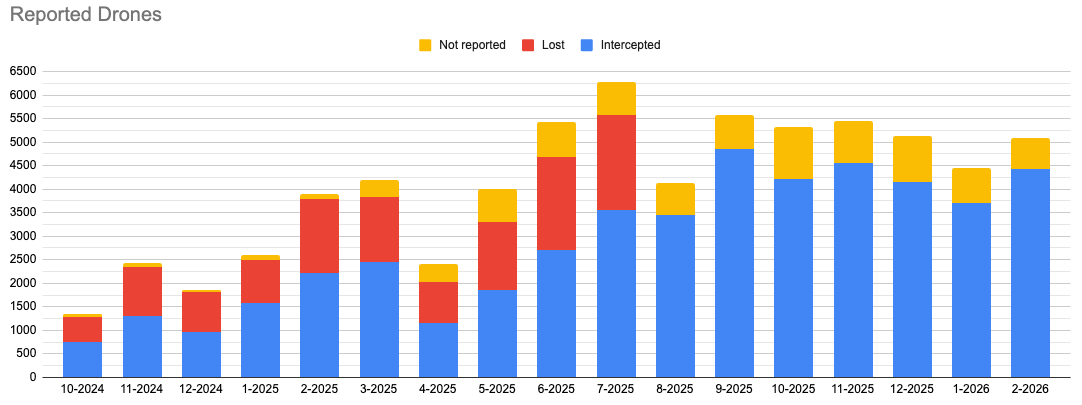
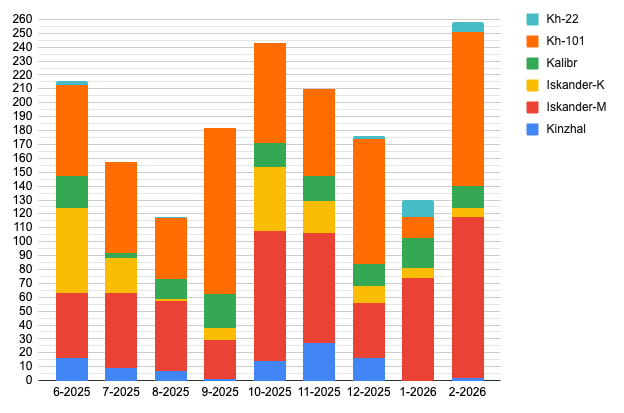
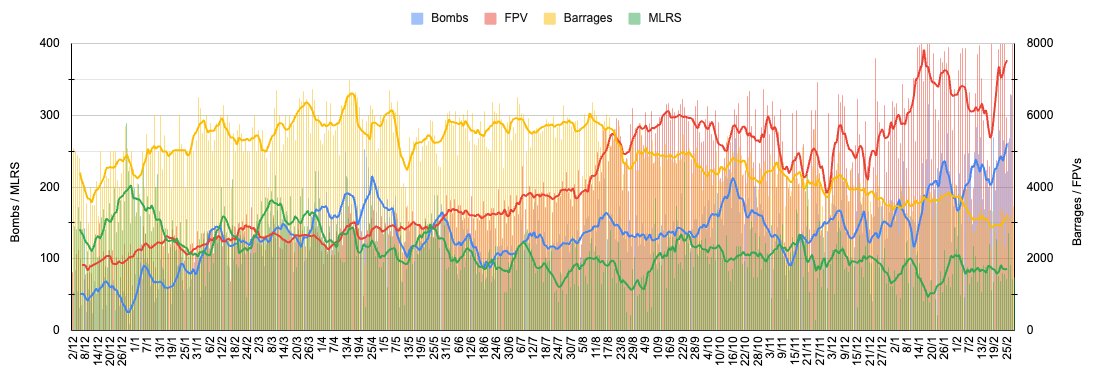
In this war, that gap has narrowed significantly. Ukraine pioneered FPV warfare early; Russia answered with mass production, Lancet loitering munitions, and heavy EW investment. By 2024, both sides had built drone ecosystems capable of making the other's movement costly. Neither holds a clean advantage along the contact line.
Detection density stalemate is not a universal law of modern war. When one side operates a mature, layered drone network with integrated electronic warfare, and the other is flying commercial quadcopters with jury-rigged payloads, the wall becomes one-sided. The stronger side retains freedom of movement that the weaker side has lost entirely.
In this war, that gap has narrowed significantly. Ukraine pioneered FPV warfare early; Russia answered with mass production, Lancet loitering munitions, and heavy EW investment. By 2024, both sides had built drone ecosystems capable of making the other's movement costly. Neither holds a clean advantage along the contact line.
The invisible wall, is not a clean concept. It is porous, asymmetric, and actively contested. But its basic pressure is real: the battlefield is growing more transparent, concentration is becoming more dangerous, and the cost of moving enough force into position — without being seen — keeps rising.
Stalemate, when it comes, will look less like two armies exhausted at the wire, and more like two forces that simply cannot find a way to mass without being found first.
Stalemate, when it comes, will look less like two armies exhausted at the wire, and more like two forces that simply cannot find a way to mass without being found first.
• • •
Missing some Tweet in this thread? You can try to
force a refresh