There was some competition for variant dominance during the month of March but the NB.1.8.1.* "Nimbus" family currently holds first place with 49.5% while the XFG.* "Stratus" family sits at 38.1% of sequenced genomes from COVID tests. 🧵1/
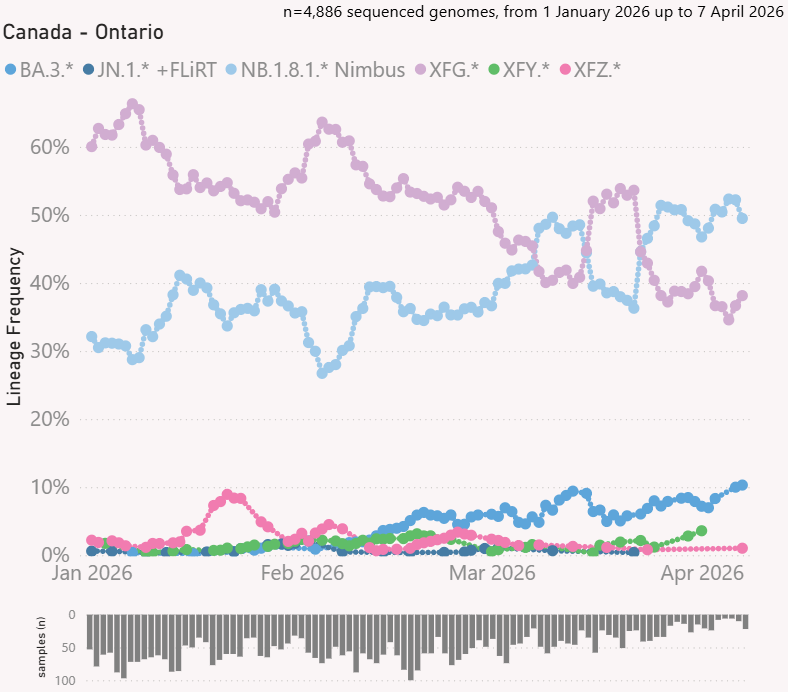
The BA.3.2 "Cicada" family has been slowing climbing and now above 10%. 2/
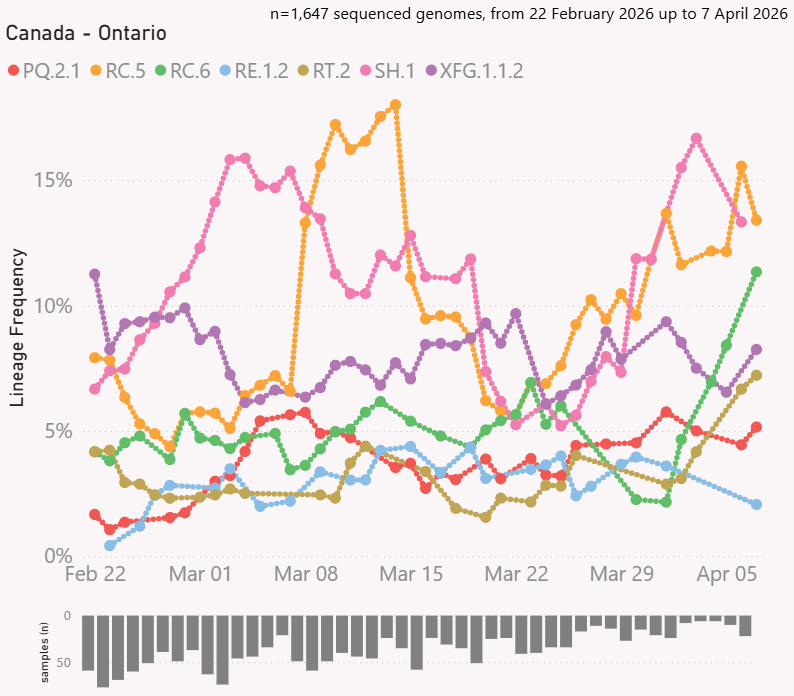
Looking at specific variants, RC.5 Nimbus currently holds first place at 13.4%, SH.1 Nimbus is a close second at 13.3%, RC.6 Nimbus is making a comeback at 11.3%, XFG.1.1.2 Stratus is at 8.2%, RT.2 Cicada at 7.2%, PQ.2.1 Nimbus at 5.2%, and RE.1.2 Cicada at 2.1%. 3/
As time goes, keeping track of the virus evolution is getting more complex. You can learn more about how variant naming works and mutations from this document ( ). 4/docs.google.com/document/d/1q0…
The SanKey diagram shows you variant lineages and you can follow back where that variant came from. 5/
Hospitalizations due to COVID have gone down from 153 to 123 in the last update. Influenza hospitalizations decreased from 59 to 47 and RSV decreased from 110 to 85. 🧵1/
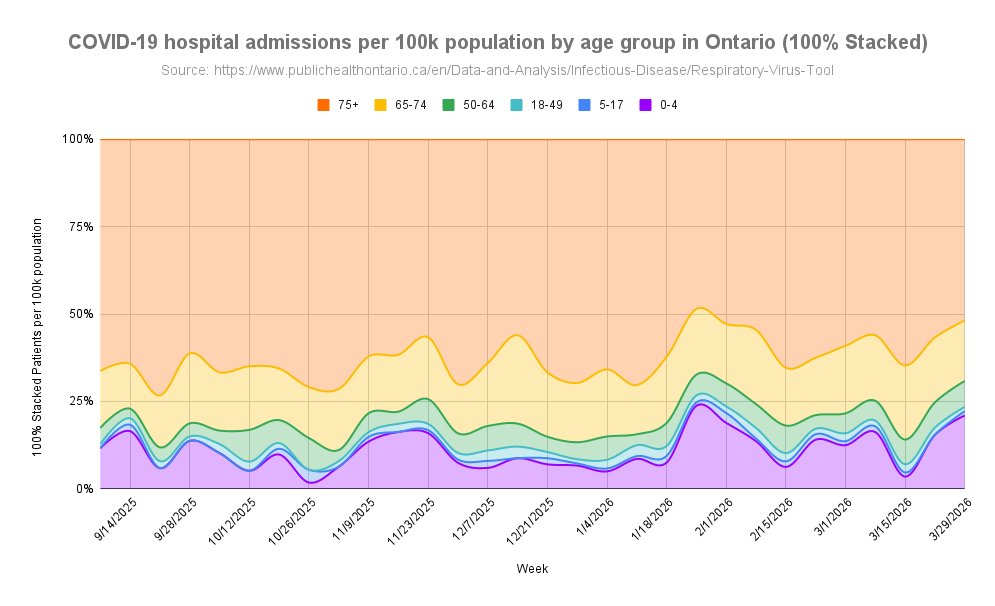
Looking at age groups, those age 75+ had the highest rates of hospitalization due to COVID but decreased since last update. Second place is age 0-4 and their levels are currently increasing while age 65-74 has the third highest rate and also decreased since last update. 2/
The youngest age group 0-4 currently have a hospitalization rate due to COVID that are 17x higher than age 5-17, 17x higher than age 18-49, and 2.8x higher than adults 50-64. 3/
*** Ontario COVID Hospitalization Rates by Age ***
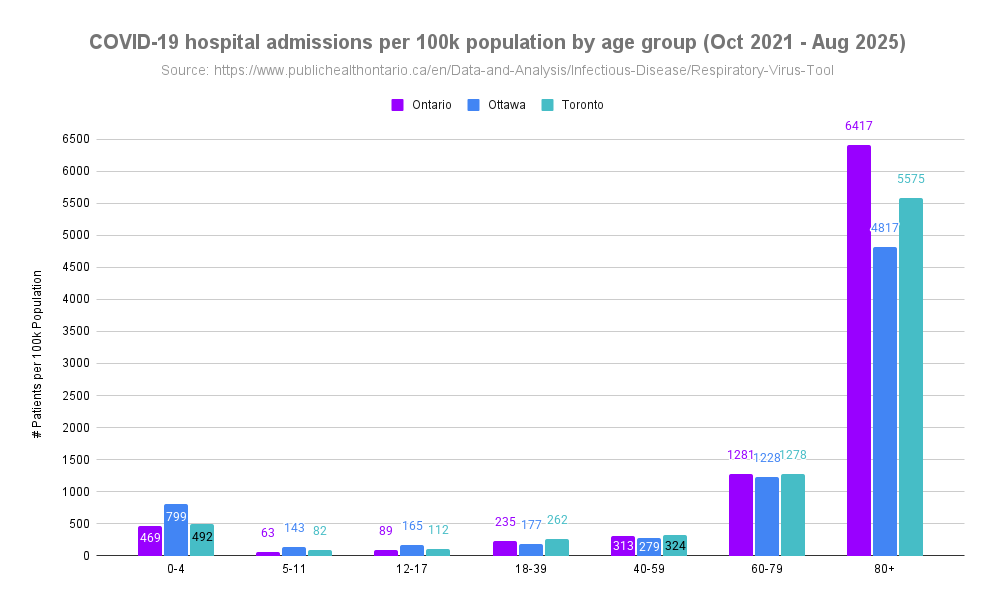
Data is now available for hospital admissions due to COVID by age group going back to Oct 2021. This provides interesting insights into how much children have been impacted with serious infections compared to adults. 🧵1/
We have heard from many sources throughout the pandemic that COVID isn't serious in children or they are not impacted as much as adults with some people still claiming this today. 2/
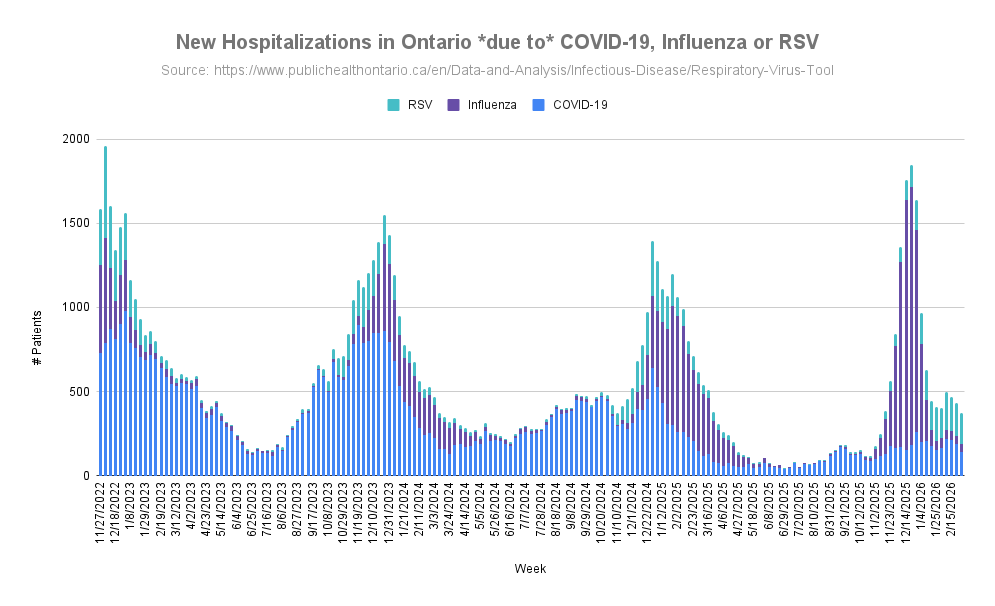
What about today, with lower circulation happening more recently and not the huge waves seen in the past, is anyone even being hospitalized for COVID anymore? The most recent update (week of March 8, 2026) there were 188 people hospitalized in Ontario due to COVID. 3/
Hospitalizations due to COVID have gone down from 190 to 138 in the last update. Influenza hospitalizations remained stable around 49 and RSV decreased slightly from 194 to 184. 🧵1/
#Ontario #Virus #Variant #COVID #RSV #Influenza
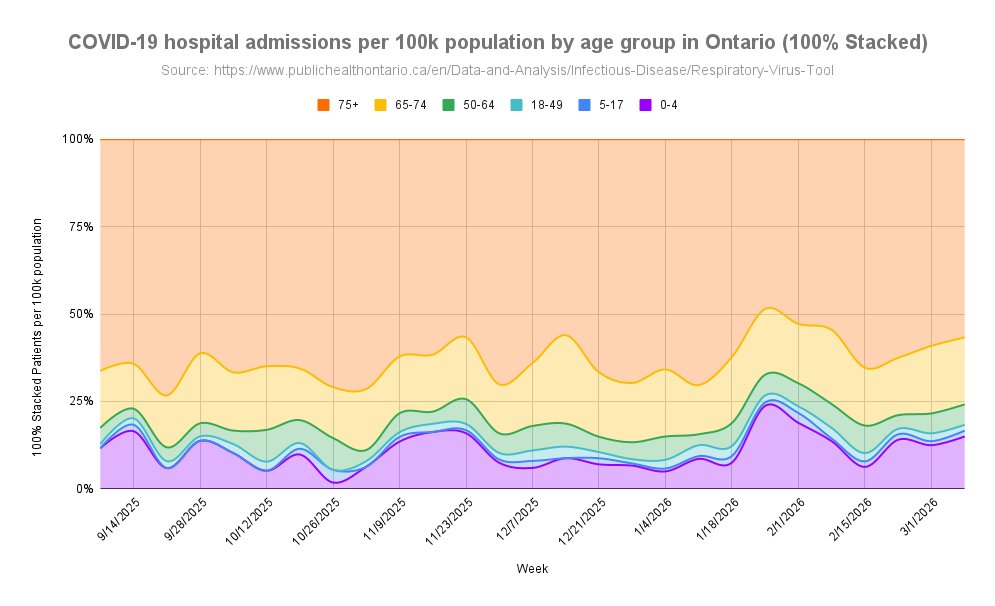
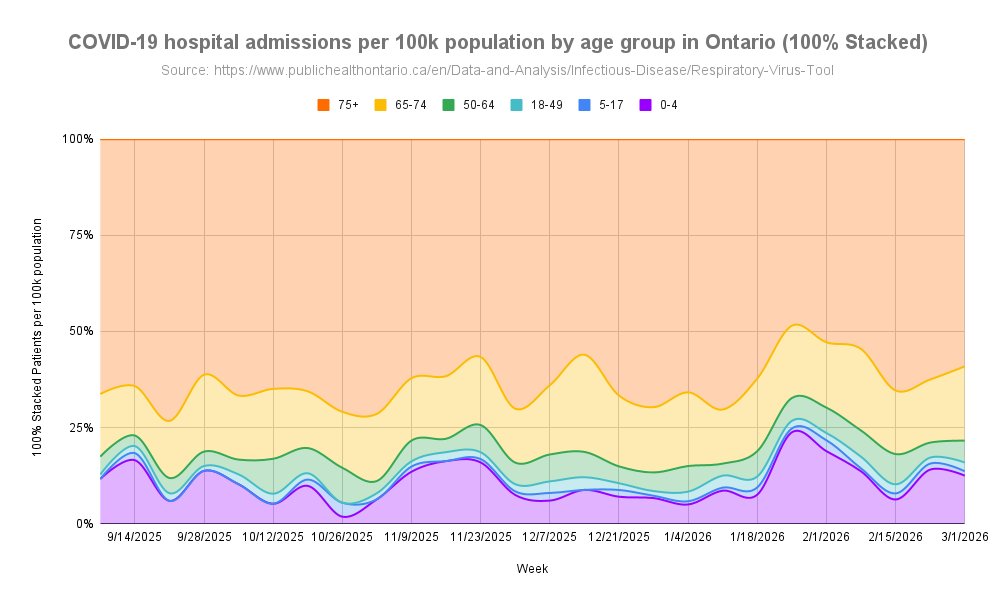
Looking at age groups, those age 75+ had the highest rates of hospitalization due to COVID but decreased since last update. Second place is age 65-74 and their levels are currently decreasing while age 0-4 has the third highest rate and also decreased since last update. 2/
The youngest age group 0-4 currently have a hospitalization rate due to COVID that are 11x higher than age 5-17, 5.5x higher than age 18-49, and 2x higher than adults 50-64. 3/
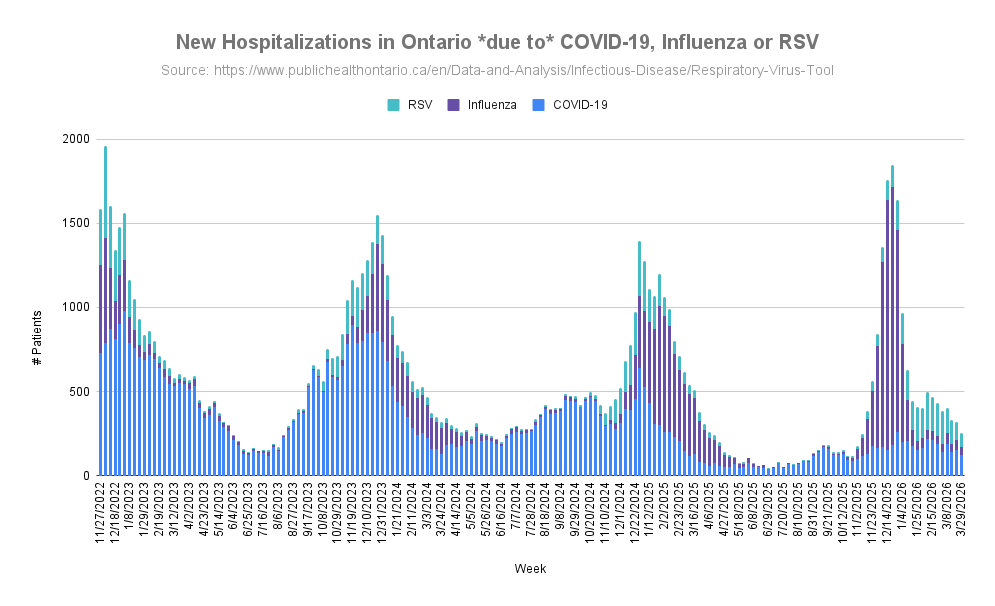
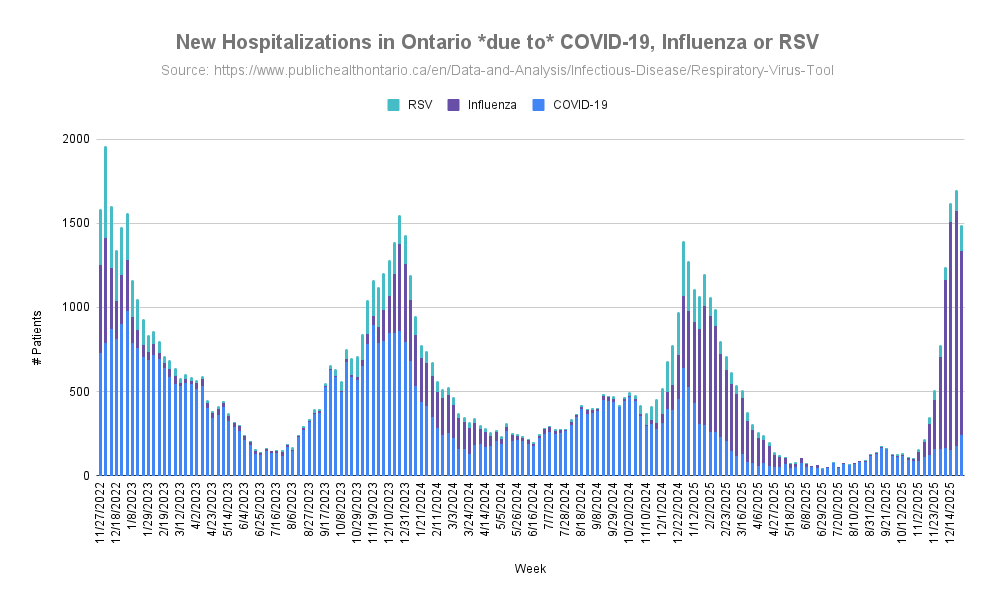
Hospitalizations due to COVID increased from 176 to 241 in the last update. Influenza hospitalizations have start dropping from the peak of 1,400 to 1,095 with RSV increasing from 121 to 156. 🧵1/
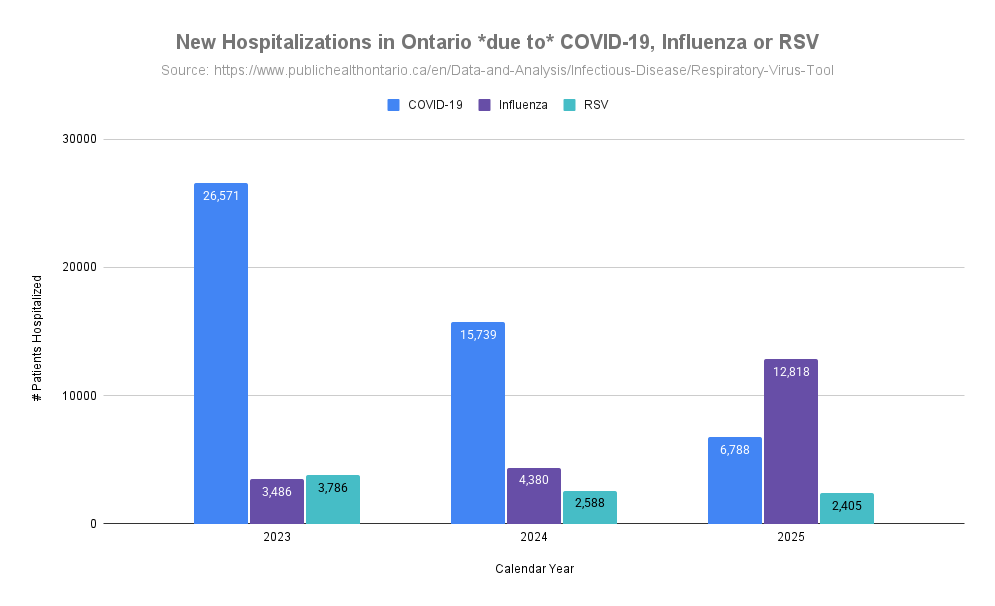
Looking back over the past few years, new hospitalizations for RSV have remained pretty stable the last two years around 2,500 and a decrease from 2023, while COVID has been significantly dropping each year, 26,571 in 2023 to 15,739 in 2024 to 6,788 in 2025. 2/
Influenza has been doing the opposite, increasing significantly each year from 3,486, to 4,380 in 2024, to 12,818 in 2025. 3/
How does various mask fit compare to filter the air and protect you or others?
Most masks, even baggy blue procedure masks use filtering material that can filter 95%+ of particles that pass through it, but the key is "pass through it". 🧵1/
Protection mostly depends on how well that mask fits your specific face and one that does not fit well, much of the air you breathe will go around the filter material and filter 0% of those particles. 2/
There has been a chart going around recently that talks about "Time it takes to transmit an infectious dose of COVID-19" which is misleading if you don't understand all of the details of how that table was made and what each component means. 3/
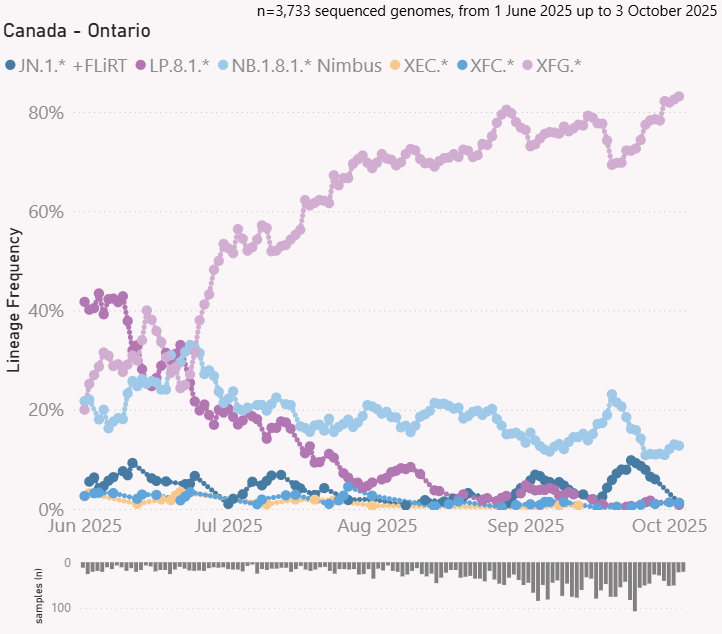
The XFG.* "Stratus" family is accounting for 83% while the next closest variant family NB.1.8.1.* "Nimbus" is 12.8% of sequenced genomes from COVID tests. 🧵1/
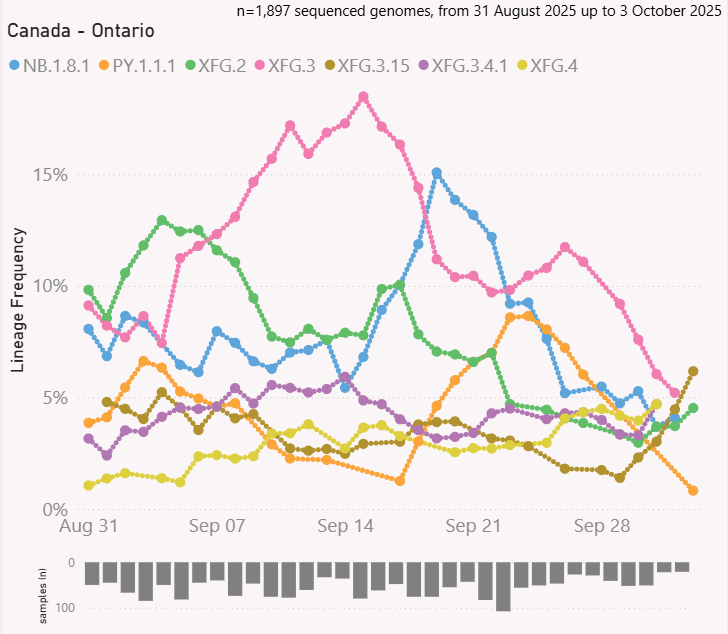
Looking at specific variants, XFG.3 has dropped considerably and its descendent XFG.3.15 now takes first place at 6.2%, followed by XFG.3 at 5.2% and XFG.2 at 4.5%. 2/
It looks like PY.1.1.1 was trying to make a run for the top in mid-September but has decreased significantly. PY.1.1.1 is a descendant of LF.7 while the XFG variant is a recombination of LF.7 and LP.8.1.2 so they would share some mutations in common. 3/