Laurie Macfarlane Profile picture
Apr 29 9 tweets 2 min read Read on X
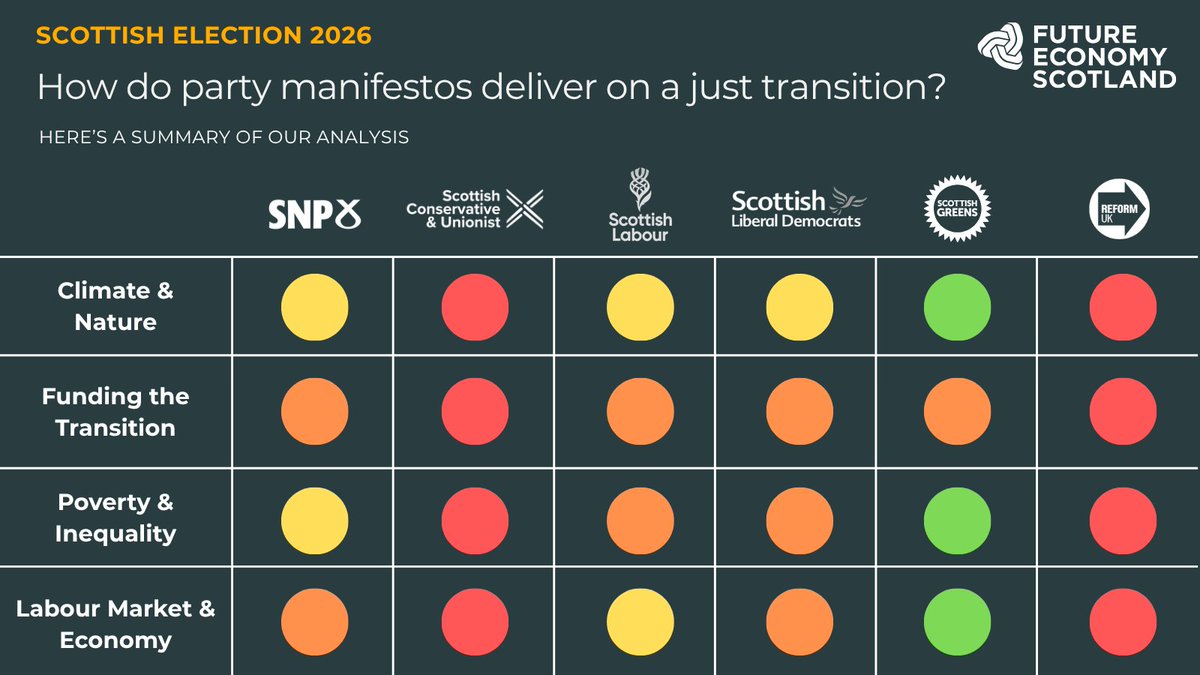
NEW: How do party election manifestos measure up on delivering a just transition?

Today we’re publishing @futureeconscot’s deep dive into each party’s policy platform. 🧵

👉 futureeconomy.scot/publications/2…Image
We assess manifestos across four key themes:

🌍 Climate and nature
🏦 Funding the transition
⚖️ Poverty and inequality
👷‍♀️ Labour market and economy

We focus on two dimensions: ambition and policy alignment.
As we are focusing on subset of policy issues, this should not be interpreted as an assessment of manifestos as a whole.

Some reflections on how manifestos stack up...
For the first time, there is a clear divide between parties committed to meeting climate goals, and those who oppose them.

The cross-party consensus that backed Scotland's net zero target is no longer – but two-thirds of Scotland’s main parties still back it.
No party has a credible fiscal offer. Those that support a just transition aren't facing up to fiscal reality, while Reform + the Conservatives are pushing heavily in the opposite direction.

Across the board, there is a gap between spending priorities and credible funding plans.
Most parties are committed to tackling poverty, but without bolder action, Scotland's 2030 child poverty target is unlikely to be achieved.

Only the Greens back active redistribution; Reform and the Conservatives favour regressive measures likely to worsen inequality.
On the labour market and wider economy, parties diverge between those recognising the need for a more active state and those favouring a market-led approach.

Again, Reform and the Conservatives are outliers in that they do not support the aims of a just transition.
In some respects, the top level results are unsurprising. The Greens, for whom a just transition is a central aim, perform well on many areas.

Reform and the Conservatives, who oppose it, score poorly. The SNP, Labour and Lib Dems each have distinct strengths and weaknesses.
But the analysis in our report provides distinct insights on each party's platform, as we get into quite a bit of detail.

Read the full report here 👇 futureeconomy.scot/publications/2…

• • •

Missing some Tweet in this thread? You can try to force a refresh

 

Keep Current with Laurie Macfarlane

Laurie Macfarlane Profile picture

Stay in touch and get notified when new unrolls are available from this author!

Read all threads

This Thread may be Removed Anytime!

PDF

Twitter may remove this content at anytime! Save it as PDF for later use!

Try unrolling a thread yourself!

how to unroll video
  1. Follow @ThreadReaderApp to mention us!

  2. From a Twitter thread mention us with a keyword "unroll"
@threadreaderapp unroll

Practice here first or read more on our help page!

More from @L__Macfarlane

Mar 19
NEW: We often hear that Scotland’s more progressive income tax is “driving people out the country.”

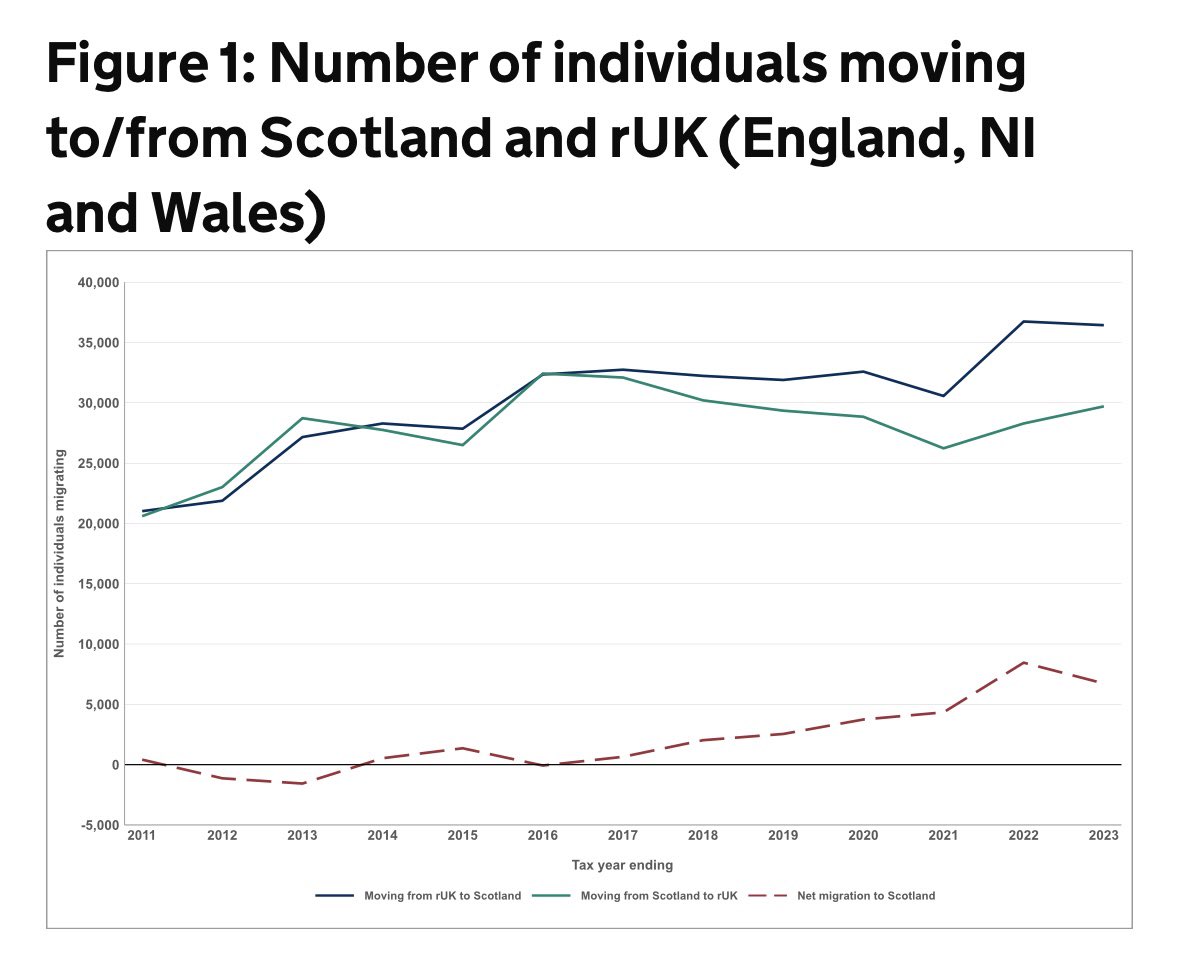
New HMRC data shows the opposite. Far more taxpayers are moving to Scotland than leaving it.

Let’s look at the data 🧵 Image
In the latest year, 6,500 more taxpayers moved to Scotland from rUK than left.

Net migration to Scotland has been positive every year since it first diverged from UK tax in 2018 — totalling ~22,000 taxpayers.
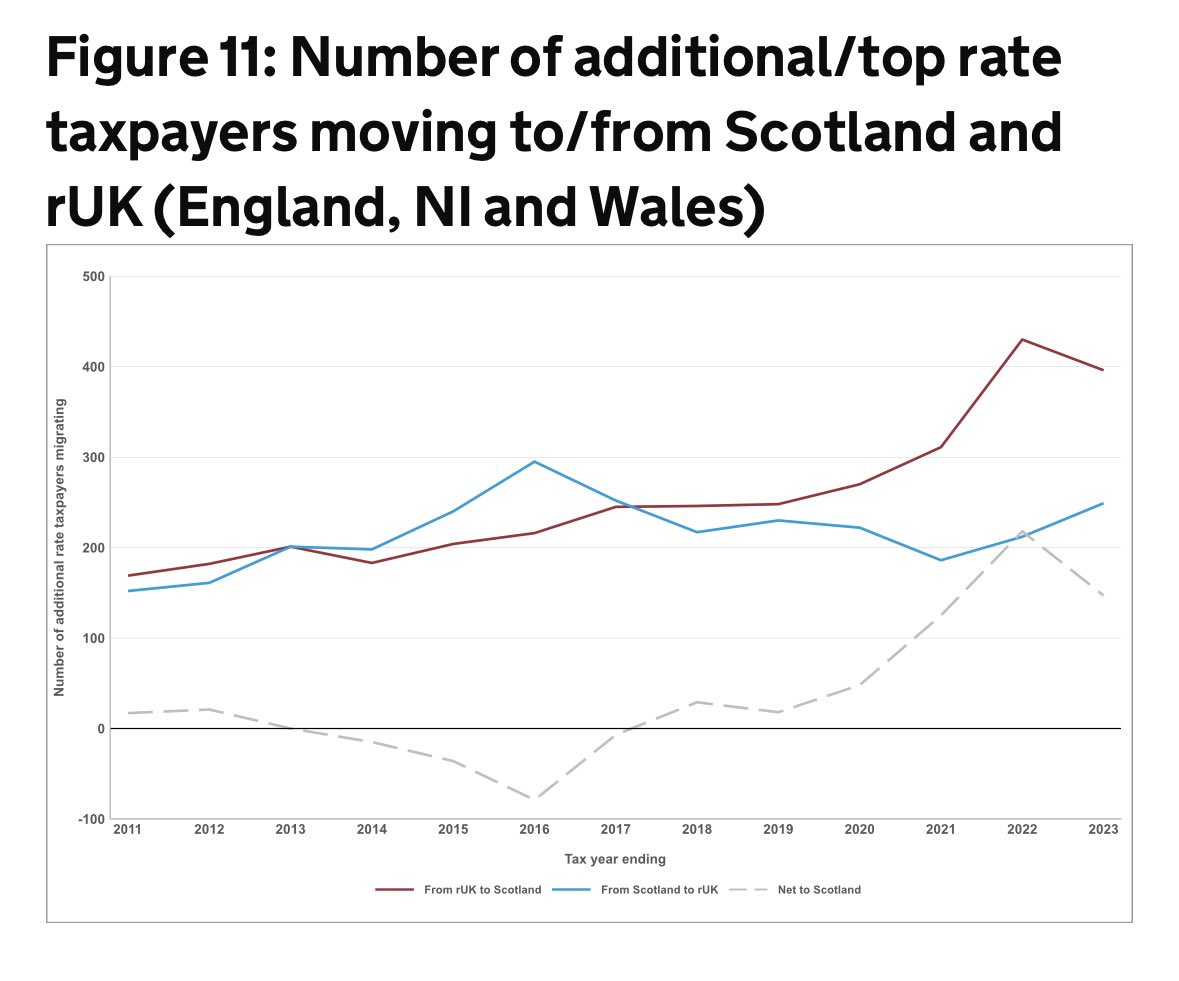
These are total figures, but maybe we’re still seeing an exodus of high earners?

Not true: in every year since divergence, more additional / top rate taxpayers have moved to Scotland than have left. Image
Read 7 tweets
Dec 14, 2025
It’s true that the US’s higher GDP relative to Europe is partly explained by longer working hours rather than productivity.

But there’s another factor that’s often ignored: the US’s poor health and extractive healthcare system 🧵
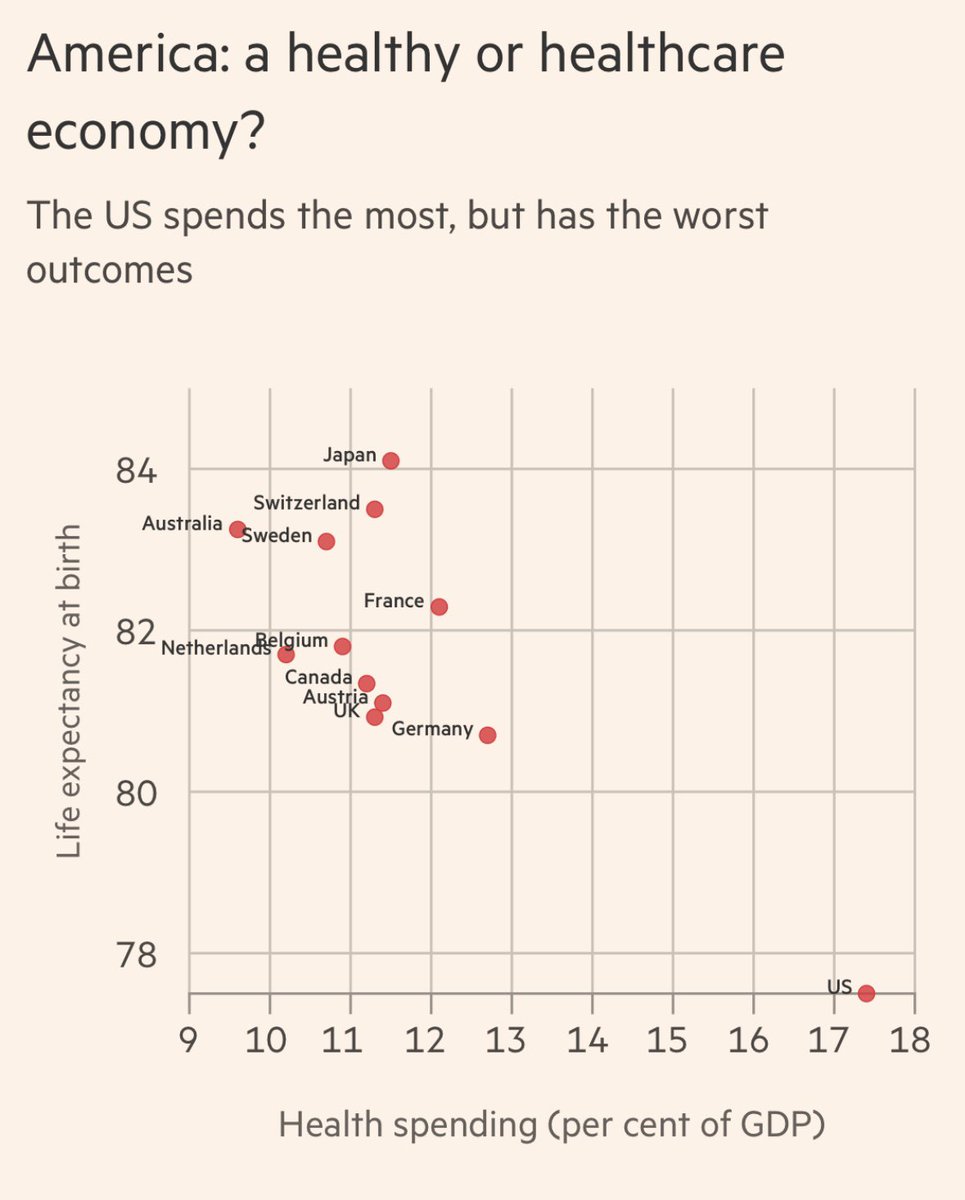
The US spends far more on healthcare than any other rich country.

Most European countries spend 9-12% of GDP, whereas the US spends close to a fifth of GDP. Yet despite spending far more, the US has much worse health outcomes. Image
Americans have lower life expectancy, are more likely to die younger, suffer higher rates of chronic illness, and die more often from preventable causes.

In other words: Americans spend far more money and get far worse outcomes.
Read 11 tweets
Jul 21, 2025
I spent a year at Ofwat back in 2013 working on price controls

I’m not remotely surprised it’s being abolished - what I saw astonished me 🧵 theguardian.com/business/2025/…
I came on secondment from the economic regulator of the Scottish water industry which - like almost every other country - is publicly owned

Regulating a privatised industry was therefore new to me. It quickly seemed apparent that something wasn’t right
Bills had soared by over 40% since privatisation. Companies had repeatedly outperformed settlements. Shareholders had lined their pockets at customers’ expense

Why was this allowed to happen?
Read 19 tweets
Mar 27, 2025
New data shows that child poverty in Scotland fell over the past year, thanks in part to new welfare payments

Meanwhile, the UK Government is actively pushing thousands more into poverty by slashing welfare

What does this stark divergence tell us? 🧵 gov.scot/news/child-pov…
The Scottish Government has been far from prefect. But by creating a more progressive tax system, and creating things like the Scottish Child Payment, it is making a difference

The pledge to abolish the two-child benefit cap in Scotland will create further divergence
To his credit, @JohnSwinney has made eradicating child poverty a key mission of his government. But this is going to be very difficult while the UK is embarking on austerity 2.0

Holyrood is pulling in one direction, while Westminster is pulling in the other
Read 5 tweets
Sep 13, 2024
We often hear that “all economists agree rent controls don’t work”. But is this actually true?

My new long-read for @futureeconscot looks at the evidence – and finds the reality is far more nuanced than is often claimed. Some key points 🧵 futureeconomy.scot/posts/57-can-r…
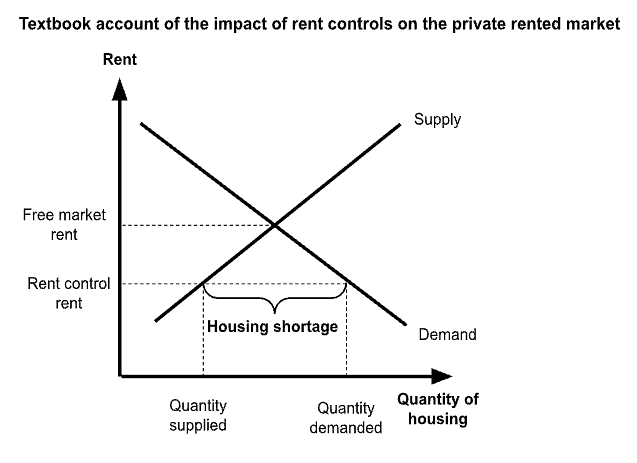
Economists’ distain for rent controls is rooted in basic models of supply and demand

Rent controls will allegedly reduce prices below the equilibrium price, which will reduce supply and choke off investment — leading to fewer, poorer quality homes Image
Similar arguments have been used before. Textbook economics said minimum wages would increase unemployment

As it turned out they didn’t. Why did many economists get this wrong? gov.uk/government/pub…
Read 17 tweets
Aug 28, 2024
It’s undoubtedly the case that Scottish Government decisions have contributed to fiscal pressures

But the idea that UK fiscal choices haven’t played any significant role is absurd - and that’s not what the SFC report says (as some are claiming) bbc.co.uk/news/articles/…
The Barnett formula means that most of Scotland’s budget is determined by UK spending decisions

When the UK makes cuts, this directly impacts Scottish budgets. The austerity of prior UK governments left an almighty mess — and (so far) the new regime hasn’t sought to unwind it
Scotland’s capital budget is forecast to fall by 20% in real terms over the next five years — again a direct result of UK fiscal decisions

This is at a time when public services are crumbling and public investment has to be dramatically scaled up to deliver net zero
Read 9 tweets

Did Thread Reader help you today?

Support us! We are indie developers!


This site is made by just two indie developers on a laptop doing marketing, support and development! Read more about the story.

Become a Premium Member ($3/month or $30/year) and get exclusive features!

Become Premium

Don't want to be a Premium member but still want to support us?

Make a small donation by buying us coffee ($5) or help with server cost ($10)

Donate via Paypal

Or Donate anonymously using crypto!

Ethereum

0xfe58350B80634f60Fa6Dc149a72b4DFbc17D341E copy

Bitcoin

3ATGMxNzCUFzxpMCHL5sWSt4DVtS8UqXpi copy

Thank you for your support!

Follow Us!

:(