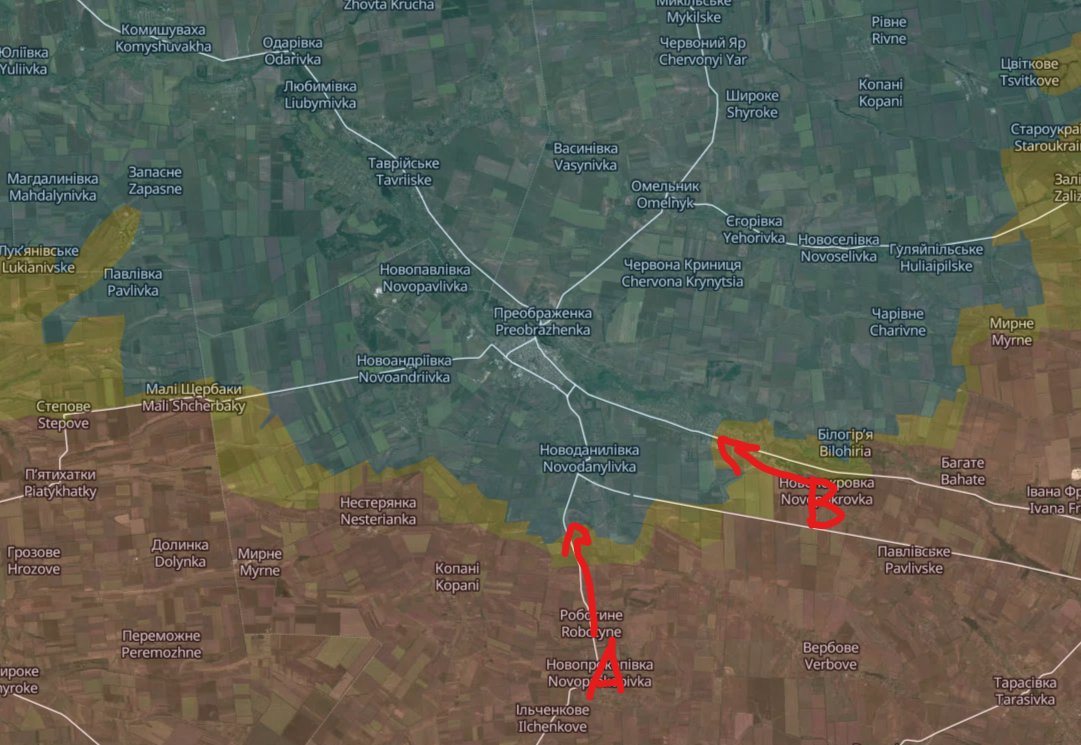
Here is translated text from Al Ta about the situation in Ukraine. He is a Russian propagandist, a soviet anti-Putinist who views reviving the full Soviet Union (including Poland) as the primary number one goal of this war. He's also pretty honest about the situation. Its long. (racial slurs and whatnot are removed btw)
Preservation of one’s own forces and resources (including manpower).
On paper, everything looks neat and classical: we strike the enemy at its foundations and core, while we ourselves conserve strength and wait for the right moment for a decisive blow. But in reality, everything is both simpler and more complicated at the same time.
If you think through the basic principles of a classical war of attrition, then at the initial stage, when the enemy’s potential is being destroyed, when strikes are delivered against its economy, communications, and supply routes for raw materials and weapons, the side that holds the initiative should remain on the defensive, abandoning unimportant territories and максимально protecting its soldiers. This attrition is carried out through the remote destruction of the enemy’s potential.
On paper, everything looks neat and classical: we strike the enemy at its foundations and core, while we ourselves conserve strength and wait for the right moment for a decisive blow. But in reality, everything is both simpler and more complicated at the same time.
If you think through the basic principles of a classical war of attrition, then at the initial stage, when the enemy’s potential is being destroyed, when strikes are delivered against its economy, communications, and supply routes for raw materials and weapons, the side that holds the initiative should remain on the defensive, abandoning unimportant territories and максимально protecting its soldiers. This attrition is carried out through the remote destruction of the enemy’s potential.
Strictly speaking, the correct strategy in such a war should include:
1. Readiness for total and continuous mobilization.
We remember that this kind of war is one of mobilizing all the strength of the people. Total mobilization is necessary to achieve a manpower advantage, which should allow final military actions to be carried out quickly once the enemy’s ability to resist is completely broken. In addition, prolonged combat, even in a well-organized defense, still leads to losses, which are unavoidable. Therefore, there is a constant need to replenish the front with personnel.
2. Readiness for total destruction and the deaths of the enemy’s civilian population (and your own, if the enemy is not weaker than you).
It is extremely difficult, more likely impossible, to “delicately” destroy a country’s economic foundation. Therefore, a country that begins such a war must be prepared to act decisively and harshly. This is the price of survival.
3. Defense as the foundation of the first phase of such a war.
Preserving soldiers’ lives is the key to a future victorious offensive. It is physically impossible to conserve personnel while conducting offensive operations. Many are familiar with the standard ratios required for an attacking force to outnumber a defending one. Even taking into account more advanced and destructive weapons, the need for such a ratio remains, it will never be 1:1. In essence, the main function of troops (infantry supported by tanks, artillery, and aviation) in such a war is to occupy territories where the enemy can no longer resist. Frontal or stubborn assaults are not characteristic of a war of attrition.
4. Seizing territory in the initial and main stages of such a war is not the primary objective.
Territory should be taken either after the course of the war has been turned and the enemy’s ability to resist has been broken, or through the imposition of postwar conditions.
5. Emphasis on firepower.
The enemy should be subjected to an overwhelming barrage of destructive force using every possible means. Everything available should be directed at the target. Naturally, this places emphasis on highly destructive weapons: artillery and aviation. The nature of the current war has also added UAVs (unmanned systems). We already see strike systems in the air and at sea, and soon ground systems will be added.
The goal is to inflict unacceptable losses on the enemy before you yourself suffer unacceptable losses. If you like, it resembles a boxing match: both sides exchange blows, but in the end the stronger one wins. At the same time, for every artillery shot fired at you, ten should be fired in return; for every drone launched, ten drones should respond. Only this way.
Yet, for example, by the results of March 2026, “so-called Ukraine” surpassed us in the number of drones launched at our territory.
Each of you can compare these principles with what is actually happening at the front. After all, “we haven’t even started yet,” if some leaders are to be believed.
1. Readiness for total and continuous mobilization.
We remember that this kind of war is one of mobilizing all the strength of the people. Total mobilization is necessary to achieve a manpower advantage, which should allow final military actions to be carried out quickly once the enemy’s ability to resist is completely broken. In addition, prolonged combat, even in a well-organized defense, still leads to losses, which are unavoidable. Therefore, there is a constant need to replenish the front with personnel.
2. Readiness for total destruction and the deaths of the enemy’s civilian population (and your own, if the enemy is not weaker than you).
It is extremely difficult, more likely impossible, to “delicately” destroy a country’s economic foundation. Therefore, a country that begins such a war must be prepared to act decisively and harshly. This is the price of survival.
3. Defense as the foundation of the first phase of such a war.
Preserving soldiers’ lives is the key to a future victorious offensive. It is physically impossible to conserve personnel while conducting offensive operations. Many are familiar with the standard ratios required for an attacking force to outnumber a defending one. Even taking into account more advanced and destructive weapons, the need for such a ratio remains, it will never be 1:1. In essence, the main function of troops (infantry supported by tanks, artillery, and aviation) in such a war is to occupy territories where the enemy can no longer resist. Frontal or stubborn assaults are not characteristic of a war of attrition.
4. Seizing territory in the initial and main stages of such a war is not the primary objective.
Territory should be taken either after the course of the war has been turned and the enemy’s ability to resist has been broken, or through the imposition of postwar conditions.
5. Emphasis on firepower.
The enemy should be subjected to an overwhelming barrage of destructive force using every possible means. Everything available should be directed at the target. Naturally, this places emphasis on highly destructive weapons: artillery and aviation. The nature of the current war has also added UAVs (unmanned systems). We already see strike systems in the air and at sea, and soon ground systems will be added.
The goal is to inflict unacceptable losses on the enemy before you yourself suffer unacceptable losses. If you like, it resembles a boxing match: both sides exchange blows, but in the end the stronger one wins. At the same time, for every artillery shot fired at you, ten should be fired in return; for every drone launched, ten drones should respond. Only this way.
Yet, for example, by the results of March 2026, “so-called Ukraine” surpassed us in the number of drones launched at our territory.
Each of you can compare these principles with what is actually happening at the front. After all, “we haven’t even started yet,” if some leaders are to be believed.
Strictly speaking, the correct strategy in such a war should include:
1. Readiness for total and continuous mobilization.
We remember that this kind of war is one of mobilizing all the strength of the people. Total mobilization is necessary to achieve a manpower advantage, which should allow final military actions to be carried out quickly once the enemy’s ability to resist is completely broken. In addition, prolonged combat, even in a well-organized defense, still leads to losses, which are unavoidable. Therefore, there is a constant need to replenish the front with personnel.
2. Readiness for total destruction and the deaths of the enemy’s civilian population (and your own, if the enemy is not weaker than you).
It is extremely difficult, more likely impossible, to “delicately” destroy a country’s economic foundation. Therefore, a country that begins such a war must be prepared to act decisively and harshly. This is the price of survival.
3. Defense as the foundation of the first phase of such a war.
Preserving soldiers’ lives is the key to a future victorious offensive. It is physically impossible to conserve personnel while conducting offensive operations. Many are familiar with the standard ratios required for an attacking force to outnumber a defending one. Even taking into account more advanced and destructive weapons, the need for such a ratio remains, it will never be 1:1. In essence, the main function of troops (infantry supported by tanks, artillery, and aviation) in such a war is to occupy territories where the enemy can no longer resist. Frontal or stubborn assaults are not characteristic of a war of attrition.
4. Seizing territory in the initial and main stages of such a war is not the primary objective.
Territory should be taken either after the course of the war has been turned and the enemy’s ability to resist has been broken, or through the imposition of postwar conditions.
5. Emphasis on firepower.
The enemy should be subjected to an overwhelming barrage of destructive force using every possible means. Everything available should be directed at the target. Naturally, this places emphasis on highly destructive weapons: artillery and aviation. The nature of the current war has also added UAVs (unmanned systems). We already see strike systems in the air and at sea, and soon ground systems will be added.
The goal is to inflict unacceptable losses on the enemy before you yourself suffer unacceptable losses. If you like, it resembles a boxing match: both sides exchange blows, but in the end the stronger one wins. At the same time, for every artillery shot fired at you, ten should be fired in return; for every drone launched, ten drones should respond. Only this way.
Yet, for example, by the results of March 2026, “so-called Ukraine” surpassed us in the number of drones launched at our territory.
Each of you can compare these principles with what is actually happening at the front. After all, “we haven’t even started yet,” if some leaders are to be believed.
1. Readiness for total and continuous mobilization.
We remember that this kind of war is one of mobilizing all the strength of the people. Total mobilization is necessary to achieve a manpower advantage, which should allow final military actions to be carried out quickly once the enemy’s ability to resist is completely broken. In addition, prolonged combat, even in a well-organized defense, still leads to losses, which are unavoidable. Therefore, there is a constant need to replenish the front with personnel.
2. Readiness for total destruction and the deaths of the enemy’s civilian population (and your own, if the enemy is not weaker than you).
It is extremely difficult, more likely impossible, to “delicately” destroy a country’s economic foundation. Therefore, a country that begins such a war must be prepared to act decisively and harshly. This is the price of survival.
3. Defense as the foundation of the first phase of such a war.
Preserving soldiers’ lives is the key to a future victorious offensive. It is physically impossible to conserve personnel while conducting offensive operations. Many are familiar with the standard ratios required for an attacking force to outnumber a defending one. Even taking into account more advanced and destructive weapons, the need for such a ratio remains, it will never be 1:1. In essence, the main function of troops (infantry supported by tanks, artillery, and aviation) in such a war is to occupy territories where the enemy can no longer resist. Frontal or stubborn assaults are not characteristic of a war of attrition.
4. Seizing territory in the initial and main stages of such a war is not the primary objective.
Territory should be taken either after the course of the war has been turned and the enemy’s ability to resist has been broken, or through the imposition of postwar conditions.
5. Emphasis on firepower.
The enemy should be subjected to an overwhelming barrage of destructive force using every possible means. Everything available should be directed at the target. Naturally, this places emphasis on highly destructive weapons: artillery and aviation. The nature of the current war has also added UAVs (unmanned systems). We already see strike systems in the air and at sea, and soon ground systems will be added.
The goal is to inflict unacceptable losses on the enemy before you yourself suffer unacceptable losses. If you like, it resembles a boxing match: both sides exchange blows, but in the end the stronger one wins. At the same time, for every artillery shot fired at you, ten should be fired in return; for every drone launched, ten drones should respond. Only this way.
Yet, for example, by the results of March 2026, “so-called Ukraine” surpassed us in the number of drones launched at our territory.
Each of you can compare these principles with what is actually happening at the front. After all, “we haven’t even started yet,” if some leaders are to be believed.
Depriving the enemy of its material and resource base for waging such a war
This partially overlaps with the previous point. A high density of strikes, focus on disabling the enemy’s economic base, destruction of communications, supply routes, warehouses, and storage facilities, these are key elements of a war of attrition.
We cannot say we are succeeding at this right now. There was no serious industrial base in “so-called Ukraine” to begin with. And whatever domestic weapons production existed has been painlessly replaced by supplies from abroad—from uniforms to air defense systems.
Intelligence infrastructure should also be mentioned separately. How exactly does our General Staff intend to undermine this economic foundation?
For the first 2–3 years of the war, we were essentially doing nothing effective, while telling everyone it was a war of attrition. Now, when Ukrainian capabilities have been transferred to factories in Europe and Asia (Turkey), when their production capacity has multiplied, when weapons being developed against us are being improved and modernized in a calm environment, what kind of “attrition war” are we imposing?
Again, Iran is cited as an example: it clearly followed all the above principles, mobilization in preparation for a possible land offensive, and strikes against painful economic targets without regard for scale of destruction or type of targets. Once again, the Persians outperformed us.
This partially overlaps with the previous point. A high density of strikes, focus on disabling the enemy’s economic base, destruction of communications, supply routes, warehouses, and storage facilities, these are key elements of a war of attrition.
We cannot say we are succeeding at this right now. There was no serious industrial base in “so-called Ukraine” to begin with. And whatever domestic weapons production existed has been painlessly replaced by supplies from abroad—from uniforms to air defense systems.
Intelligence infrastructure should also be mentioned separately. How exactly does our General Staff intend to undermine this economic foundation?
For the first 2–3 years of the war, we were essentially doing nothing effective, while telling everyone it was a war of attrition. Now, when Ukrainian capabilities have been transferred to factories in Europe and Asia (Turkey), when their production capacity has multiplied, when weapons being developed against us are being improved and modernized in a calm environment, what kind of “attrition war” are we imposing?
Again, Iran is cited as an example: it clearly followed all the above principles, mobilization in preparation for a possible land offensive, and strikes against painful economic targets without regard for scale of destruction or type of targets. Once again, the Persians outperformed us.
Breaking the enemy’s will to resist, including through creating social tension within the opposing country.
This is about people. Yes, about those people who can become the trigger for the destruction of a country from within. But this does not happen instantly. It becomes the result of serious hardship and public dissatisfaction caused by problems with electricity and gas supply, by extreme price increases, by harsh state policies that constantly send people to the front, by the inability to use goods and services that have become привычные and even necessary, by the inability to feel that your life is guaranteed, and so on.
We have already written that after four years of war, we cannot point to anything like this. Of course, such national unity as in Iran did not occur, largely due to the actions of the Ukrainian authorities rather than our own efforts, but to believe that Ukraine is on the verge of a social explosion is extremely naive.
We have already said that we monitored the situation, for example, in Kyiv during the coldest periods. Yes, there were frozen homes, yes, there were problems with electricity and heating, and so on. But everything passed. At that time, everything in the city functioned well: shopping and entertainment centers, supermarkets, gas stations, restaurants, and so on. This does not really resemble readiness for social unrest. By the way, a comparison of prices for basic goods in supermarkets is also not in our favor. We checked.
We have no doubt that our leadership would very much like such a “supporting factor,” but it is also the result of deliberate action, not just the passage of time.
In Romania, a eurosceptic who won elections in a fair contest was simply sidelined. Moldova is moving further away from us. Azerbaijan openly threatens us and, while being called a strategic partner of Russia, is opening weapons production on its territory for Ukraine. Armenia is waving goodbye because we cannot influence it economically. In Hungary another eurosceptic failed badly. In France, the party of Marine Le Pen has been pushed into a corner along with her personally.
Or does someone expect that in Germany, Alternative for Germany will come to power and everything will suddenly work out for us? That is naive. As the saying goes, no money, no honey.
For a war of attrition to be waged in this direction as well, someone actually has to carry it out.
This is about people. Yes, about those people who can become the trigger for the destruction of a country from within. But this does not happen instantly. It becomes the result of serious hardship and public dissatisfaction caused by problems with electricity and gas supply, by extreme price increases, by harsh state policies that constantly send people to the front, by the inability to use goods and services that have become привычные and even necessary, by the inability to feel that your life is guaranteed, and so on.
We have already written that after four years of war, we cannot point to anything like this. Of course, such national unity as in Iran did not occur, largely due to the actions of the Ukrainian authorities rather than our own efforts, but to believe that Ukraine is on the verge of a social explosion is extremely naive.
We have already said that we monitored the situation, for example, in Kyiv during the coldest periods. Yes, there were frozen homes, yes, there were problems with electricity and heating, and so on. But everything passed. At that time, everything in the city functioned well: shopping and entertainment centers, supermarkets, gas stations, restaurants, and so on. This does not really resemble readiness for social unrest. By the way, a comparison of prices for basic goods in supermarkets is also not in our favor. We checked.
We have no doubt that our leadership would very much like such a “supporting factor,” but it is also the result of deliberate action, not just the passage of time.
In Romania, a eurosceptic who won elections in a fair contest was simply sidelined. Moldova is moving further away from us. Azerbaijan openly threatens us and, while being called a strategic partner of Russia, is opening weapons production on its territory for Ukraine. Armenia is waving goodbye because we cannot influence it economically. In Hungary another eurosceptic failed badly. In France, the party of Marine Le Pen has been pushed into a corner along with her personally.
Or does someone expect that in Germany, Alternative for Germany will come to power and everything will suddenly work out for us? That is naive. As the saying goes, no money, no honey.
For a war of attrition to be waged in this direction as well, someone actually has to carry it out.
And in fact, we ourselves are the ones being fought according to the principles of a war of attrition. Unlike us.
Liberal leaders of the financial bloc have been strangling the country’s economy for 35 years, and for the last 25 it has been the same individuals. Is it really not obvious that adjustments are needed, if not a complete change of course? Usually, a problem is not addressed if it is believed not to exist. It seems our leadership lives in that belief.
Infrastructure deep inside our country is being destroyed as if at a shooting range. The choice of targets is not limited in any way. Want to strike an oil refinery? They strike oil refineries. Want to hit an arsenal with weapons? They hit the arsenal. Want to hit ships of the Black Sea Fleet? They strike there. Want to hit the residence of the President of Russia? Easy.
In Tuapse, there is an environmental disaster, with fallout in the form of fuel oil. Both the frequency and the severity of the consequences of such attacks will only increase. How long can we withstand such pressure?
Residents of Moscow should not think this will not affect them. It will. If they wait, it definitely will. The war will remind everyone of itself.
But that is not even the main issue. The entire country is now in an extremely unstable position, and something urgently needs to be done about it.
Last week, NATO approved 60 billion dollars in aid, and the European Union approved 90 billion euros. This is comparable to the level of support that was provided to Ukraine during the time of Joe Biden. And at the same time, countries in Western Europe are beginning to announce plans to forcibly deport men, citizens of Ukraine, back home. Ireland, Poland, Germany, and others. These are tens and hundreds of thousands of people. The list of such countries will only grow, as will the number of men who will be given rifles bought with these billions.
In addition, the draft age can be lowered, exemptions partially removed, and foreign fighters can continue to be recruited. The money has appeared, which means the mobilization potential is far from exhausted.
Waging a war of attrition against an economy that is an order of magnitude larger than yours is not a smart idea. That is why we say this year will be decisive. If we allow ourselves to be drawn into a true war of attrition against a global Europe aligned against us, it will not end well for us.
Yes, there is one person, with a rather unusual role in our government, who recently stated, apparently seriously, that with conventional weapons we could defeat any NATO force. It makes one recall the novella Seryozha by Vera Panova. In one episode, a small boy directly asks a not very intelligent adult:
“Uncle Petya, are you a fool?”
Liberal leaders of the financial bloc have been strangling the country’s economy for 35 years, and for the last 25 it has been the same individuals. Is it really not obvious that adjustments are needed, if not a complete change of course? Usually, a problem is not addressed if it is believed not to exist. It seems our leadership lives in that belief.
Infrastructure deep inside our country is being destroyed as if at a shooting range. The choice of targets is not limited in any way. Want to strike an oil refinery? They strike oil refineries. Want to hit an arsenal with weapons? They hit the arsenal. Want to hit ships of the Black Sea Fleet? They strike there. Want to hit the residence of the President of Russia? Easy.
In Tuapse, there is an environmental disaster, with fallout in the form of fuel oil. Both the frequency and the severity of the consequences of such attacks will only increase. How long can we withstand such pressure?
Residents of Moscow should not think this will not affect them. It will. If they wait, it definitely will. The war will remind everyone of itself.
But that is not even the main issue. The entire country is now in an extremely unstable position, and something urgently needs to be done about it.
Last week, NATO approved 60 billion dollars in aid, and the European Union approved 90 billion euros. This is comparable to the level of support that was provided to Ukraine during the time of Joe Biden. And at the same time, countries in Western Europe are beginning to announce plans to forcibly deport men, citizens of Ukraine, back home. Ireland, Poland, Germany, and others. These are tens and hundreds of thousands of people. The list of such countries will only grow, as will the number of men who will be given rifles bought with these billions.
In addition, the draft age can be lowered, exemptions partially removed, and foreign fighters can continue to be recruited. The money has appeared, which means the mobilization potential is far from exhausted.
Waging a war of attrition against an economy that is an order of magnitude larger than yours is not a smart idea. That is why we say this year will be decisive. If we allow ourselves to be drawn into a true war of attrition against a global Europe aligned against us, it will not end well for us.
Yes, there is one person, with a rather unusual role in our government, who recently stated, apparently seriously, that with conventional weapons we could defeat any NATO force. It makes one recall the novella Seryozha by Vera Panova. In one episode, a small boy directly asks a not very intelligent adult:
“Uncle Petya, are you a fool?”
Conclusion of our reflections.
What is currently happening at the front and in the country is neither a “special military operation” nor a war of attrition, because aside from the depletion of households as a result of the contraction of the economy, nothing else is really happening. The country will not be able to fight like this for long.
At the same time, another observation repeats itself: on both sides, the situation is roughly the same. Our own authorities are actively doing everything to increase dissatisfaction among their own citizens.
Things have reached the point where we cannot even take advantage of a temporary window of opportunity such as high oil prices, because a significant part of our export energy infrastructure has been destroyed. And no one is saying that this moment will be followed by a total rise in the cost of everything. Yes, everything, except wages. Apparently, someone sincerely believes this will pass us by.
What should be done?
Urgently correct the imbalances, otherwise later there will be nothing, no one, and nowhere left to correct.
If we are waging a war of attrition, and it has already proven impossible to achieve the desired result by purely military means, then we must at least adhere to the basic principles of such a war.
Immediate implementation of asymmetric measures against the opponent.
High-ranking officials officially declare a war with NATO, yet no such war is actually being fought. On the contrary, we actively allow NATO to sustain itself through trade with us.
Preemptive strikes against military and industrial enterprises in Europe that are involved in supporting Ukraine are only one option. But it is a necessary one. Without this, the situation will not move forward.
We will continue to be struck, while we sharpen red pencils and draw lines with them. Meanwhile, the country will keep moving in a direction that is unclear, and certainly not where we would want.
At the front, the tactic of “preserving personnel” continues in all its supposed brilliance. Only it does not feel encouraging.
Europe is openly preparing for war with us. Right now, it is not ready, neither materially nor psychologically. But time is moving very quickly.
China will remain silent, just as it did after the events in Venezuela and after the attack on Iran.
Either we change the situation and our approach this year, or next year it will no longer be possible to do so.
What is currently happening at the front and in the country is neither a “special military operation” nor a war of attrition, because aside from the depletion of households as a result of the contraction of the economy, nothing else is really happening. The country will not be able to fight like this for long.
At the same time, another observation repeats itself: on both sides, the situation is roughly the same. Our own authorities are actively doing everything to increase dissatisfaction among their own citizens.
Things have reached the point where we cannot even take advantage of a temporary window of opportunity such as high oil prices, because a significant part of our export energy infrastructure has been destroyed. And no one is saying that this moment will be followed by a total rise in the cost of everything. Yes, everything, except wages. Apparently, someone sincerely believes this will pass us by.
What should be done?
Urgently correct the imbalances, otherwise later there will be nothing, no one, and nowhere left to correct.
If we are waging a war of attrition, and it has already proven impossible to achieve the desired result by purely military means, then we must at least adhere to the basic principles of such a war.
Immediate implementation of asymmetric measures against the opponent.
High-ranking officials officially declare a war with NATO, yet no such war is actually being fought. On the contrary, we actively allow NATO to sustain itself through trade with us.
Preemptive strikes against military and industrial enterprises in Europe that are involved in supporting Ukraine are only one option. But it is a necessary one. Without this, the situation will not move forward.
We will continue to be struck, while we sharpen red pencils and draw lines with them. Meanwhile, the country will keep moving in a direction that is unclear, and certainly not where we would want.
At the front, the tactic of “preserving personnel” continues in all its supposed brilliance. Only it does not feel encouraging.
Europe is openly preparing for war with us. Right now, it is not ready, neither materially nor psychologically. But time is moving very quickly.
China will remain silent, just as it did after the events in Venezuela and after the attack on Iran.
Either we change the situation and our approach this year, or next year it will no longer be possible to do so.
sorry I repeated one part when I added a better translation and then forgot to remove the first one
• • •
Missing some Tweet in this thread? You can try to
force a refresh