Everyone says the US dollar dominates because of the “petrodollar.”
This is wrong.
The petro-dollar didn’t create dollar dominance.
Dollar dominance created the petro-dollar.
A 🧵that debunks this petro-dollar myth
This is wrong.
The petro-dollar didn’t create dollar dominance.
Dollar dominance created the petro-dollar.
A 🧵that debunks this petro-dollar myth
The US$ is not powerful because of oil priced in its currency
The US$ is powerful because banks all over the world create their own $, on their own balance sheets, with the tacit acceptance of Fed and US Treasury but beyond their regulatory reach.
Enter the EURO-dollar market
The US$ is powerful because banks all over the world create their own $, on their own balance sheets, with the tacit acceptance of Fed and US Treasury but beyond their regulatory reach.
Enter the EURO-dollar market

Petro$ story gets cause/effect backwards.
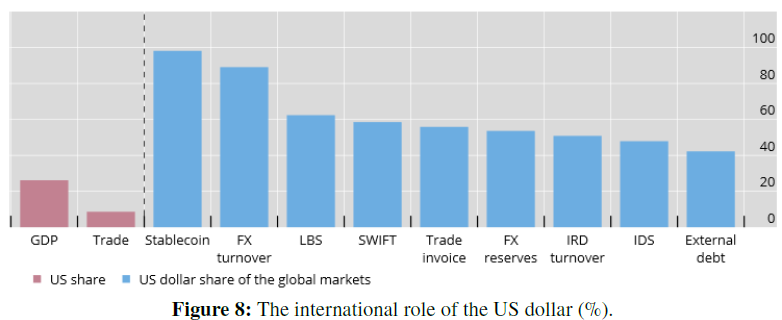
Oil producers priced barrels in $ in 1970s because an infrastructure of global $ banking was already in place.
Banks worldwide manufacture $ via lending. These are real, usable $ for trade and finance, even if they never touch US soil.
Oil producers priced barrels in $ in 1970s because an infrastructure of global $ banking was already in place.
Banks worldwide manufacture $ via lending. These are real, usable $ for trade and finance, even if they never touch US soil.
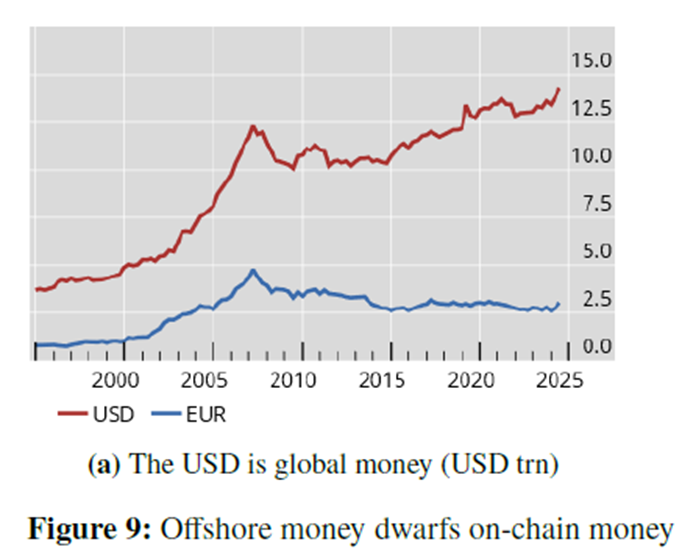
Any bank, anywhere, can expand its balance sheet and create a $ liability.
That liability becomes someone's $ asset.
That’s offshore money creation.
Scale matters:
- $14tn in offshore $ liabilities (euro$)
- vs $19tn in US banking system
= 40% of all $ are created outside the US
That liability becomes someone's $ asset.
That’s offshore money creation.
Scale matters:
- $14tn in offshore $ liabilities (euro$)
- vs $19tn in US banking system
= 40% of all $ are created outside the US
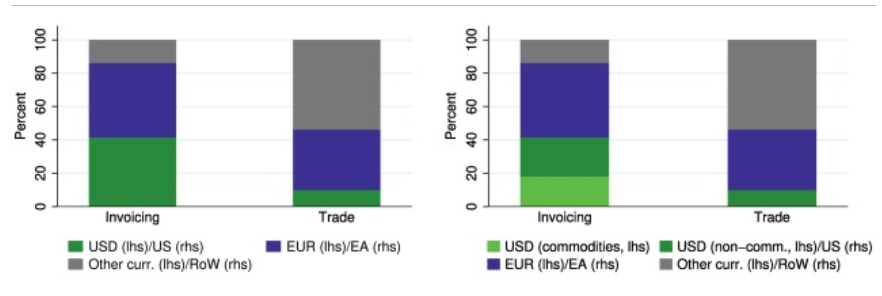
Oil wasn’t priced in $ to create demand for $.
Oil was priced in $ because a deep, liquid $ banking system already existed globally.
Infrastructure first, pricing second.
a) Banks create $ liquidity
b) Trade gets financed in $
c) Merchants invoice in $
Oil was priced in $ because a deep, liquid $ banking system already existed globally.
Infrastructure first, pricing second.
a) Banks create $ liquidity
b) Trade gets financed in $
c) Merchants invoice in $
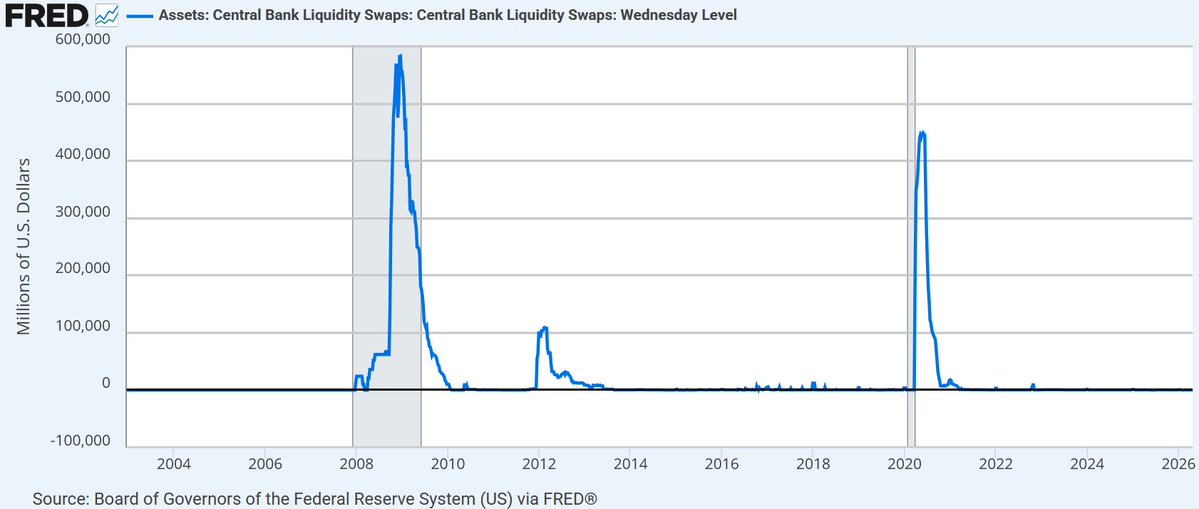
And when this system cracks?
The FED steps in via Swap lines with other central banks. These are $ liquidity backstops to the eurodollar market.
Swap lines are USD loans. Loans need to be paid back. And as such create $ demand. Swap lines dollarize the world.
@SantiagoAuFund
The FED steps in via Swap lines with other central banks. These are $ liquidity backstops to the eurodollar market.
Swap lines are USD loans. Loans need to be paid back. And as such create $ demand. Swap lines dollarize the world.
@SantiagoAuFund
In a credit-based system, the currency that private banks create the most of globally wins.
And that is the US dollar.
The dollar’s power isn’t about oil. It’s about a self-reinforcing global credit system where:
Banks create $ -> Trade uses $ -> Fed backstops $
Sorry $ doomers
And that is the US dollar.
The dollar’s power isn’t about oil. It’s about a self-reinforcing global credit system where:
Banks create $ -> Trade uses $ -> Fed backstops $
Sorry $ doomers
• • •
Missing some Tweet in this thread? You can try to
force a refresh