It seems that no matter what the US says, it has worked itself into a perpetual stalemate in the war with Iran pending escalation which will provoke an even larger escalation response and an even worse eventual stalemate.
open.substack.com/pub/visiblefis…
open.substack.com/pub/visiblefis…
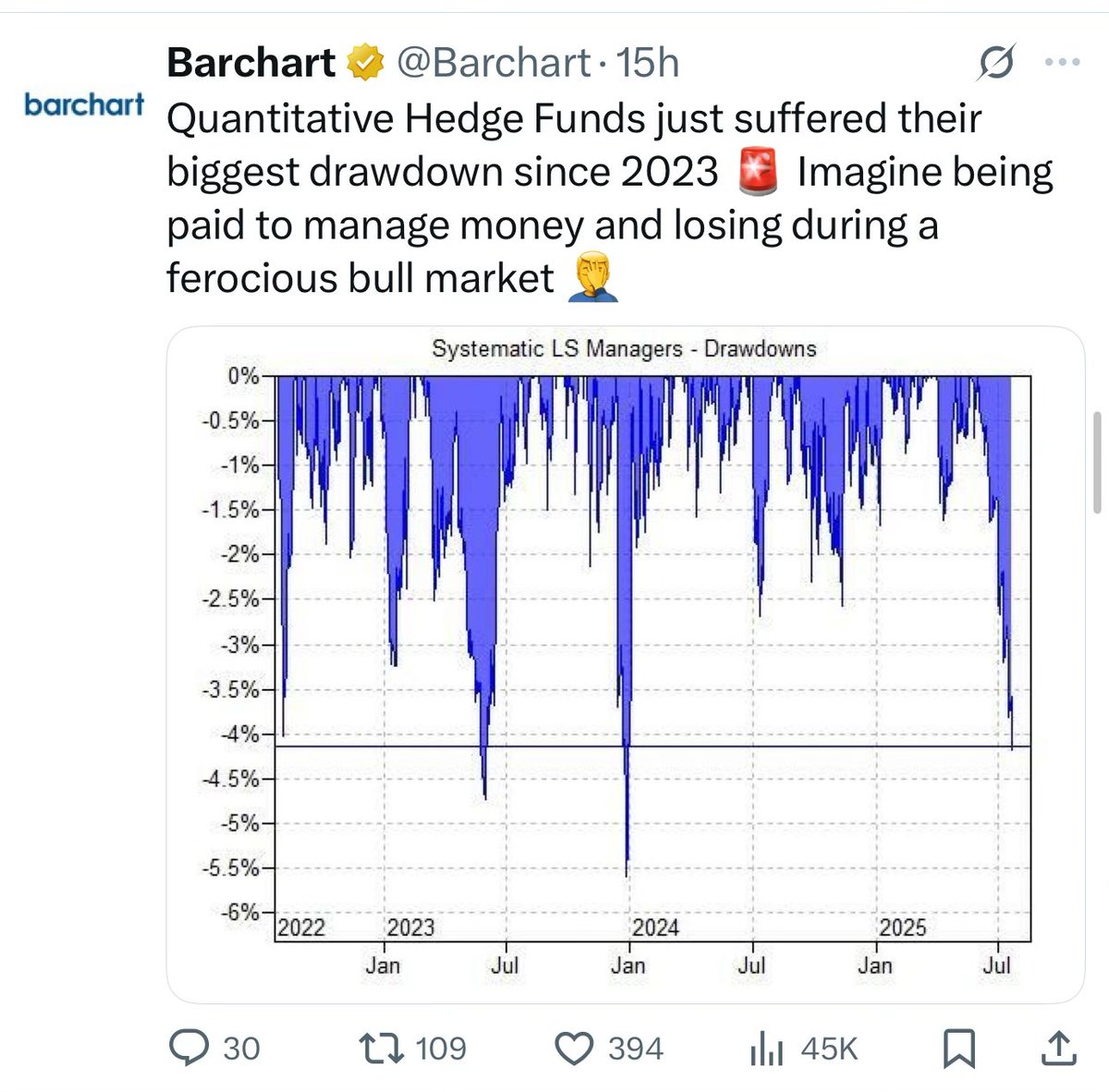
The risk of the stalemate has been discounted completely in markets, that’s what makes No Man’s Land such a dangerous place. It simultaneously means that Iran controls the strait while the US denies the reality that it has lost control over freedom of navigation for trade.
The physical cascade of products not reaching their destination in supply chains that we have documented in “The Minecraft Syndrome” begins to overwhelm the manipulation we described in the “Structural Short” and eventually this means the end of the dollar as reserve currency.
“The Six Pillars” explains the mechanism and “No Man’s Land” means the pillars erode continuously until they fail. The only question, is how long before all 6 finally give way.
What is most abstract to people is what losing that exorbitant privilege actually means to them because it’s not immediately visible, nor is it in the realm of outcomes perceived as possible, let alone pending.
We tried our best to explain it in terms of the “floor” in prices that everyone expects that has been there in every crisis to reward the faithful who “buy the dip” and what happens if the sovereign guarantee fails that creates it.
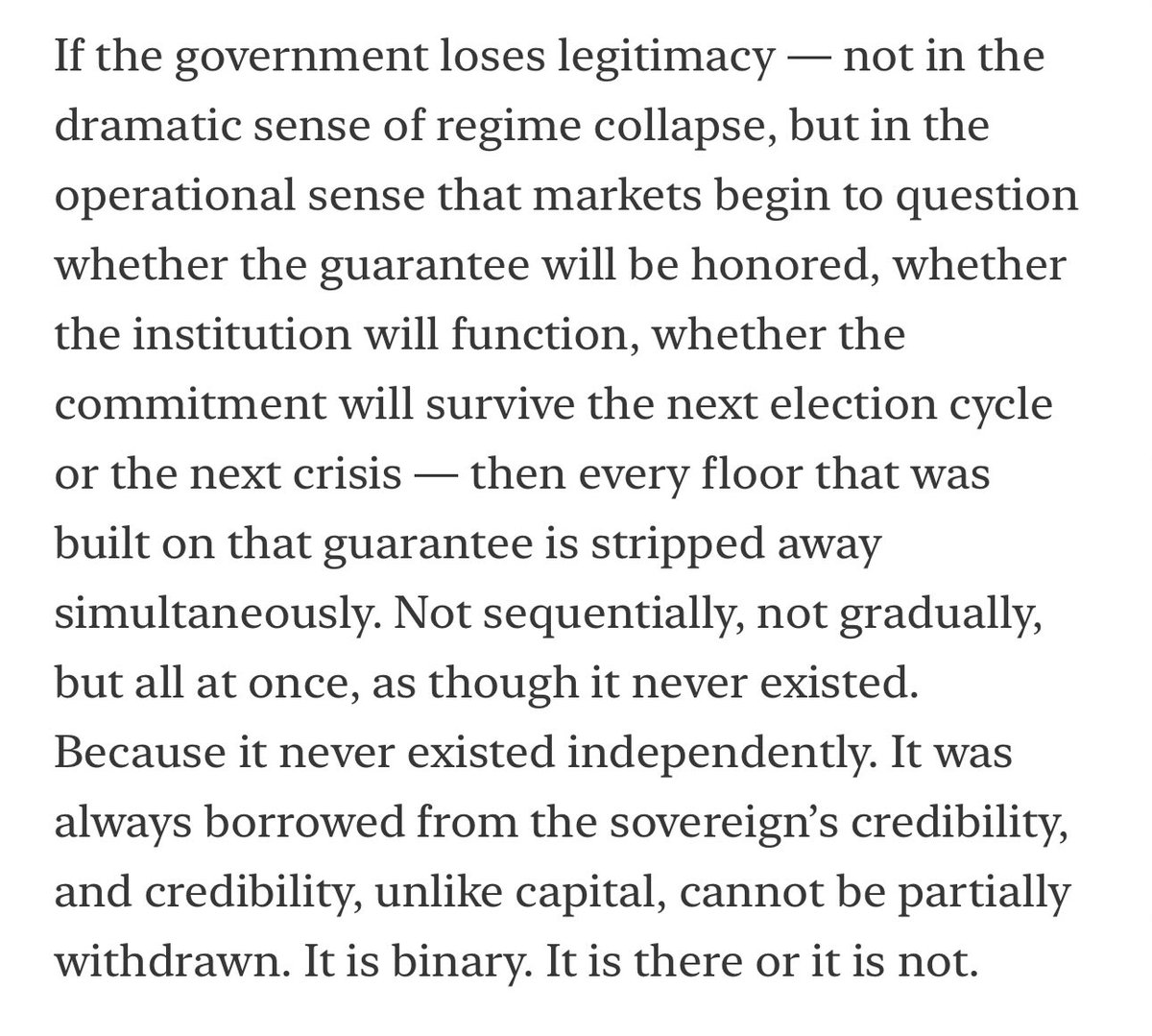
It is not just a floor for equity prices, it is every floor that exists as a result of past and ongoing government guarantees. Those floors all depend on the persistence of belief in the Six Pillars that is crumbling. No Man’s Land is the quicksand beneath them.
When the financial system gained the sovereign backstop in 2008, the arrow of risk pointed in both directions. The government assumed the financial system’s tail risk, but the financial system simultaneously assumed the government’s legitimacy as a permanent condition.
Every instrument, every market, and every institution that derives its stability from the implicit sovereign guarantee is premised on the government remaining a credible guarantor. There are no exceptions to this. 
@threadreaderapp unroll
• • •
Missing some Tweet in this thread? You can try to
force a refresh