The Government said they reduced the indexation rate for renewables because they'd been over-compensated. That's not even half the story.
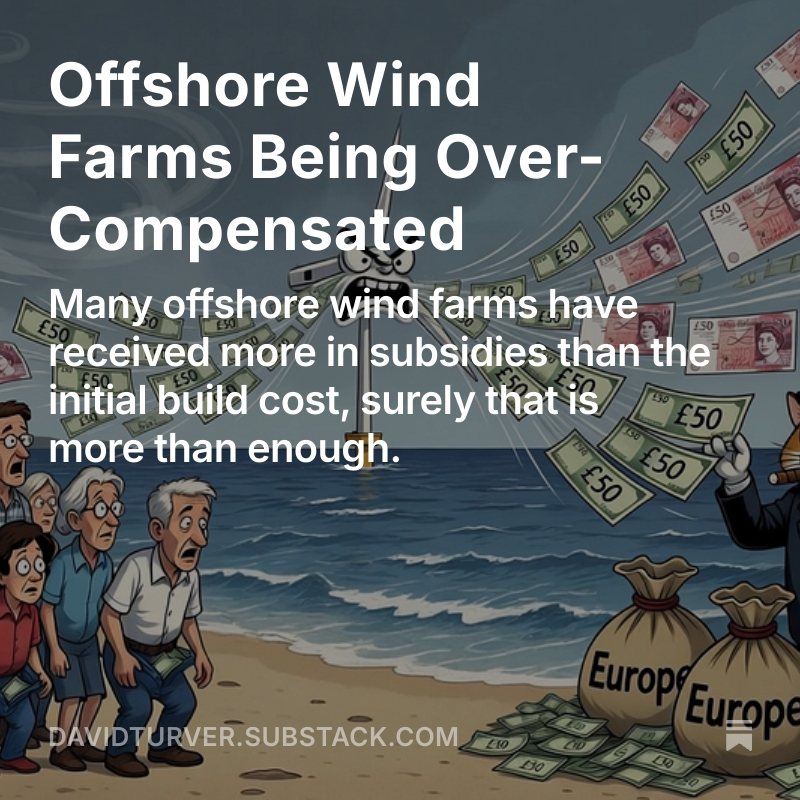
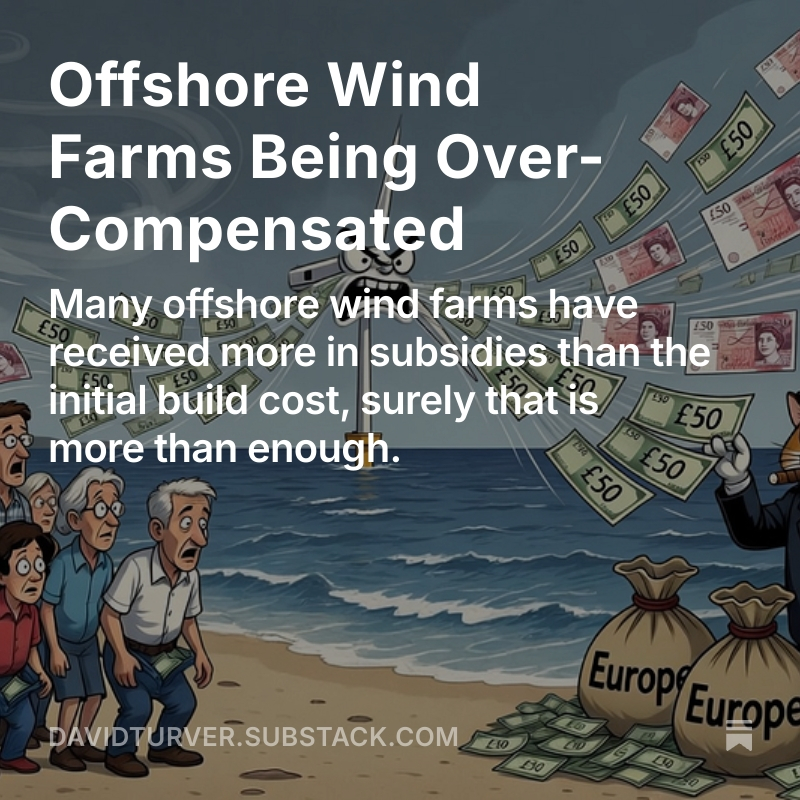
New analysis shows wind farms have already received more in subsidy than the build cost, enriching overseas investors. A thread (1/n)
Starting with the six offshore wind farms that have received most subsidies under the ROC scheme: Greater Gabbard, Gwynt y Mor, London Array, Race Bank, Sheringham Shoal and West of Duddon Sands (WODS). (2/n)
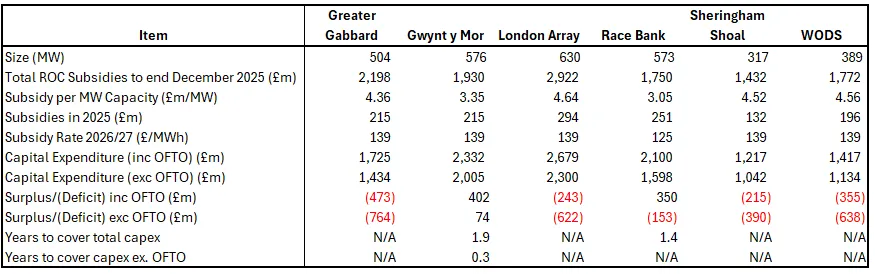
Greater Gabbard has received £2.2bn in subsidies but it only cost £1.4bn to build it (exc. OFTO sale proceeds). London Array has received £2.9bn in subsidies but net cost as ~£2.3bn. WODS received £1.8bn subsidies vs £1.1bn net cost (3/n)
Many of these windfarms are owned (or part owned) by overseas investors. UK bill and taxpayers are being fleeced to send the money abroad to line their pockets (4/n)
Even the newer, supposedly cheaper, CfD windfarms have either already received more subsidy than build cost, or are on track to do so soon (5/n)
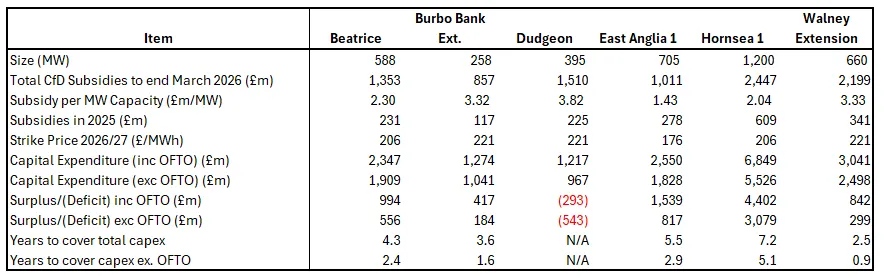
Dudgeon has received £1.5bn in CfD subsidies but the net cost was £1.2bn. Walney Extension will likely have received more in subsidies than build costs by end March 27 (6/n)
The other early CfD offshore wind units - Beatrice, Burbo Bank Ext, East Anglia 1 & Hornsea 1 are on track to receive more in subsidies in the next few years, well before their subsidy contracts expire (7/n)
Miliband has recognised the "overcompensation" problem, but is just tinkering at the edges. ROCs need to be abolished in line with new Tory policy (8/n)
CfDs are harder to deal with, but natural justice should say that subsidies are withdrawn once the initial build costs are covered (9/n)
If you enjoyed this thread, please like and share. You can sign up for free to read the full article on the link below (10/10). open.substack.com/pub/davidturve…
Hi @threadreaderapp unroll please.
• • •
Missing some Tweet in this thread? You can try to
force a refresh

🚨UK Net Zero & energy subsidies have exploded to £585 BILLION 🚨
Our taxes funding unreliable renewables, backups, carbon capture & subsidies to use the expensive energy. A new update to the Subsidy Control Database exposes the scale of the madness. (1/11)
Breakdown of the insanity:
- Renewables Obligation (ROCs): £104bn
- Contracts for Difference (CfDs): £102bn inc. £40bn for AR7
- £31bn for FiTs
In total over £260bn to subsidise renewables that don’t produce when we need it most, or FIVE Hinkley Point C’s (2/11)
Wind and solar are intermittent, so we pay another £72bn for the Capacity Market – backup power for when the wind doesn’t blow or sun doesn’t shine. And a further £1bn to subsidise making turbines. (3/11)
Ember, the people who came up with Miliband's promise to cut bills by £300 have been torturing the data to claim renewables saved money in March. Record CfD subsidies for March of £258m tell a different story. We're witnessing the dying embers of Net Zero propaganda (1/n)
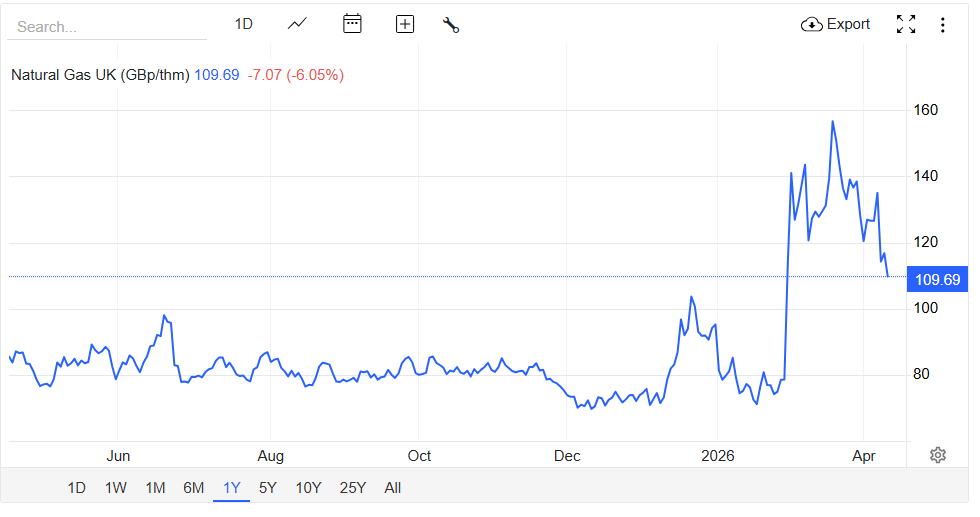
It's true that gas prices spiked in March at the opening of hostilities with Iran, and electricity prices rose too (2/n)
But gas prices didn't rise by as much as 2022, and the impact on electricity prices was muted by a reduction in carbon costs, as Ember should know, because it's in their data (3/n)
Net zero advocates love to claim renewables are cheaper than gas by waving around Levelised Cost of Energy (LCOE) models from Lazard, IRENA, and the UK Government’s Generation Cost 2025 report. But these models are junk. Here’s why. (1/19)
LCOE sums up all capital and operating costs over a plant’s lifetime, discounts them, and divides by total electricity generated. Result: £/MWh or p/kWh in a chart like Lazard's below. Sounds scientific… until you look closer. (2/19)
Classic LCOE compared dispatchable sources (gas, coal, nuclear, hydro) that match demand. Now it’s used for wind & solar, whose output depends on weather, not demand. A midday solar kWh when supply>demand is worthless. Peak-hour gas power is priceless. LCOE ignores this. (3/19)
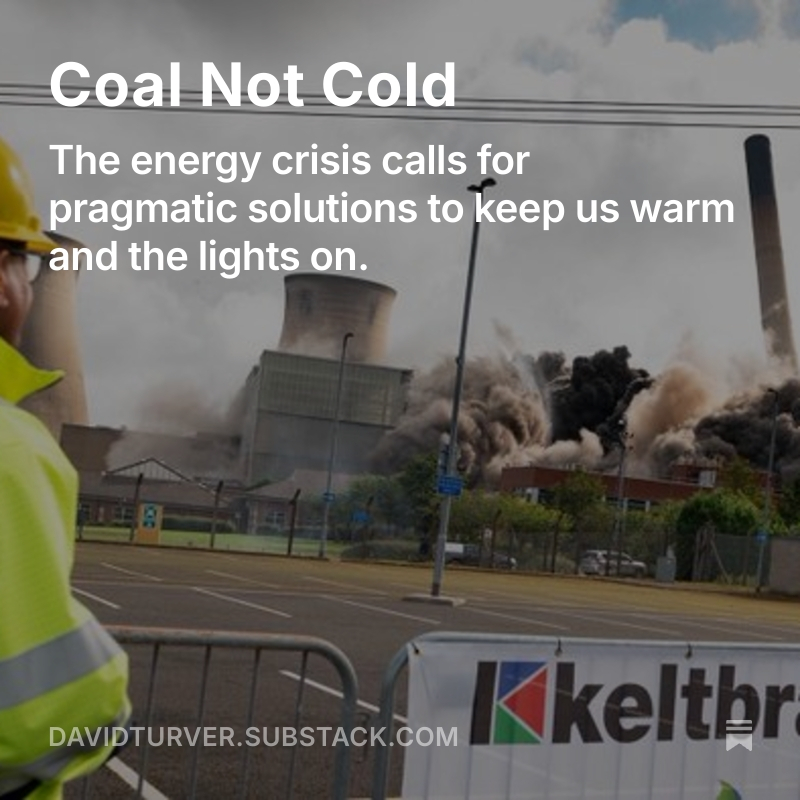
We're facing an energy crisis that is going to require radical solutions to solve. Many countries are ramping up coal-fired electricity generation in response. Is it time for the UK to go for Coal not Cold? A thread (1/n)
Looking first at UK coal reserves and resources. Euracoal has estimated we're sitting on 3,560 million tonnes of hard coal resources & 1,000Mt of lignite. Plus 277Mt of economically recoverable hard coal reserves. Plenty to go at (2/n)
So, what about the benefits of using coal? First, fuel diversification. War in Iran has again demonstrated the fragility of global supply chains, particularly LNG. Using our own coal would give welcome fuel diversification & energy security (3/n)
In a vote tantamount to treason, Parliament decided 297-108 to put Net Zero ideology above Britain's energy security. MPs rejected a Tory motion to scrap the Energy Profits Levy, lift the ban on new North Sea licences & approve the Rosebank & Jackdaw fields. A thread (1/15)
Not a single Labour, Liberal Democrat, SNP, Reform or Restore Britain MP voted in favour. This decision came at a dangerous time – amid a the largest ever energy shock triggered by the war in Iran. (2/15)
Normally ~20% of the world's oil supply passes through the Strait of Hormuz. Since the conflict started, traffic has plunged by over 95%. Brent crude and UK gas prices have risen sharply as a result. (3/15)
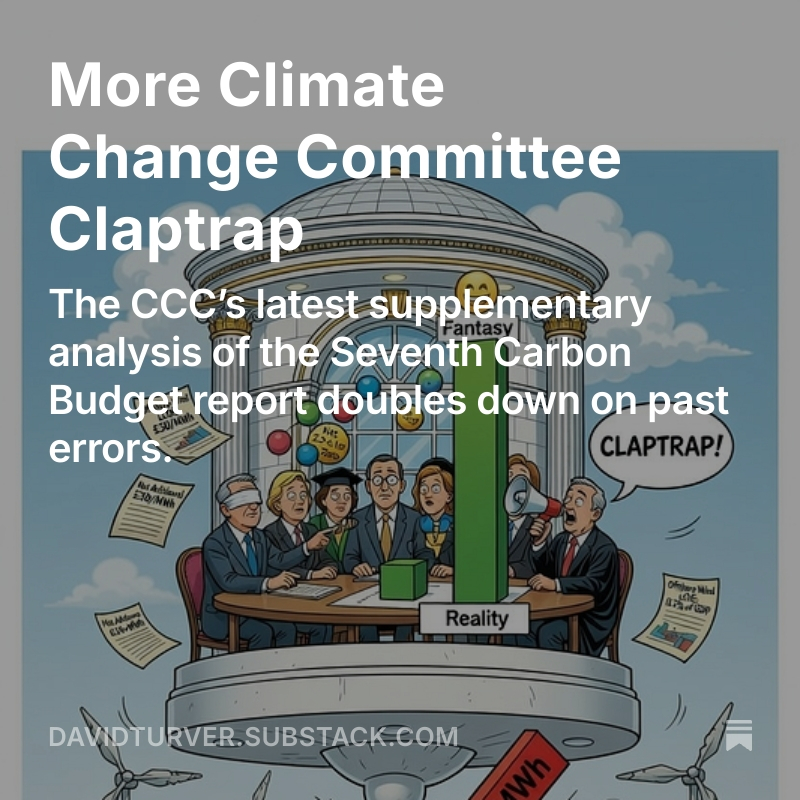
The CCC recently dropped a supplementary analysis of their 7th Carbon Budget, doubling down on past errors. They claim Net Zero costs less than the 2022 fossil fuel price spike & delivers a "net benefit" to society. Let's dismantle the ivory tower claptrap. A thread (1/13)
They also claim achieving Net Zero is “more cost-effective” than continued reliance on fossil fuels in all scenarios (2/13)
To support this, they’ve added “co-impacts” — cleaner air, warmer homes, active travel, “healthier diets” and carbon savings. Sounds impressive… until you examine the numbers and assumptions. (3/13)