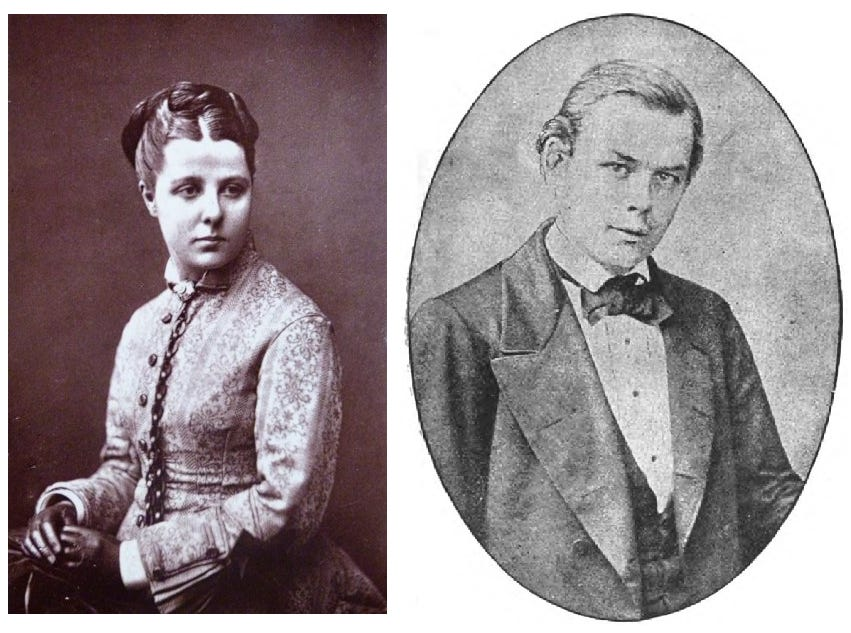
Pierre Guillaume Frédéric le Play argued that France's early fertility decline was driven by its inheritance reforms, where estates had to be split up equally to all of the kids, including the girls.
There's likely something to this!🧵
There's likely something to this!🧵
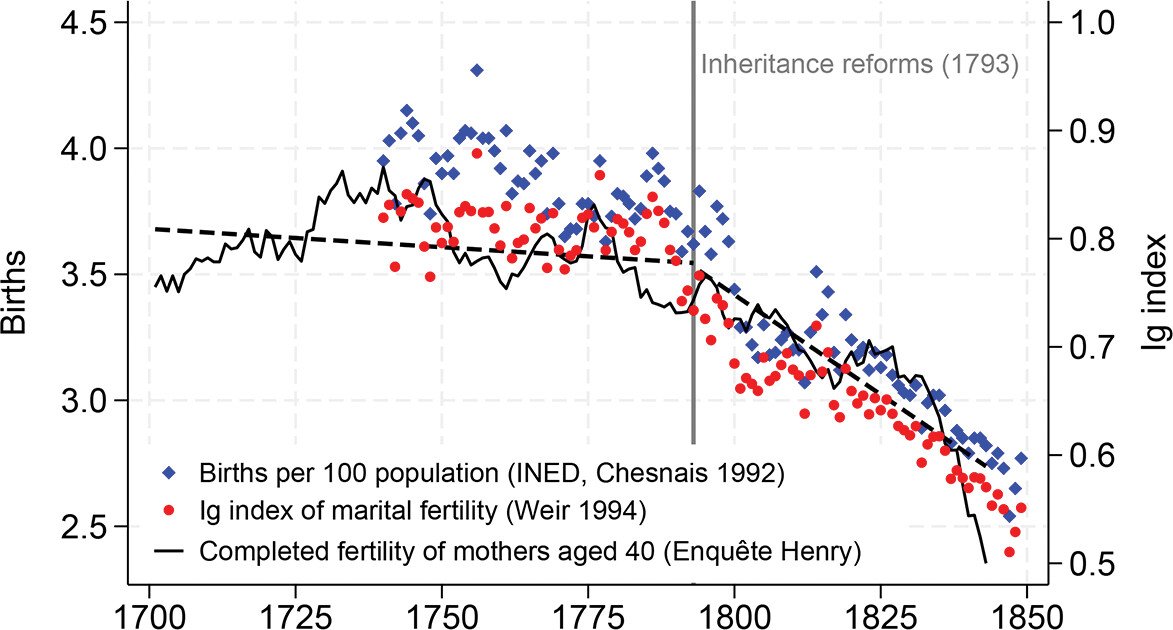
For reference, the French Revolution ushered in a number of egalitarian laws.
A major example of these had to do with inheritance, and in particular with partibility.
In some areas of France, there was partible inheritance, and in others, it was impartible.
A major example of these had to do with inheritance, and in particular with partibility.
In some areas of France, there was partible inheritance, and in others, it was impartible.

Partible inheritance refers to inheritance spread among all of a person's heirs, sometimes including girls, sometimes not.
Impartible inheritance on the other hands refers to the situation where the head of an estate can nominate a particular heir to get all or a select portion.
Impartible inheritance on the other hands refers to the situation where the head of an estate can nominate a particular heir to get all or a select portion.

Pierre Guillaume Frédéric le Play was an early economist, engineer, and sociologist born in 1806, who looked at trends in France's fertility.
He proposed that cutting up estates weakened family solidarity and made children into 'costs' on the estate, thus lowering fertility.
He proposed that cutting up estates weakened family solidarity and made children into 'costs' on the estate, thus lowering fertility.

To get at this, researchers put together a shapefile for the 435 judicial districts within which different inheritance rules historically applied.
These have to do with (A) customary laws and written laws and (B) inheritance systems across partibility and women's inclusion.
These have to do with (A) customary laws and written laws and (B) inheritance systems across partibility and women's inclusion.

The data on inheritance systems and laws was paired with historical fertility data from two different databases.
Together, this makes it possible to compare fertility before and after the inheritance law changes made regions more legally similar.
Together, this makes it possible to compare fertility before and after the inheritance law changes made regions more legally similar.

If we look at trends in fertility over time comparing regions that impartible versus partible inheritance, the ones with impartible inheritance start off with higher fertility, but after the reforms, rapidly converge.

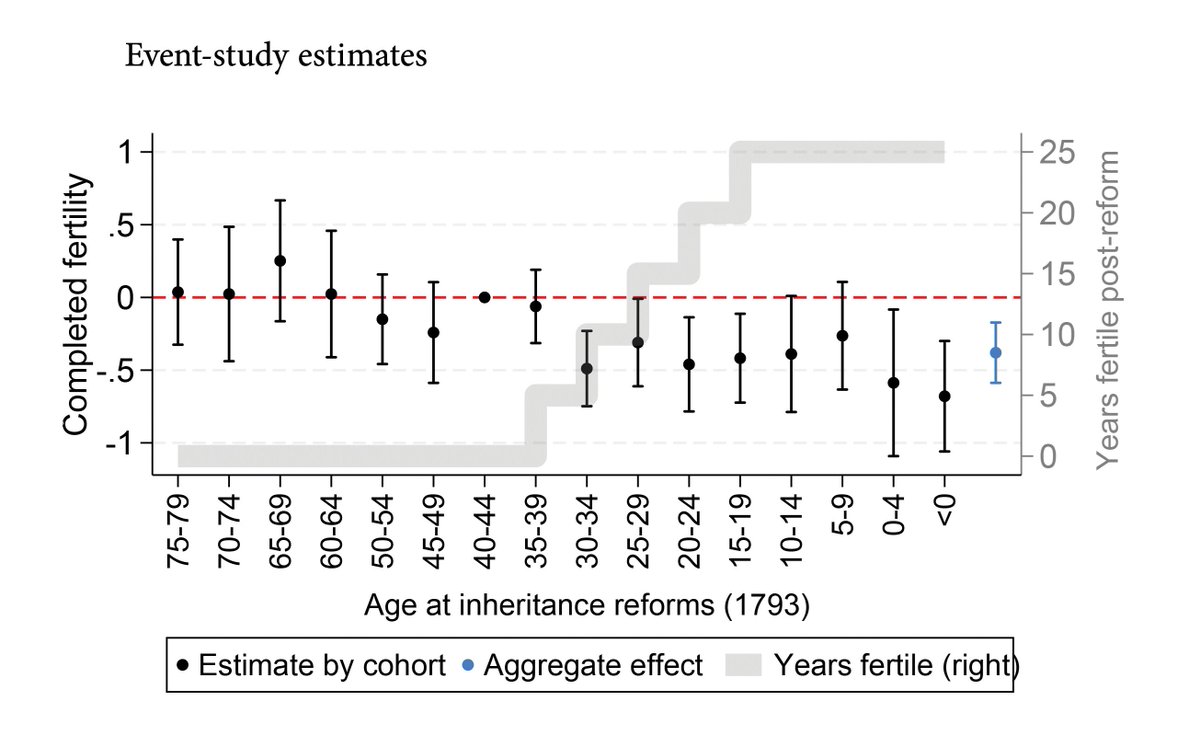
Looking at women before before or after the reforms, we see that fertility substantially falls for affected cohorts, and the average effect is substantial.
Using different data, the results are replicated.
Here, a regression discontinuity design with borders between areas with different pre-reform inheritance rules shows that, prior to the reforms, inegalitarian practices were associated with fertility.
And after, this goes away.
Here, a regression discontinuity design with borders between areas with different pre-reform inheritance rules shows that, prior to the reforms, inegalitarian practices were associated with fertility.
And after, this goes away.

It seems Le Play was correct! Inheritance practices definitely impact fertility.
But, while this is an explanatory factor for some of France's decline and the convergence across its regions, the decline of religion is likely more responsible for the decline shared across them.
But, while this is an explanatory factor for some of France's decline and the convergence across its regions, the decline of religion is likely more responsible for the decline shared across them.

To that end, I leave you with this previous thread: x.com/cremieuxrecuei…
And the study this thread was based on: journals.uchicago.edu/doi/full/10.10…
And the study this thread was based on: journals.uchicago.edu/doi/full/10.10…
• • •
Missing some Tweet in this thread? You can try to
force a refresh