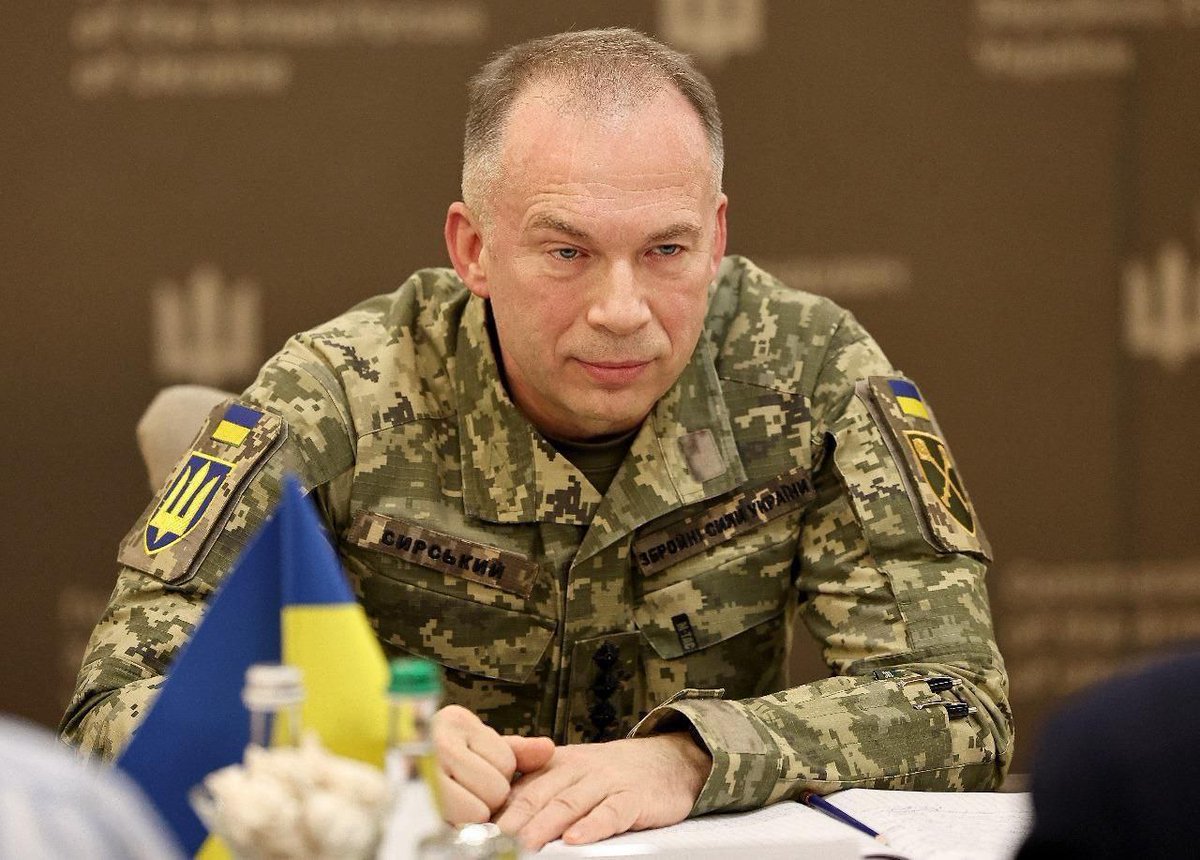
Robert Brovdi, Commander of Ukraine's Unmanned Systems Forces:
A “symbolic” attack on Red Square would generate headlines around the world but says Ukraine will probably deliver a “slap in the face” where Russia’s air defences are weaker. 1/9
“Why waste drones on the ‘great wall’,” he said, referring to the enhanced security around Moscow. "If you hit the energy sector or military that’s the best strike, on the periphery.” 2/9
“Practically everything there [at Russia's Tuapse oil terminal] has burned." Putin spends 40% of his $530bn annual budget on the military and Brovdi estimates that 100m tonnes of Russian oil, worth $100bn, is exported each year from ports within range of his drones. 3/9
For the fifth month in a row the Kremlin has lost more soldiers than it can recruit, putting deaths at 30,000 to 34,000 a month. “This affects the combat capability of the Russian army, reducing its offensive potential. That is a fact,” 4/9
A situational awareness system, Delta, logs every mission, including failures. Brovdi says he receives 12-15 terabytes of raw video footage every day. 5/9
In Brovdi’s view, Ukraine has pioneered a “new doctrine of war”. Drones are responsible for 80% of destruction, supplanting assault rifles and armour. “A blitzkrieg is now impossible." 6/9
"If Russia had a million tanks and tried to seize Kyiv again, it would be the biggest bloodbath in world history. Two million drones would swarm over these tanks and burn them mercilessly.” 7/9
NATO countries have not yet fully grasped the need to overhaul their armies. Many of the generals in charge received their military training when “nobody gave a shit about drones”. 8/9
They need to emulate Ukraine’s example by building an ecosystem that integrates video footage, photographs, coordinates, and confirmed kills. “Russia won’t stop. Neither we nor you have time.”. 9/9
Please remember to subscribe and support my Substack - Russia Analyzed - for the latest insights and analysis on Russian foreign and security policy and the war against Ukraine. cutt.ly/pw9h2qju
@threadreaderapp unroll
• • •
Missing some Tweet in this thread? You can try to
force a refresh

General Zaluzhnyi, former Commander-in-Chief of the Ukrainian Armed Forces:
Since 2023, significant changes have taken place on the battlefield, giving rise to an entirely new type of warfare shaped by emerging tools and the far-reaching consequences of this transformation. 1/17
At that time, the emergence of new tools such as unmanned systems made the battlefield increasingly transparent, creating a so-called deadlock that made the achievement of operational and strategic objectives extremely difficult. 2/17
Since then, Russia has done substantial work to find a way out of this deadlock. 3/17
Covert mobilization have never stopped in Russia. The Russian regime faces a constant dilemma: whether it should move toward open, public mobilization measures. 1/13
There is a real decline in the number of people willing to become cannon fodder, even despite the promised perks and financial rewards, the flow of volunteers or mercenaries is also decreasing. 2/13
The need for an open mobilization is growing, but it still has not been taken because of fears over reputational damage and the potential destabilization of the situation inside the Russian Federation itself. 3/13
General Biletsky, Commander of Ukraine's 3rd Army Corps:
After Starlink was blocked for Russian forces, the gap between their effectiveness and ours narrowed dramatically, because replacing Starlink as a battlefield communications system is practically impossible. 1/15
The only thing that can replace Starlink is another Starlink. Therefore, Starlink’s influence on the course of the war right now is enormous. Over the past two weeks, the effectiveness of Russian strike operations has significantly deteriorated — by approximately 20–40%. 2/15
Within one or two months Russia will partially improve their effectiveness through other means — Russian communication satellites and so on. 3/15
Whether this intelligence report is accurate, or whether Putin’s system is nearing collapse, as has occurred at moments in Russian history when military setbacks triggered the breakdown of the existing order, is extremely difficult to predict, especially with open-source. 1/4
However, the gradual overheating of Russia's political system, driven by accumulating pressures across economic, military, and social domains, makes it increasingly fragile. 2/4
In such conditions, even a relatively minor shock, which under normal circumstances would barely register, could trigger a chain reaction and escalate into something far more significant. And if that moment comes, it is likely to unfold suddenly. 3/4
General Vasyl Syrotenko, Chief of Ukraine's Engineer Troops:
Traditional concepts such as the line of contact, deep rear, or safe zone have largely disappeared, as unmanned capabilities now cover all these areas. 1/15
Unmanned systems have fundamentally changed the entire architecture of warfare. As a result, these systems are now one of the main factors shaping combat, delivering strikes, and enabling the execution of a wide range of tasks. 2/15
Engineering units responsible for building obstacle systems increasingly rely on mobile platforms, unmanned, and robotic systems to carry out engineering support tasks on the battlefield. 3/15
Pavlo Yelizarov, Deputy Commander of the Ukrainian Air Force and founder of the legendary Lasar’s Group:
Ukrainian counteroffensive cannot be ruled out and remains a real possibility. 1/14
If Ukraine improves its efficiency, particularly by increasing the scale of damage inflicted on enemy personnel and equipment, it could generate a cumulative impact on frontline morale. 2/14
Such a counteroffensive could allow Ukraine to improve its position and then consolidate along more favorable lines. 3/14