I'm Italian. Greece has been my second country for years.
The Greeks I know rarely spend their summers on the cruise islands. Not Santorini. Not Mykonos. Not Crete. Not Rhodes.
They take the ferry from Piraeus to islands the world hasn't found, or drive into a continental mainland that foreign lists never mention.
Greece is the most layered civilization in Europe.
10 underrated places where the kafeneio is real, the ouzo is local, and history isn't behind glass.
🧵
The Greeks I know rarely spend their summers on the cruise islands. Not Santorini. Not Mykonos. Not Crete. Not Rhodes.
They take the ferry from Piraeus to islands the world hasn't found, or drive into a continental mainland that foreign lists never mention.
Greece is the most layered civilization in Europe.
10 underrated places where the kafeneio is real, the ouzo is local, and history isn't behind glass.
🧵


How I filtered. Three rules:
- History that doesn't sit behind glass. Frescoes still being painted, monasteries still inhabited, Roman aqueducts still carrying water.
- Real Greek life. Kafeneios, schools, fishermen, not the postcard version that empties on October 15.
- Reachable from Athens, Thessaloniki, or a small regional airport without a four-hour ordeal.
Same logic of my Italian selection. Santorini and Mykonos fail rule two. Both are gorgeous. Both stay off the list.
Four in Peloponnese, three in Epirus, one in Macedonia, two in small Cyclades. Two nights minimum per place. Greece reveals itself slowly.
This is a travel list first. Three of these places (Nafplio, Ioannina, Kastoria) are also genuinely livable year-round, and I'll flag them when we get there.
Let's go.
- History that doesn't sit behind glass. Frescoes still being painted, monasteries still inhabited, Roman aqueducts still carrying water.
- Real Greek life. Kafeneios, schools, fishermen, not the postcard version that empties on October 15.
- Reachable from Athens, Thessaloniki, or a small regional airport without a four-hour ordeal.
Same logic of my Italian selection. Santorini and Mykonos fail rule two. Both are gorgeous. Both stay off the list.
Four in Peloponnese, three in Epirus, one in Macedonia, two in small Cyclades. Two nights minimum per place. Greece reveals itself slowly.
This is a travel list first. Three of these places (Nafplio, Ioannina, Kastoria) are also genuinely livable year-round, and I'll flag them when we get there.
Let's go.

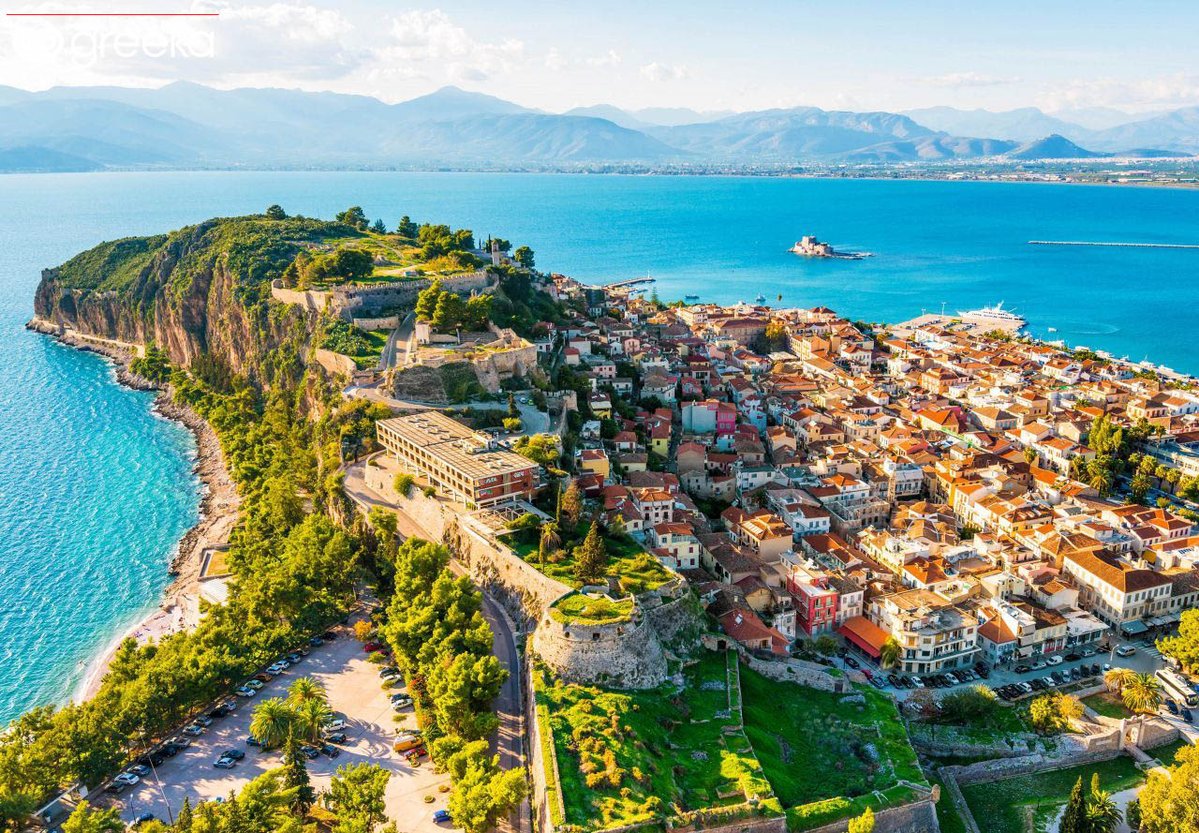
1/ Nafplio (Peloponnese)
Population 14,000. Livable year-round.
The first capital of modern Greece, between 1828 and 1834. A four-year window of Italianate civility before Athens took over and the country reset itself around the Acropolis. Nafplio kept the architecture of those years intact: a Venetian harbor, a neoclassical lower town, three fortresses watching everything.
Palamidi, the upper fortress, is reached by 999 stone steps cut into the rock. Bourtzi, a tiny Venetian fortlet, sits on its own island in the bay. Akronafplia, the oldest, is built into the medieval castle hill above the old town. Capodistrias, the first head of independent Greece, was assassinated outside the church of Agios Spyridon in 1831. The bullet hole is still in the doorframe.
Two hours from Athens by car on the new highway. Buses run every hour from Kifissos.
Eat: bougatsa for breakfast, fresh fish at the harborfront tavernas, the local wine of the Argolida.
The Athenian default for a real weekend. Foreign tourists almost never come. The first time I sat in Syntagma Square at midnight in October, with the Bourtzi lit up across the water, I understood why every Greek I knew had told me to start here.
Population 14,000. Livable year-round.
The first capital of modern Greece, between 1828 and 1834. A four-year window of Italianate civility before Athens took over and the country reset itself around the Acropolis. Nafplio kept the architecture of those years intact: a Venetian harbor, a neoclassical lower town, three fortresses watching everything.
Palamidi, the upper fortress, is reached by 999 stone steps cut into the rock. Bourtzi, a tiny Venetian fortlet, sits on its own island in the bay. Akronafplia, the oldest, is built into the medieval castle hill above the old town. Capodistrias, the first head of independent Greece, was assassinated outside the church of Agios Spyridon in 1831. The bullet hole is still in the doorframe.
Two hours from Athens by car on the new highway. Buses run every hour from Kifissos.
Eat: bougatsa for breakfast, fresh fish at the harborfront tavernas, the local wine of the Argolida.
The Athenian default for a real weekend. Foreign tourists almost never come. The first time I sat in Syntagma Square at midnight in October, with the Bourtzi lit up across the water, I understood why every Greek I knew had told me to start here.


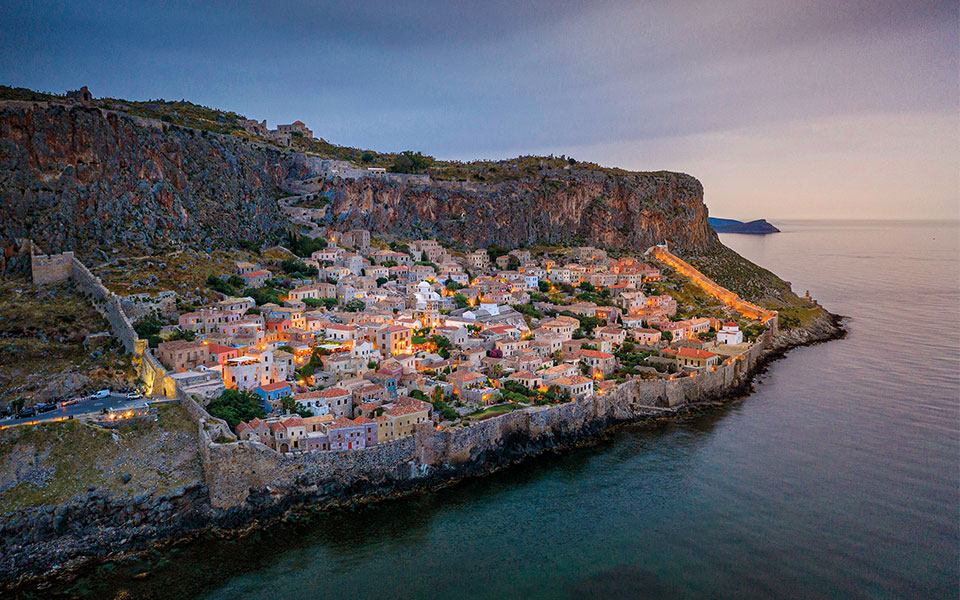
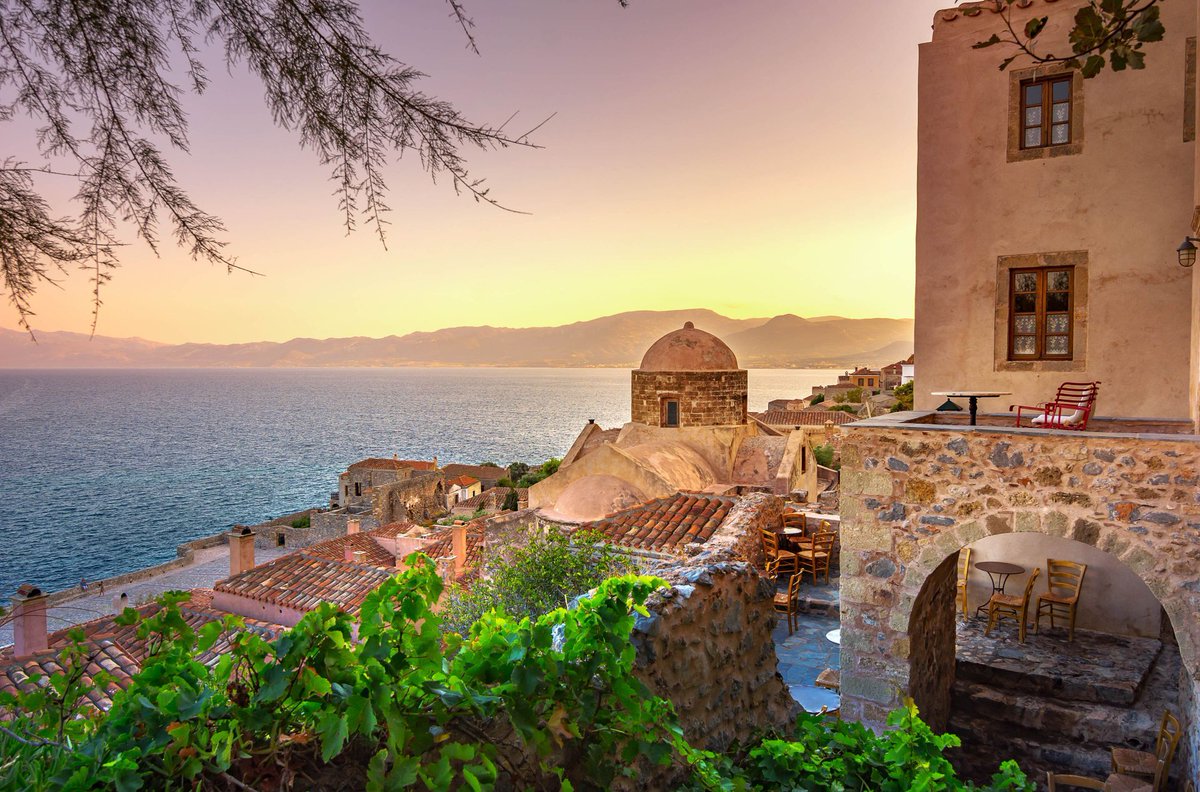
2/ Monemvasia (Peloponnese)
Population: a few dozen permanent residents on the rock. The modern village of Gefyra across the causeway has another 1,500.
A Byzantine fortress city built on a 100-meter limestone monolith, connected to the mainland by a single 200-meter causeway. The name "Mone-emvasis" means "single entrance." There is exactly one gate into the medieval lower town. You walk through it and into the 13th century.
Pedestrian-only inside. Stone stairs run up to the abandoned upper town on the plateau, where the 12th-century Hagia Sophia still stands among the ruins. The view from there is a 270-degree drop to open sea.
Founded in the 6th century, Monemvasia was one of the most important ports of the Byzantine Empire. It gave the world Malvasia wine, the Italianized version of its own name.
Distance: 4 hours by car from Athens. No train. The closest small airport is Kalamata, 2h30 inland.
Eat: hilopites pasta with rooster. Drink the local Malvasia, still produced 5 km inland.
The "Greek Mont Saint-Michel," with one critical difference. Nobody in Greece treats it that way. You'll have entire alleys to yourself even in July.
Population: a few dozen permanent residents on the rock. The modern village of Gefyra across the causeway has another 1,500.
A Byzantine fortress city built on a 100-meter limestone monolith, connected to the mainland by a single 200-meter causeway. The name "Mone-emvasis" means "single entrance." There is exactly one gate into the medieval lower town. You walk through it and into the 13th century.
Pedestrian-only inside. Stone stairs run up to the abandoned upper town on the plateau, where the 12th-century Hagia Sophia still stands among the ruins. The view from there is a 270-degree drop to open sea.
Founded in the 6th century, Monemvasia was one of the most important ports of the Byzantine Empire. It gave the world Malvasia wine, the Italianized version of its own name.
Distance: 4 hours by car from Athens. No train. The closest small airport is Kalamata, 2h30 inland.
Eat: hilopites pasta with rooster. Drink the local Malvasia, still produced 5 km inland.
The "Greek Mont Saint-Michel," with one critical difference. Nobody in Greece treats it that way. You'll have entire alleys to yourself even in July.


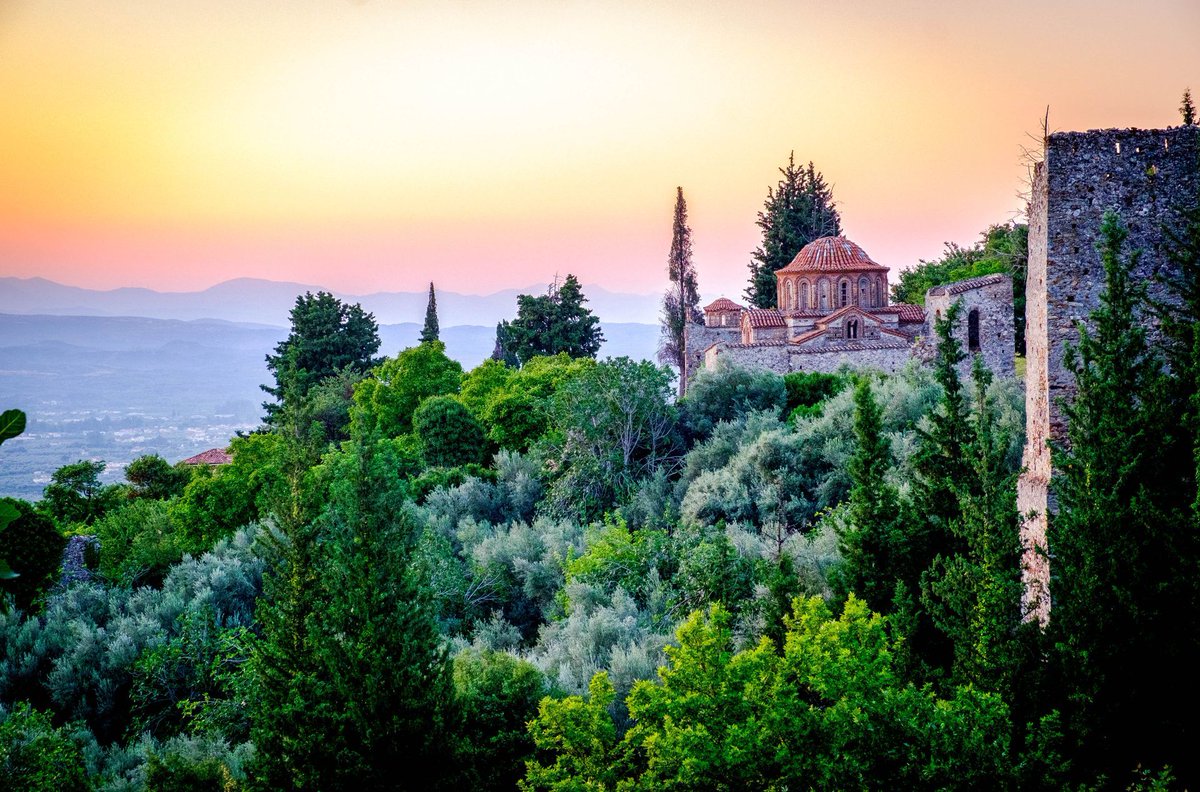
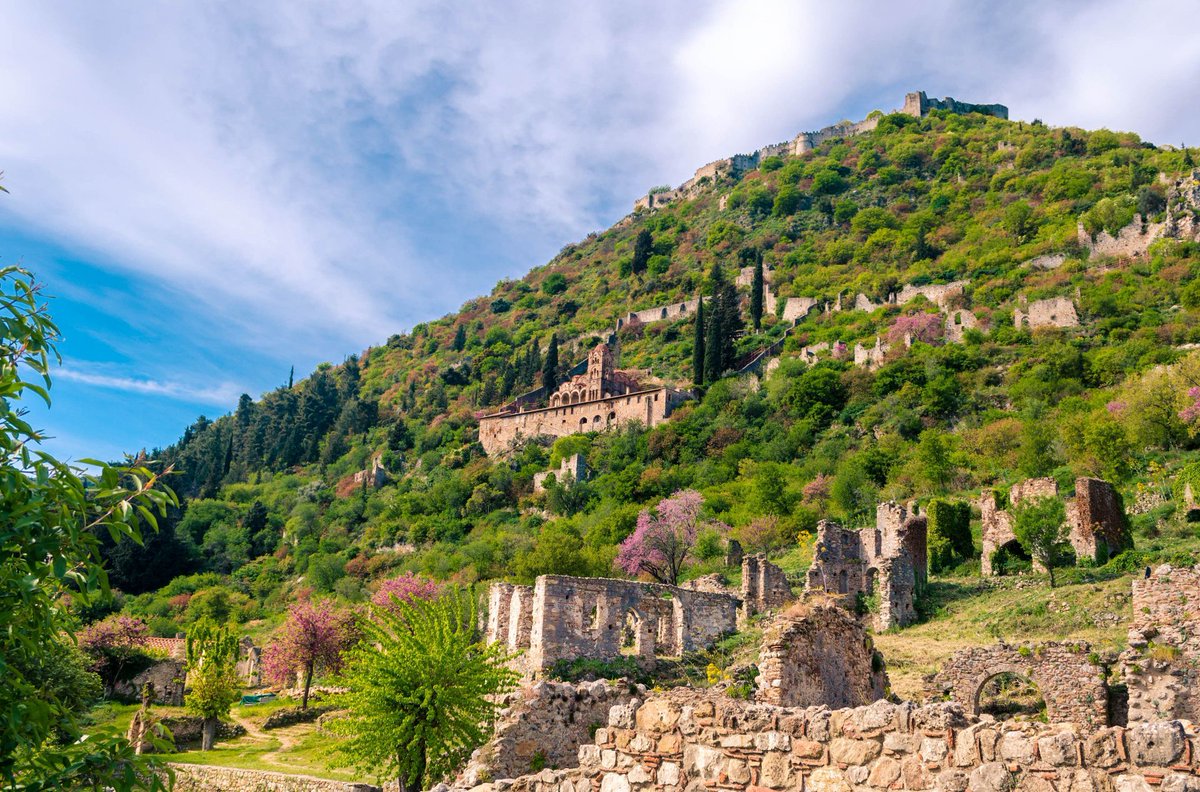
3/ Mystras (Peloponnese)
Population: 0 inside the archaeological site. The modern village below has 500.
A complete Byzantine ghost city on the slopes of the Taygetos range, six kilometers from Sparta. Founded in 1249 by Frankish crusaders, it became the capital of the Despotate of the Morea, the last serious Byzantine state to fall, in 1460, seven years after Constantinople.
This is where the last Byzantine emperor, Constantine XI Palaiologos, was crowned in 1449 before he died defending the walls of Constantinople. The despots' palace, restored in 2017, dominates the upper city. The Pantanassa monastery is still active. A small community of nuns lives there, the last continuous link to a thousand-year empire.
The frescoes inside the churches (Aphendiko, Hagia Sophia, Peribleptos, Metropolis) are among the most refined Byzantine art outside Mount Athos. UNESCO listed the whole site in 1989.
Distance: 3h from Athens by car, 1h from Kalamata airport.
Stay in the village of Néos Mystras below. Walk the ruined city for at least three hours. Wear shoes for stone.
The world has Pompeii. Greece has Mystras. Almost nobody outside Greece knows it exists.
Population: 0 inside the archaeological site. The modern village below has 500.
A complete Byzantine ghost city on the slopes of the Taygetos range, six kilometers from Sparta. Founded in 1249 by Frankish crusaders, it became the capital of the Despotate of the Morea, the last serious Byzantine state to fall, in 1460, seven years after Constantinople.
This is where the last Byzantine emperor, Constantine XI Palaiologos, was crowned in 1449 before he died defending the walls of Constantinople. The despots' palace, restored in 2017, dominates the upper city. The Pantanassa monastery is still active. A small community of nuns lives there, the last continuous link to a thousand-year empire.
The frescoes inside the churches (Aphendiko, Hagia Sophia, Peribleptos, Metropolis) are among the most refined Byzantine art outside Mount Athos. UNESCO listed the whole site in 1989.
Distance: 3h from Athens by car, 1h from Kalamata airport.
Stay in the village of Néos Mystras below. Walk the ruined city for at least three hours. Wear shoes for stone.
The world has Pompeii. Greece has Mystras. Almost nobody outside Greece knows it exists.

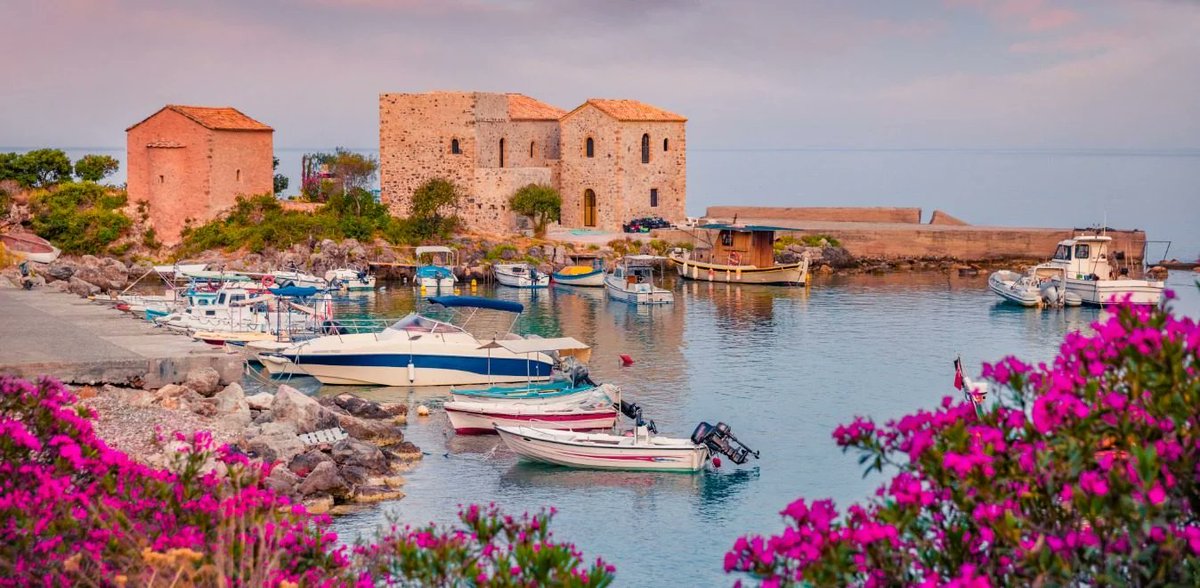
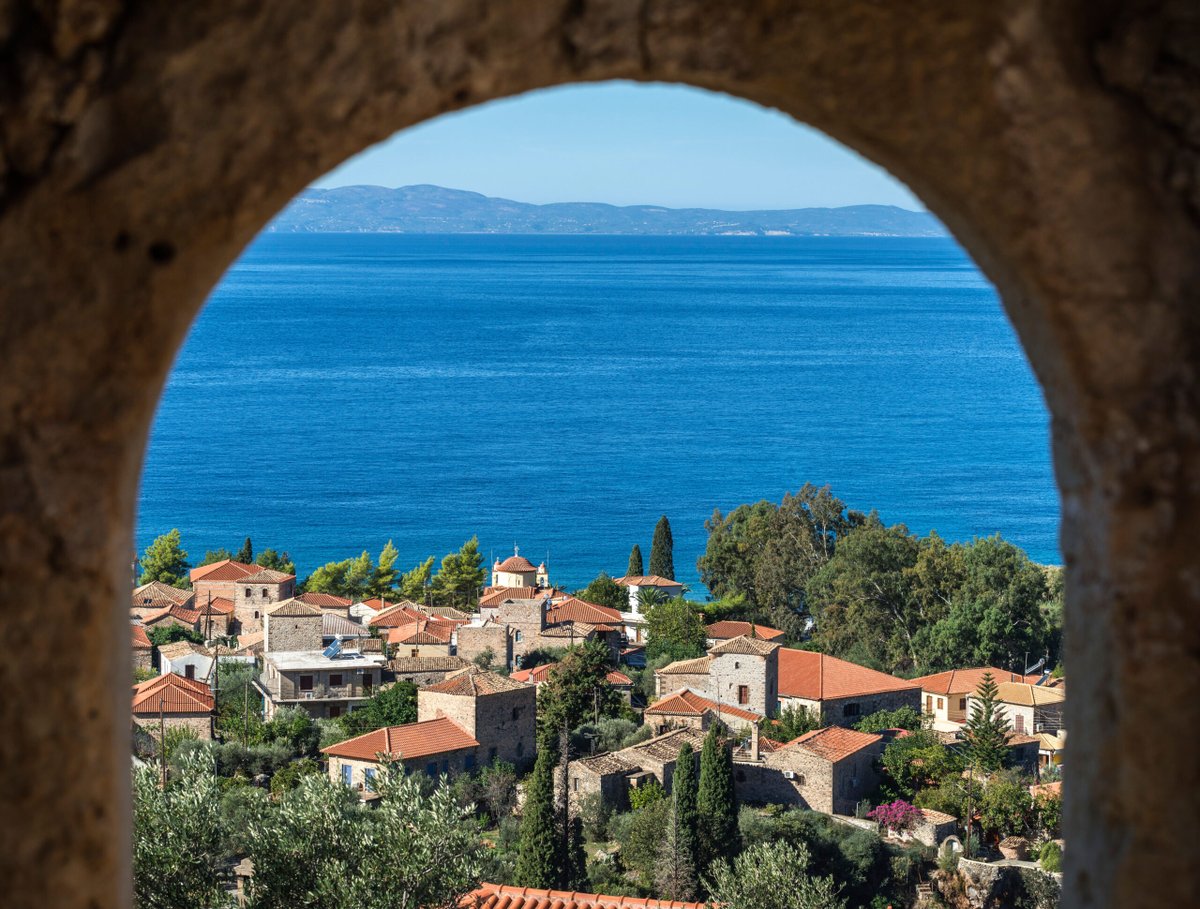
4/ Kardamyli (Mani, Peloponnese)
Population 280.
A village of stone tower-houses on the Messenian Gulf, the gateway to the deep Mani. That strange peninsula at the southern tip of the Peloponnese where Greece becomes austere, rocky, and almost North African in its light.
Patrick Leigh Fermor moved here in 1964 and lived in Kardamyli for 47 years, until his death in 2011. He built the most beautiful private house in modern Greece on a small bay south of town. After his death the Benaki Museum acquired it; it now functions as a writers' residency, and you can rent it for a week if you book a year ahead.
The old town, Palia Kardamyli, is a fortified compound of 17th-century tower-houses, restored. The Mani has never been a tourist place, partly because the locals were too busy practicing the most enduring blood-feud tradition in Europe until well into the 20th century. The stillness here is genuine.
Distance: 4h from Athens, 1h30 from Kalamata airport.
Eat: lalangia (fried dough drizzled with honey), syglino (smoked pork in mountain orange), the local olive oil that the rest of Greece quietly admits is the best in the country.
If Greece has a town the writers go to and the Instagrammers haven't found, this is it.
Population 280.
A village of stone tower-houses on the Messenian Gulf, the gateway to the deep Mani. That strange peninsula at the southern tip of the Peloponnese where Greece becomes austere, rocky, and almost North African in its light.
Patrick Leigh Fermor moved here in 1964 and lived in Kardamyli for 47 years, until his death in 2011. He built the most beautiful private house in modern Greece on a small bay south of town. After his death the Benaki Museum acquired it; it now functions as a writers' residency, and you can rent it for a week if you book a year ahead.
The old town, Palia Kardamyli, is a fortified compound of 17th-century tower-houses, restored. The Mani has never been a tourist place, partly because the locals were too busy practicing the most enduring blood-feud tradition in Europe until well into the 20th century. The stillness here is genuine.
Distance: 4h from Athens, 1h30 from Kalamata airport.
Eat: lalangia (fried dough drizzled with honey), syglino (smoked pork in mountain orange), the local olive oil that the rest of Greece quietly admits is the best in the country.
If Greece has a town the writers go to and the Instagrammers haven't found, this is it.


If you are enjoying these, you will love my substack. Join here, for weekly guides, in-depth analyses and more:
→
Now north. Epirus, Macedonia, the islands Greeks themselves love. Six places to go. palombo.substack.com
→
Now north. Epirus, Macedonia, the islands Greeks themselves love. Six places to go. palombo.substack.com

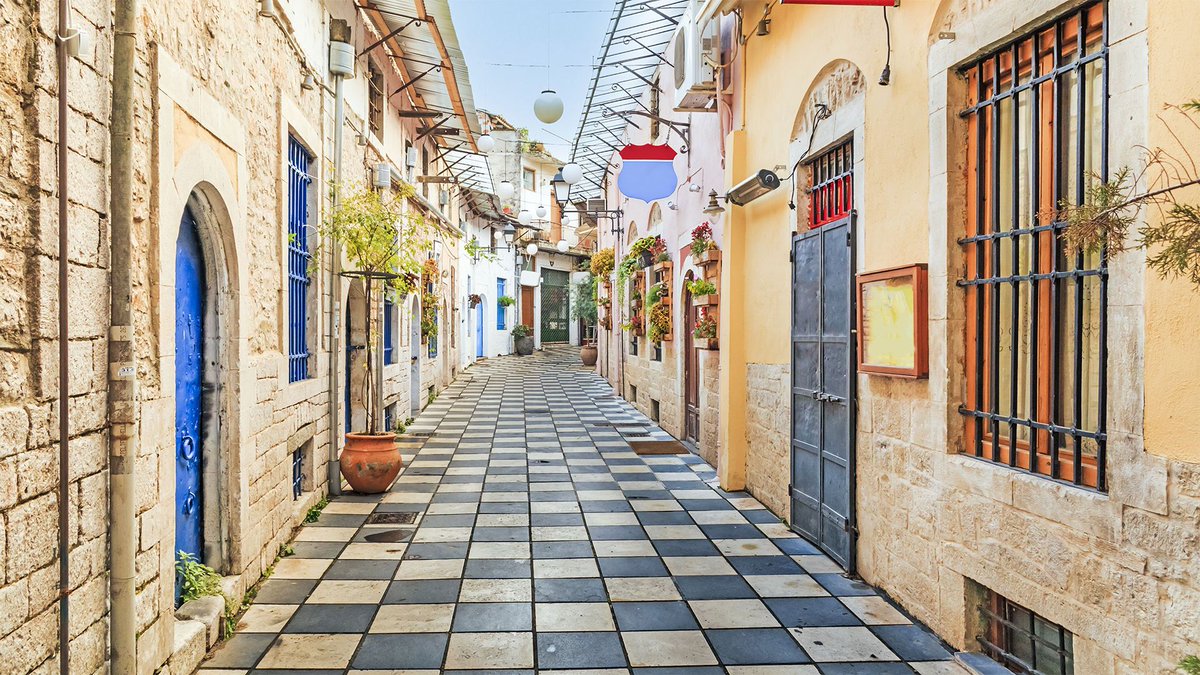
5/ Ioannina (Epirus)
Population 65,000. Livable year-round.
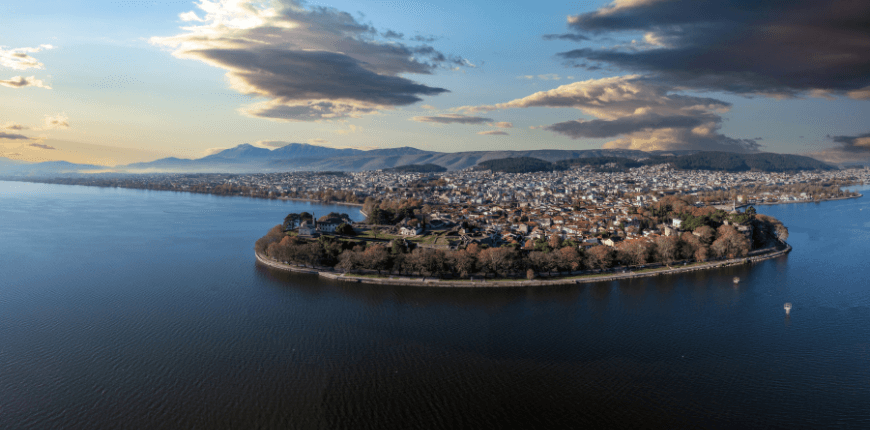
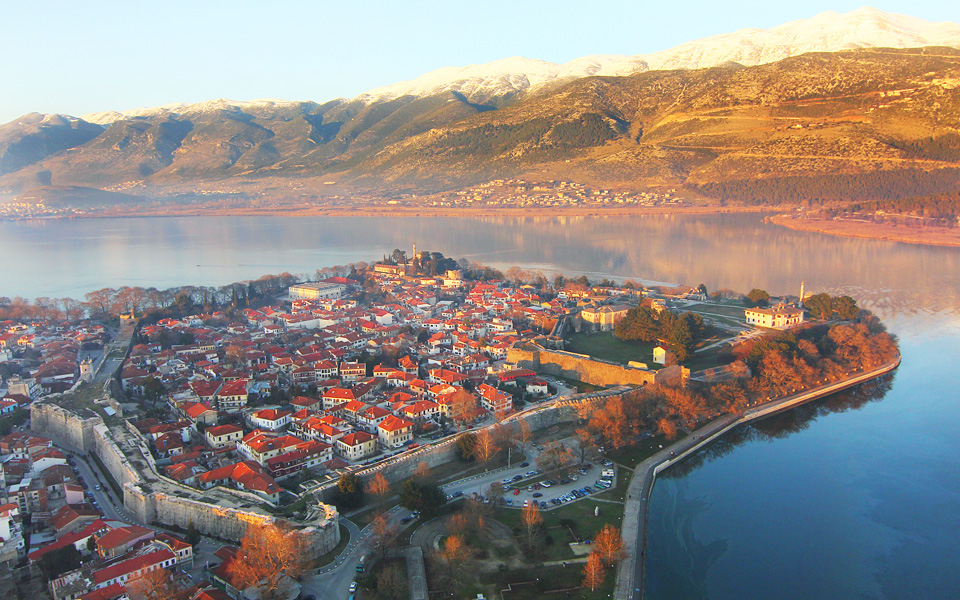
The capital of Epirus, a lakeside Ottoman city most foreigners cannot place on a map. Lake Pamvotida sits at its center, and on the lake sits a small island, Nisaki, with seven monasteries and one of the strangest small museums in Greece, in the hut where Ali Pasha was killed by sultan's troops in 1822.
Ali Pasha. The "Lion of Janina," who ran a personal fiefdom from this lake for thirty-four years, hosted Lord Byron in 1809, corresponded with Napoleon, and made Ioannina one of the great cultural and commercial centers of the Ottoman Balkans.
His silver-smithing tradition still survives. Half the shops in the bazaar around the Its Kale citadel are filigree workshops.
University town of 25,000 students. Real city services. Real winter (it sits in a basin at 480m and gets cold).
Distance: 5h from Athens by car, 1h15 by domestic flight (Ioannina airport is small but functional). 4h from Thessaloniki by bus.
Eat: pita Ipirou (the savory pies of the region), trout from the lake, the local frog legs that nobody warned you about.
The most underrated city in Greece, full stop. A Greek friend told me: "Italians visit Athens. They should visit Ioannina."
Population 65,000. Livable year-round.
The capital of Epirus, a lakeside Ottoman city most foreigners cannot place on a map. Lake Pamvotida sits at its center, and on the lake sits a small island, Nisaki, with seven monasteries and one of the strangest small museums in Greece, in the hut where Ali Pasha was killed by sultan's troops in 1822.
Ali Pasha. The "Lion of Janina," who ran a personal fiefdom from this lake for thirty-four years, hosted Lord Byron in 1809, corresponded with Napoleon, and made Ioannina one of the great cultural and commercial centers of the Ottoman Balkans.
His silver-smithing tradition still survives. Half the shops in the bazaar around the Its Kale citadel are filigree workshops.
University town of 25,000 students. Real city services. Real winter (it sits in a basin at 480m and gets cold).
Distance: 5h from Athens by car, 1h15 by domestic flight (Ioannina airport is small but functional). 4h from Thessaloniki by bus.
Eat: pita Ipirou (the savory pies of the region), trout from the lake, the local frog legs that nobody warned you about.
The most underrated city in Greece, full stop. A Greek friend told me: "Italians visit Athens. They should visit Ioannina."


6/ Metsovo (Epirus)
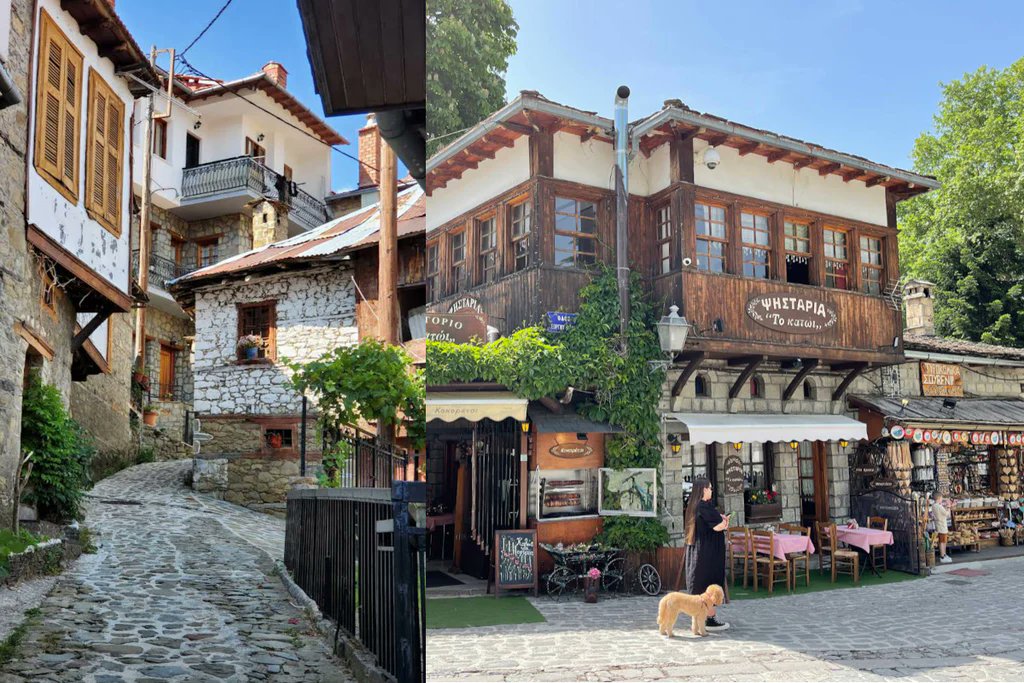
Population 3,000.
A stone village at 1,156 meters in the Pindus mountains, the highest serious town in Greece. The Pindus range divides Epirus from Thessaly, and Metsovo sits on the pass, looking like a Swiss village painted in Greek light.
Vlach country. The Aromanians, a Romance-language minority older than modern Greece, made Metsovo their cultural capital. The dialect is still spoken by older residents. The Tositsa Foundation, in the restored mansion of an 18th-century noble family, is the best small ethnographic museum in northern Greece.
Wine: Katogi-Averoff, founded in 1959 by Evangelos Averoff, was the first serious modern Greek winery. They grow Cabernet Sauvignon at altitude. Cheeses: Metsovone (smoked, cylindrical) and Metsovela are made here and almost only here.
Skiing in winter at the small Anilio resort. Four traditional restaurants worth your time. One of the few Greek towns with a real, lived four-season identity.
Distance: 1h from Ioannina by car on the Egnatia highway.
Eat: cured meats, kontosouvli (rotisserie pork), pite. Drink the red Katogi.
Greece in winter, with wood smoke and snow. The opposite of the postcard.
Population 3,000.
A stone village at 1,156 meters in the Pindus mountains, the highest serious town in Greece. The Pindus range divides Epirus from Thessaly, and Metsovo sits on the pass, looking like a Swiss village painted in Greek light.
Vlach country. The Aromanians, a Romance-language minority older than modern Greece, made Metsovo their cultural capital. The dialect is still spoken by older residents. The Tositsa Foundation, in the restored mansion of an 18th-century noble family, is the best small ethnographic museum in northern Greece.
Wine: Katogi-Averoff, founded in 1959 by Evangelos Averoff, was the first serious modern Greek winery. They grow Cabernet Sauvignon at altitude. Cheeses: Metsovone (smoked, cylindrical) and Metsovela are made here and almost only here.
Skiing in winter at the small Anilio resort. Four traditional restaurants worth your time. One of the few Greek towns with a real, lived four-season identity.
Distance: 1h from Ioannina by car on the Egnatia highway.
Eat: cured meats, kontosouvli (rotisserie pork), pite. Drink the red Katogi.
Greece in winter, with wood smoke and snow. The opposite of the postcard.


7/ Zagorochoria (Epirus)
46 villages. Combined population about 3,500.
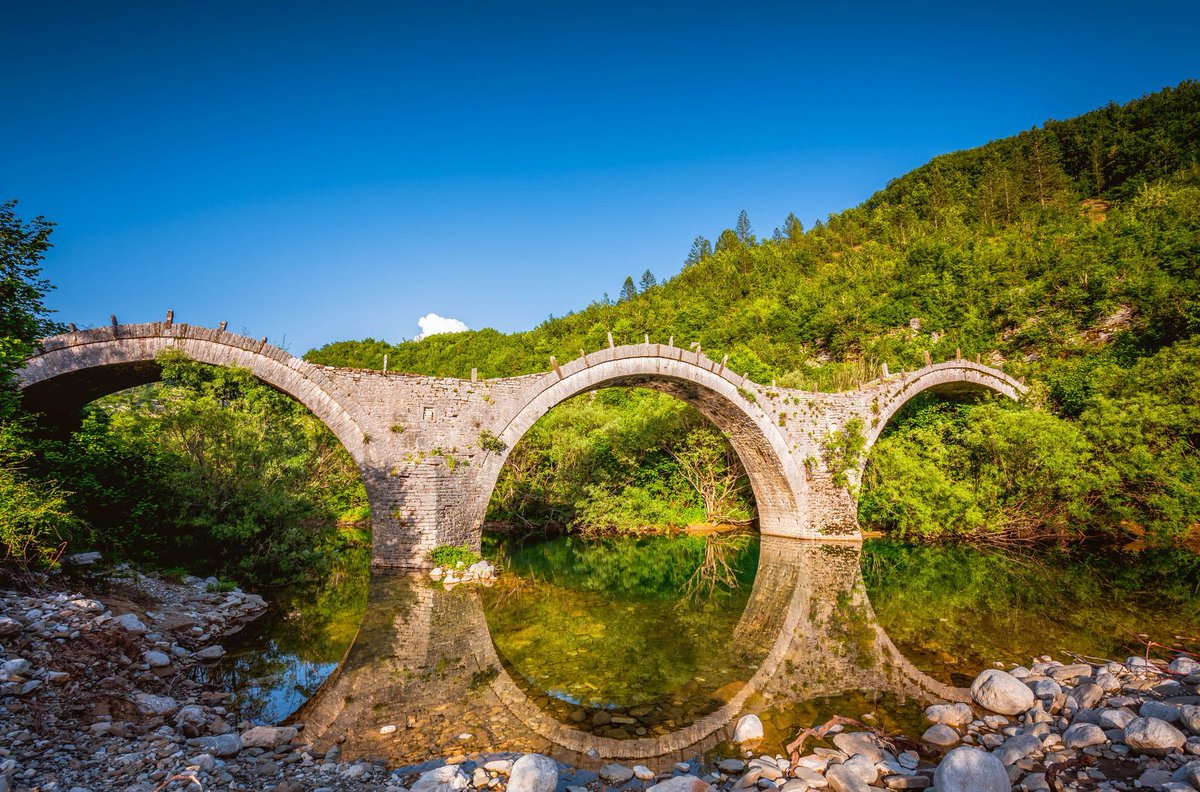
Forty-six stone villages in the Pindus mountains, each a few hundred souls, connected by 18th-century arched stone bridges and footpaths through the deepest gorge in the world relative to its width. Vikos Gorge runs between them, listed by Guinness, walked by serious hikers.
The architecture is unmistakable: gray slate roofs, stone walls, carved wooden balconies, no modern interventions allowed. Greece has protected the building code rigorously. UNESCO inscribed the cultural landscape as a World Heritage Site in 2023.
Base: Megalo Papingo or Mikro Papingo, two stone villages at the gorge's edge. Stay in a traditional archontiko (stone mansion) converted into a small hotel. From either Papingo, you can hike to Drakolimni, the "dragon lake," a glacial alpine lake at 2,050 meters that sits beneath the limestone peaks of Mount Tymfi.
Other villages worth the drive: Vitsa, Monodendri (with its clifftop monastery of Agia Paraskevi), Aristi, Kipi (the bridge cluster).
Distance: 1h from Ioannina airport.
Eat: pite, trahanas soup, mountain herbs, the fresh trout from the Voidomatis river, one of the cleanest rivers in Europe.
If you have one place in northern Greece to visit, this is it.
46 villages. Combined population about 3,500.
Forty-six stone villages in the Pindus mountains, each a few hundred souls, connected by 18th-century arched stone bridges and footpaths through the deepest gorge in the world relative to its width. Vikos Gorge runs between them, listed by Guinness, walked by serious hikers.
The architecture is unmistakable: gray slate roofs, stone walls, carved wooden balconies, no modern interventions allowed. Greece has protected the building code rigorously. UNESCO inscribed the cultural landscape as a World Heritage Site in 2023.
Base: Megalo Papingo or Mikro Papingo, two stone villages at the gorge's edge. Stay in a traditional archontiko (stone mansion) converted into a small hotel. From either Papingo, you can hike to Drakolimni, the "dragon lake," a glacial alpine lake at 2,050 meters that sits beneath the limestone peaks of Mount Tymfi.
Other villages worth the drive: Vitsa, Monodendri (with its clifftop monastery of Agia Paraskevi), Aristi, Kipi (the bridge cluster).
Distance: 1h from Ioannina airport.
Eat: pite, trahanas soup, mountain herbs, the fresh trout from the Voidomatis river, one of the cleanest rivers in Europe.
If you have one place in northern Greece to visit, this is it.


8/ Kastoria (Macedonia)
Population 13,000. Livable year-round.
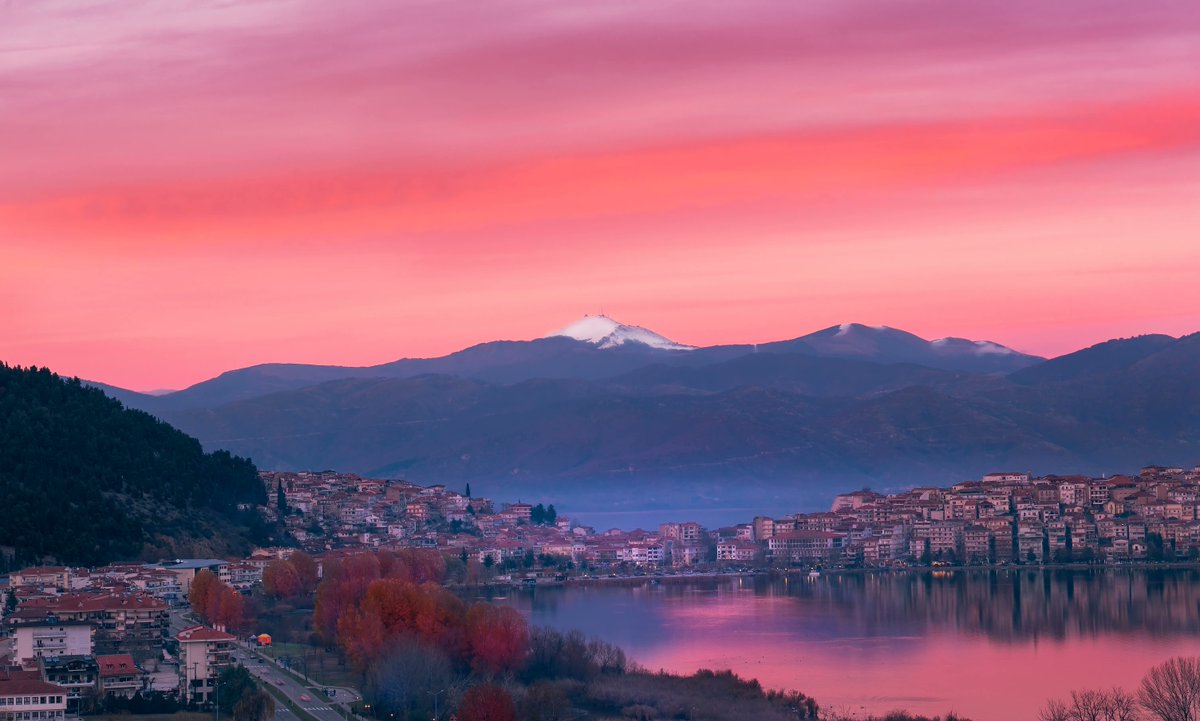
A peninsula city on Lake Orestiada, surrounded by water on three sides, in the cold high hills of Greek Macedonia 30 km from the Albanian border. Kastoria has 72 Byzantine and post-Byzantine churches preserved in its old town, the highest concentration anywhere outside Constantinople, most of them small chapels with frescoes from the 11th to 17th centuries.
For 700 years this was the world capital of fur. Kastorian merchants traded in skins from Russia, North America, and Siberia, processed them in workshops along the lake, and sold them in Vienna, Leipzig, and the Ottoman court. The 18th-century mansions (archontika) of those merchants line the old quarters of Doltso and Apozari.
The Cave of the Dragon (Spilaio tou Drakou), a karstic cave with seven underground lakes and stalactite formations, sits on the lake's edge. The Byzantine Museum holds painted icons that almost nobody outside Greece has seen.
Distance: 3h from Thessaloniki by car on the Egnatia highway. The local airport (Aristotelis) is small and infrequent.
Eat: trout from the lake, Prespes beans (from the lakes 50 km north), the dense local bread.
The most "Balkan" Greek city. Closer in feeling to Ohrid or Bitola than to Athens.
Population 13,000. Livable year-round.
A peninsula city on Lake Orestiada, surrounded by water on three sides, in the cold high hills of Greek Macedonia 30 km from the Albanian border. Kastoria has 72 Byzantine and post-Byzantine churches preserved in its old town, the highest concentration anywhere outside Constantinople, most of them small chapels with frescoes from the 11th to 17th centuries.
For 700 years this was the world capital of fur. Kastorian merchants traded in skins from Russia, North America, and Siberia, processed them in workshops along the lake, and sold them in Vienna, Leipzig, and the Ottoman court. The 18th-century mansions (archontika) of those merchants line the old quarters of Doltso and Apozari.
The Cave of the Dragon (Spilaio tou Drakou), a karstic cave with seven underground lakes and stalactite formations, sits on the lake's edge. The Byzantine Museum holds painted icons that almost nobody outside Greece has seen.
Distance: 3h from Thessaloniki by car on the Egnatia highway. The local airport (Aristotelis) is small and infrequent.
Eat: trout from the lake, Prespes beans (from the lakes 50 km north), the dense local bread.
The most "Balkan" Greek city. Closer in feeling to Ohrid or Bitola than to Athens.

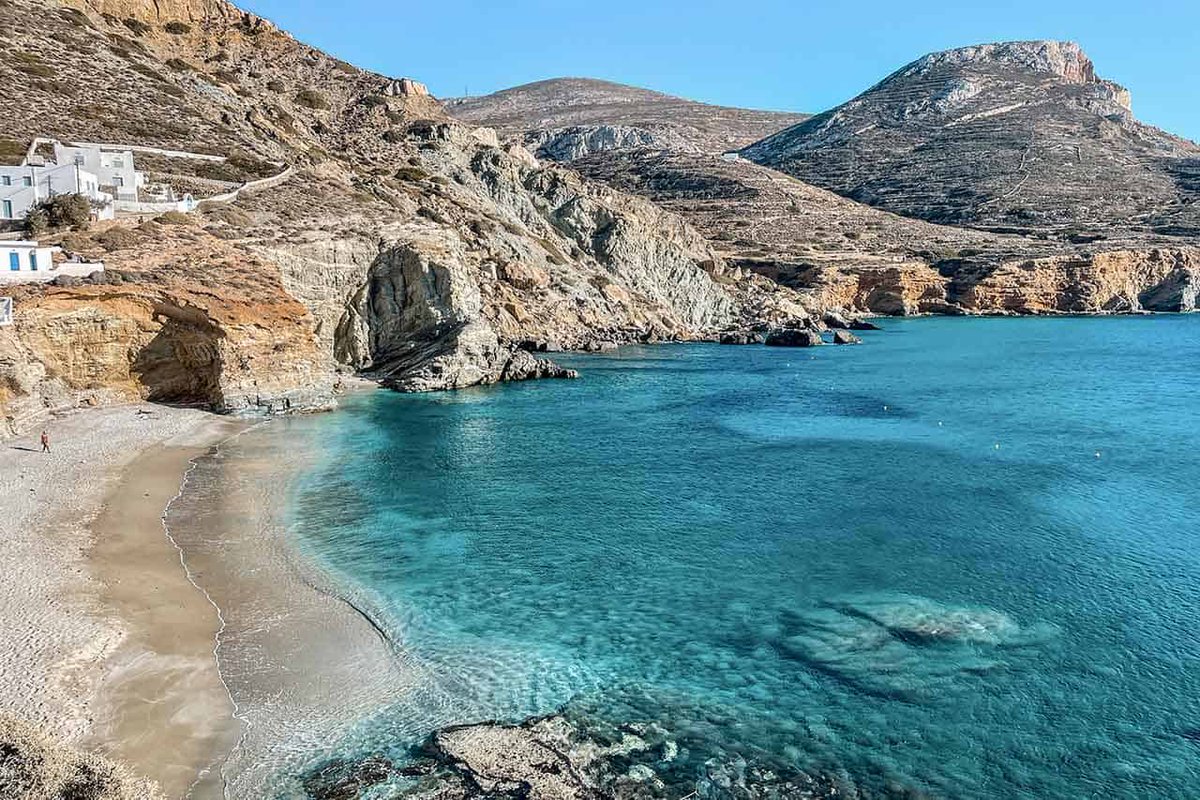
9/ Folegandros (Cyclades)
Population 770.
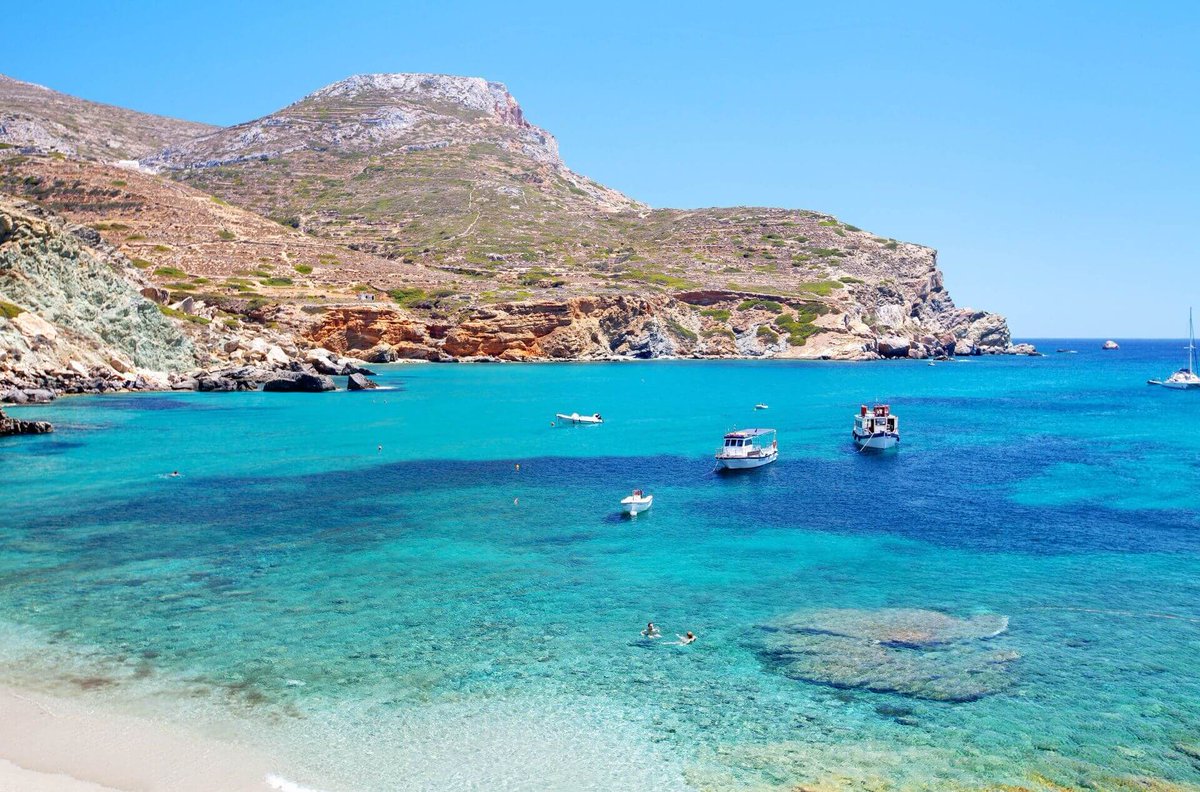
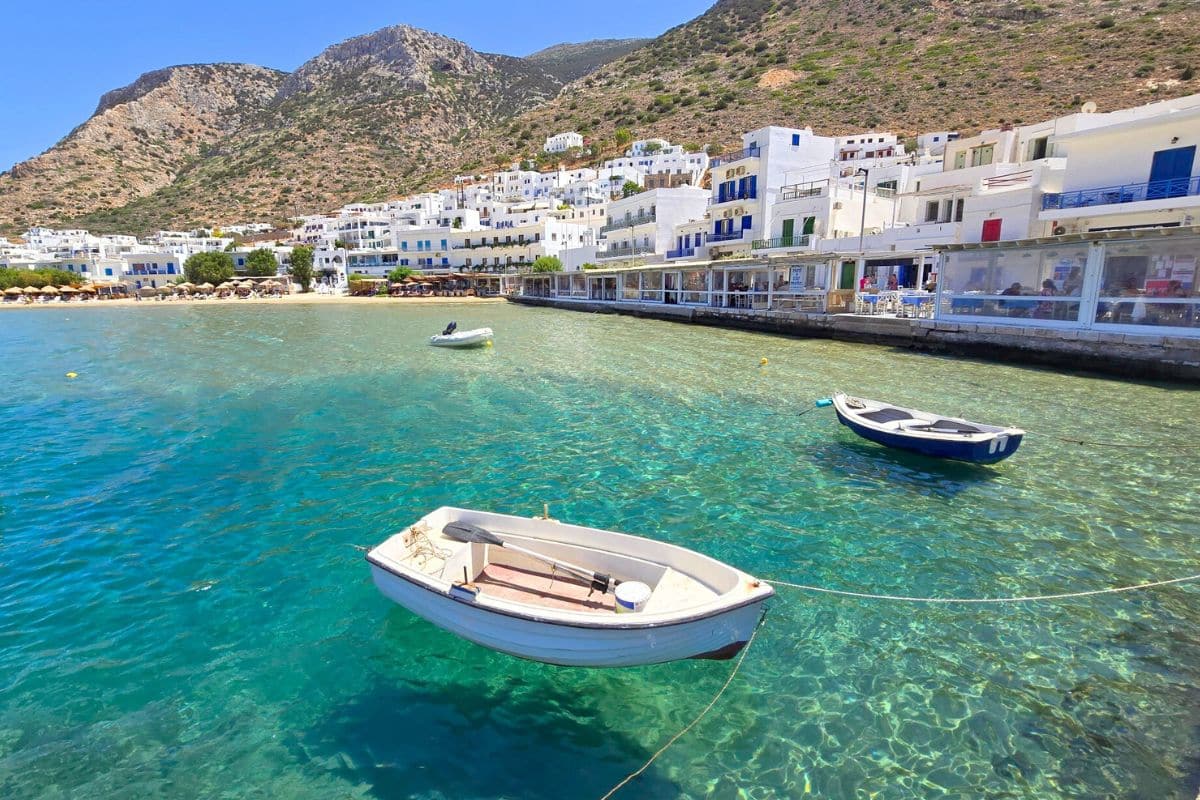
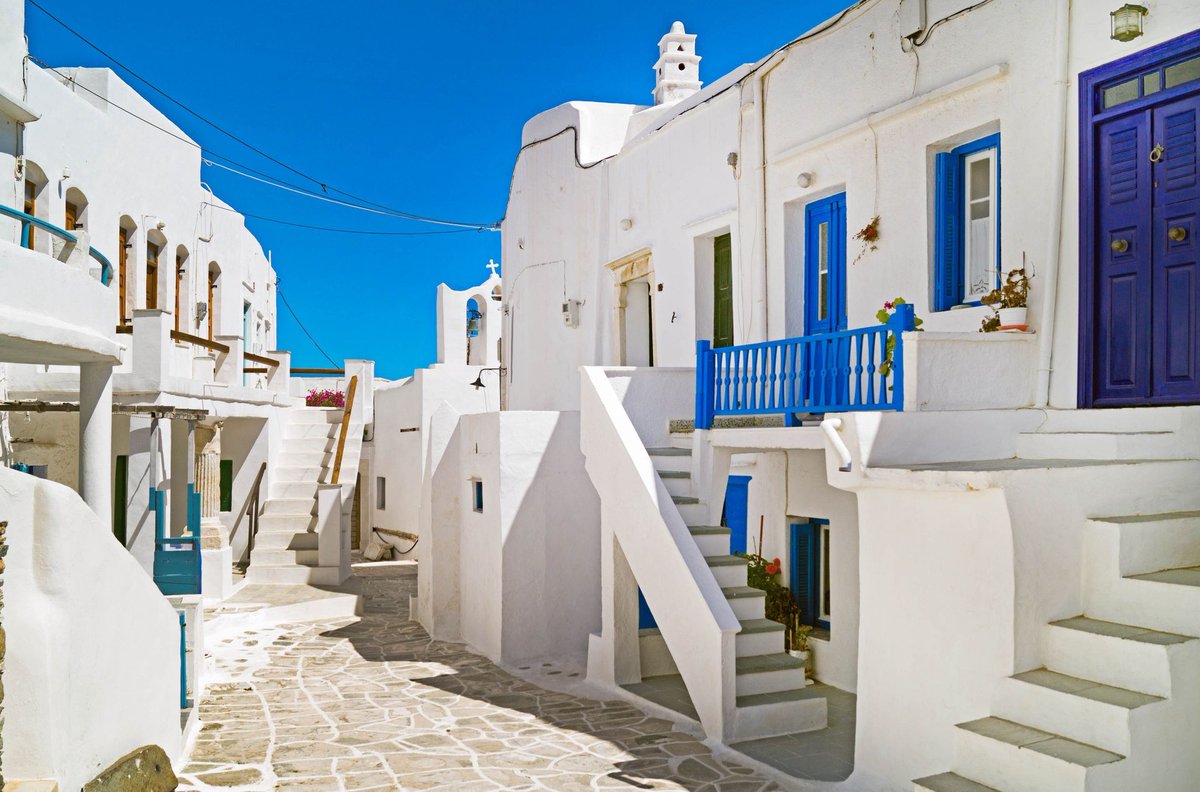
A small Cycladic island between Milos and Santorini that the rest of the world has barely noticed. The chora sits on top of a 200-meter cliff, with the medieval Kastro neighborhood at its eastern edge. A square of fortified houses turned inward, backs to the cliff drop, the way Cycladic villages were built when pirates were a real concern.
Three squares. One main pedestrian street. The church of Panagia, on the highest point of the island, requires a 15-minute climb up a switchback path. The view from there at sunset is the kind of thing people misuse the word "transcendent" for.
Less developed than Santorini and Milos. Quieter than Sifnos. This is the Cyclades the way they looked before the world arrived.
Distance: 4h fast ferry from Piraeus, 8 to 9h slow ferry. No direct flights.
Eat: matsata (the island's hand-cut pasta with rooster), kalasouna (local cheese pie), local capers in everything.
The single most visually striking small island in the Cyclades. Almost no English voices in August.
Population 770.
A small Cycladic island between Milos and Santorini that the rest of the world has barely noticed. The chora sits on top of a 200-meter cliff, with the medieval Kastro neighborhood at its eastern edge. A square of fortified houses turned inward, backs to the cliff drop, the way Cycladic villages were built when pirates were a real concern.
Three squares. One main pedestrian street. The church of Panagia, on the highest point of the island, requires a 15-minute climb up a switchback path. The view from there at sunset is the kind of thing people misuse the word "transcendent" for.
Less developed than Santorini and Milos. Quieter than Sifnos. This is the Cyclades the way they looked before the world arrived.
Distance: 4h fast ferry from Piraeus, 8 to 9h slow ferry. No direct flights.
Eat: matsata (the island's hand-cut pasta with rooster), kalasouna (local cheese pie), local capers in everything.
The single most visually striking small island in the Cyclades. Almost no English voices in August.

10/ Sifnos (Cyclades)
Population 2,600.
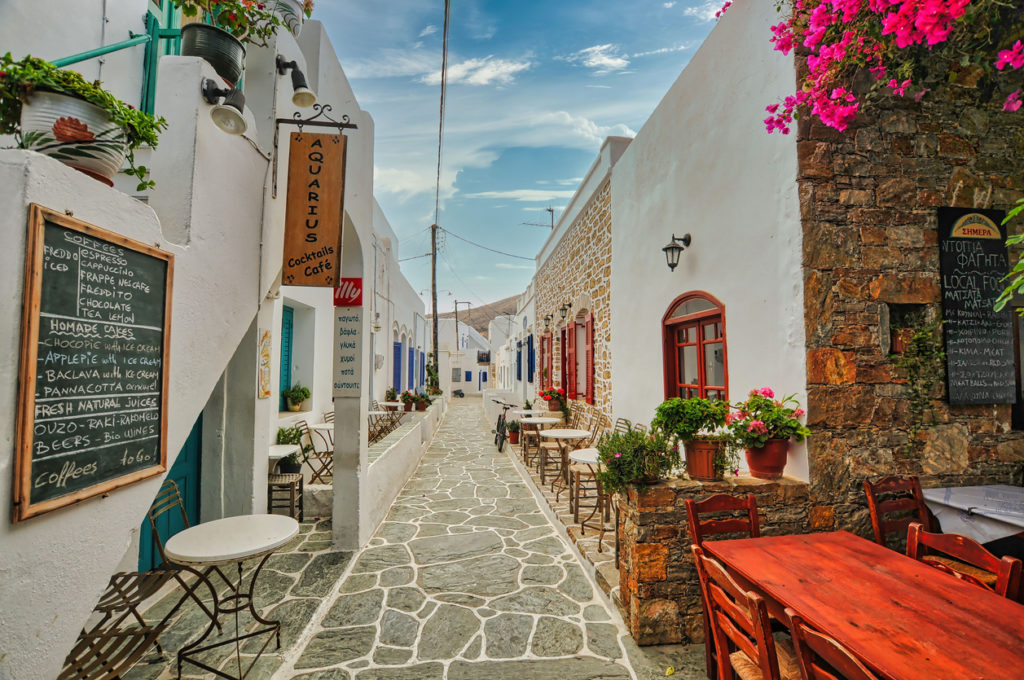
The Cycladic island Greeks vote for first when asked. Sifnos has been at the top of every Greek "best island" survey for years, but somehow the foreign press never quite catches on.
Sifnos is built around food. Nikolaos Tselementes, the chef whose 1910 cookbook effectively founded modern Greek cooking, was Sifnian. Every village has a serious taverna. The island specialty is mastelo: lamb baked overnight in a clay pot with red wine and dill. Revithada, the Sunday chickpea soup also baked in clay overnight, is a national dish that originated here.
Geography: a chora called Apollonia in the center; a fortified medieval village called Kastro on the east coast (still inhabited, mostly by old Sifnians); the village of Artemonas with neoclassical mansions; the Panagia Chrysopigi monastery on a small rock connected to the coast by a tiny causeway, one of the most photographed buildings in Greece.
The hiking is exceptional. Over 100 km of marked stone paths connect the villages, the ancient watchtowers, and the coast.
Distance: 2h45 fast ferry from Piraeus, 5h slow.
Eat: everything. Sifnos is the only island in the Cyclades where every meal has a chance of being the best meal of the trip.
The island Greeks save for themselves.
Population 2,600.
The Cycladic island Greeks vote for first when asked. Sifnos has been at the top of every Greek "best island" survey for years, but somehow the foreign press never quite catches on.
Sifnos is built around food. Nikolaos Tselementes, the chef whose 1910 cookbook effectively founded modern Greek cooking, was Sifnian. Every village has a serious taverna. The island specialty is mastelo: lamb baked overnight in a clay pot with red wine and dill. Revithada, the Sunday chickpea soup also baked in clay overnight, is a national dish that originated here.
Geography: a chora called Apollonia in the center; a fortified medieval village called Kastro on the east coast (still inhabited, mostly by old Sifnians); the village of Artemonas with neoclassical mansions; the Panagia Chrysopigi monastery on a small rock connected to the coast by a tiny causeway, one of the most photographed buildings in Greece.
The hiking is exceptional. Over 100 km of marked stone paths connect the villages, the ancient watchtowers, and the coast.
Distance: 2h45 fast ferry from Piraeus, 5h slow.
Eat: everything. Sifnos is the only island in the Cyclades where every meal has a chance of being the best meal of the trip.
The island Greeks save for themselves.
A rough guide if you're choosing:
- Best for first-time impact: Monemvasia. The single most cinematic place in Greece.
- Best for Byzantine art and history: Mystras. A whole city ruin, not just one church.
- Best for "Greek modernity": Nafplio. Where the country started.
- Best for the writer's pilgrimage: Kardamyli (Patrick Leigh Fermor's town).
- Best lakeside: Ioannina. Underrated even by Greek standards.
- Best alpine: Metsovo. The Greek mountain identity in stone and wood.
- Best hiking and nature: Zagorochoria. Vikos Gorge, Drakolimni, the bridges.
- Best Balkan-Greek city: Kastoria. 72 Byzantine churches and a fur-trade past.
- Best small island for visuals: Folegandros. The cliff-edge chora.
- Best small island for food: Sifnos. By a margin.
- Best three-day base: Ioannina for Epirus, Nafplio for the eastern Peloponnese, Kardamyli for the Mani.
If you only have a weekend: Nafplio + Mystras + Monemvasia (one tight Peloponnese loop).
If you have a week: the full Peloponnese loop, four picks.
If you have ten days: Peloponnese plus Epirus. Skip the islands this trip.
If I had to pick one for someone's first trip: Nafplio. For their second: Zagorochoria. For their third: Sifnos.
- Best for first-time impact: Monemvasia. The single most cinematic place in Greece.
- Best for Byzantine art and history: Mystras. A whole city ruin, not just one church.
- Best for "Greek modernity": Nafplio. Where the country started.
- Best for the writer's pilgrimage: Kardamyli (Patrick Leigh Fermor's town).
- Best lakeside: Ioannina. Underrated even by Greek standards.
- Best alpine: Metsovo. The Greek mountain identity in stone and wood.
- Best hiking and nature: Zagorochoria. Vikos Gorge, Drakolimni, the bridges.
- Best Balkan-Greek city: Kastoria. 72 Byzantine churches and a fur-trade past.
- Best small island for visuals: Folegandros. The cliff-edge chora.
- Best small island for food: Sifnos. By a margin.
- Best three-day base: Ioannina for Epirus, Nafplio for the eastern Peloponnese, Kardamyli for the Mani.
If you only have a weekend: Nafplio + Mystras + Monemvasia (one tight Peloponnese loop).
If you have a week: the full Peloponnese loop, four picks.
If you have ten days: Peloponnese plus Epirus. Skip the islands this trip.
If I had to pick one for someone's first trip: Nafplio. For their second: Zagorochoria. For their third: Sifnos.

Honest truth #1: timing.
August is the wrong month, mostly. The Cyclades book out by July. Folegandros and Sifnos sell out their small bed inventory months ahead. The mainland is hotter than you think; the Peloponnese in mid-August can be punishing at midday.
May, June, late September, early October are right for the mainland. June and September are right for the islands.
Greek Orthodox Easter (different date from Western Easter, usually one to five weeks later) is intense. August 15 (Dormition of the Virgin) is a national holiday with mass internal travel. It disrupts everything for a week.
Winter on the mainland is real. Metsovo and Zagorochoria get serious snow. Worth it if you ski; not if you don't.
August is the wrong month, mostly. The Cyclades book out by July. Folegandros and Sifnos sell out their small bed inventory months ahead. The mainland is hotter than you think; the Peloponnese in mid-August can be punishing at midday.
May, June, late September, early October are right for the mainland. June and September are right for the islands.
Greek Orthodox Easter (different date from Western Easter, usually one to five weeks later) is intense. August 15 (Dormition of the Virgin) is a national holiday with mass internal travel. It disrupts everything for a week.
Winter on the mainland is real. Metsovo and Zagorochoria get serious snow. Worth it if you ski; not if you don't.

Honest truth #2: distances and ferries.
Greek mountain roads are slower than the map suggests. A 200 km drive in Epirus can take four hours. Plan for it.
Ferries are seasonal and weather-dependent. The "fast ferry" from Piraeus to a small Cycladic island is fast in good weather and delayed or cancelled in wind. Build slack into the schedule.
If you're island-hopping, never plan your last island for the day of your flight home. Sleep in Athens the night before. Greeks know this; tourists learn it the hard way.
The right move is to commit to one region per trip. Mainland or islands, north or south. Mixing it all into ten days is the most common mistake foreigners make in Greece.
Greek mountain roads are slower than the map suggests. A 200 km drive in Epirus can take four hours. Plan for it.
Ferries are seasonal and weather-dependent. The "fast ferry" from Piraeus to a small Cycladic island is fast in good weather and delayed or cancelled in wind. Build slack into the schedule.
If you're island-hopping, never plan your last island for the day of your flight home. Sleep in Athens the night before. Greeks know this; tourists learn it the hard way.
The right move is to commit to one region per trip. Mainland or islands, north or south. Mixing it all into ten days is the most common mistake foreigners make in Greece.
Honest truth #3: Greek time.
Greeks eat lunch at 2 or 3pm and dinner at 10pm. The kitchen at most tavernas opens at 7 or 8pm and serves until midnight. If you turn up hungry at 7pm and ask for dinner, you'll often be the only table. By 10pm the same place will be full.
Coffee is the morning ritual that lasts an hour, not the takeaway you're used to. Sit. Order one Greek coffee or one freddo espresso. Watch the square wake up.
The pace is different. Internalize this in the first 24 hours and Greece opens up. Resist it and you'll spend the whole trip slightly out of phase with the country.
Greeks eat lunch at 2 or 3pm and dinner at 10pm. The kitchen at most tavernas opens at 7 or 8pm and serves until midnight. If you turn up hungry at 7pm and ask for dinner, you'll often be the only table. By 10pm the same place will be full.
Coffee is the morning ritual that lasts an hour, not the takeaway you're used to. Sit. Order one Greek coffee or one freddo espresso. Watch the square wake up.
The pace is different. Internalize this in the first 24 hours and Greece opens up. Resist it and you'll spend the whole trip slightly out of phase with the country.
Honest truth #4: the Greek alphabet.
You don't need fluent Greek to travel here. You do need to read the alphabet and learn ten words.
Highway signs are bilingual. Off the highway, often only Greek. Half an hour with a phonetic Greek alphabet chart before your trip is the cheapest investment that pays off.
The ten words:
"Yia sas" (formal hello), "Yia sou" (informal)
"Kalimera" (good morning), "Kalispera" (good evening)
"Efcharisto" (thank you)
"Parakalo" (please, you're welcome, hello on the phone)
"Ena kafe parakalo" (a coffee, please)
"Ton logariasmo, parakalo" (the bill, please)
"Signomi" (excuse me)
"Nai" (yes), "Ochi" (no, the false friend that catches every Italian)
Twenty Greek words used with intention go further than two hundred used with hesitation.
You don't need fluent Greek to travel here. You do need to read the alphabet and learn ten words.
Highway signs are bilingual. Off the highway, often only Greek. Half an hour with a phonetic Greek alphabet chart before your trip is the cheapest investment that pays off.
The ten words:
"Yia sas" (formal hello), "Yia sou" (informal)
"Kalimera" (good morning), "Kalispera" (good evening)
"Efcharisto" (thank you)
"Parakalo" (please, you're welcome, hello on the phone)
"Ena kafe parakalo" (a coffee, please)
"Ton logariasmo, parakalo" (the bill, please)
"Signomi" (excuse me)
"Nai" (yes), "Ochi" (no, the false friend that catches every Italian)
Twenty Greek words used with intention go further than two hundred used with hesitation.
Greece isn't four islands.
Greece is 7,000 years of layered civilization. Mycenaean, classical, Roman, Byzantine, Frankish, Venetian, Ottoman, modern. Built into towns small enough that you can walk through every layer in a morning.
The ten places above are where Greeks themselves go when they want a real weekend. None of them will ruin you with crowds. All of them will reward two slow nights, a willingness to eat dinner at 10pm, and ten Greek words spoken with intention.
Save this thread. Use it. The places above were already old when most of Europe was still prehistoric. They'll be here when the next "10 hidden gems in Greece" article passes them by once again.
Greece is 7,000 years of layered civilization. Mycenaean, classical, Roman, Byzantine, Frankish, Venetian, Ottoman, modern. Built into towns small enough that you can walk through every layer in a morning.
The ten places above are where Greeks themselves go when they want a real weekend. None of them will ruin you with crowds. All of them will reward two slow nights, a willingness to eat dinner at 10pm, and ten Greek words spoken with intention.
Save this thread. Use it. The places above were already old when most of Europe was still prehistoric. They'll be here when the next "10 hidden gems in Greece" article passes them by once again.
I’m publishing a weekly essay on global mobility aiming to build the best jurisdictional intelligence on the Internet.
If you’d like to follow along, join here:
→ palombo.substack.com
If you’d like to follow along, join here:
→ palombo.substack.com

Thank you for reading!
For more posts and insights like this, follow @thealepalombo
And repost this to share with your audience:
For more posts and insights like this, follow @thealepalombo
And repost this to share with your audience:
https://twitter.com/953352286255886338/status/2053099098195275920
• • •
Missing some Tweet in this thread? You can try to
force a refresh