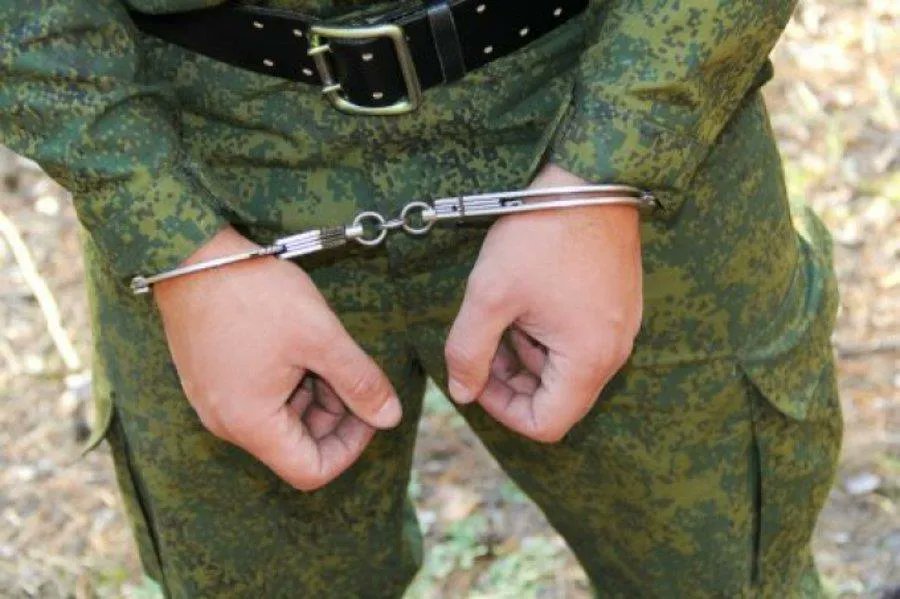
1/ Yuri Kozarenko, the high-profile Russian drone developer who was arrested last Friday on fraud charges, is being accused of passing off Chinese products as his own. Other Russian UAV developers say that his firm was notorious for "brazen relabeling of products from China." ⬇️
2/ The video above shows a drone claimed by Kozarenko's company to be its 'Quadcopter Krechet' model. It's actually a Chinese-made Autel EVO MAX 4T, which has been relabelled as a Russian-made product without even any cosmetic modifications to disguise its origins.
3/ Kozarenko's arrest (see the thread below) is being greeted with glee by Russian UAV specialists who have been accusing his company, Transport of the Future (TB), of fraud for at least the past year.
https://x.com/ChrisO_wiki/status/2053551535997554921
4/ 'UAV developer' writes on Telegram:
"TB, in my opinion, is the tip of a huge iceberg of relabelers and charlatans responsible for disrupting the supply of Baba Yagas [heavy drones] to the troops."
"TB, in my opinion, is the tip of a huge iceberg of relabelers and charlatans responsible for disrupting the supply of Baba Yagas [heavy drones] to the troops."
5/ "They themselves failed to deliver and prevented others from doing so by any means possible.
First and foremost, by feeding top management lies about the real state of the drone industry in Russia.
First and foremost, by feeding top management lies about the real state of the drone industry in Russia.
6/ "Hence the confidence among senior officials that we have a ton of specialists, that drones are made domestically and in abundance, and that we're not hooked on Chinese drones up to our tonsils.
7/ "Hence the favorite phrase of the technical bodies: "The army doesn't need another drone." There are grown-up guys doing all sorts of things, and here you are with your garage-built contraptions in the Kalashnikov lane...
8/ "The result is obvious: entire weapon systems (back-ups, heavy tanks, interceptors) are a complete failure. And now, catching up with the Ukrainians will require incredible effort and investment, and while it's being spent, we'll suffer losses.
9/ "And it's all because of cunning guys like TB.
Relabelers and their cover-ups are an utter evil. Until there's a clear distinction between importers and manufacturers, we'll go nowhere and we won't have our own technologies."
Relabelers and their cover-ups are an utter evil. Until there's a clear distinction between importers and manufacturers, we'll go nowhere and we won't have our own technologies."
10/ In a similar vein, 'Voron FPV' rails against how "the majority of "non-comrades" are afraid to publish absurd news about the brazen relabeling of products from China, thereby simply delaying the processing of these characters."
11/ "They betray the interests of the people who work with this equipment.
Sooner or later, all these assholes will be sitting on 5-litre bottles [i.e sent to the front line]. The list of such developers should be published more often."
Sooner or later, all these assholes will be sitting on 5-litre bottles [i.e sent to the front line]. The list of such developers should be published more often."
12/ Another drone developer complained in June 2025 that his company had been to an exhibition sponsored by TB, at which "all the drones there were actually ours, but they were presenting them as their own. Unbelievable!!!"
13/ As one commentator says, "it's cheaper to order from China than to make it yourself ... You buy everything there, they'll put any sticker you want on it, and you can sell it for a 400% markup."
14/ "The main thing is to put the sticker on before the sale, and preferably over the 'Made in China' sign."
Another commentator notes, "it's not just in the UAV sector; it's the same everywhere, especially in IT companies – they're slashing budgets by the billion!"
Another commentator notes, "it's not just in the UAV sector; it's the same everywhere, especially in IT companies – they're slashing budgets by the billion!"
15/ "I work in IT manufacturing myself and have to deal with rebranding; usually we take the internal components out of the original equipment, cram them into our casing, and voilà – MADE IN RUSSIA!"
16/ Similar component substitution scams are rife throughout the entire Russian technology sector. In 2023, it was reported that cheap but unreliable Chinese components had virtually disabled Russia's ballistic missile early warning radars.
https://x.com/ChrisO_wiki/status/1655449330021433347
17/ 'UAV developer' explains how a dishonest developer can "screw the government and get a medal for it":
"The recipe is simple and, essentially, hasn't changed for the last 20 years:"
"The recipe is simple and, essentially, hasn't changed for the last 20 years:"
18/ "1. Go to China, determine the range of components (let's say, electric motors) that the Chinese are willing to produce. Get samples.
19/ "2. Order a clone of the sample motors with the design documentation from local DIYers. Cost doesn't matter. Along the way, we get a bunch of photos of the production process and individual parts.
"3. Register this clone as a domestically produced motor.
"3. Register this clone as a domestically produced motor.
20/ "4. We smuggle ready-made motors or large-unit kits from China (you can also save on taxes here), assemble them in a garage with the help of three Tajiks, and deliver them as a domestic motor.
21/ "5. Everyone stands up and applauds you and cites you as an example.
No one is bothered by the die-cast parts and stators cut by electrical discharge machining. Where did you even make all this in your garage?! Do you have a document stating that it's domestic!?
No one is bothered by the die-cast parts and stators cut by electrical discharge machining. Where did you even make all this in your garage?! Do you have a document stating that it's domestic!?
22/ "That's all there is to it.
Whether this is good or bad is, in fact, impossible to say definitively. It's clear that if we start hunting for rebadging now, supplies to the front will suffer.
Whether this is good or bad is, in fact, impossible to say definitively. It's clear that if we start hunting for rebadging now, supplies to the front will suffer.
23/ "The problem lies elsewhere: our country, represented by its leaders, can't decide what it wants.
On the one hand, there's talk of technological sovereignty and import substitution, which manufacturers and developers take at face value.
On the one hand, there's talk of technological sovereignty and import substitution, which manufacturers and developers take at face value.
24/ "On the other hand, there are the laws of the market and simple bureaucratic logic. Fund Lyosha and Petya—who knows what they'll achieve, whether they'll be able to bring production up to standard, whether the price will be competitive—and you'll be held accountable.
25/ "On the contrary, there's a proven Chinese solution that will work, the final cost of which is clear. And you can report on the results...
26/ "So, we simply need to stop dreaming about sovereignty and openly admit that we live in a market economy. And the market dictates that independent high-tech production in the country is impossible without long-term targeted subsidies, so we simply steal everything from China.
27/ "Meanwhile, our specialists flock to China, develop technologies there, which the Chinese then sell here.
At least local manufacturers will stop wasting their time and energy on the pipe dream of creating and selling a domestic product.
At least local manufacturers will stop wasting their time and energy on the pipe dream of creating and selling a domestic product.
28/ "Or else, unconditionally subsidise domestic producers capable of bringing production to a competitive level within five years. But no one will agree to this for the reasons stated." /end
• • •
Missing some Tweet in this thread? You can try to
force a refresh