
When elected officials begin communicating like conspiracy influencers, something fundamental has changed in politics.
What we are watching is not simply the spread of “conspiracy theories,” but the mainstreaming of conspiracist aesthetics and communication styles into modern political culture itself 🧵
Research on populist political communication has increasingly examined how modern political actors use emotional narratives, anti-elite framing and “hidden truth” rhetoric to build audience engagement and identity.
pmc.ncbi.nlm.nih.gov/articles/PMC63…
This shift has accelerated dramatically in the algorithmic age, where politics increasingly competes not just for votes, but for attention.
What we are watching is not simply the spread of “conspiracy theories,” but the mainstreaming of conspiracist aesthetics and communication styles into modern political culture itself 🧵
Research on populist political communication has increasingly examined how modern political actors use emotional narratives, anti-elite framing and “hidden truth” rhetoric to build audience engagement and identity.
pmc.ncbi.nlm.nih.gov/articles/PMC63…
This shift has accelerated dramatically in the algorithmic age, where politics increasingly competes not just for votes, but for attention.


1/
QAnon was a major turning point in this evolution, not because every claim was believed literally, but because it demonstrated how participatory conspiracy ecosystems could create highly emotionally invested political audiences.
Politics stopped functioning purely as ideology and increasingly became:
- interactive narrative,
- online mythology,
- fandom culture,
- and perpetual “decoding” of hidden meaning.
Researchers studying online conspiracy communities observed how these systems rewarded participation, identity and emotional immersion:
arxiv.org/abs/2105.04632
Social media platforms then amplified this further because algorithms consistently reward:
- outrage,
- mystery,
- emotional intensity,
- tribal conflict,
- and unresolved narratives.
Research into algorithmic amplification and misinformation ecosystems has repeatedly shown that emotionally charged content spreads more effectively online:
arxiv.org/abs/2110.11010
This is why modern political communication increasingly resembles influencer culture, livestream drama and reality television more than traditional institutional politics.
QAnon was a major turning point in this evolution, not because every claim was believed literally, but because it demonstrated how participatory conspiracy ecosystems could create highly emotionally invested political audiences.
Politics stopped functioning purely as ideology and increasingly became:
- interactive narrative,
- online mythology,
- fandom culture,
- and perpetual “decoding” of hidden meaning.
Researchers studying online conspiracy communities observed how these systems rewarded participation, identity and emotional immersion:
arxiv.org/abs/2105.04632
Social media platforms then amplified this further because algorithms consistently reward:
- outrage,
- mystery,
- emotional intensity,
- tribal conflict,
- and unresolved narratives.
Research into algorithmic amplification and misinformation ecosystems has repeatedly shown that emotionally charged content spreads more effectively online:
arxiv.org/abs/2110.11010
This is why modern political communication increasingly resembles influencer culture, livestream drama and reality television more than traditional institutional politics.


2/
Importantly, conspiracist political culture does not emerge in a vacuum.
It often grows fastest during periods of institutional distrust and social fragmentation.
Watergate.
Iraq WMD failures.
The financial crisis.
Cambridge Analytica.
Epstein.
Pandemic-era distrust.
These events created fertile ground for "what else are they hiding?" narratives because many people increasingly lost faith in traditional institutions, media and expertise.
This does NOT mean every conspiracy theory becomes true.
But it does help explain why conspiracist styles of communication become politically useful.
Research into conspiracy thinking repeatedly finds that uncertainty, distrust and social anxiety create environments where simplistic hidden-enemy narratives become emotionally attractive:
pmc.ncbi.nlm.nih.gov/articles/PMC94…
At the same time, modern political movements across multiple countries increasingly use:
- cryptic symbolism,
- influencer aesthetics,
- "just asking questions" rhetoric,
- anti-establishment mythologies,
- and emotionally charged identity narratives.
The ideologies differ.
But the communication mechanics often look remarkably similar.
Importantly, conspiracist political culture does not emerge in a vacuum.
It often grows fastest during periods of institutional distrust and social fragmentation.
Watergate.
Iraq WMD failures.
The financial crisis.
Cambridge Analytica.
Epstein.
Pandemic-era distrust.
These events created fertile ground for "what else are they hiding?" narratives because many people increasingly lost faith in traditional institutions, media and expertise.
This does NOT mean every conspiracy theory becomes true.
But it does help explain why conspiracist styles of communication become politically useful.
Research into conspiracy thinking repeatedly finds that uncertainty, distrust and social anxiety create environments where simplistic hidden-enemy narratives become emotionally attractive:
pmc.ncbi.nlm.nih.gov/articles/PMC94…
At the same time, modern political movements across multiple countries increasingly use:
- cryptic symbolism,
- influencer aesthetics,
- "just asking questions" rhetoric,
- anti-establishment mythologies,
- and emotionally charged identity narratives.
The ideologies differ.
But the communication mechanics often look remarkably similar.
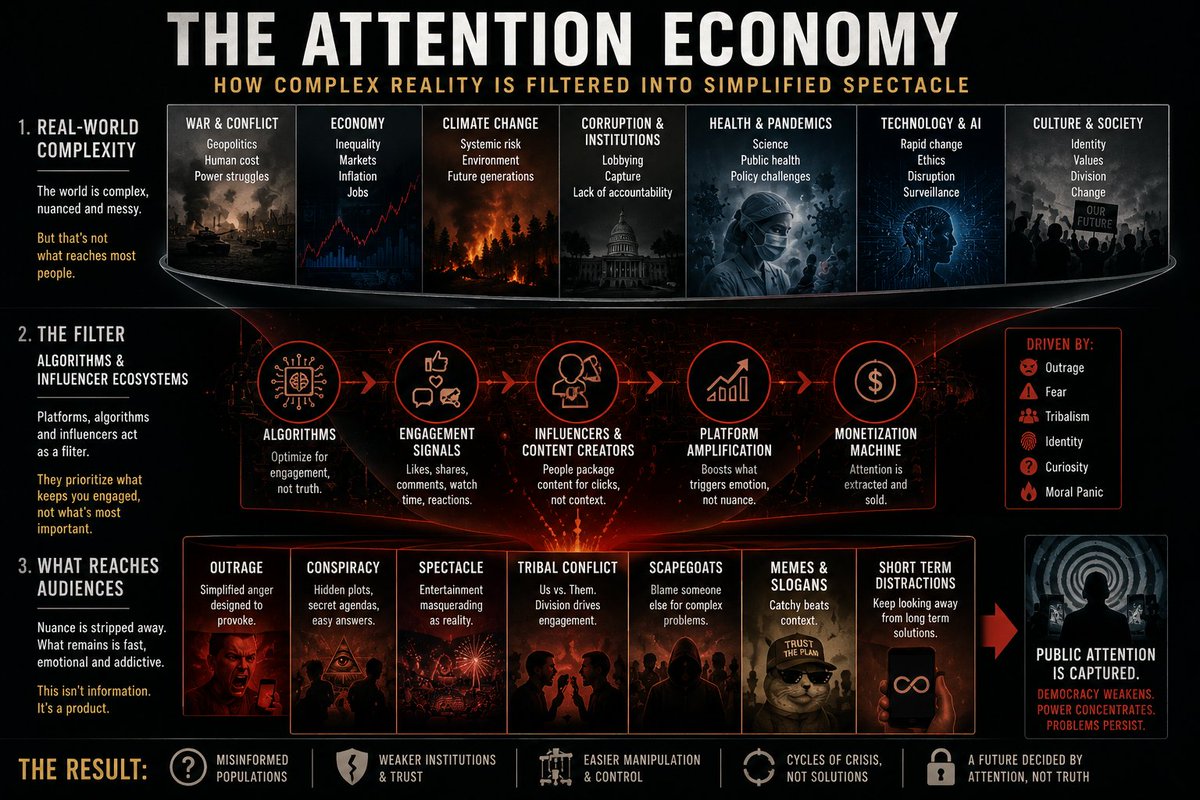

Modern propaganda rarely looks like old propaganda anymore.
It arrives as memes.
As livestreams.
As influencer culture.
As ragebait.
As cryptic symbolism.
As endless "hidden truth" narratives.
As spectacle.
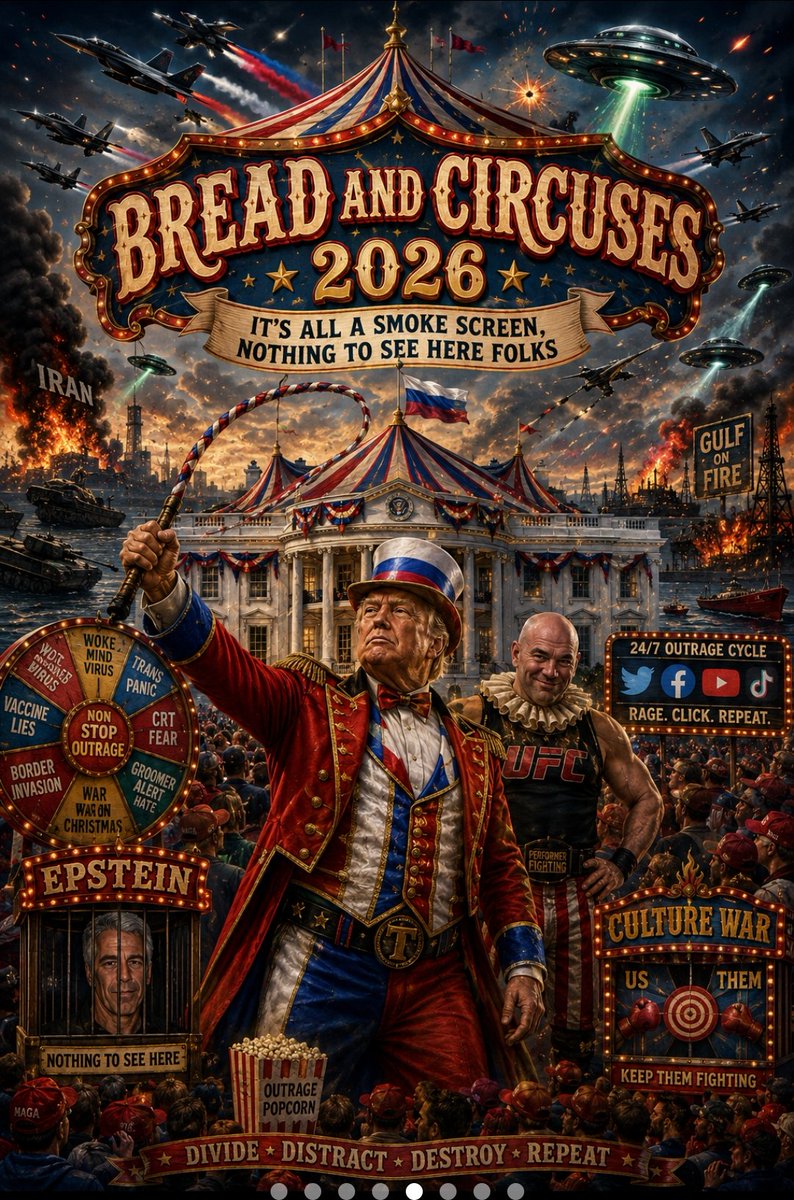
Politics is no longer just competing for votes.
It is competing for attention.
Bread and Circuses for the algorithmic age 🎪
It arrives as memes.
As livestreams.
As influencer culture.
As ragebait.
As cryptic symbolism.
As endless "hidden truth" narratives.
As spectacle.
Politics is no longer just competing for votes.
It is competing for attention.
Bread and Circuses for the algorithmic age 🎪
• • •
Missing some Tweet in this thread? You can try to
force a refresh





