1/ Even as Hezbollah pounds Israeli forces in Lebanon with FPV drones, Ukraine's ambassador to Israel says that the Israeli government has rebuffed offers of help from Ukraine and hasn't extended an invitation for President Volodymr Zelenskyy to visit. ⬇️
2/ In an interview with Israeli news outlet Ynet, Ukraine’s ambassador to Israel, Yevgen Korniychuk, says that Israel is missing an opportunity to learn from Ukraine's experience in countering weaponised drones.
3/ Hezbollah has recently been using fibre-optic FPV drones against IDF forces in Lebanon. They have become the dominant cause of Israeli casualties. Dozens of soldiers are reported to have been wounded and several killed by Hezbollah drone strikes.
4/ Korniychuk says that Ukraine is "fighting from a different angle against the same axis of evil. Unfortunately, we do not see much interest or appetite from the Israeli leadership in this field. I do not want to speculate about the reasons for that."
5/ He says that he is "very sorry to hear reports about soldiers who were hit by drones, because we suffer from exactly the same thing." He has spoken with many Israelis who he says do not understand why Israel has not made use of Ukraine's anti-drone expertise.
6/ "When meeting people from different parts of Israeli society, I often hear frustration over the fact that Israel is missing an opportunity to save more of its soldiers’ lives."
7/ "Most Israelis support Ukraine and do not understand why Ukrainians are able to deal with drones and Israel is not."
According to news reports, the IDF is trying – so far unsuccessfully – to find its own solutions to the drone threat.
8/ Korniychuk also expressed frustration at the Israeli government's apparent reluctance to invite President Zelenskyy to visit (despite Israeli foreign ministry officials' statements to the contrary).
9/ "As you know, President Zelenskyy recently made several regional visits in the Middle East, mainly to discuss security cooperation and advancing peace. I worked hard to create direct political contact for our leadership."
10/ "However, you cannot come to someone’s home without an invitation."
11/ Zelenskyy himself has said that he thinks "Russia is supporting Iran directly, 100 percent." And yet, "nobody [in Israel] asked me to help," in contrast to the Gulf states, where military cooperation agreements have recently been signed following Iranian drone attacks.
12/ The war in Ukraine has strained relationships between Israel and the government of Benjamin Netanyahu, which is widely seen as friendly towards Russia. The Israeli government has consistently refused to provide Ukraine with defensive weaponry.
13/ Netanyahu has boasted of his personal relationship with Putin, describing it as being of "strategic value" for Israel — a statement that caused additional strain for the Israel-Ukraine relationship.
14/ In February 2025, Israel voted with Russia to reject a UN resolution reaffirming Ukraine's territorial integrity. More recently, relations between the two countries have been further strained over Russian deliveries to Israel of grain stolen from occupied Ukrainian territory.
15/ It's likely that the Israeli government is declining to engage with the Ukrainians because it doesn't want to annoy Russia. This doesn't seem to have deterred the Gulf states, despite fierce criticism from Russian sources of their cooperation with Ukraine. /end
1/ Nikolai Patrushev, a key adviser to Vladimir Putin, says that Russia is fighting a pan-European neo-Nazi alliance, and advocates Russian naval action in the English Channel. He warns the Baltic states of "the end of ... peaceful, carefree life and sovereignty." ⬇️
2/ Patrushev is a former Secretary of Russia’s Security Council, a former head of the FSB, and a highly influential presidential adviser. He has been spoken of as a possible successor to Putin. Like Putin, he has often shown an extremely paranoid, aggressive worldview.
3/ This outlook is on display in an interview headlined "When War Is on the Doorstep" with Russia's main state newspaper, Rossiyskaya Gazeta, in which he addresses his views on the war in Ukraine and Russia's wider geopolitical situation.
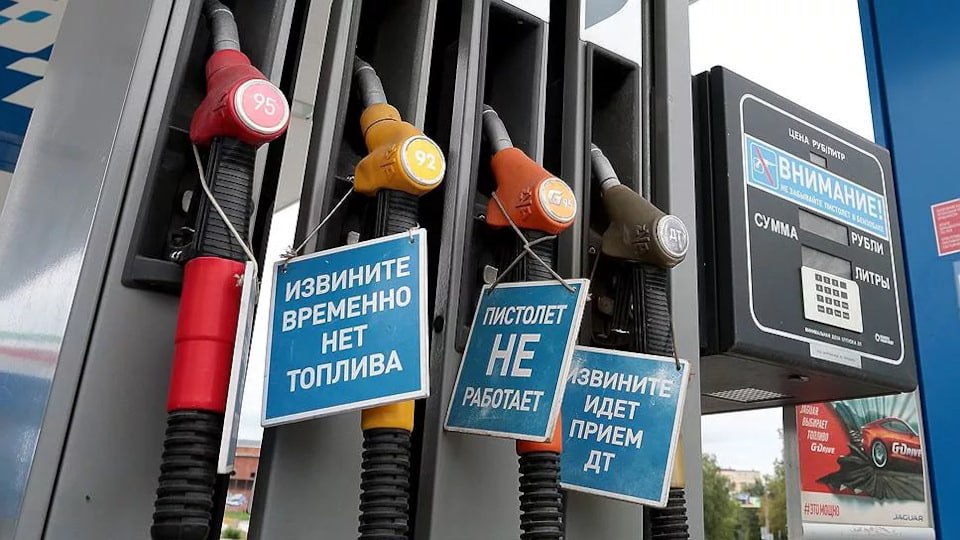
1/ Russia's former chief doctor Gennady Onishchenko says that the current fuel crisis is positively beneficial for Russia: it's making the air cleaner, and city residents are becoming fitter by being deprived of their cars. Russian commentators are wondering what he's smoking. ⬇️
2/ The comments were made by Onishchenko, an academician of the Russian Academy of Sciences, in an interview on Friday with the Moscow Speaks radio station:
3/ "We even stopped walking to the neighbouring [building] entrance and started driving in cars. If we talk about Moscow, it's much more sensible to give up cars. Most people can easily and comfortably ride the metro, and leave cars for trips outside the city.
1/ A Russian general has been arrested by a military court after being accused of 'selling' nearly 90 soldiers to a mercenary leader who is accused of extortion, kidnapping, arms trafficking, torture, and murder. Lt Gen Alexander Dembitsky denies the accusations. ⬇️
2/ The case involves Alexey Marushchenko, the head of the 'Yastreb' private military company, which fought in Ukraine. Yastreb's recruiters are said to have promised those who wished to enlish for military service that they would fight with Yastreb, rather than the regular army.
3/ The prospective contract soldiers were required to pay up front for this privilege. However, Russian criminal investigators found that Yastreb pocketed the recruits' money and they were sent straight to regular military units without any opportunity to serve with Yastreb.
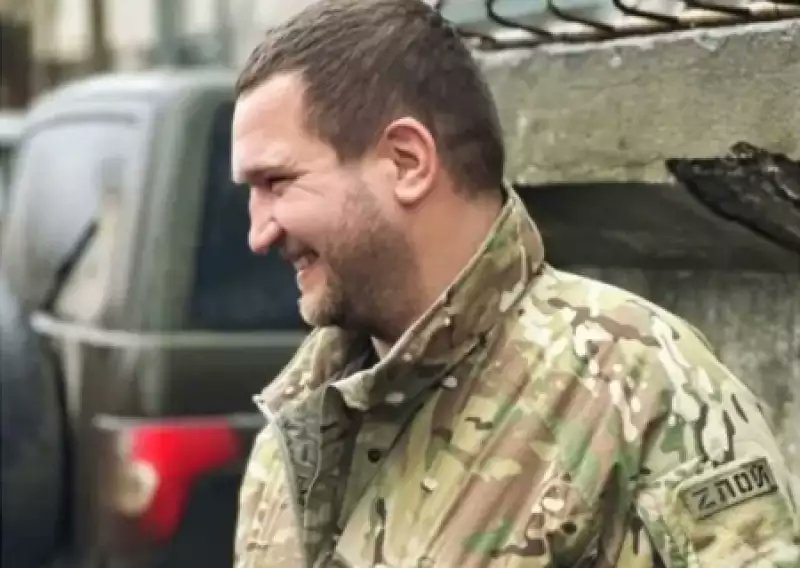
1/ An infamous Russian 'butcher commander' accused of sending his subordinates to their deaths to cover up his own drug-dealing has been promoted to command the 114th Separate Guards Motor Rifle Brigade. His many critics aren't impressed by this apparent favouritism. ⬇️
2/ Colonel Igor Puzik, callsign 'Evil,' gained notoriety in 2024 after two drone operators with the callsigns 'Goodwin' and 'Ernest' publicly accused Puzik of drug trafficking in a social media video. He sent them to their deaths in an infantry assault a few days later.
3/ The practice of deliberately killing unwanted subordinates by sending them on suicide missions has since been dubbed 'Puzikism' by Russian warbloggers. Despite their criticism and an official investigation, Puzik seems to have prospered under his superiors' protection.
1/ Soaring fuel prices in Russia are providing an unparalleled opportunity to make a quick profit through price gouging, artificial scarcity, and corruption. A Russian warblogger highlights how gas station owners and operators are exploiting the crisis. ⬇️
2/ The Russian 'Kovpak's Detachment' Telegram channel writes:
"In the case of absolutely any shortage, tension in society is created by those who want to make money on it."
3/ "In the case of fuel – gas station owners and various scum, who, with the tacit permission (obviously, not for free) of the gas station management, hang around them.
1/ Russia's deal with India to supply fuel to alleviate the current shortages involves the Indians selling fuel refined from discounted Russian oil back to Russia at full market prices. As warblogger Yuri Baranchik points out, this is extraordinarily bad value for Russia. ⬇️
2/ Baranchik grumbles:
"Well, gentlemen, it's happened: we're witnessing the birth of a new economic reality, which can safely be called "a cycle of enrichment for the Indian oil refining sector at the expense of the Russian budget and the patience of its citizens."
3/ "Look at the elegant business model that's emerging. We're pumping crude oil to India. A lot, a record amount, sometimes as much as 2.7 million barrels per day. Naturally, we're pumping it at that legendary discount that's become the talk of the town.