
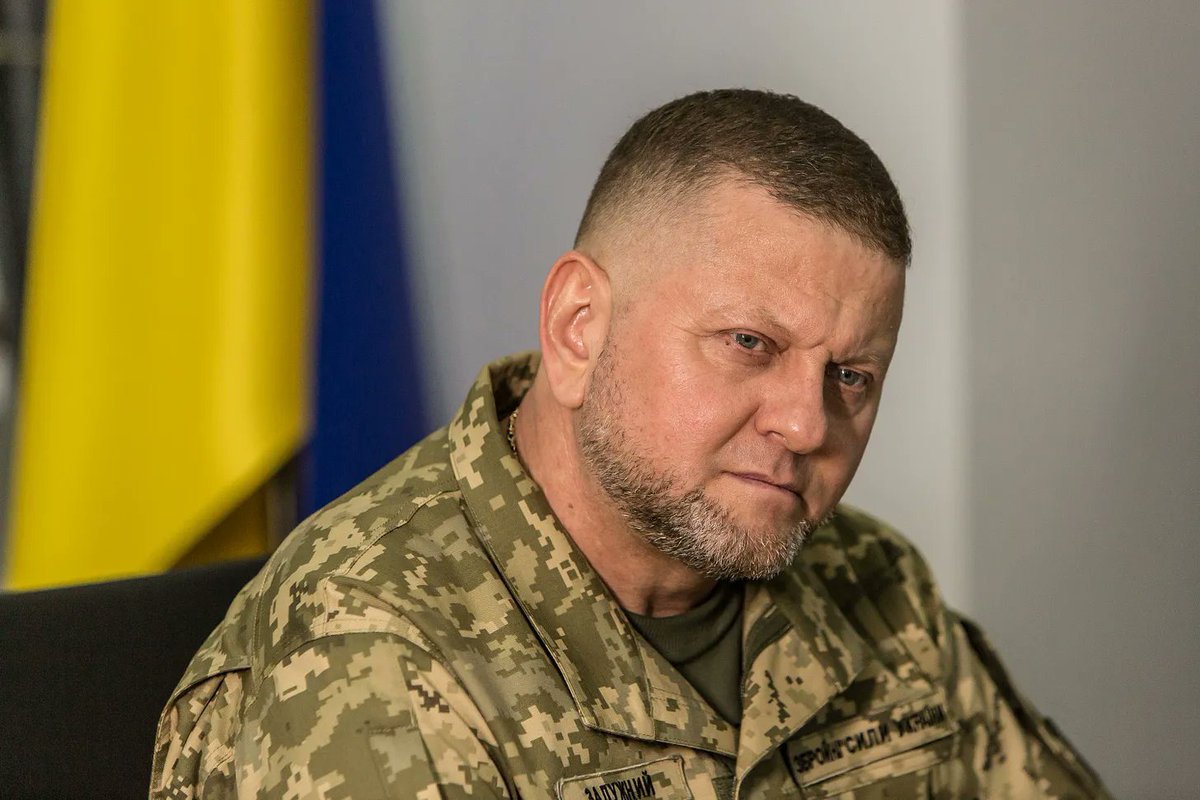
General Zaluzhnyi, former Commander-in-Chief of the Ukrainian Armed Forces:
Since 2023, significant changes have taken place on the battlefield, giving rise to an entirely new type of warfare shaped by emerging tools and the far-reaching consequences of this transformation. 1/17
Since 2023, significant changes have taken place on the battlefield, giving rise to an entirely new type of warfare shaped by emerging tools and the far-reaching consequences of this transformation. 1/17
At that time, the emergence of new tools such as unmanned systems made the battlefield increasingly transparent, creating a so-called deadlock that made the achievement of operational and strategic objectives extremely difficult. 2/17
Since then, Russia has done substantial work to find a way out of this deadlock. 3/17
Despite its extensive technical arsenal and attempts to break the stalemate through tactical actions combined with new technological solutions, the result has remained obvious: in a war of machines, people can achieve only limited success using old principles of operational art.
Yet in this process, people themselves become expendable material that naturally requires constant replenishment. 5/17
Unfortunately, after ceding the initiative on the battlefield to Russia, Ukraine was forced not only to respond to emerging challenges, but also to react to the enemy’s systematic efforts across nearly all sectors of the front. 6/17
In doing so, it often had to rely on similar methods and, inevitably, at times paid an extremely high price in casualties. 7/17
The issue of mobilization and the methods by which it is conducted are increasingly becoming the center of conflict between the country’s population and the Ukrainian state authorities. 8/17
Today, only a very limited number of personnel remain at the frontline, carrying out tasks at the limits of human endurance, often without even the physical possibility of rotation. 9/17
Remaining in shelter, even in the enemy’s rear, is often safer than moving back toward one’s own rear positions. In the second echelon operate analytical support teams, technical maintenance and support personnel for combat systems, as well as their security elements. 10/17
The launch, coordination, and command centers themselves are located in operational depth.
Strategic targets have shifted toward the destruction of the economy through strikes on infrastructure and the weakening of societal resilience through attacks on civilian objects. 11/17
Strategic targets have shifted toward the destruction of the economy through strikes on infrastructure and the weakening of societal resilience through attacks on civilian objects. 11/17
The boundaries between the front and the rear have effectively disappeared; the entire territory of the state and, unfortunately, the entire population have become part of the battlespace. 12/17
All of this creates the need for so-called “smart mobilization,” designed around scientific and technological progress. 13/17
An excellent example of such smart mobilization is the gradual transfer of certain wartime functions to private military companies or the financial incentivization of those who voluntarily participate in the war effort. 14/ 17
The second type of mobilization is nationwide mobilization with clearly defined quotas and, most importantly, clearly defined terms of service for all categories of citizens. 15/17
Perhaps there is also a third, temporary form of mobilization: the partial transfer of certain functions to private companies, combined with continued improvements to the existing system through open dialogue with society. 16/17
This would especially involve engaging young people on issues such as a new model of military service, clearly defined training periods, fixed terms of service, and future prospects afterward. 17/17
@threadreaderapp unroll
• • •
Missing some Tweet in this thread? You can try to
force a refresh






