BRITISH POLLING & PUBLIC OPINION
In 1961 the Harold Macmillan's Conservative government were finally looking to bring in immigration restrictions first put forward by Churchill in 1954 to end the right of Commonwealth citizens to freely come to Britain. This was fiercely opposed on moral grounds by Hugh Gaitskell's Labour Party. The public were strongly supportive of restrictions. The way they were brought in caused a huge spike in people bringing family members over and effectively marked the point where immigration that the immigrants regarded as temporary became permanent.
#Politics #History
• • •
Missing some Tweet in this thread? You can try to
force a refresh

This book is about the history of Sikh immigration to Gravesend. It's a town East of London on the south bank of the Thames associated with Dickens.
OK, so in common with almost all books on British race relations and immigration, the book is written by a foreigner. In this case, an American protestant marries to an Indian Hindu woman. It seem like the book is based on two studies of the Sikhs of Gravesend and a study in the Punjab of the area they came from. The first study was 1970-71, and the second was in 1983 by which time the community had changed substantially and the book was substantially rewritten. I've ordered the first edition to try and get his uncontaminated earlier impressions.
I first misread the name and thought he was named after the Duke of Welington. Grok says he's a protestant. I wonder if despite the surname, he couldn't be a Methodist?
THE SIKHS IN BRITAIN
Not a lot of people know that the Sikhs originally arived after the war as non-English speaking illiterate peasants on forged passports who turned living standards back to Disckensian squalor.🧵
They brought with them peasant Communism & linked up with British Communists to put down local opposition to the ethnic displacement of the natives. There were famous riots and roving bands of Sikh youth patroling to violently confront the white youth.🧵
In 1964, the public reaction to being ethnically displaced by non-English speaking illiterate Sikh peasants led to Britain's Most Racist Election. Few know the public reaction to Sikhs was a significant part of what fueled Powell's support.🧵
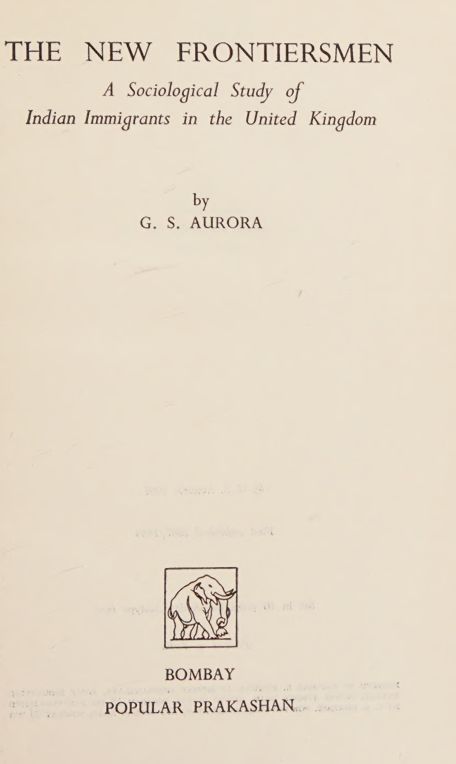
I haven't reread a book in ages, but I thought this might be somewhat topical. It is a remarkable study by an Indian economist who lived amongst immigrant Sikhs in West London in the late 50s. Brave, British loving warriors invited by a grateful nation for their services in War?
The book conceals the name of the community being looked at behind the name 'Greenend'. It is really though focused on the Sikhs of Southall, the neighbouring area to Greenford.
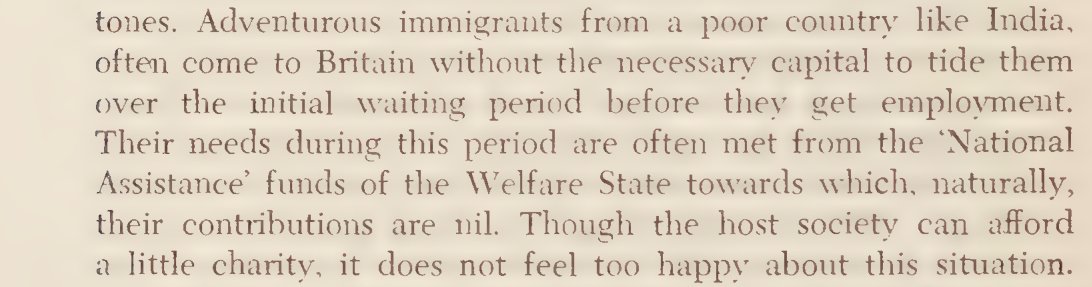
A long forgotten issue is that migrants from India and the West Indies were able to take advantage of welfare on offer in Britain and live of National Assistance while they looked for work. This obviously lowered the risk considerably.
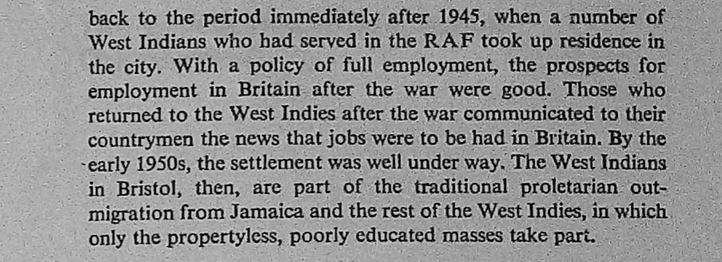
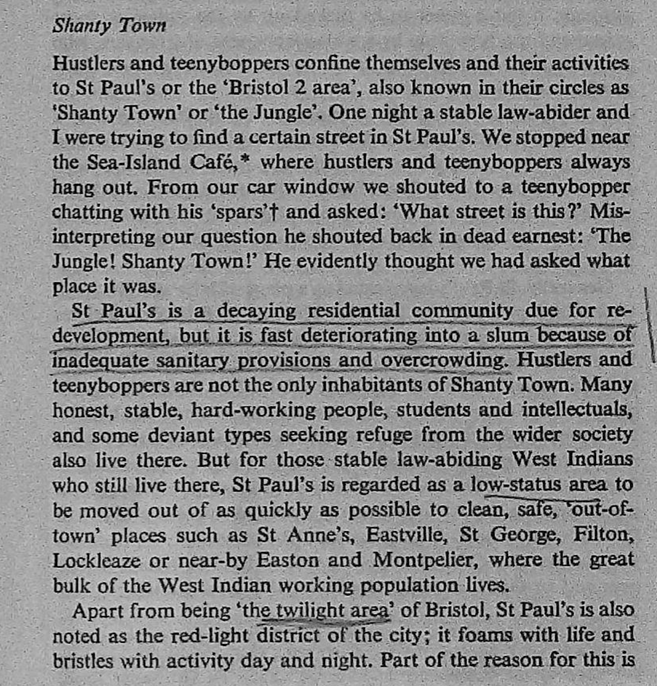
Next book on the list. Bristol has always been one of the more liberal, studenty places that has seen significant postwar Commonwealth immigration.
The actual invitation of the Windrush Generation...
The area of West Indian immigration to Bristol was locally called Shanty Town or the Jungle. As with so many other such areas, it was notorious for prostitution.
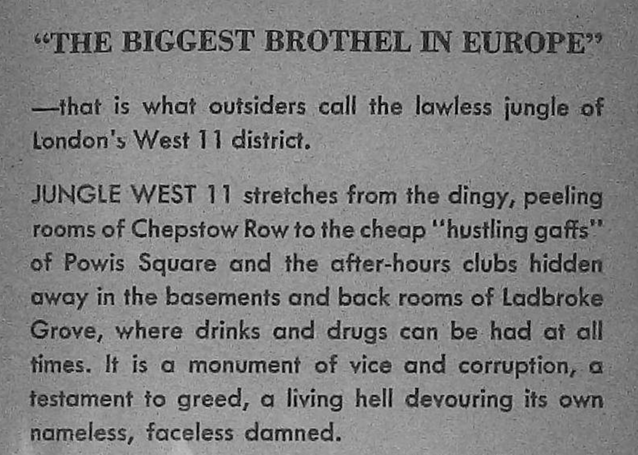
This book just arrived in the post. It is a reprint of a book on race relations from 1960 and contains the best academic account of The Notting Hill riots that I am aware of. Most interesting is that it predates the 1964 concensus to take many aspects of race of the table as a topic for public discussion. In common with a remarkable number of the sociologists working on this topic in the period, the author was an immigrant herself. Apparantly she came up with the term "gentrification".
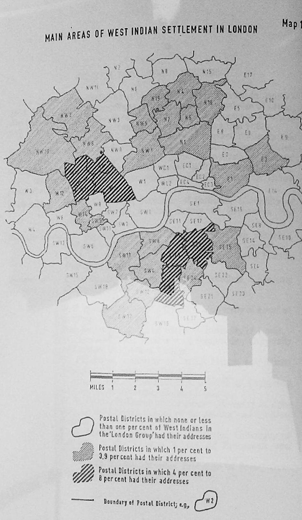
I quite liked thismap of where West Indians were located in 1960. You have the settlement around Notting Hill north of the Thames, and Brixton to the south.
This table illistrates why Attlee wasn't particularly worried about West Indian immigration during his time in power (1945-51) and why it was only towards the end of Churchill's final time in office (51-mid 55) that any urgency entered the conversation, though he was too old and stroked out to do much about it.
Churchill was replaced by first Eden and then Macmillan who shared the general civil service view that it was a topic for cranks. That attitude lasted until mid-1958 with rioting in Nottingham and Notting Hill, which brought back memories of the 8 months of race riots in 1919.
Unsurprisingly, the book opens with the Windrush Scandal, and the conventional story of "is" having brought "them" here, and hence owing them some kind of moral duty in return.
The framing of the story is quite interesting... it just focuses, like almost all Windrush scandal cases, on the profound inconvenience and moral shame after a lifetime of contribution. What is almost never said is what the basis of the claim to citizenship was, or why that was called into queston.
In this case, the individual had arrived in England in the 60s on a parent's passport and had never aquired a passport of her own. The destroyed documents would have helped, but they were never proof of citizenship.
What this comes down to is decades of immigration law, implemented to tamp down public concerns about immigration, but without any serious intention towards systematic enforcement... hence people spending 50 years living and working in the country without proof of a right to live and work in the country.
My read of this is that it comes down to a profound lack of seriousness about this going back at least to Harold Macmillan who, even though he was the one who finally imposed immigration restrictions, regarded it as a topic for cranks.
It is a situation that is impossible to deal with, to end, to ever put the lid on without creating case after case like this.