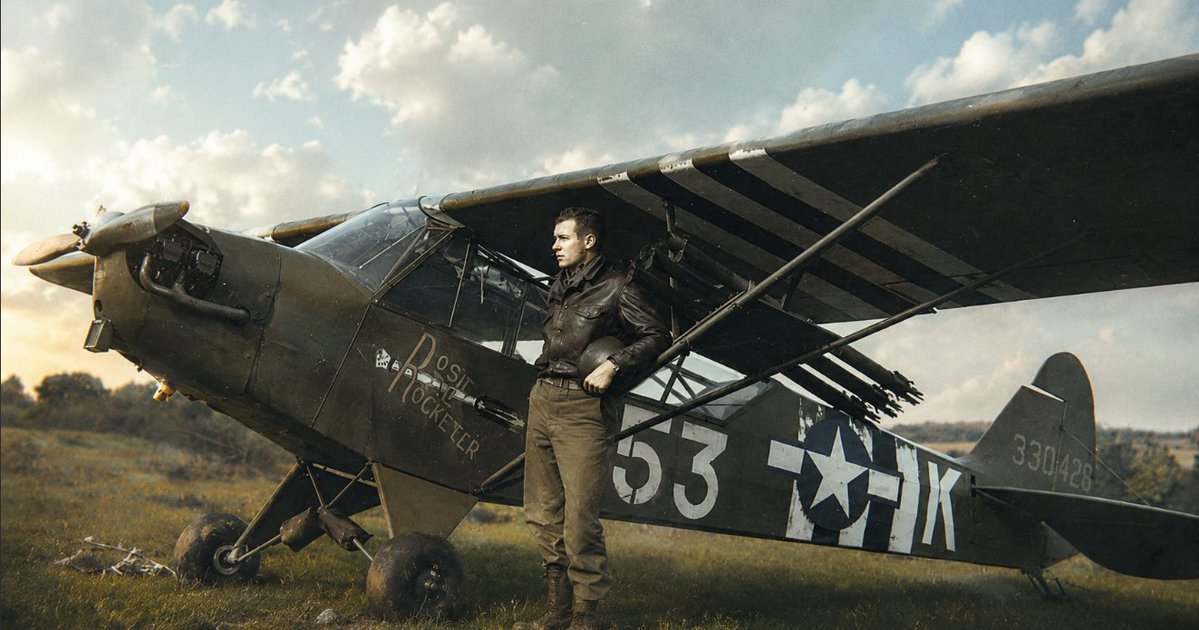
Yes, what you are seeing here is a tiny unarmed observation plane with six bazookas strapped to its wings.
The pilot was a 32 year old history teacher from Illinois.
He destroyed at least six German tanks.
This is the story of Bazooka Charlie..🧵1/5
The pilot was a 32 year old history teacher from Illinois.
He destroyed at least six German tanks.
This is the story of Bazooka Charlie..🧵1/5
🧵 2/5
Charles M. Carpenter was born on August 29 1912 in Edgington, Illinois. He grew up in the small farming towns of the Mississippi River valley. He became a high school teacher in Moline, Illinois. He taught history. He coached the football team.
He was 30 years old when the United States entered World War II. He did not have to enlist. He had a stable career and a wife and a young daughter named Carol. He volunteered anyway.
The Army sent him to flight school. They saw his quiet steady personality and decided he had the temperament for one of the most dangerous jobs in the military. Observation pilot.
By the spring of 1944 he had been promoted to Major and assigned to the 4th Armored Division of General George Patton's Third Army. He was given a fabric covered Piper L-4H Grasshopper. The military version of the J-3 Cub. The aircraft weighed 1,220 pounds at gross weight. It cruised at 80 miles per hour. It had no armor. It had no weapons.
His job was to fly low and slow over the front line, find German positions, and call in artillery on them.
He decided that was not enough.
Charles M. Carpenter was born on August 29 1912 in Edgington, Illinois. He grew up in the small farming towns of the Mississippi River valley. He became a high school teacher in Moline, Illinois. He taught history. He coached the football team.
He was 30 years old when the United States entered World War II. He did not have to enlist. He had a stable career and a wife and a young daughter named Carol. He volunteered anyway.
The Army sent him to flight school. They saw his quiet steady personality and decided he had the temperament for one of the most dangerous jobs in the military. Observation pilot.
By the spring of 1944 he had been promoted to Major and assigned to the 4th Armored Division of General George Patton's Third Army. He was given a fabric covered Piper L-4H Grasshopper. The military version of the J-3 Cub. The aircraft weighed 1,220 pounds at gross weight. It cruised at 80 miles per hour. It had no armor. It had no weapons.
His job was to fly low and slow over the front line, find German positions, and call in artillery on them.
He decided that was not enough.
🧵 3/5
Carpenter painted his Piper Cub yellow with a black lightning bolt running down the fuselage. He named it Rosie the Rocketer in honor of the women who built American warplanes back home.
Then he started strapping bazookas to it.
He began with two M1 rocket launchers under the wing struts. He flew over the front line, dove on a German vehicle, and fired. The bazooka worked. He added two more. Then two more. He finally settled on six bazookas. Three under each wing, mounted just outboard of the jury struts. He later upgraded them to the newer M9 bazookas firing M6A3 HEAT rounds capable of penetrating nearly four inches of armor.
His aircraft became one of the most unusual improvised anti-tank platforms of the war.
The other pilots called him the Mad Major.
His routine was simple. He would find a German tank or armored vehicle from the air. He would corkscrew down to attack altitude. He would dive at the enemy and fire his bazookas one at a time or in volleys. He would climb away and circle back to a friendly airfield to reload.
He flew almost always alone. Any additional weight in the cockpit affected the Cub's already marginal performance.
He wrote home to his wife Elda in August 1944:
"Lately I have been taking quite a few chances but my luck has been marvelous. Yesterday I got a bullet hole through the wing and hit a church steeple with one wheel."
Carpenter painted his Piper Cub yellow with a black lightning bolt running down the fuselage. He named it Rosie the Rocketer in honor of the women who built American warplanes back home.
Then he started strapping bazookas to it.
He began with two M1 rocket launchers under the wing struts. He flew over the front line, dove on a German vehicle, and fired. The bazooka worked. He added two more. Then two more. He finally settled on six bazookas. Three under each wing, mounted just outboard of the jury struts. He later upgraded them to the newer M9 bazookas firing M6A3 HEAT rounds capable of penetrating nearly four inches of armor.
His aircraft became one of the most unusual improvised anti-tank platforms of the war.
The other pilots called him the Mad Major.
His routine was simple. He would find a German tank or armored vehicle from the air. He would corkscrew down to attack altitude. He would dive at the enemy and fire his bazookas one at a time or in volleys. He would climb away and circle back to a friendly airfield to reload.
He flew almost always alone. Any additional weight in the cockpit affected the Cub's already marginal performance.
He wrote home to his wife Elda in August 1944:
"Lately I have been taking quite a few chances but my luck has been marvelous. Yesterday I got a bullet hole through the wing and hit a church steeple with one wheel."
🧵 4/5
September 19 1944. The Battle of Arracourt in eastern France.
Patton's Third Army had pushed deep into Lorraine. The Germans launched a major armored counterattack to stop them. Panzer divisions equipped with Panther and Tiger tanks rolled west under heavy fog.
Carpenter took off in Rosie the Rocketer.
He found the German tank column moving through the mist. He dove. He fired. He hit a Panther. The tank caught fire. He climbed away, came back around, fired again. Another tank stopped moving. He flew back to his airfield, reloaded, and went out again. By the end of the day he had flown three sorties and fired sixteen bazooka rounds. He had destroyed at least two Panthers and damaged others. The German advance at his sector of the battle had been blunted.
The next month he destroyed four more tanks and an armored car. The Germans started shooting at him with everything they had. He told a Stars and Stripes reporter:
"Word must be getting around to watch out for Cubs with bazookas on them. Every time I show up now they shoot with everything they have."
His official credited total reached six German armored vehicles destroyed or disabled. Later accounts claimed some may have included Tiger tanks. He was the only Piper Cub pilot in the entire war to be considered a tank ace.
According to later accounts he even landed his Cub during one defensive action, climbed onto an American Sherman tank, and personally manned its .50 caliber machine gun to help hold off a German attack.
He earned the Silver Star, the Bronze Star with Oak Leaf Cluster, and the Air Medal with Oak Leaf Cluster.
September 19 1944. The Battle of Arracourt in eastern France.
Patton's Third Army had pushed deep into Lorraine. The Germans launched a major armored counterattack to stop them. Panzer divisions equipped with Panther and Tiger tanks rolled west under heavy fog.
Carpenter took off in Rosie the Rocketer.
He found the German tank column moving through the mist. He dove. He fired. He hit a Panther. The tank caught fire. He climbed away, came back around, fired again. Another tank stopped moving. He flew back to his airfield, reloaded, and went out again. By the end of the day he had flown three sorties and fired sixteen bazooka rounds. He had destroyed at least two Panthers and damaged others. The German advance at his sector of the battle had been blunted.
The next month he destroyed four more tanks and an armored car. The Germans started shooting at him with everything they had. He told a Stars and Stripes reporter:
"Word must be getting around to watch out for Cubs with bazookas on them. Every time I show up now they shoot with everything they have."
His official credited total reached six German armored vehicles destroyed or disabled. Later accounts claimed some may have included Tiger tanks. He was the only Piper Cub pilot in the entire war to be considered a tank ace.
According to later accounts he even landed his Cub during one defensive action, climbed onto an American Sherman tank, and personally manned its .50 caliber machine gun to help hold off a German attack.
He earned the Silver Star, the Bronze Star with Oak Leaf Cluster, and the Air Medal with Oak Leaf Cluster.
🧵 5/5
In early 1945 Carpenter was forced out of the cockpit by a lump in his neck. The Army doctors diagnosed Hodgkin's lymphoma. They gave him months to live.
He received an honorable discharge in 1946. He went home to Illinois. He returned to teaching history. He coached football again. He repaired the marriage that the war had nearly destroyed. He watched his daughter Carol grow up.
He outlived the doctors' prognosis by twenty years.
Charles Carpenter died in 1966 at the age of 53. The Mad Major. Bazooka Charlie. The history teacher who became the most unlikely tank ace in the history of aerial warfare.
Rosie the Rocketer survived the war. The little yellow Cub was sold to a flying club in Vienna. She disappeared into an Austrian aviation museum in 1976. In 2017 researchers from the American Heritage Museum in Massachusetts located her and confirmed her identity. The Collings Foundation purchased her and shipped her home to the United States.
She was restored to flying condition by Colin Powers of La Pine, Oregon. The original nose art was repainted by Carpenter's granddaughter Erin Pata. The plane took to the air again in 2020.
She still flies today.
Every October at the American Heritage Museum in Stow, Massachusetts, Rosie the Rocketer takes off for the museum's annual World War Two reenactment. Six dummy bazookas still hang from her wings.
The little Piper Cub that hunted German tanks.
The history teacher who flew her.
Bazooka Charlie.
I post a story like this every single day. Most people never see them. Follow so you don't miss the next one.
In early 1945 Carpenter was forced out of the cockpit by a lump in his neck. The Army doctors diagnosed Hodgkin's lymphoma. They gave him months to live.
He received an honorable discharge in 1946. He went home to Illinois. He returned to teaching history. He coached football again. He repaired the marriage that the war had nearly destroyed. He watched his daughter Carol grow up.
He outlived the doctors' prognosis by twenty years.
Charles Carpenter died in 1966 at the age of 53. The Mad Major. Bazooka Charlie. The history teacher who became the most unlikely tank ace in the history of aerial warfare.
Rosie the Rocketer survived the war. The little yellow Cub was sold to a flying club in Vienna. She disappeared into an Austrian aviation museum in 1976. In 2017 researchers from the American Heritage Museum in Massachusetts located her and confirmed her identity. The Collings Foundation purchased her and shipped her home to the United States.
She was restored to flying condition by Colin Powers of La Pine, Oregon. The original nose art was repainted by Carpenter's granddaughter Erin Pata. The plane took to the air again in 2020.
She still flies today.
Every October at the American Heritage Museum in Stow, Massachusetts, Rosie the Rocketer takes off for the museum's annual World War Two reenactment. Six dummy bazookas still hang from her wings.
The little Piper Cub that hunted German tanks.
The history teacher who flew her.
Bazooka Charlie.
I post a story like this every single day. Most people never see them. Follow so you don't miss the next one.
• • •
Missing some Tweet in this thread? You can try to
force a refresh