Untold War Stories Profile picture
The stories they don't teach you in the history books, daily. Check out the highlights for previous stories.
May 15 5 tweets 4 min read
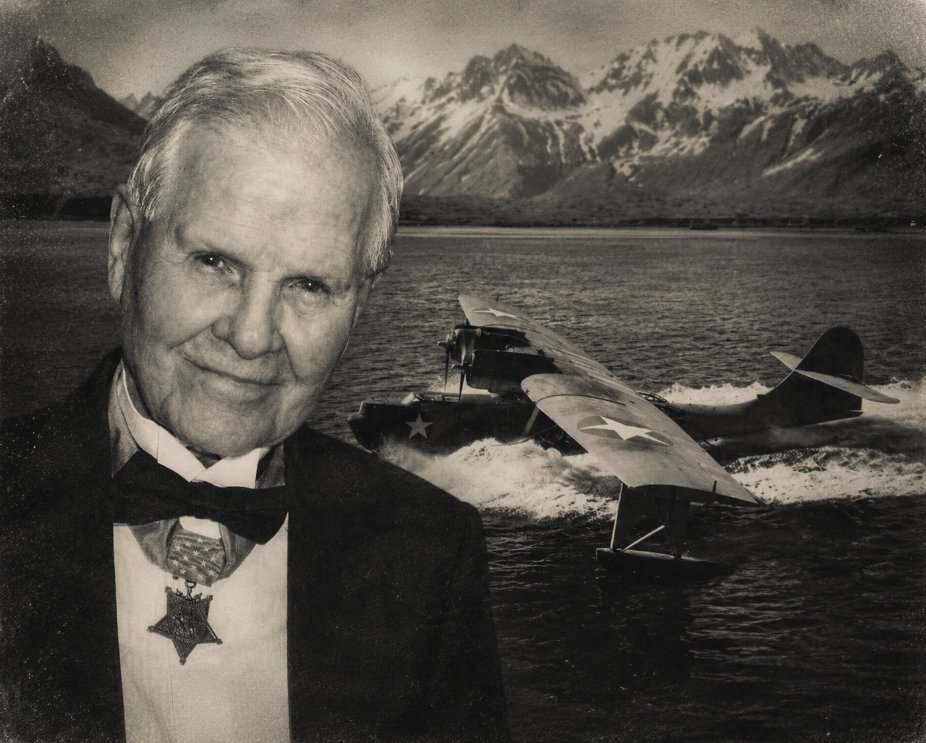
Yes, what you are seeing here is a tiny unarmed observation plane with six bazookas strapped to its wings.

The pilot was a 32 year old history teacher from Illinois.

He destroyed at least six German tanks.

This is the story of Bazooka Charlie..🧵1/5 Image 🧵 2/5
Charles M. Carpenter was born on August 29 1912 in Edgington, Illinois. He grew up in the small farming towns of the Mississippi River valley. He became a high school teacher in Moline, Illinois. He taught history. He coached the football team.
He was 30 years old when the United States entered World War II. He did not have to enlist. He had a stable career and a wife and a young daughter named Carol. He volunteered anyway.

The Army sent him to flight school. They saw his quiet steady personality and decided he had the temperament for one of the most dangerous jobs in the military. Observation pilot.

By the spring of 1944 he had been promoted to Major and assigned to the 4th Armored Division of General George Patton's Third Army. He was given a fabric covered Piper L-4H Grasshopper. The military version of the J-3 Cub. The aircraft weighed 1,220 pounds at gross weight. It cruised at 80 miles per hour. It had no armor. It had no weapons.

His job was to fly low and slow over the front line, find German positions, and call in artillery on them.

He decided that was not enough.
May 13 5 tweets 4 min read
In June 1944 an American pilot held his crippled B-24 in the air long enough for 7 men to parachute to safety.

Then his plane went into a power dive and crashed into an English farm.

His body lay 20 feet underground for 79 years.

In 2023 they found him. They buried him at Arlington.

This is the story of William Montgomery..🧵1/5Image 🧵 2/5
William Baily Montgomery was born in 1919 in Ford City, Pennsylvania. A small steel town along the Allegheny River.

He was a football star at Washington and Jefferson College where he captained both the football and track teams. He pledged Phi Kappa Psi fraternity. He stood almost six feet tall and weighed around 190 pounds.

After graduation in 1942 he enlisted in the United States Army Air Forces. He earned his pilot wings and his lieutenant's bars. He was assigned to fly the B-24 Liberator, one of the main American heavy bombers of the war.

By the spring of 1944 he had crossed the Atlantic and was stationed at RAF Halesworth in Suffolk, England.

He flew with the 844th Bombardment Squadron of the 489th Bombardment Group. Eighth Air Force.

He was 24 years old.
May 10 4 tweets 3 min read
Yes, what you are seeing here is a captured Japanese Zero with American markings.

In 1942 a Japanese pilot crashed it in Alaska.

The Americans rebuilt it and flew it across California for the next two years.

What they discovered changed the Pacific war.

This is the story of the Akutan Zero..🧵1/4Image 🧵 2/4
By 1942 the Mitsubishi A6M Zero had become the most feared fighter in the Pacific. It could outturn every Allied fighter it faced early in the war and had astonishing range. It had decimated Allied air forces from Pearl Harbor to the Philippines to Singapore.

American pilots called it the mystery plane. Nobody had captured one intact. Nobody fully understood what made it so deadly. Some American pilots refused to engage Zeros at all unless they had massive numerical superiority.

Then on June 4 1942 a 19 year old Japanese pilot named Tadayoshi Koga lifted off the deck of the carrier Ryujo. He was part of a diversionary raid on Dutch Harbor in the Aleutian Islands of Alaska, designed to distract American attention from Midway.

Koga's three plane section attacked Dutch Harbor and shot down a PBY Catalina. Then American ground fire severed his oil line.

He had minutes before his engine seized. He turned for the designated emergency landing field on nearby Akutan Island.
May 9 5 tweets 4 min read
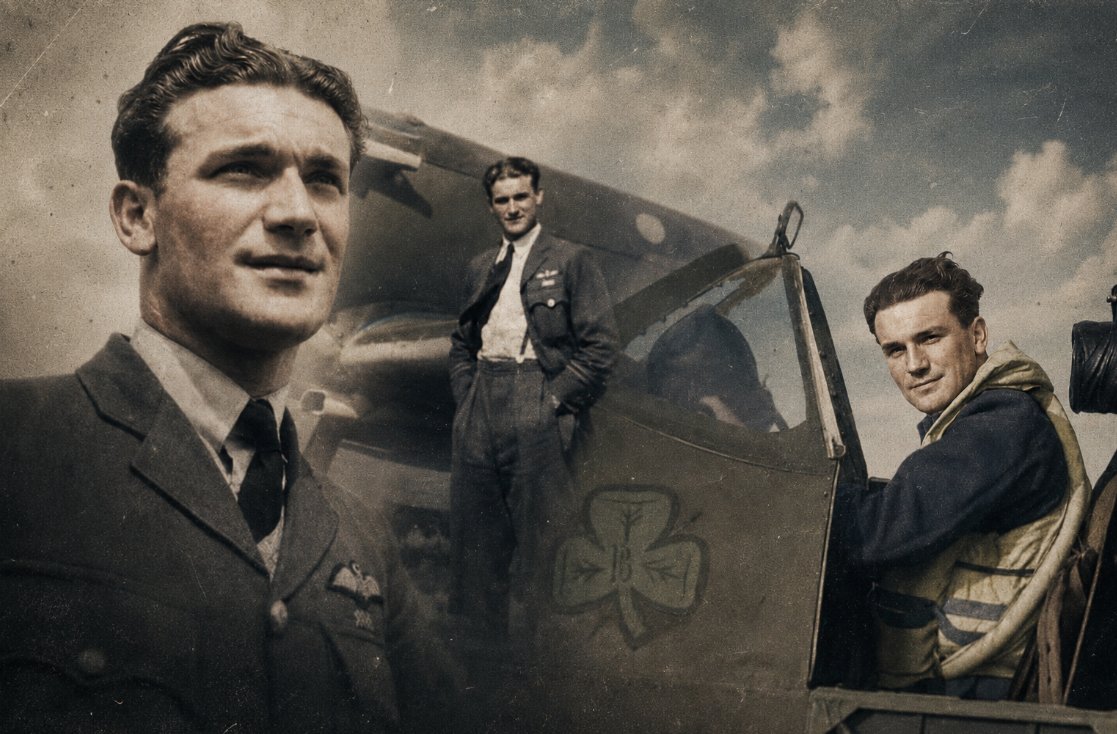
Before America entered WW2, hundreds of American pilots crossed the Atlantic to fight Hitler.

They lost their American citizenship for it.

They flew Spitfires for Britain.

77 of them never came home.

This is the story of the Eagle Squadrons..🧵1/5 Image 🧵 2/5
Summer 1940. France had fallen. The Luftwaffe was bombing London. Britain was fighting alone.

Across the Atlantic the United States was officially neutral. American law made it a federal crime for any citizen to serve in the armed forces of a foreign country. The penalty was a thousand dollar fine and prison time. Anyone who took an oath to a foreign king or government risked losing his American citizenship.

Hundreds of young American pilots did not care.

They drove themselves to the Canadian border in their own cars. They were met by recruiters working for an underground organization called the Clayton Knight Committee, run by the World War One Canadian ace Billy Bishop. The recruiters smuggled them across into Canada. From there they were trained as RAF pilots and shipped to Britain.

A wealthy American named Charles Sweeny was paying for much of it out of his own pocket. He was being chased by the FBI for breaking American neutrality laws.

By November 1940 around 244 American pilots had made the crossing.
May 3 4 tweets 2 min read
American soldiers brought hundreds of thousands of Japanese swords home from WW2.

Some were mass produced military weapons.

Some were 700 year old family heirlooms.

Most are still in American basements today.

This is what happened to the swords of Japan..🧵1/4 Image 🧵 2/4
For centuries the sword was the soul of the Japanese warrior. The katana was forged by hand over weeks of folding and quenching steel.

Master swordsmiths spent their entire lives learning the craft. The greatest blades were considered National Treasures and were passed from father to son across generations.

When Japan went to war in 1937 every Japanese officer was required to carry a sword. Most carried mass produced military blades called gunto.

But many carried something far more valuable. They carried their families' real swords. Heirlooms hundreds of years old. Some had been forged in the age of the samurai.

In August 1945 the Emperor surrendered. Allied forces ordered the Japanese military to give up every weapon they had. Including their swords.
Apr 30 4 tweets 3 min read
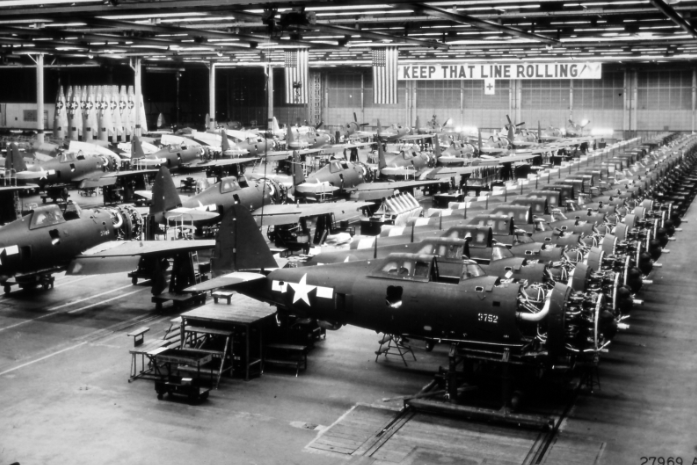
When the war ended America had to decide what to do with 150,000 warplanes.

Some went to museums.

Some were sold to civilians for as little as $875.

Most were flown to the desert and melted.

This is what happened to the planes that won World War II...🧵1/4 Image 🧵 2/4
The United States built about 294,000 aircraft for World War II.

When the Japanese surrendered in August 1945 those aircraft were suddenly a problem. Storage cost about $20 per month per plane.

The new jet engine had made every piston aircraft instantly obsolete. Nobody wanted thousands of single seat fighters with no civilian use.

The government created huge boneyards across the American west and south. Kingman in Arizona. Walnut Ridge in Arkansas. Ontario in California. Albuquerque. Altus and Clinton in Oklahoma.

At Walnut Ridge alone the warbirds arrived at a rate of 250 per day. By 1946 there were more than 10,000 aircraft parked in the Arkansas dust. P-40s, P-38s, P-51s, B-17s, B-24s, B-29s, B-32s straight off the assembly line that had never seen combat.
Apr 28 8 tweets 5 min read
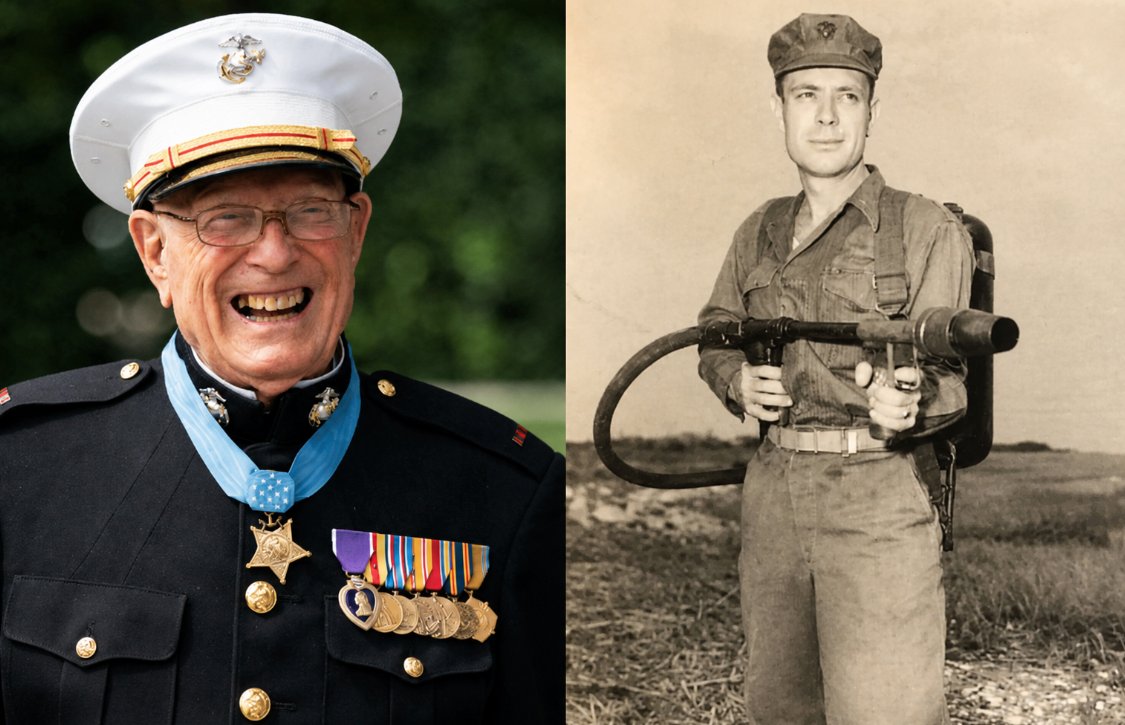
He lied about his age and enlisted at 17.

By 19 he was America's most decorated soldier.

By 23 he was a Hollywood movie star.

By 45 he was dead.

This is the story of Audie Murphy..🧵1/8 Image 🧵 2/8
Audie Leon Murphy was born on June 20 1925 in Kingston, Texas.

The seventh of twelve children born to sharecroppers of Irish and Scots-Irish descent.

His father abandoned the family when Audie was a boy. His mother died when he was 16.

He left school in the fifth grade to pick cotton at a dollar a day to feed his younger siblings. He hunted rabbits and squirrels with an old hunting rifle to put meat on the table. He learned to shoot moving targets out of necessity. He was 5 foot 5 and weighed barely 110 pounds.

When Pearl Harbor was attacked in December 1941 he tried to enlist. The Marines rejected him for being too small. The Army paratroopers rejected him for being too small.

So he lied about his age and walked into the Army recruiting office in June 1942. He was 17 years old.
Apr 26 7 tweets 4 min read
He was 31 years old commanding pilots a decade younger.

They called him Pappy.

They called themselves the Black Sheep.

They shot down over 150 Japanese aircraft in less than three months.

Then their leader vanished.

This is the story of Pappy Boyington...🧵1/7 Image 🧵 2/7
Gregory Boyington was born on December 4 1912 in Coeur d'Alene, Idaho. He grew up in Washington state. He wrestled and swam at the University of Washington. He graduated in 1934 with a degree in aeronautical engineering.

He wanted to be a Marine pilot. The Marine Corps barred married men from flying. He had married young. So he changed his name back to a legal birth name he had not used in years and enlisted as a single man.
He earned his wings in 1937. By 1941 he had resigned from the Marines to join Claire Chennault's Flying Tigers in China. He claimed six kills against the Japanese over Burma.

After Pearl Harbor he rejoined the Marines.
Apr 23 7 tweets 3 min read
On August 24 1942 he became the first Marine Corps ace of WW2.

He ended the war with 18.5 kills.

Fifty years later a teenager with a shotgun kicked in his front door.

This is the story of Marion Carl...🧵1/7 Image 🧵 2/7
Marion Carl was born on a dairy farm in Hubbard, Oregon in 1915.

He worked the farm with his father growing up. He loved aviation from a young age. He studied engineering at Oregon State and learned to fly on the side.

He reportedly soloed an aircraft after only a few hours of instruction. Most pilots needed far longer.

He earned his Marine Corps wings in December 1939. Two years later Pearl Harbor was attacked and the farm boy from Oregon was sent to the Pacific.
Apr 22 7 tweets 3 min read
On May 4 1942 a Japanese Zero pilot shot down three American P-39 in 20 seconds.

He was called The Flying Tiger.

He was 24 years old when he was killed over Guadalcanal by an American Ace.

This is the story of Junichi Sasai...🧵1/7 Image 🧵 2/7
Junichi Sasai was born in Tokyo in 1918.

His father was a captain in the Japanese Imperial Navy. The path was set before him from birth.

He was sickly as a child. Bullied at school. His father put him through judo training and a strict diet. By the time he reached the Naval Academy at Etajima he held a black belt and competed in wrestling.

He graduated in 1939. By 1941 he was a fighter pilot flying the Mitsubishi A6M Zero.
Apr 15 8 tweets 3 min read
🧵 1/7
Japanese records credit him with just over 80 kills.
But what he wrote in his own diary tells a completely different story.
This is the story of Tetsuzo Iwamoto.. Image 🧵 2/7
Iwamoto lied to his parents about sitting college entrance exams. He secretly enlisted in the Imperial Japanese Navy instead. By 1936 he had earned his wings. By 1938 he was over China in his first real dogfight, outnumbered, untested and completely alone in the chaos. He shot down three enemy fighters on that first day. His commanding officer scolded him for being too aggressive. He didn't care.
Apr 11 8 tweets 3 min read
🧵 1/7
In 1942 a Japanese pilot took a bullet through the head at 13,000 feet.

What he did next is one of the most extraordinary things any pilot ever did. Image 🧵 2/7
Saburo Sakai was one of Japan's greatest surviving ace. 64 confirmed kills. A legend in the Pacific war. On August 7 1942 over Guadalcanal he made a mistake that should have killed him. He spotted what he thought was a formation of American fighters and dove to attack. They weren't fighters. They were TBF Avenger torpedo bombers — slow, heavy, and packed with rear gunners specifically designed to destroy anyone who came in from behind. The moment he got in range a gunner put a bullet through his skull before he even knew what he was looking at.
Apr 10 8 tweets 2 min read
🧵 1/7
This dog flew 30 combat missions over Nazi Germany. Was wounded by shrapnel over enemy territory.
Saved the lives of an entire squadron.
This is the story of Antis the German Shepherd. Image 🧵 2/7
Robert Bozdech was a Czech airman who fled to France after the Nazis invaded his country. In January 1940 his plane was shot down over German lines. Crawling through the snow to escape, he found a tiny German Shepherd puppy abandoned in a farmhouse. He hid him inside his jacket and ran.