10 AI tools recommended by 10 billionaires in 2026.
1) Elon Musk → Grok
Musk built xAI and ships Grok inside X for free. The AI with a sense of humor and real-time access to X posts. Free for every X user.
Site → x.ai
1) Elon Musk → Grok
Musk built xAI and ships Grok inside X for free. The AI with a sense of humor and real-time access to X posts. Free for every X user.
Site → x.ai

2) Sam Altman → ChatGPT
The man who built it uses it daily. Free version answers most questions. 800M weekly users. The fastest way into the AI conversation.
Site → chatgpt.com
The man who built it uses it daily. Free version answers most questions. 800M weekly users. The fastest way into the AI conversation.
Site → chatgpt.com

3. Dario Amodei → Claude
The Anthropic CEO uses Claude to write everything from internal memos to public essays. Free tier is genuinely useful for daily work.
Site → claude.ai
The Anthropic CEO uses Claude to write everything from internal memos to public essays. Free tier is genuinely useful for daily work.
Site → claude.ai

4. Bill Gates → Khanmigo
Gates calls Khan Academy's AI tutor "the most exciting thing happening in education." Free for teachers and students. The actual future of learning.
Site → khanmigo.ai
Gates calls Khan Academy's AI tutor "the most exciting thing happening in education." Free for teachers and students. The actual future of learning.
Site → khanmigo.ai

5. Naval Ravikant → Claude Code
Naval publicly called Claude Code "so good it makes everyone a software engineer." Free Hobby tier. The vibe coding revolution he keeps referencing.
Site → claude.com/claude-code
Naval publicly called Claude Code "so good it makes everyone a software engineer." Free Hobby tier. The vibe coding revolution he keeps referencing.
Site → claude.com/claude-code

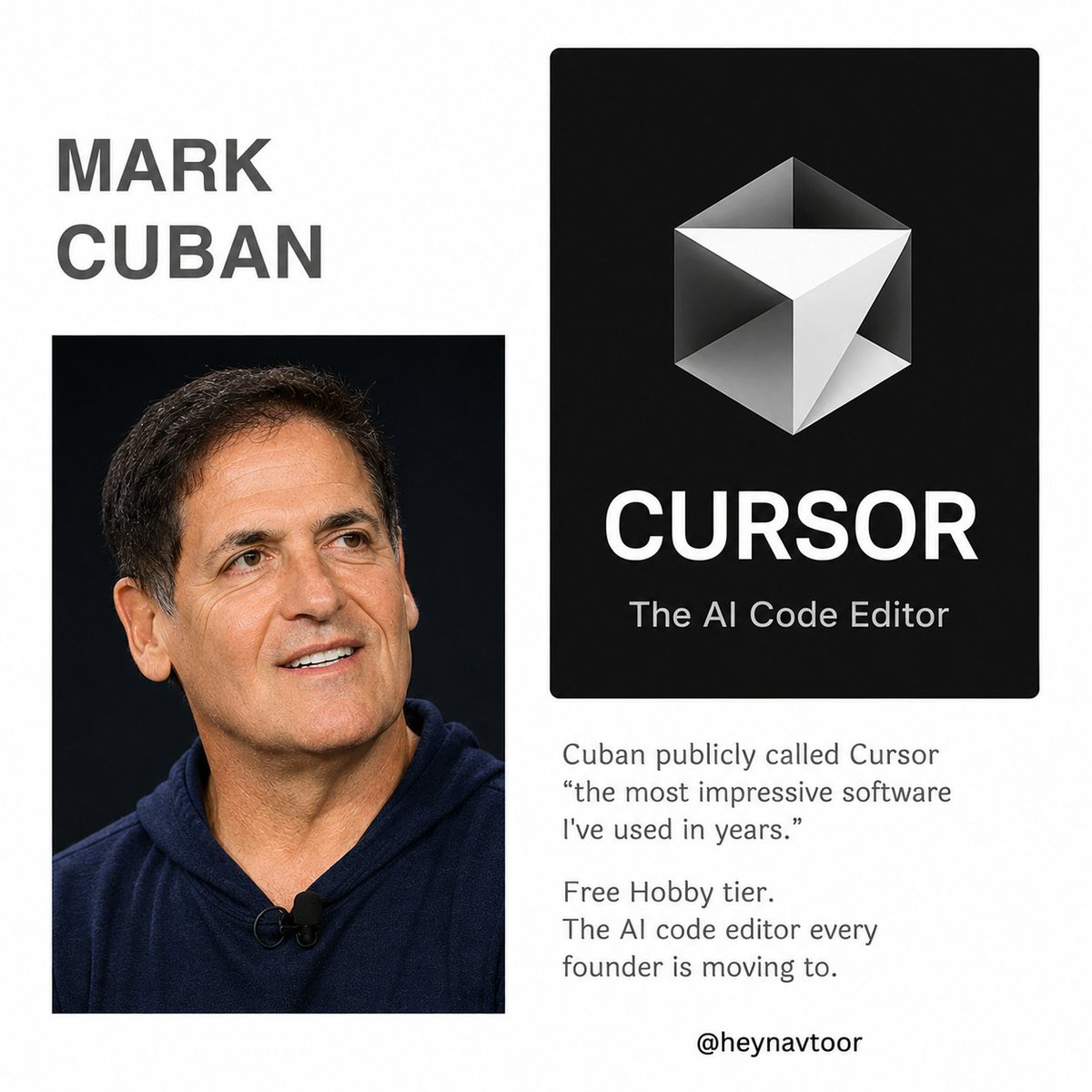
6. Mark Cuban → Cursor
Cuban publicly called Cursor "the most impressive software I've used in years." Free Hobby tier. The AI code editor every founder is moving to.
Site → cursor.com
Cuban publicly called Cursor "the most impressive software I've used in years." Free Hobby tier. The AI code editor every founder is moving to.
Site → cursor.com
7. Jensen Huang → NVIDIA AI Workbench
The NVIDIA CEO ships free developer tools on the GPUs running every AI model on Earth. Free download. The infrastructure billionaire's playground.
Site → nvidia.com/en-us/deep-lea…
The NVIDIA CEO ships free developer tools on the GPUs running every AI model on Earth. Free download. The infrastructure billionaire's playground.
Site → nvidia.com/en-us/deep-lea…

8. Peter Thiel → Palantir AIP
Thiel co-founded Palantir. Their AI platform now powers Fortune 500 ops. Free trial for builders. The tool governments and giants quietly run on.
Site → palantir.com/platforms/aip
Thiel co-founded Palantir. Their AI platform now powers Fortune 500 ops. Free trial for builders. The tool governments and giants quietly run on.
Site → palantir.com/platforms/aip

9. Reid Hoffman → Microsoft Copilot
Hoffman co-founded Inflection AI (acquired by Microsoft). Copilot ships inside Office for free with most accounts. The AI quietly inside every business.
Site → copilot.microsoft.com
Hoffman co-founded Inflection AI (acquired by Microsoft). Copilot ships inside Office for free with most accounts. The AI quietly inside every business.
Site → copilot.microsoft.com

10. Marc Andreessen → Anthropic
Andreessen's a16z invested $750M in Anthropic. He uses Claude daily and tweets about it constantly. The fund's biggest AI bet, free for you to use.
Site → claude.ai
Andreessen's a16z invested $750M in Anthropic. He uses Claude daily and tweets about it constantly. The fund's biggest AI bet, free for you to use.
Site → claude.ai

I hope you've found this thread helpful.
Follow me @heynavtoor for more.
Like/Repost the quote below if you can:
Follow me @heynavtoor for more.
Like/Repost the quote below if you can:
https://twitter.com/1916904726295453696/status/2056276477247922683
• • •
Missing some Tweet in this thread? You can try to
force a refresh