Roy🇨🇦 Profile picture
May 19 17 tweets 4 min read Read on X
Russian blogger Alexei Rogozin warns that the American company Palantir has provided Ukraine with AI tools that process vast amounts of data to integrate with and leverage long-range UAV strike capabilities.
1/

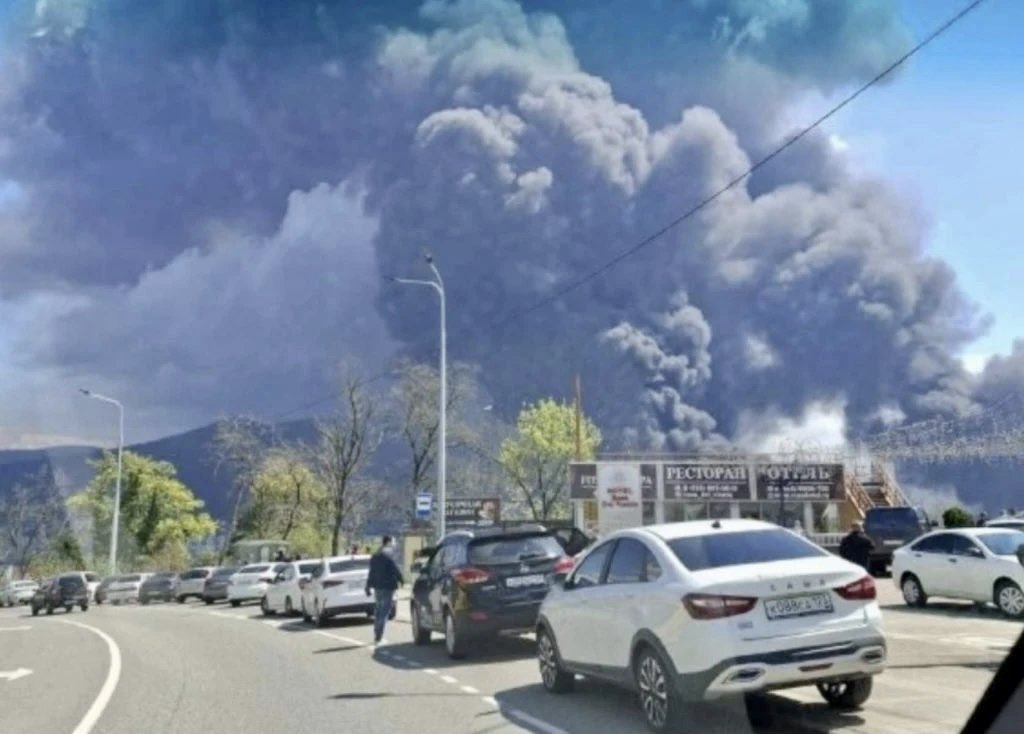
[Tuapse oil terminal burns]
“Ukraine's long-range strikes on Russian targets cannot be viewed solely as a problem of air defense. An unmanned aerial vehicle (UAV) or missile is just the final link in the chain.
2/
“The main work begins earlier: reconnaissance, accumulation of digital traces, analysis of satellite and aerial photos, comparison of open and closed data, assessment of the vulnerability of objects, and review of the results of previous strikes.
3/
“The danger lies not only in the UAV itself, but in the entire system that helps to understand in advance where, when, and with what calculation to send it. Ukraine's 35-year-old Defense Minister, Mikhail Fedorov, openly stated that cooperation with the…
4/
“… American corporation Palantir has given Ukraine tools for analyzing aerial strikes, artificial intelligence solutions for processing large amounts of intelligence data, and the integration of these technologies into long-range strike planning.
5/

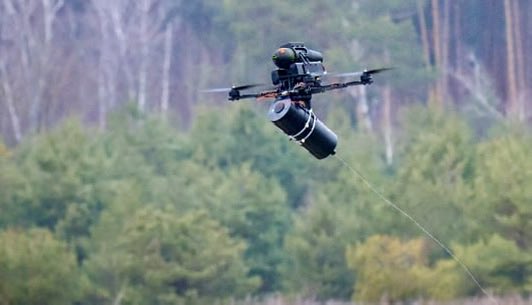
[FP-1 UAVs launching]
“The point is not that the American program itself chooses the target. The purpose of such systems is different: they allow to quickly collect fragmented information into a single picture.
6/
“Satellite images, UAV videos, surveillance data, interceptions, information about the repair and restoration of objects, repetitive routes, the results of previous attacks.
7/
“For long-range strikes, it is crucial to understand what function the object performs, how it is related to production, logistics, or energy, how quickly it is restored, and what effect a repeated hit will have.
8/
“Palantir here acts as a data processing and linking environment, while the Ukrainian system Delta provides a unified picture of the situation, linking UAVs, sensors, units, and strike means.
9/

[Fedorov and Zelensky meet with Palantir CEO Alex Karp] Image
“Ukraine has already been able to integrate drones, sensors, and strike means into a common network faster than the US Army itself.

Also indicative is the Ukrainian project Brave1 Dataroom, created together with Palantir.
10/
“It is positioned as a closed environment for training artificial intelligence models on real combat materials. More than 100 companies are officially involved and over 80 models are being trained, primarily for the detection and interception of targets like ‘Geran’.
11/
“In fact, this is an attempt to turn war into a continuous learning cycle: collect data, label it, train the AI model, apply it, measure the result, and improve the system again.
12/

[Russian ‘Geran-2’ UAV is destroyed by ‘Sting’ interceptor]
“From this follows a simple conclusion: the fight only against unmanned carriers does not solve the problem. If the enemy constantly updates data about the object, understands its role in the industrial or military chain, …
13/
‘… analyzes the consequences of strikes, and quickly trains new models on combat experience, then the strike UAV itself becomes just an executing element.

Therefore, we need not only air defense and electronic warfare.
14/
We need camouflage, reduction of the observability of objects, control of digital traces, protection of logistics, false signs, rapid analysis of the consequences of strikes, and a unified data system for object defense. The enemy is not just building a fleet of drones, …
15/
“… but a full-fledged reconnaissance and strike architecture. The response must be of the same level. In modern warfare, the one who learns to quickly turn every combat episode into data, a decision, and ultimately a new quality of management will win.”
16/16

• • •

Missing some Tweet in this thread? You can try to force a refresh

 

Keep Current with Roy🇨🇦

Roy🇨🇦 Profile picture

Stay in touch and get notified when new unrolls are available from this author!

Read all threads

This Thread may be Removed Anytime!

PDF

Twitter may remove this content at anytime! Save it as PDF for later use!

Try unrolling a thread yourself!

how to unroll video
  1. Follow @ThreadReaderApp to mention us!

  2. From a Twitter thread mention us with a keyword "unroll"
@threadreaderapp unroll

Practice here first or read more on our help page!

More from @GrandpaRoy2

May 10
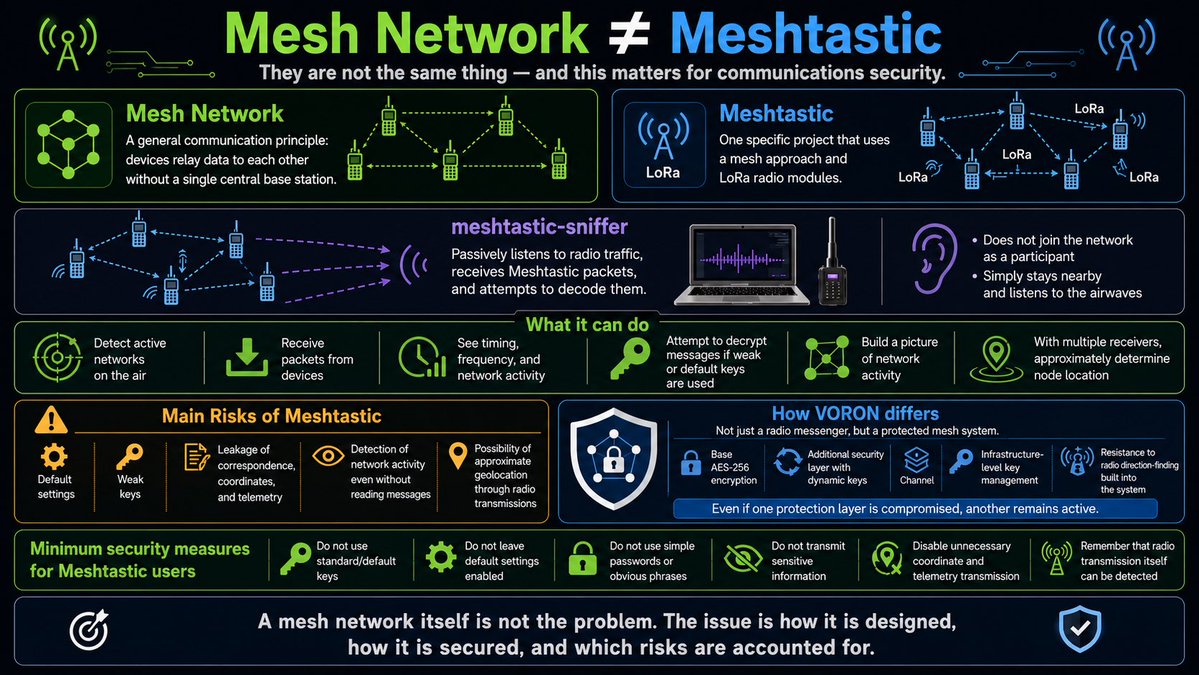
The Russians have developed a new radio reconnaissance system called the “Meshtastic-Sniffer” for detecting and analyzing Ukrainian Meshtastic/LoRa mesh networks.
Using multiple synchronized receivers, it can geolocate transmitting nodes via TDOA (Time Difference of Arrival).
1/ Image
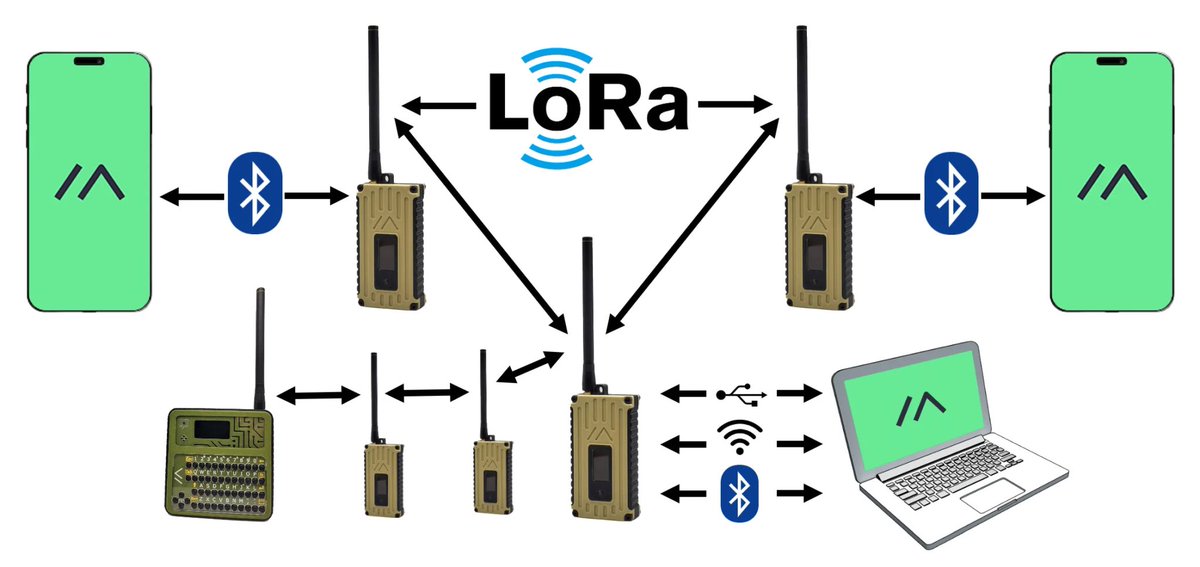
It is important to note that mesh networks and Meshtastic are different.
A mesh network is a general communications architecture in which devices relay data to one another without a central base station.
Meshtastic is one specific implementation that uses LoRa radio modules.
2/ Image
The “Meshtastic-Sniffer” can exploit the security risks of poorly configured Meshtastic networks.
It passively listens to radio traffic, intercepts packets, analyzes network activity, and attempts to decrypt messages using default or weak keys.
3/
Read 7 tweets
May 9
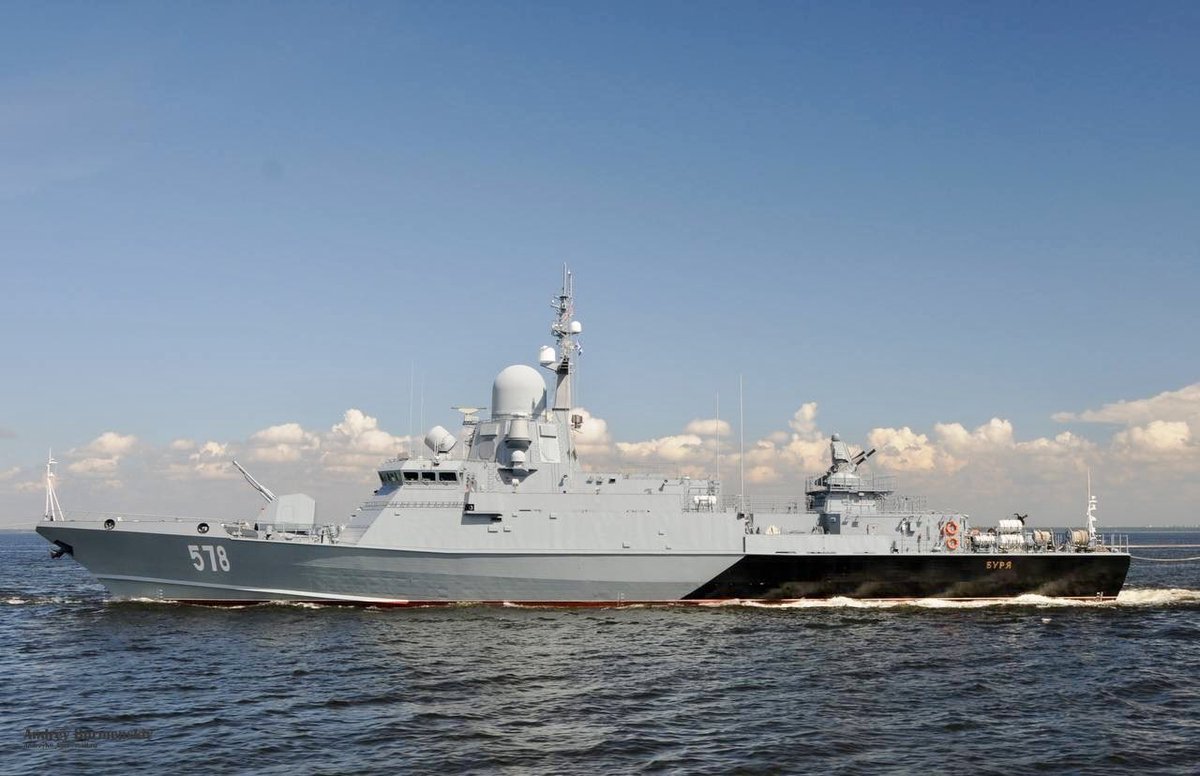
The sorry state of Russian surface warship construction is exemplified by the long-delayed commissioning of the small 800-ton missile ship Burya.
Laid down in December 2016 and launched in October 2018, it then sat idle for years awaiting its diesel engines.
1/ Image
Even then, sea trials dragged on for another three-and-a-half years due to chronic engine problems.
Originally, German high-speed diesel engines had been intended, but sanctions imposed after the 2014 annexation of Crimea cut off supplies.
2/
Russia shifted to domestic “import substitution,” but the Zvezda factory in St. Petersburg has lacked the capacity, facilities, and supply chain to keep up with demand.
When engines have finally been delivered, they have been plagued by breakdowns and warranty disputes.
3/ Image
Read 6 tweets
May 5
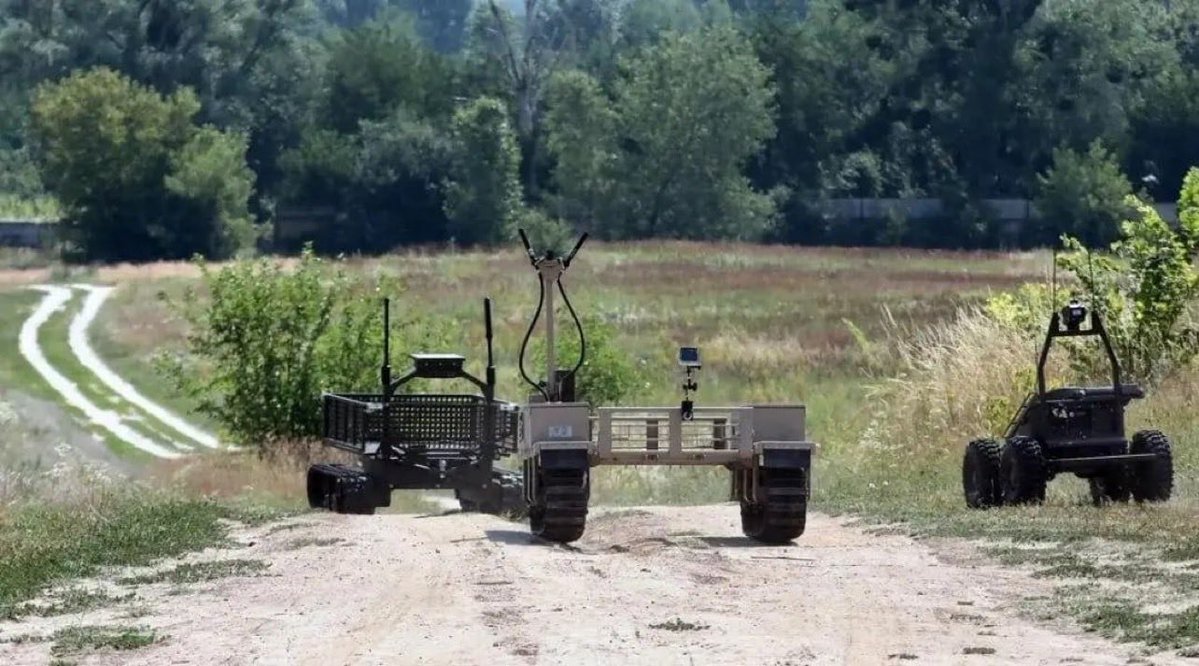
Ukrainian EW and radio expert Serhii “Flash” Beskrestnov was an early supporter of the importance of UGVs.
Here are excerpts from an interesting interview with him by ArmyInform.com.ua
1/ x.com/grandparoy2/st…Image
“If we’re touching on the topic of robots, including UGVs, it should be understood that someone has to control these robots, operate them, support them, and repair them. So humans are indispensable here.
2/
“But we are trying to make sure that the robots themselves take the first hit and work where it is most dangerous. Thanks to this, people will be able to stay further back — ‘pulled back’ — and, accordingly, in much greater safety.
3/
Read 11 tweets
May 2
Russian blogger “Kuban” describes the tactics for evading an incoming FPV.
The essence: a moment's hesitation is death.

“FPV ABOVE THE HEAD: SECONDS MAKE THE DIFFERENCE.
1/ Image
“Forget neat schemes. In reality, everything is simpler and tougher: you go, do the task, and at some point someone shouts ‘air!’, or you hear the sound yourself. Then you have no options, only seconds.
2/
“And it's not the one who knows the theory who survives, but the one who already has a reflex reaction.
The first thing that breaks people is the delay. Half a second to understand, another second to look and that's it. FPV is already on the way out.
3/
Read 17 tweets
Apr 27
The Russians have failed to develop an equivalent of Ukraine’s successful Sky Fortress acoustic system that detects and tracks Shahed UAVs
Russian bloggers are angry that a recent 1,800 km Ukrainian UAV strike past the Ural Mountains went undetected by Russian air defenses.
1/ Image
Sky Fortress is a system of microphones mounted on cellular towers connected to central processing nodes.
AI algorithms detect the distinctive sound of Geran-2 (Shahed) engines, enabling mobile ground fire teams to be dispatched and stationed ahead of the UAV's flight path.
2/ Image
Blogger “Ramzay” (Vladislav Shurygin)“ says:

“We have been proposing this [acoustic] option constantly since 2023. But the Aerospace Forces command has also ignored this option. As a result - the current situation.
3/
Read 6 tweets
Apr 25
Russian blogger “Military Manager” has described the tactics of Russian “Molniya” strike UAVs used to minimize the heavy losses occurring to Ukrainian interceptor FPVs.

“1. Your target is in a forest belt in the enemy's notional rear area. 10-15km from the front line.
1/
“Several villages behind the LBS [Line of Contact] are directly on the route. How will you fly? The answer is obvious. Of course, we will bypass all NP [settlements] and the forest strips that are part of it.
2/
“Air-defense positions are always placed next to the enemy’s key assets.
For reference: the target is only 17 km away from us in a straight line, but we are taking a detour route 27 km long.
3/
Read 11 tweets

Did Thread Reader help you today?

Support us! We are indie developers!


This site is made by just two indie developers on a laptop doing marketing, support and development! Read more about the story.

Become a Premium Member ($3/month or $30/year) and get exclusive features!

Become Premium

Don't want to be a Premium member but still want to support us?

Make a small donation by buying us coffee ($5) or help with server cost ($10)

Donate via Paypal

Or Donate anonymously using crypto!

Ethereum

0xfe58350B80634f60Fa6Dc149a72b4DFbc17D341E copy

Bitcoin

3ATGMxNzCUFzxpMCHL5sWSt4DVtS8UqXpi copy

Thank you for your support!

Follow Us!

:(