China's armed forces secretly trained about 200 Russian military personnel in China late last year and some have since returned to fight in Ukraine. 1/10
The covert training sessions, which predominantly focused on the use of drones, were outlined in a dual-language Russian-Chinese agreement signed by senior Russian and Chinese officers in Beijing on July 2, 2025. 2/10
The agreement said about 200 Russian troops would be trained at military facilities in locations including Beijing and the eastern city of Nanjing. The sources said around this number subsequently trained in China. 3/10
The agreement also said hundreds of Chinese troops would undergo training at military facilities in Russia. 4/10
By training Russian military personnel at an operational and tactical level who then participate in Ukraine, China is far more directly involved in the war on the European continent than previously known, one intelligence official said. 5/10
According to the training agreement reviewed, the Russians would be schooled in disciplines such as drones, electronic warfare, army aviation and armoured infantry. 6/10
Visits by Chinese troops to Russia for training have been taking place since at least 2024, but Russian personnel training in China is new, two of the intelligence agencies said. 7/10
While Russia has extensive combat experience in Ukraine, China's vast drone industry offers technological know-how and advanced training methods such as flight simulators. 8/10
A significant number of Russian personnel who received training in China were ranking military instructors in a position to pass knowledge down the chain of command, the two intelligence agencies said. 9/10
One of the agencies said they had confirmed the identities of a handful of Russian military personnel who trained in China and had since been directly involved in combat operations with drones in Ukraine's occupied Crimea and Zaporizhzhia regions. 10/10
Please remember to subscribe and support my Substack - Russia Analyzed - for the latest insights and analysis on Russian foreign and security policy and the war against Ukraine. cutt.ly/pw9h2qju
• • •
Missing some Tweet in this thread? You can try to
force a refresh

Russian President Vladimir Putin has few good options in Ukraine with his armed forces unable to advance significantly on the battlefield while Western sanctions are chipping away at his resources. 1/7
Russia was losing more men than it was recruiting in the fifth year of its full-scale war, and that a general mobilisation would be deeply unpopular and potentially undermine stability. 2/7
"All these factors together are creating a situation where some people in Russia including in the higher levels understand that they have a big problem. Hard to say what Putin thinks about it, but I think all these factors are starting to float into his decision-making," 3/7
Ukraine has shifted its focus to striking Russia's rear areas in an effort to disrupt its supply chains. 1/6
Ukraine is now capable of striking targets located around 20 kilometers behind Russia's front line nearly 5,000 times per month. This clearly affects both the logistics of Russian units and the support provided to frontline troops. 2/6
Fighting intensified along the front lines last week. Although the end of the week coincided with Victory Day celebrations, Russian long-range strikes became more intense once the holiday had passed. 3/6
Maksym Zhorin, Deputy Commander of Ukraine's 3rd Army Corps:
The situation is no longer as favorable for Russian forces as it was a year ago. 1/10
First, the Ukrainian Forces have significantly adapted to the tactics Russia employs. Second, Ukrainian forces have increasingly disrupted Russian logistics, primarily through greater battlefield transparency and the ability to conduct strikes deep within operational sectors. 2/
The zone of constant surveillance continues to expand, while the strike zone is expanding even further. At this point, virtually no vehicle — not even motorcycles — can survive within roughly ten kilometers of the line of contact. 3/10
Robert Brovdi, Commander of Ukraine’s Unmanned Systems Forces:
The decisive struggle is taking place directly on the battlefield, not deep in the rear, not near Tuapse, and not beyond the Urals.
The advance of Russian infantry is stopped at the line of combat contact. 1/15
The emphasis should shift almost entirely toward targeting personnel. Redirecting even an additional 30% of strikes exclusively toward enemy manpower could produce significant results within a very short period of time. 2/15
Because shortages of enemy personnel at the front would become immediately noticeable. Russia would not be able to rapidly revise its mobilization system and suddenly double the inflow of personnel. 3/15
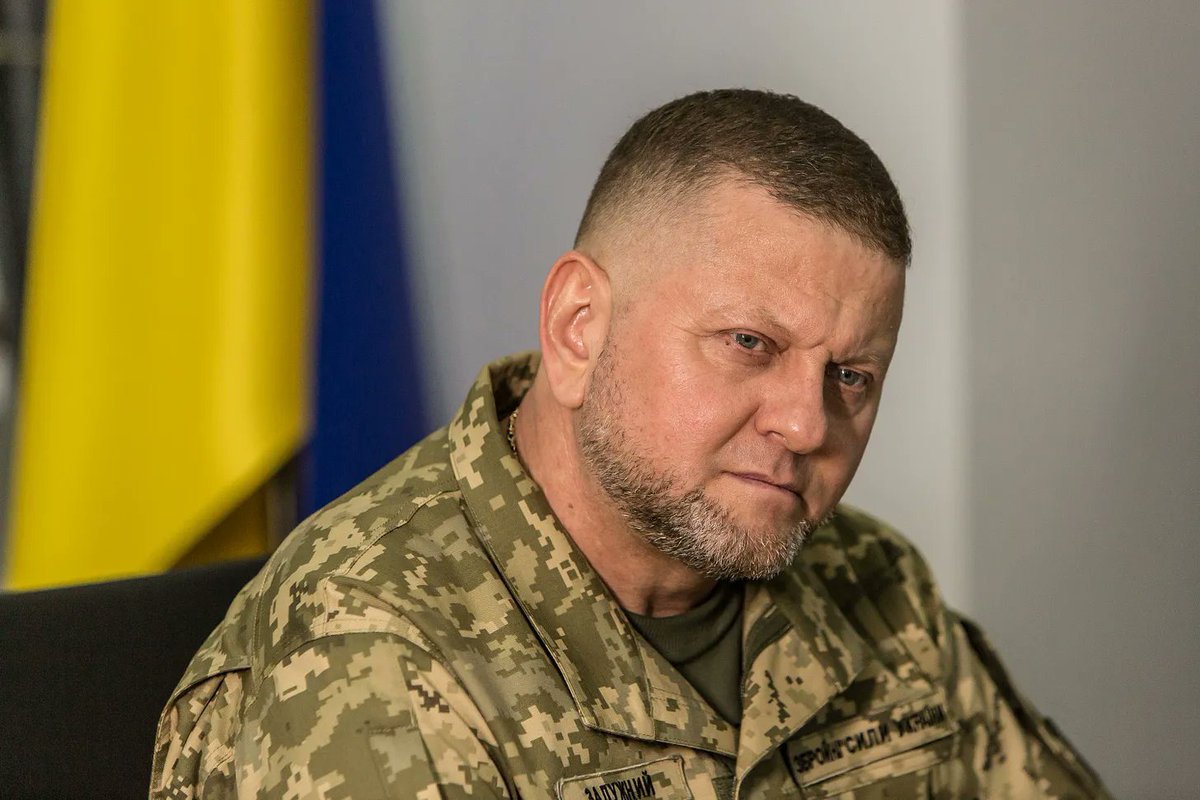
General Zaluzhnyi, former Commander-in-Chief of the Ukrainian Armed Forces:
Since 2023, significant changes have taken place on the battlefield, giving rise to an entirely new type of warfare shaped by emerging tools and the far-reaching consequences of this transformation. 1/17
At that time, the emergence of new tools such as unmanned systems made the battlefield increasingly transparent, creating a so-called deadlock that made the achievement of operational and strategic objectives extremely difficult. 2/17
Since then, Russia has done substantial work to find a way out of this deadlock. 3/17