This is a 💣 🐚
It's extremely significant. The top take-away. Cunningham, the bill sponsor, "May 31 may come and go without a final answer on all of this. That's a possibility."
🧵 👇
It's extremely significant. The top take-away. Cunningham, the bill sponsor, "May 31 may come and go without a final answer on all of this. That's a possibility."
🧵 👇
https://twitter.com/MaryAnnAhernNBC/status/2057278812593824028
It appears there was some confusion. The Bears contacted Johnson. 🐻 say it was regarding the remainder of the Soldier Field lease should Arlington not work out. Johnson took it as...
Johnson ran with this and is in full opposition to the bill as a result. He's telling Chicago politicians not to betray the city. But in the meantime, there's another major obstacle.
As I've noted several times, there's still no infrastructure funding.
It's not in HB910. It's not in any other bill. There's no vehicle for it.
And it sounds like this probably won't change because the Bears haven't delivered a traffic study.
Reference-
dailyherald.com/20260517/news/…
It's not in HB910. It's not in any other bill. There's no vehicle for it.
And it sounds like this probably won't change because the Bears haven't delivered a traffic study.
Reference-
dailyherald.com/20260517/news/…
Cunningham says the state can't commit the requested $850 million (I've seen several versions of this figure) for infrastructure without the traffic study. In fairness this is something the Bears should have completed.
But, this strengthens a few parts of the theories I've presented over the past months. One major part, I think $850 million is way too low for the infrastructure needed.
The Bears aren't providing the traffic study because the cost will turn out to be much higher. It's better to get Illinois to commit for the infrastructure and if the committed money doesn't cover it, it's an IL problem. They want some commitment to get the loan approved
But there's other costs as well. Looking at water needs, for example, a wider pipe needs to be ran essentially all the way from Lake Michigan to the site. That's no small task.
The train line there is run by Union Pacific. To accommodate game day surges, they need to build a spot to park trains, provide bypasses, and even then dispatch is controlled nationally by Union Pacific which can't run on a high frequency schedule.
The power is insufficient for a dome. So are existing data lines. The creek there combined with Illinois law mandates massive underground water storage for drainage.
My theory is that the moment Kevin Warren arrived, he recognized the massive costs associated with the site, and used it for leverage for Chicago. Hence, he pivoted downtown almost immediately after taking over.
Once hope there was crushed, he turned to the Indiana site. This has been going on longer than the public knows, and the timeline matches when he said Arlington was the only feasible site in Cook county
Indiana actually passed legislation to bring a professional sports team to the region in early 2025. McDermott found out about the Bears around Thanksgiving 2025, when they scheduled phase II environmental testing.
To get to that point requires months of work.
To get to that point requires months of work.
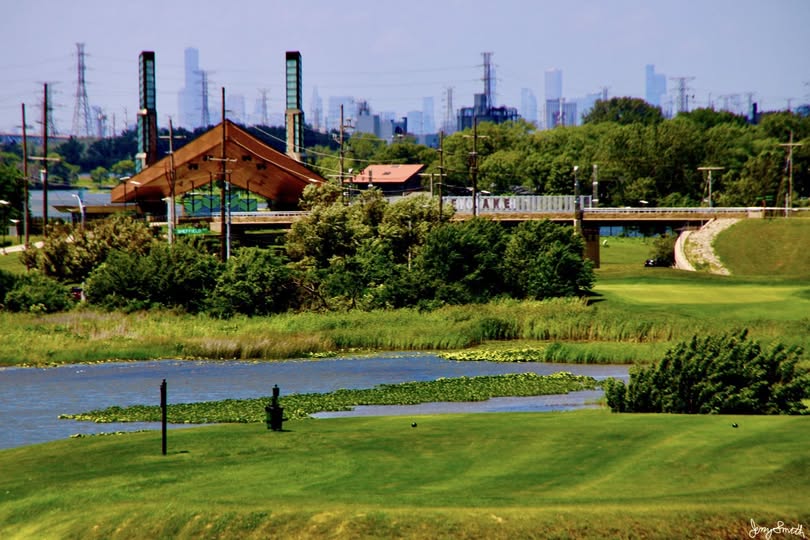
The Bears came clean about Indiana engagement mid December, a day before trucks arrived by wolf lake to drill.
This sort of secrecy generally isn't something you see with leverage. They want headlines early and often.
This sort of secrecy generally isn't something you see with leverage. They want headlines early and often.
The theory I've run with is that Indiana is the plan, and has been for some time, but for a cleaner exit, a more forgivable one by fans, it's best that Illinois fail first. Then they had no choice... And this article seems to show the Bears setting up Illinois to fail
And I've also said I think if the Bears think Chicago is in play, giving them control and a campus they desire, they'll choose that.
I do not believe that door is as shut as they'd have you believe.
I do not believe that door is as shut as they'd have you believe.
Arlington is an inferior site to Hammond (because of the infrastructure) and the deal with the state is far worse. It was a leverage play for Chicago, and remains one for Chicago and Hammond. It's not feasible.
Because you can choose to believe the Bears are so incompetent they haven't performed this traffic study over years, and just can't negotiate with politicians, and are inept... Or you can look at these facts and draw another conclusion...
That they don't actually want Arlington.
That they don't actually want Arlington.
Because if you looked at these same actions and discovered they were about Hammond, you would draw that conclusion easily.
Ie
"They aren't doing the necessary work because Hammond is a bluff."
Ie
"They aren't doing the necessary work because Hammond is a bluff."
But instead... it's Arlington... where they've delayed and stalled and didn't do the work and everyone acts baffled because it's Arlington and assumes there's no way Arlington is a bluff... When the actions plainly show it.
Try explaining why the Bears kept Indiana secret for nearly a year...
It continue to act amazed that Indiana accomplished something in months (hint, they didn't... You just knew about it for a couple months)
I can't even explain why it was still a secret at Thanksgiving
It continue to act amazed that Indiana accomplished something in months (hint, they didn't... You just knew about it for a couple months)
I can't even explain why it was still a secret at Thanksgiving
And now... Let's try explaining why the Bears prodded Johnson into doing what he's doing. Why there's no essential traffic study, that I assume Illinois has been asking for for some time.
It appears to be sabotage because it is.
It appears to be sabotage because it is.
@threadreaderapp compile
• • •
Missing some Tweet in this thread? You can try to
force a refresh