We used the keyword "process server" 68 times on one page
People hear that and assume its keyword stuffing. Its not
If you actually look at what ranks on page one of Google, the top results are using their target keyword hundreds of times. Sometimes thousands. Most businesses are still under-using their keyword on their own pages because some blog 10 years ago told them to keep it under 5
But the keyword count isnt the only thing we did
We also added geographic keywords. Fort Worth, Texas. Specifically. In the body. In the headers. In the meta. So Google knows exactly where this client serves
If someone in Fort Worth searches for a process server, Google has a hundred ways of figuring out who in that area to show them. The page that explicitly says "Fort Worth, Texas" in the right places is going to come up before the page that just says "process server" with no location
And then we added the license number on the page
Two reasons. The first is for the visitor. Someone landing on the page can see this is an actually licensed business. Thats a trust signal that takes 5 seconds to register and removes one objection before they even ask
The second is for Google. Google reads everything on the page. When it sees a license number formatted correctly, thats another data point telling it this is a real, verified business. Not just a marketing page hoping to rank
Three things
Keyword frequency. Geographic specificity. License number
None of these are exotic SEO tactics. Theyre things most agencies skip because they sound boring
Our clients rank because we do the boring things while everyone else is looking for shortcuts
if you want this run on your business, drop your site in the comments or message us
There are 130 different HTML tags. We tested every single one to see which ones Google actually indexes
38 of them dont
Heres the setup. We built a low competition test site about prehistoric plankton. Put a unique keyword in each HTML tag. Waited for the page to index. Then searched site:domain "keyword" in Google for each one
If our page came up, that tag is indexable. If it didnt, its not
The yes list is what youd expect. Title tag. H1 through H6. Meta description. Image alt. Body. Paragraph. The basics every SEO guide already covers
The no list is where it gets interesting
JSON-LD schema. Not indexable. Not the headline, not the description, not the articleBody, not the author name, not even the keywords field
You can dump your entire blog post into a JSON-LD block and nobody will ever find it through Google search
og: and twitter: tags. Title, description, image alt. None of it indexes
Title attributes. aria-label. input placeholders. svg titles. blockquote cite attributes. All no-index
Every meta tag people argue about. Keywords. Abstract. Subject. Summary. Topic. All dead
Heres where this gets useful
just because something doesnt index doesnt mean it cant help you rank
those are completely different things
indexable means if someone searches that keyword Google can pull up your page. Ranking means having that keyword in that location pushes your page higher
different axes
so theres actually 4 buckets. Indexed AND ranking factor. Indexed but NOT a ranking factor. Not indexed but IS a ranking factor. Not indexed and not a ranking factor
JSON-LD schema is a known ranking factor. This test proved it doesnt index. Which puts it in that weird third bucket. Doesnt show up in search but still helps you rank
so the open question is
what about the other 37 no-index zones
are any of them ranking factors? Hidden places to add keyword density without touching your main content?
we dont know yet. Thats the next test
but if even a handful of them are, thats hundreds of new spots most SEOs arent looking at
everyone is fighting over the same 6 or 7 tags. We think theres a whole shadow layer under that nobody is testing
Most people doing keyword research are doing it wrong
they go to a tool, type in their service, see a list of suggestions and just copy them all to their website.
Done
Except half those keywords have nothing to do with what they actually offer
heres what I do instead
Go to Google Trends. Type in your top level keyword. Lets say youre a process server. So you type "process server"
Now Google Trends does two things. It shows you related search terms people are putting in, AND it lets you compare those terms against each other
But heres what nobody talks about
Google Trends doesnt give you intent. It just tells you the search volume relative to other terms
So you have to go check each one yourself
I take every related term, I highlight it, right click, search Google. Then I look at what comes up
If I see GMBs popping up in the results, thats a green light. That means people searching this term are looking for a local service.
That's my customer
If I see a job board or "how to be a process server" results, skip it. Thats not someone trying to hire you, thats someone trying to BE you
I also skip brand names. Saw one called "server one" pop up. Not a search term, just someones buisness name
So I run through the list. Process server, process service, process servers (plural), private process server, legal process server, process server near me, subpoena service. Each one I Google. Each one I check. GMBs popping up means I add it to my comparison
Once Im done I have a list of actual keywords my customers are typing into Google
Now heres the part most people miss completley
These don't just go on your website
They go on your Google Business Profile services list
Go to your GMB. Click add services. Add every single one of those keywords as a service. Write a small discription. Use the keyword in the discription
even the low volume ones. ESPECIALLY the low volume ones
Because if you have "subpoena service" listed and the other process server in your city doesnt, when someone searches that exact term, Google has to pick somebody. Its picking you because you're the only one who told it you offer that
You're not making Google guess. You're telling it exactly what you do
most of your competitors are going to leave that section blank or with one generic service. That's your opening
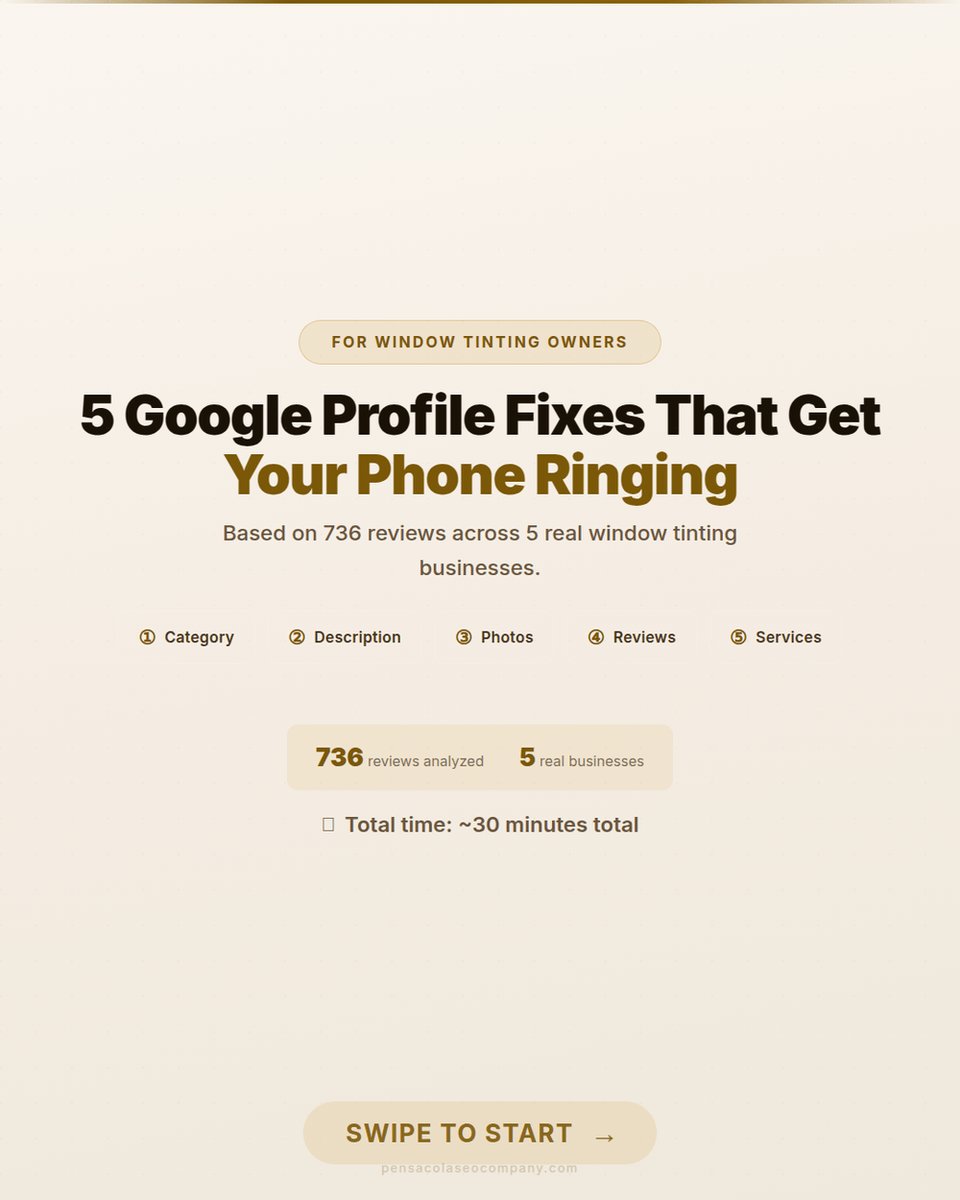
51% of window tinting reviews go completely unanswered. Over half. Your future customers are reading those ignored complaints right now and calling someone else 🧵👇
I analyzed 736 reviews across 5 real window tinting businesses in Houston. Here are the 5 Google Profile fixes that take about 30 minutes total.
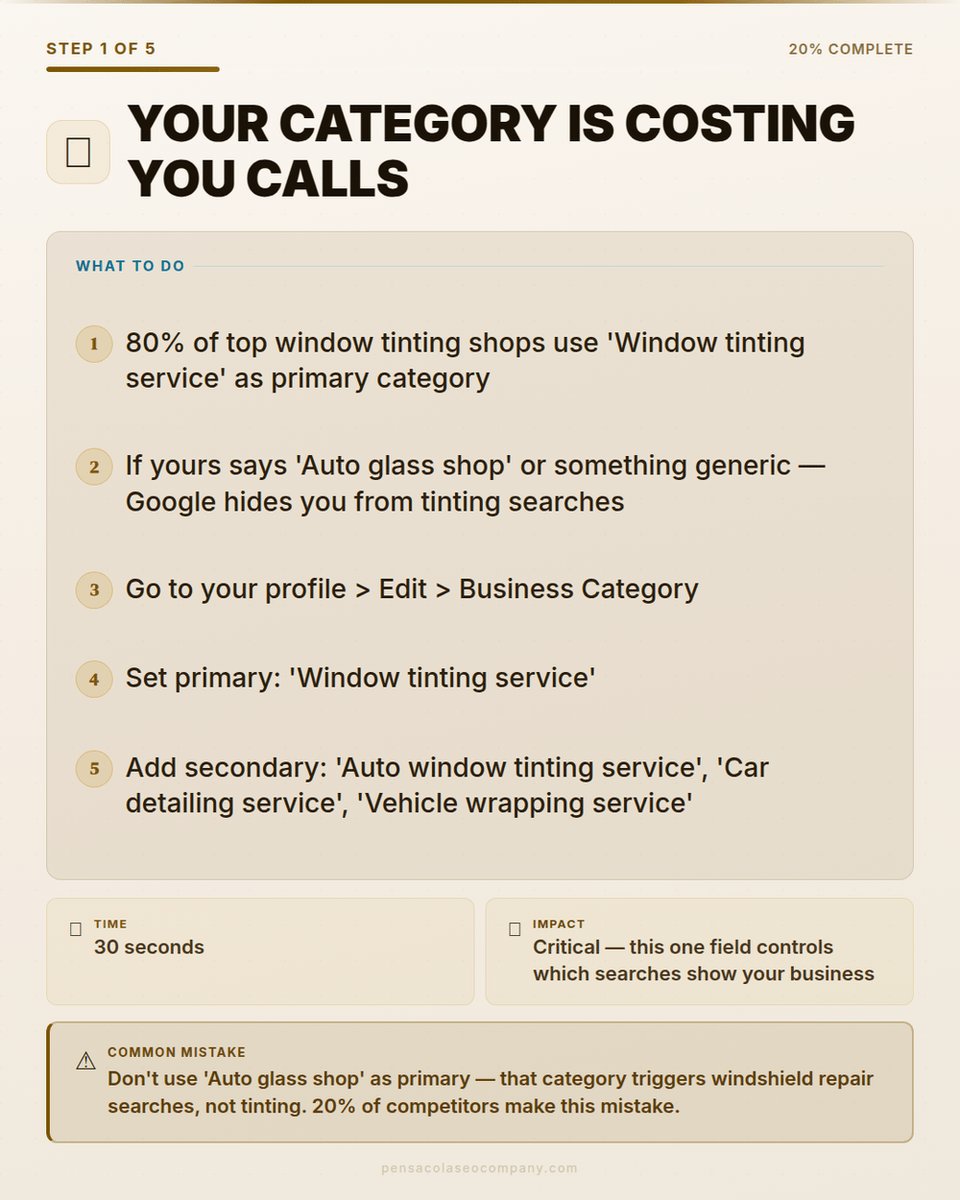
20% use 'Auto glass shop' as their primary category — triggering windshield repair searches instead of tinting. The average description uses 417 of 750 characters. Top shops average 159 photos.
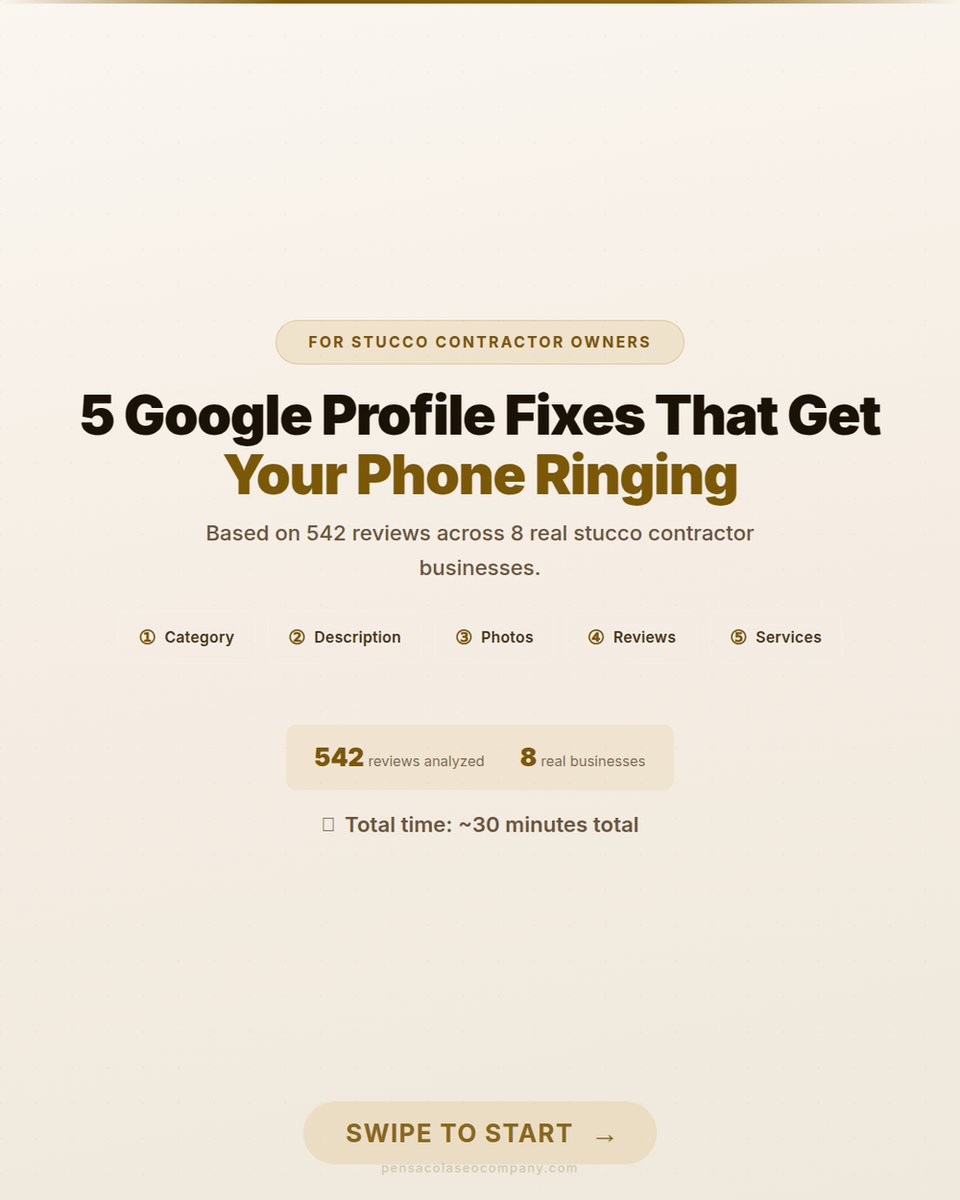
I analyzed 542 reviews across 8 stucco contractor businesses. 63% are using the wrong primary Google category 🧵👇
Only 37.5% use 'Stucco contractor' -- the rest scatter across 'Home inspector', 'Masonry contractor', 'Construction company.' Descriptions average 364 of 750 characters. 38% of reviews go unanswered. And the average profile has just 15 photos.
Swipe through to see all 5 fixes -- the category fix alone takes 30 seconds.
I analyzed 39 reviews across 2 solar panel installer businesses. Their Google profiles are almost completely empty 🧵👇
Average description: 12 characters out of 750. Average photos: 0. 41% of reviews go unanswered. 50% don't list any services. And the one business that does list services? It lists 'CCTV Cameras' -- not solar.
Swipe through to see all 5 fixes -- this niche is wide open.
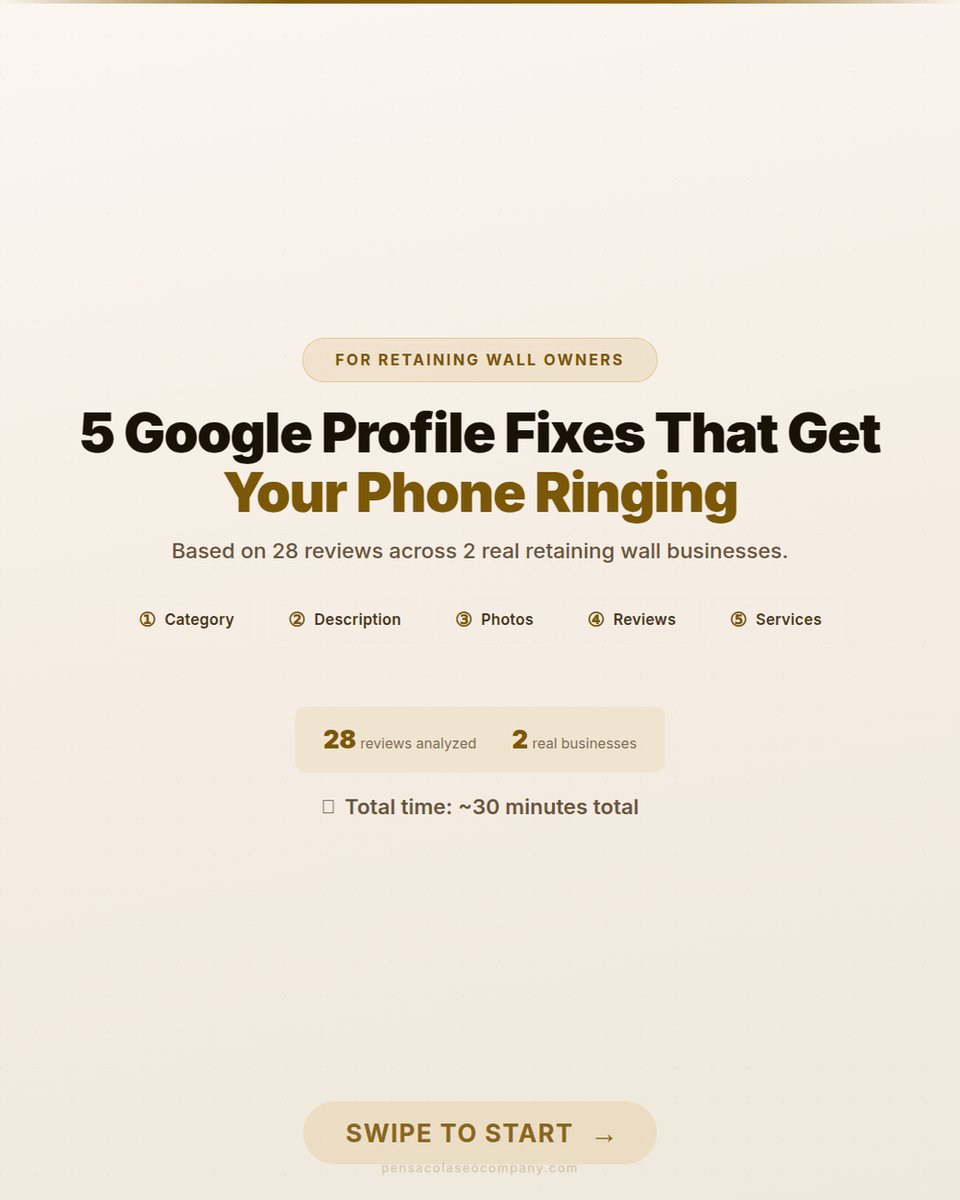
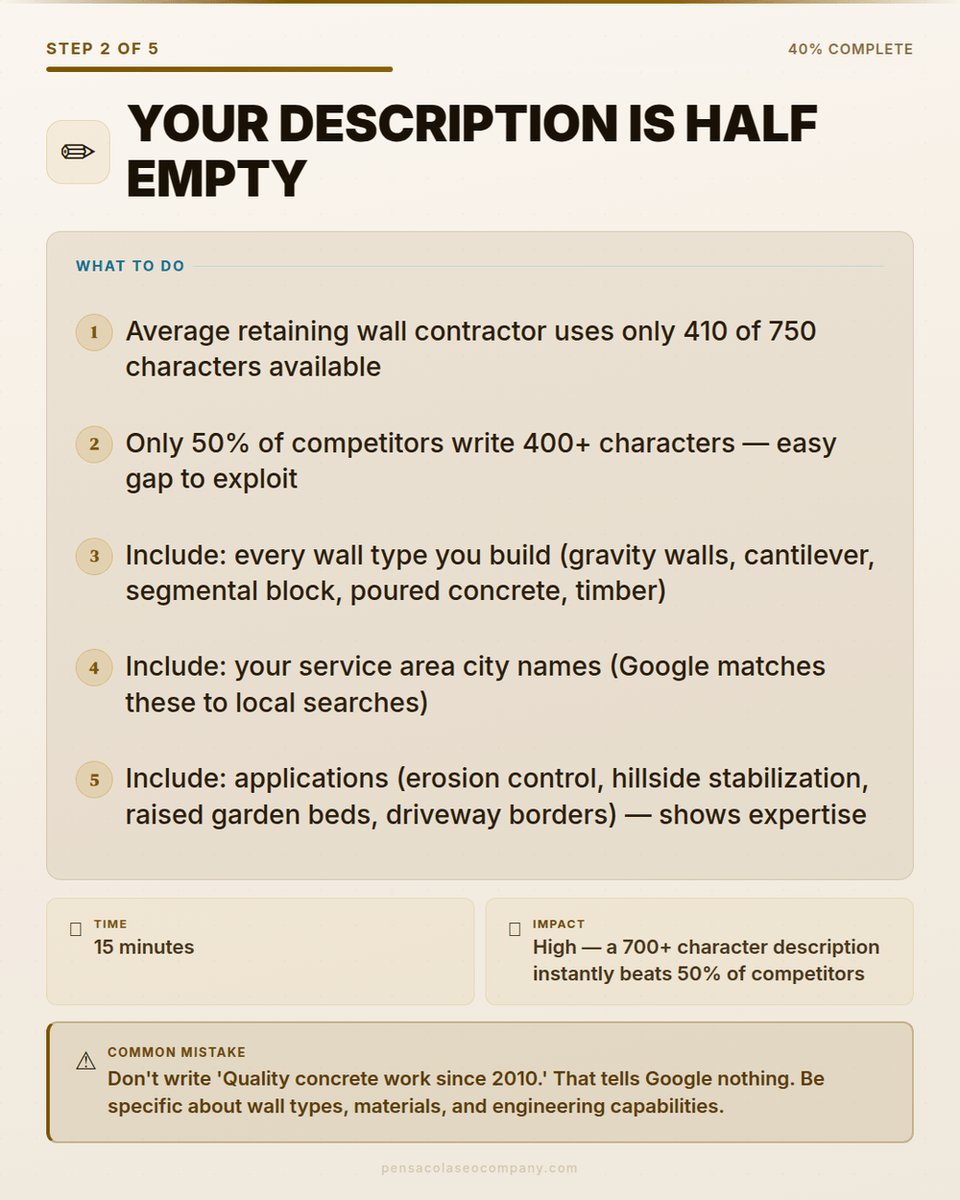
I analyzed 28 reviews across 2 retaining wall businesses. 79% of their Google reviews go completely ignored 🧵👇
Only 21.4% of reviews get a response. Descriptions average 410 of 750 characters. Average photo count: 97. And only 50% post updates -- Google sees the rest as inactive.
Swipe through to see all 5 fixes -- the review response gap alone is a massive competitive advantage.