There is a cemetery on the island of Guam where 24 Marine war dogs are buried.
They were Doberman Pinschers and German Shepherds who fought alongside the Marines in the Pacific.
This is the story of the Marine Devil Dogs..🧵1/5
They were Doberman Pinschers and German Shepherds who fought alongside the Marines in the Pacific.
This is the story of the Marine Devil Dogs..🧵1/5
🧵 2/5
By early 1942 the United States Marine Corps had a problem in the Pacific.
The Japanese were dug into the dense jungles of every island the Marines tried to take. They were masters of concealment. They moved silently through the undergrowth. They set ambushes at night. They infiltrated American positions while the Marines slept. Marine patrols were being cut to pieces by an enemy they could not see, hear, or smell.
The Marines needed an answer. They found one in a civilian organization called Dogs for Defense.
In late 1942 the Marine Corps established its first War Dog Platoon at Camp Lejeune in North Carolina. American families donated their family pets. Breeders donated trained working dogs. The most common donations were Doberman Pinschers and German Shepherds.
The Marines wanted dogs that were 25 inches tall at the shoulder and weighed about 60 pounds. Big enough to be intimidating. Small enough that a Marine could carry one out of combat if it was wounded.
The training course ran 14 weeks. The dogs learned to obey hand signals so handlers could direct them silently in combat. They learned to alert without barking when they detected the enemy. They learned to crawl, swim, climb cargo nets, ride in landing craft, and ignore the sound of gunfire and explosions. They learned to track a man by scent through dense jungle.
They were assigned roles. Scout dogs walked at the head of patrols and alerted to enemy positions ahead. Messenger dogs ran communications between units across battlefields where radios had failed. Sentry dogs guarded camps at night.
Over 1,000 dogs completed the Marine training program during the war. The Marines called them Devil Dogs, borrowing the famous Marine Corps nickname from the First World War.
By early 1942 the United States Marine Corps had a problem in the Pacific.
The Japanese were dug into the dense jungles of every island the Marines tried to take. They were masters of concealment. They moved silently through the undergrowth. They set ambushes at night. They infiltrated American positions while the Marines slept. Marine patrols were being cut to pieces by an enemy they could not see, hear, or smell.
The Marines needed an answer. They found one in a civilian organization called Dogs for Defense.
In late 1942 the Marine Corps established its first War Dog Platoon at Camp Lejeune in North Carolina. American families donated their family pets. Breeders donated trained working dogs. The most common donations were Doberman Pinschers and German Shepherds.
The Marines wanted dogs that were 25 inches tall at the shoulder and weighed about 60 pounds. Big enough to be intimidating. Small enough that a Marine could carry one out of combat if it was wounded.
The training course ran 14 weeks. The dogs learned to obey hand signals so handlers could direct them silently in combat. They learned to alert without barking when they detected the enemy. They learned to crawl, swim, climb cargo nets, ride in landing craft, and ignore the sound of gunfire and explosions. They learned to track a man by scent through dense jungle.
They were assigned roles. Scout dogs walked at the head of patrols and alerted to enemy positions ahead. Messenger dogs ran communications between units across battlefields where radios had failed. Sentry dogs guarded camps at night.
Over 1,000 dogs completed the Marine training program during the war. The Marines called them Devil Dogs, borrowing the famous Marine Corps nickname from the First World War.
🧵 3/5
November 1 1943. Bougainville. Solomon Islands.
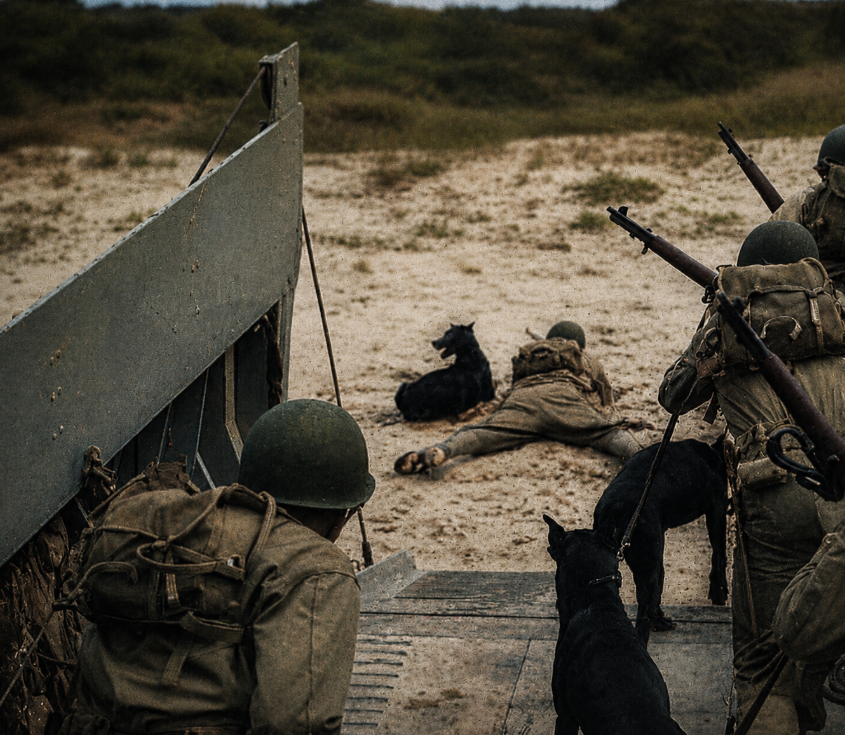
The first Marine War Dog Platoon went into combat. 24 dogs and 55 handlers attached to the 2nd Marine Raider Regiment. 21 Dobermans and 3 German Shepherds. They were lowered from the deck of the attack transport USS George Clymer in cargo nets and improvised harnesses. They climbed into Higgins boats with their handlers and went ashore under heavy Japanese fire.
Two dogs entered the history books that morning.
Andy was a Doberman scout dog handled by PFCs Robert Lansley and John Mahoney. He walked at the head of the Raider patrols. On day two of the invasion he alerted to a Japanese machine gun nest hidden in the jungle 100 yards ahead. The Marines took cover. The machine gun opened up. Not one of them was hit.
Caesar was a large German Shepherd messenger dog handled by PFC Rufus Mayo. On the first night ashore Caesar was sleeping in a foxhole beside Mayo when he suddenly leaped out and attacked a Japanese soldier creeping up on the position in the dark. The Japanese soldier shot Caesar at point blank range and ran. Caesar survived. Mayo had survived too because the dog had not waited to be told.
On day three Caesar carried a message from Company M to the regimental command post when American telephone lines had been cut by Japanese mortars. He was the only means of communication between the two units. He was wounded again. Marines carried him back to safety on a stretcher.
Of the 24 dogs and 55 handlers who went ashore at Bougainville, only 2 dogs and 2 handlers did not come home.
Handlers later claimed no Marine patrol guarded by war dogs was successfully surprised during the Bougainville campaign.
After Bougainville every Marine division in the Pacific was assigned its own War Dog Platoon.
November 1 1943. Bougainville. Solomon Islands.
The first Marine War Dog Platoon went into combat. 24 dogs and 55 handlers attached to the 2nd Marine Raider Regiment. 21 Dobermans and 3 German Shepherds. They were lowered from the deck of the attack transport USS George Clymer in cargo nets and improvised harnesses. They climbed into Higgins boats with their handlers and went ashore under heavy Japanese fire.
Two dogs entered the history books that morning.
Andy was a Doberman scout dog handled by PFCs Robert Lansley and John Mahoney. He walked at the head of the Raider patrols. On day two of the invasion he alerted to a Japanese machine gun nest hidden in the jungle 100 yards ahead. The Marines took cover. The machine gun opened up. Not one of them was hit.
Caesar was a large German Shepherd messenger dog handled by PFC Rufus Mayo. On the first night ashore Caesar was sleeping in a foxhole beside Mayo when he suddenly leaped out and attacked a Japanese soldier creeping up on the position in the dark. The Japanese soldier shot Caesar at point blank range and ran. Caesar survived. Mayo had survived too because the dog had not waited to be told.
On day three Caesar carried a message from Company M to the regimental command post when American telephone lines had been cut by Japanese mortars. He was the only means of communication between the two units. He was wounded again. Marines carried him back to safety on a stretcher.
Of the 24 dogs and 55 handlers who went ashore at Bougainville, only 2 dogs and 2 handlers did not come home.
Handlers later claimed no Marine patrol guarded by war dogs was successfully surprised during the Bougainville campaign.
After Bougainville every Marine division in the Pacific was assigned its own War Dog Platoon.
🧵 4/5
July 21 1944. The Marines landed on Guam.
The 2nd and 3rd War Dog Platoons came ashore with the Marine infantry. They would run more than 450 combat patrols on the island over the next three weeks. They cleared caves. They detected land mines. They found booby traps. They guarded sleeping Marines at night.
A Doberman named Kurt walked at the head of a Marine patrol through the jungle north of the landing beaches on July 22 1944. Kurt was handled by PFC Allen Jacobson. The dog suddenly stopped and alerted. There was a Japanese force directly ahead. The patrol took cover.
The patrol was 250 Marines strong. The Japanese force was estimated at several thousand soldiers preparing an ambush. Kurt had detected them before they had detected the Marines.
In the firefight that followed Kurt was hit by shrapnel from a Japanese mortar shell. His spine was severely damaged. The dogs' veterinarian Captain William Putney later wrote about treating him:
"I hastily hooked up an IV bottle and inserted the end of the tube into the vein of Kurt's right foreleg. I put a half-grain of morphine into the tube. He let out a big sigh, closed his eyes, and went to sleep."
Kurt did not wake up. He was the first American war dog killed in action on Guam.
PFC Jacobson refused medical treatment for his own wounds until Kurt had been carried off the battlefield. When the dog was finally evacuated Jacobson buried him in a shallow grave with a wooden cross.
Over the next three weeks 24 more Devil Dogs were killed in action on Guam. Yonnie. Koko. Bunkie. Skipper. Poncho. Tubby. Hobo. Nig. Prince. Fritz. Emmy. Missy. Cappy. Duke. Max. Blitz. Arno. Silver. Brockie. Bursch. Pepper. Ludwig. Rickey. Tam was buried at sea off Asan Point.
July 21 1944. The Marines landed on Guam.
The 2nd and 3rd War Dog Platoons came ashore with the Marine infantry. They would run more than 450 combat patrols on the island over the next three weeks. They cleared caves. They detected land mines. They found booby traps. They guarded sleeping Marines at night.
A Doberman named Kurt walked at the head of a Marine patrol through the jungle north of the landing beaches on July 22 1944. Kurt was handled by PFC Allen Jacobson. The dog suddenly stopped and alerted. There was a Japanese force directly ahead. The patrol took cover.
The patrol was 250 Marines strong. The Japanese force was estimated at several thousand soldiers preparing an ambush. Kurt had detected them before they had detected the Marines.
In the firefight that followed Kurt was hit by shrapnel from a Japanese mortar shell. His spine was severely damaged. The dogs' veterinarian Captain William Putney later wrote about treating him:
"I hastily hooked up an IV bottle and inserted the end of the tube into the vein of Kurt's right foreleg. I put a half-grain of morphine into the tube. He let out a big sigh, closed his eyes, and went to sleep."
Kurt did not wake up. He was the first American war dog killed in action on Guam.
PFC Jacobson refused medical treatment for his own wounds until Kurt had been carried off the battlefield. When the dog was finally evacuated Jacobson buried him in a shallow grave with a wooden cross.
Over the next three weeks 24 more Devil Dogs were killed in action on Guam. Yonnie. Koko. Bunkie. Skipper. Poncho. Tubby. Hobo. Nig. Prince. Fritz. Emmy. Missy. Cappy. Duke. Max. Blitz. Arno. Silver. Brockie. Bursch. Pepper. Ludwig. Rickey. Tam was buried at sea off Asan Point.
🧵 5/5
The Devil Dogs fought on. They served at Iwo Jima. They served at Peleliu. They served at Okinawa. They served on every Pacific island the Marines took back from the Japanese in the final two years of the war.
Caesar the German Shepherd who had saved Rufus Mayo's life on Bougainville was killed in action on northern Okinawa on April 17 1945. His handler Bob Forsyth said of him afterward:
"Andy and Caesar were good Marines."
The men who handled the Devil Dogs never forgot them. After the war Captain William Putney, the Marine veterinarian who had cared for Kurt on Guam, spent the rest of his life pushing for proper recognition of the war dogs. In 2001 he published a memoir called Always Faithful, the first detailed account of the Marine War Dog Platoons in the Pacific.
In June 1994 a bronze statue of Kurt the Doberman was unveiled at the Pentagon. It was sculpted by an artist named Susan Bahary. The statue was then shipped to Guam and installed at a new cemetery on the Naval Base. The remains of the 24 Devil Dogs who had been killed liberating Guam were moved to the new ground beneath the statue. The cemetery was dedicated on July 21 1994, exactly 50 years after the invasion.
The bronze Kurt stands watch over his fallen brothers to this day. The inscription on the base honors the 25 Marine war dogs who gave their lives liberating Guam in 1944. It records that they served as sentries, messengers, and scouts. That they explored caves, detected mines and booby traps.
It ends with two words.
Semper Fidelis.
I post a story like this every single day. Most people never see them. Follow so you don't miss the next one.
The Devil Dogs fought on. They served at Iwo Jima. They served at Peleliu. They served at Okinawa. They served on every Pacific island the Marines took back from the Japanese in the final two years of the war.
Caesar the German Shepherd who had saved Rufus Mayo's life on Bougainville was killed in action on northern Okinawa on April 17 1945. His handler Bob Forsyth said of him afterward:
"Andy and Caesar were good Marines."
The men who handled the Devil Dogs never forgot them. After the war Captain William Putney, the Marine veterinarian who had cared for Kurt on Guam, spent the rest of his life pushing for proper recognition of the war dogs. In 2001 he published a memoir called Always Faithful, the first detailed account of the Marine War Dog Platoons in the Pacific.
In June 1994 a bronze statue of Kurt the Doberman was unveiled at the Pentagon. It was sculpted by an artist named Susan Bahary. The statue was then shipped to Guam and installed at a new cemetery on the Naval Base. The remains of the 24 Devil Dogs who had been killed liberating Guam were moved to the new ground beneath the statue. The cemetery was dedicated on July 21 1994, exactly 50 years after the invasion.
The bronze Kurt stands watch over his fallen brothers to this day. The inscription on the base honors the 25 Marine war dogs who gave their lives liberating Guam in 1944. It records that they served as sentries, messengers, and scouts. That they explored caves, detected mines and booby traps.
It ends with two words.
Semper Fidelis.
I post a story like this every single day. Most people never see them. Follow so you don't miss the next one.
• • •
Missing some Tweet in this thread? You can try to
force a refresh