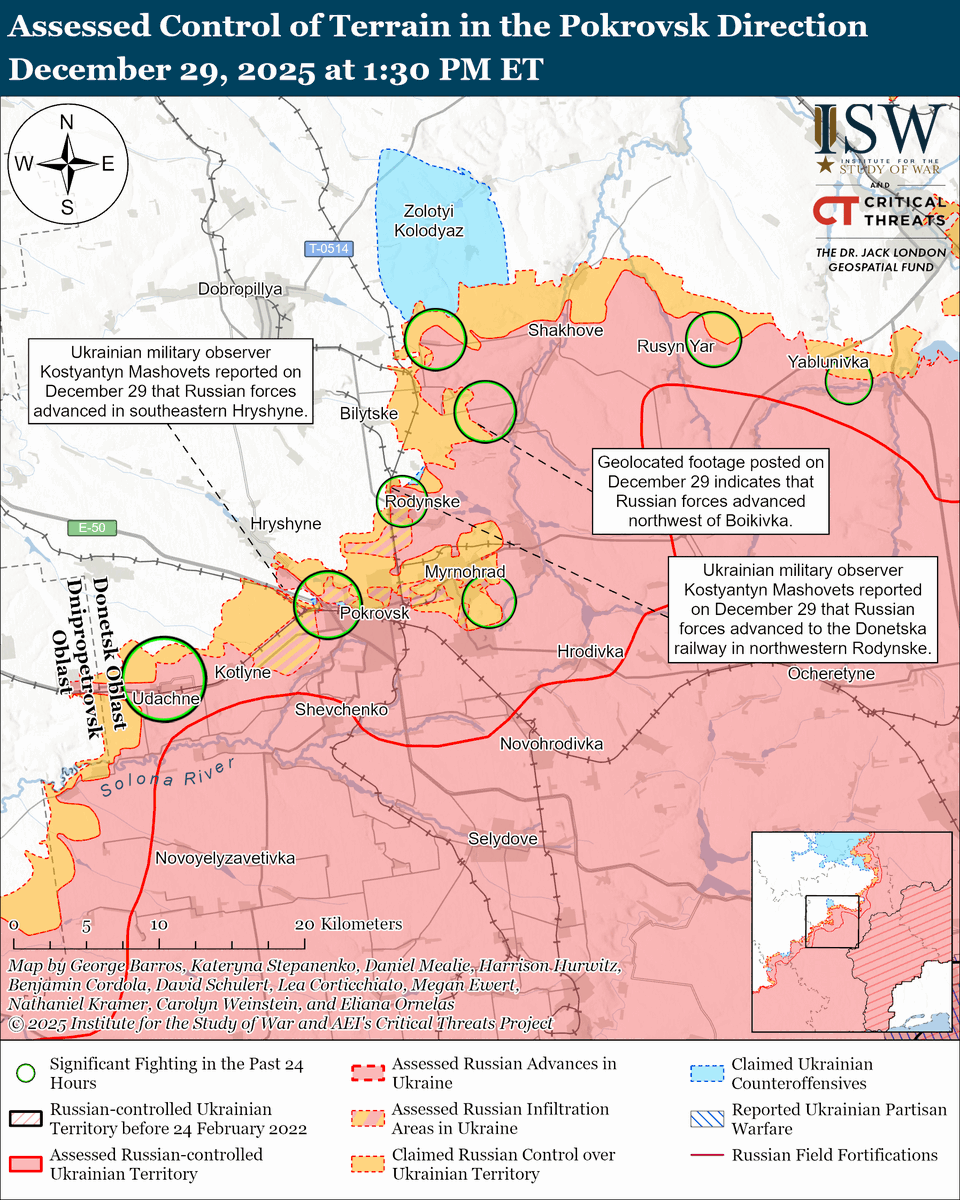
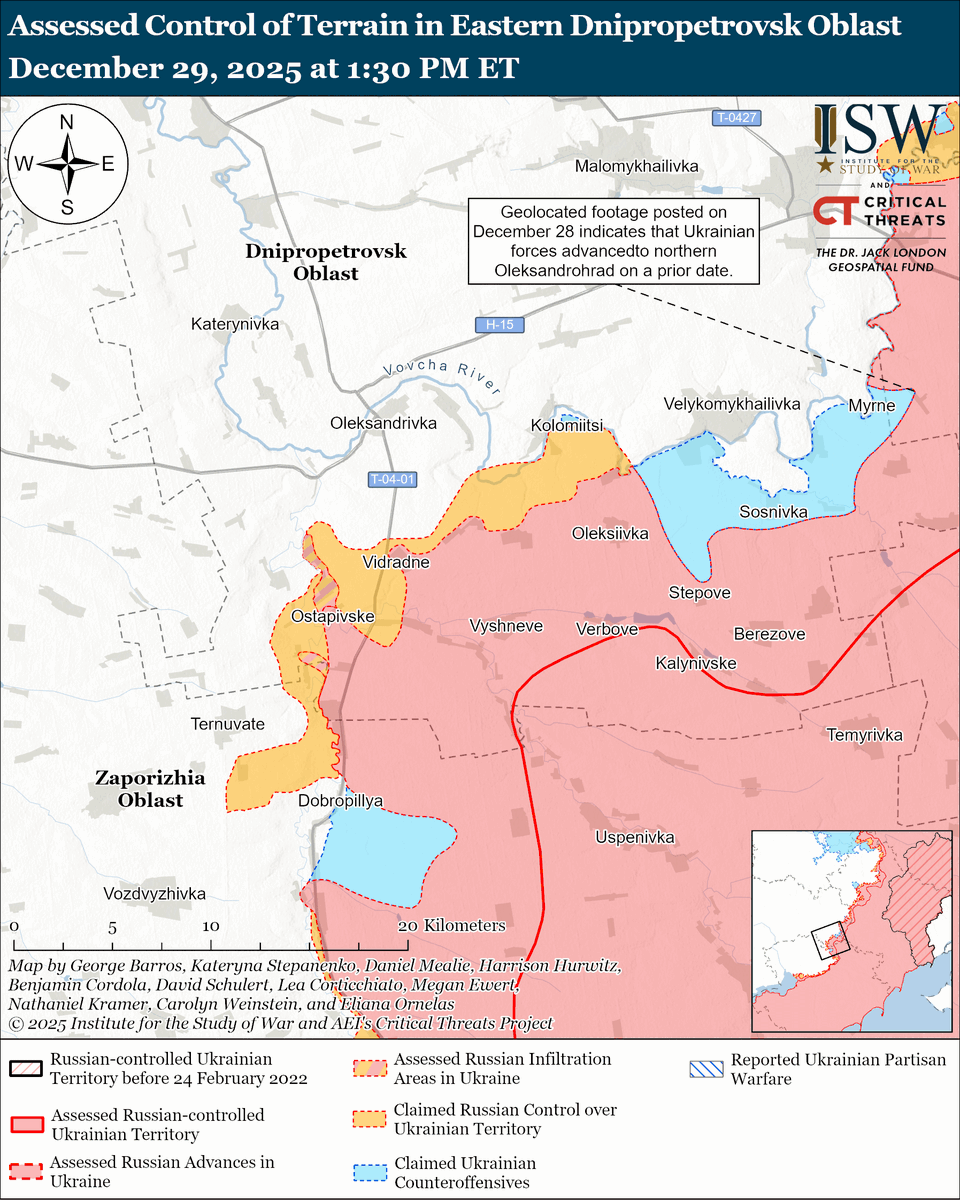
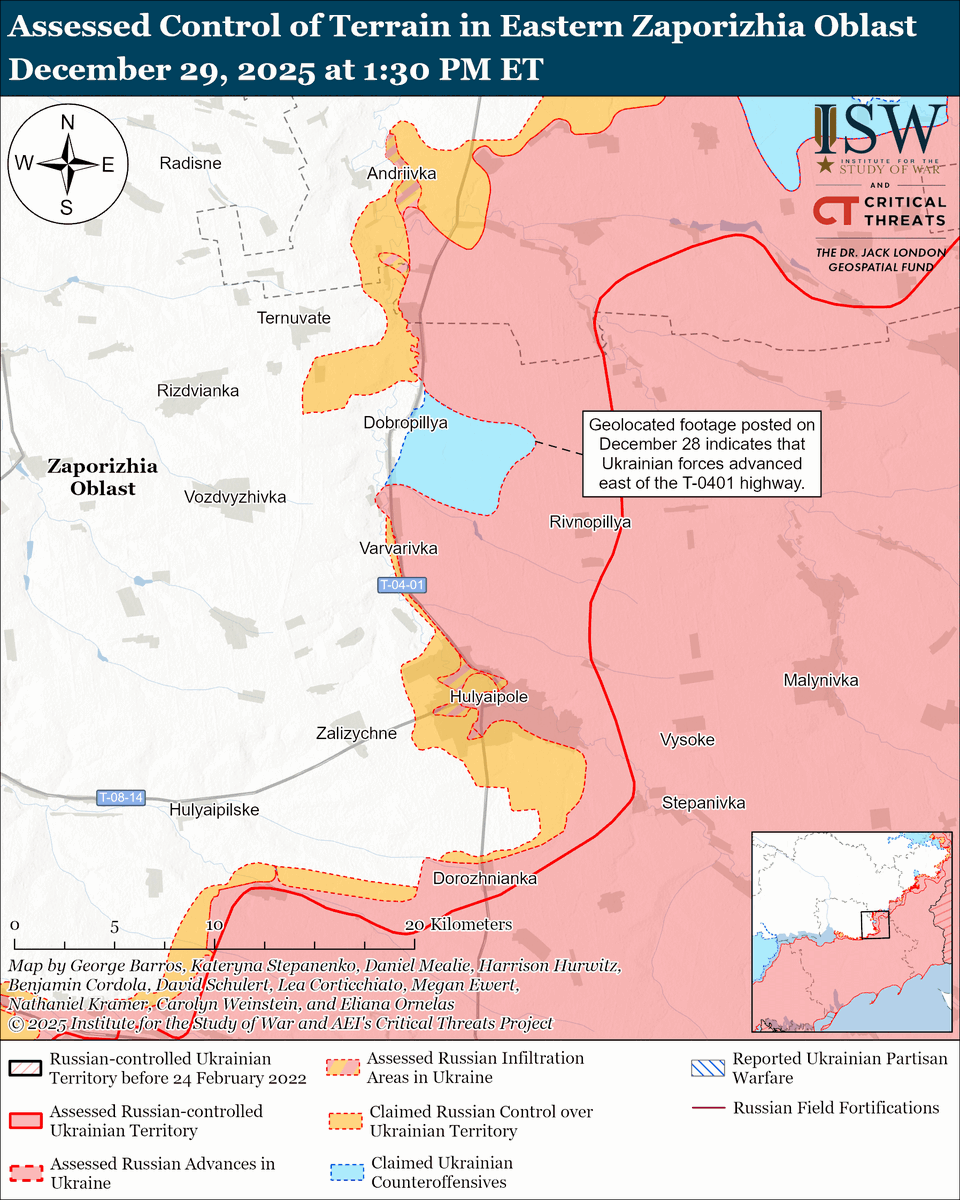
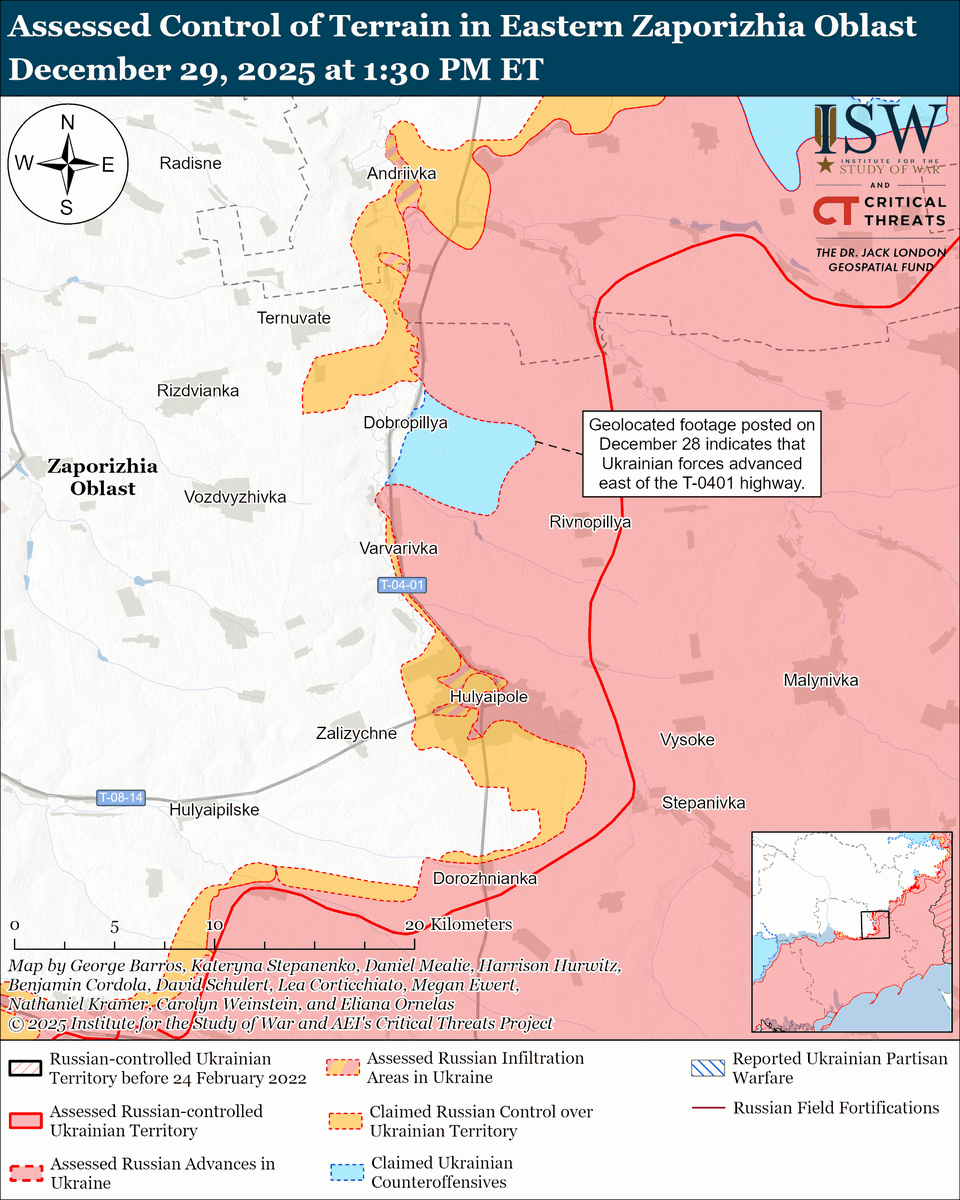
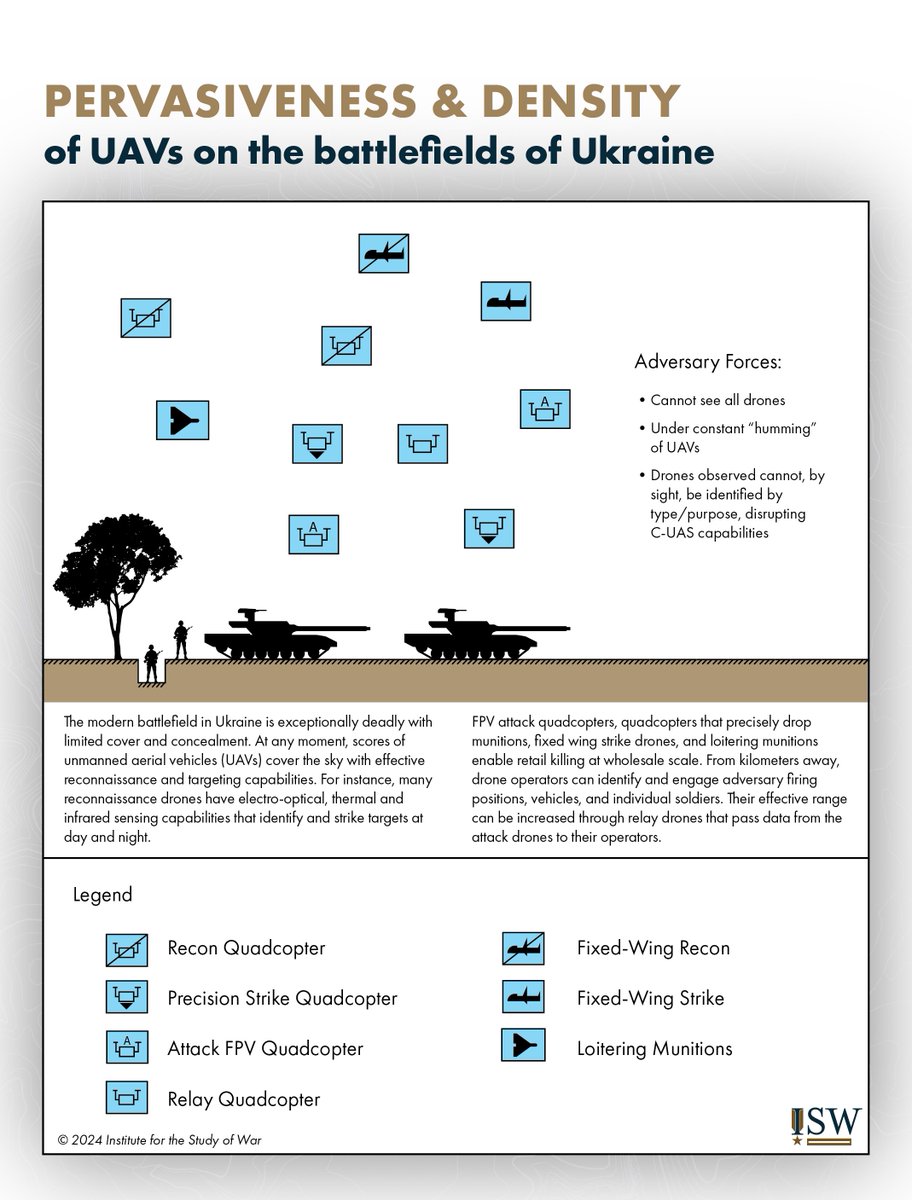
🧵(1/3) The Changing Character of the Battlefield in Ukraine: The character of the war has been of a positional nature since late 2023, with neither side being capable of conducting operational maneuver. The partially transparent drone-dominated battlefield has forced belligerents to disperse their forces within the kill zone — the expanding area (currently within 15-25 kilometers from the frontline) where the saturation of tactical strike and reconnaissance drones poses an elevated risk to any personnel or equipment operating within.
Neither Russia nor Ukraine has been able to mass infantry or heavy equipment within 30 kilometers of the frontline necessary to achieve operational breakthroughs, though Russian forces have attempted occasional abortive battalion-, company-, and platoon-sized mechanized assaults over the years.
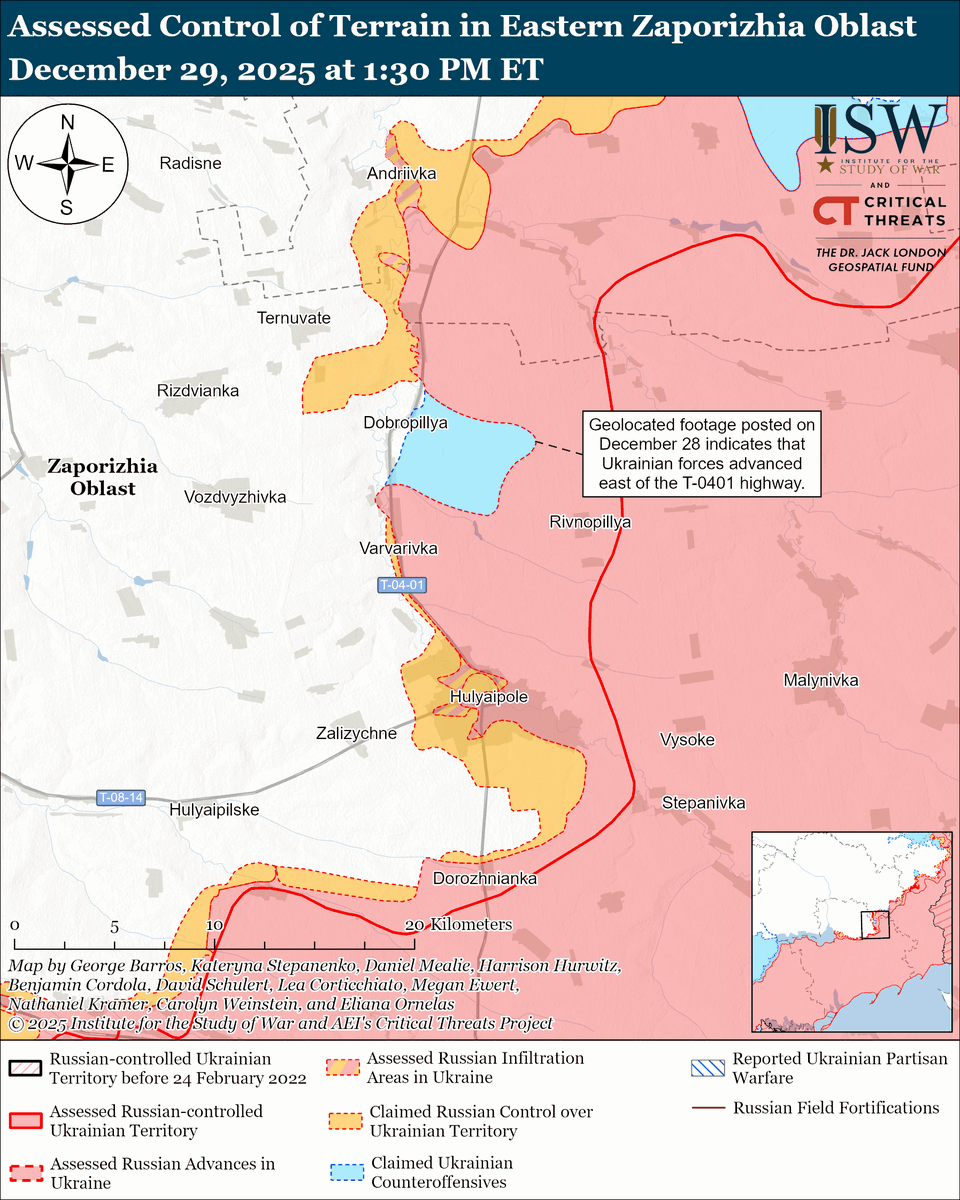
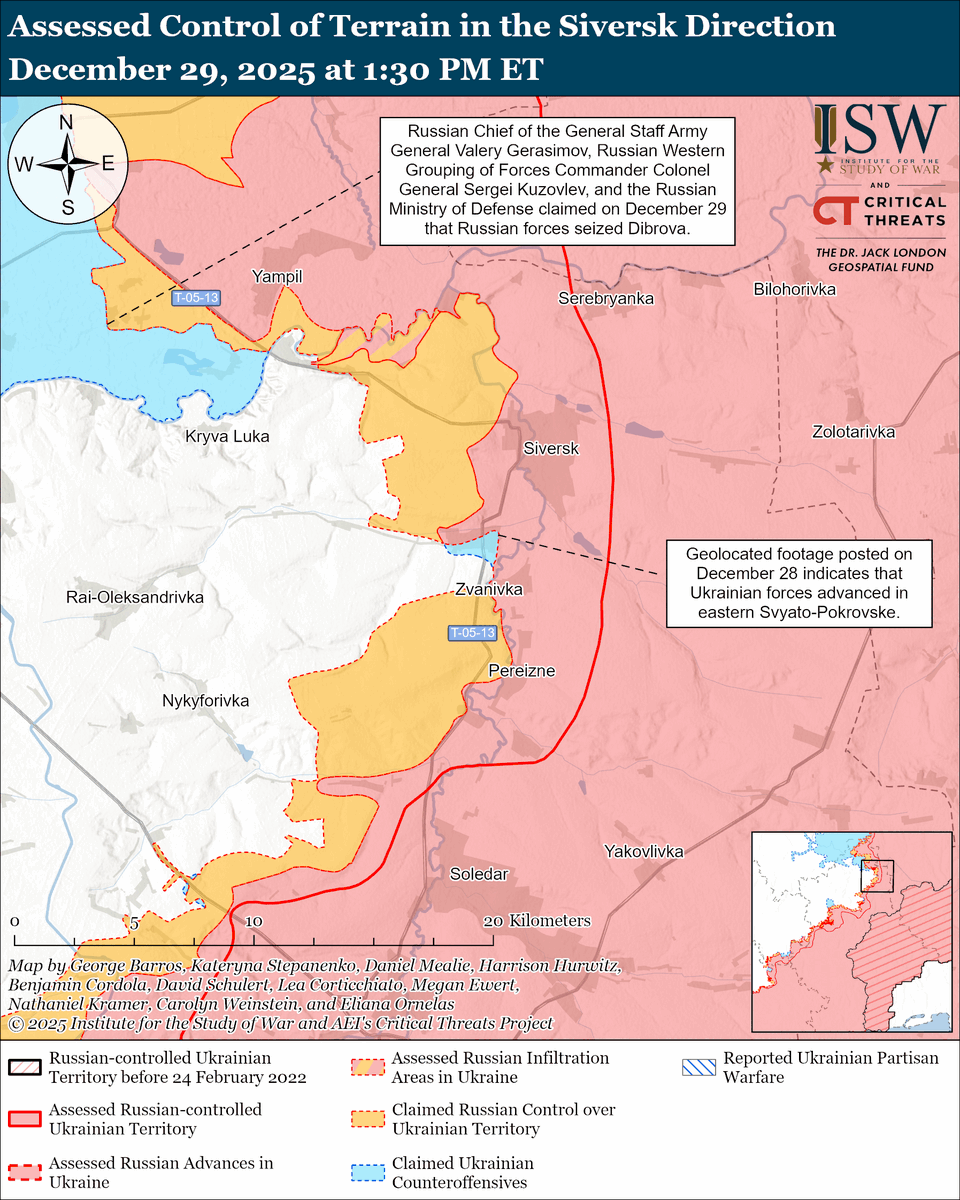
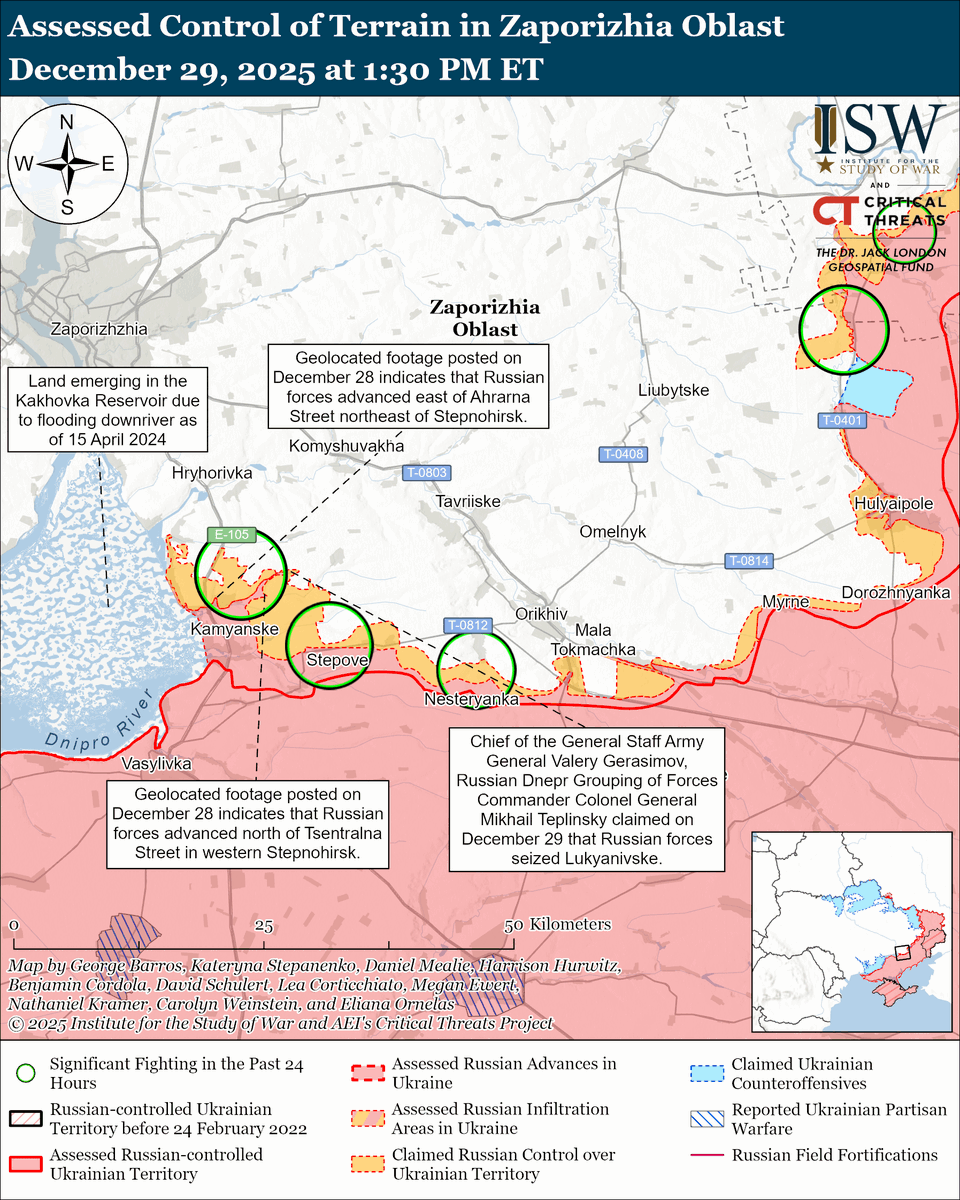
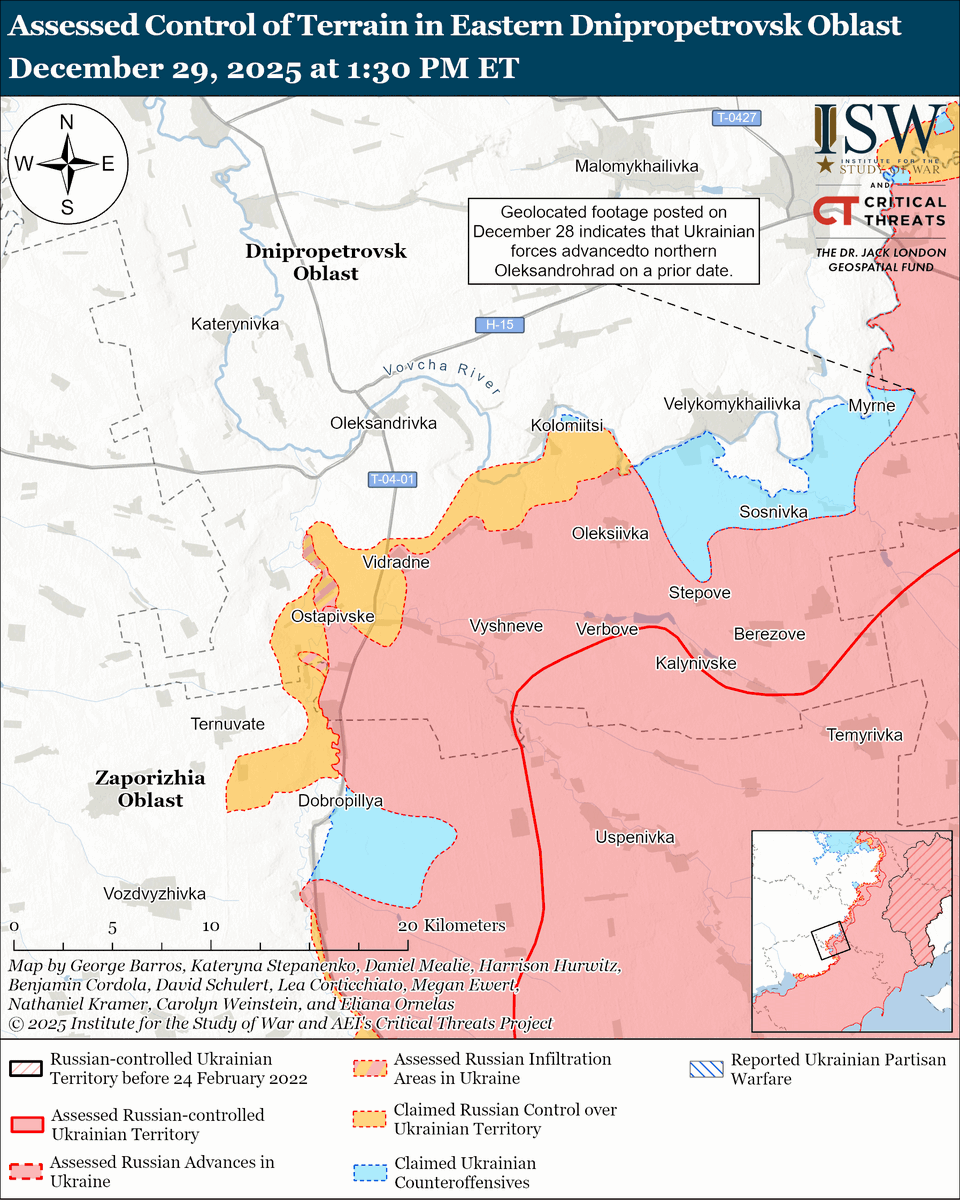
Russian forces’ main form of offensive maneuver since 2025 has been infiltration, usually conducted by small groups of one to three infantrymen who attempt to use cover, concealment, and subterranean infrastructure to infiltrate the kill zone and into the tactical rear of Ukrainian positions.
These Russian infiltrators attempt to reach predetermined rally points in Ukrainian positions’ tactical rear and consolidate positions from which a Russian force (usually squad-sized but sometimes larger) can then attempt a frontal assault against a Ukrainian strongpoint. Thinly manned Ukrainian positions, usually anchored on strongpoints in prepared field fortifications and windbreaks, are thus intermingled with Russian strongpoints as Russian forces bypass Ukrainian positions via infiltration. The result is a pointillist frontline in which Russian and Ukrainian positions are intermixed in the kill zone, where both sides’ unmanned aerial vehicles (UAVs) hunt each other relentlessly, and neither side holds a contiguous frontline.
The persistent drone threat coupled with legacy crewed weapons, artillery, and prepared defenses in depth — a system that ISW has dubbed the “tactical reconnaissance strike complex” (TSRC) — makes operational maneuver extremely difficult, but not impossible.
Neither Russia nor Ukraine has been able to mass infantry or heavy equipment within 30 kilometers of the frontline necessary to achieve operational breakthroughs, though Russian forces have attempted occasional abortive battalion-, company-, and platoon-sized mechanized assaults over the years.
Russian forces’ main form of offensive maneuver since 2025 has been infiltration, usually conducted by small groups of one to three infantrymen who attempt to use cover, concealment, and subterranean infrastructure to infiltrate the kill zone and into the tactical rear of Ukrainian positions.
These Russian infiltrators attempt to reach predetermined rally points in Ukrainian positions’ tactical rear and consolidate positions from which a Russian force (usually squad-sized but sometimes larger) can then attempt a frontal assault against a Ukrainian strongpoint. Thinly manned Ukrainian positions, usually anchored on strongpoints in prepared field fortifications and windbreaks, are thus intermingled with Russian strongpoints as Russian forces bypass Ukrainian positions via infiltration. The result is a pointillist frontline in which Russian and Ukrainian positions are intermixed in the kill zone, where both sides’ unmanned aerial vehicles (UAVs) hunt each other relentlessly, and neither side holds a contiguous frontline.
The persistent drone threat coupled with legacy crewed weapons, artillery, and prepared defenses in depth — a system that ISW has dubbed the “tactical reconnaissance strike complex” (TSRC) — makes operational maneuver extremely difficult, but not impossible.
https://x.com/TheStudyofWar/status/2058896440559120755
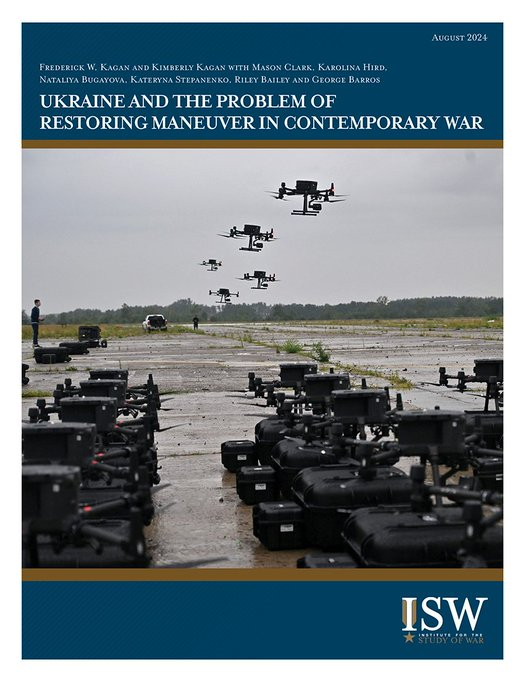
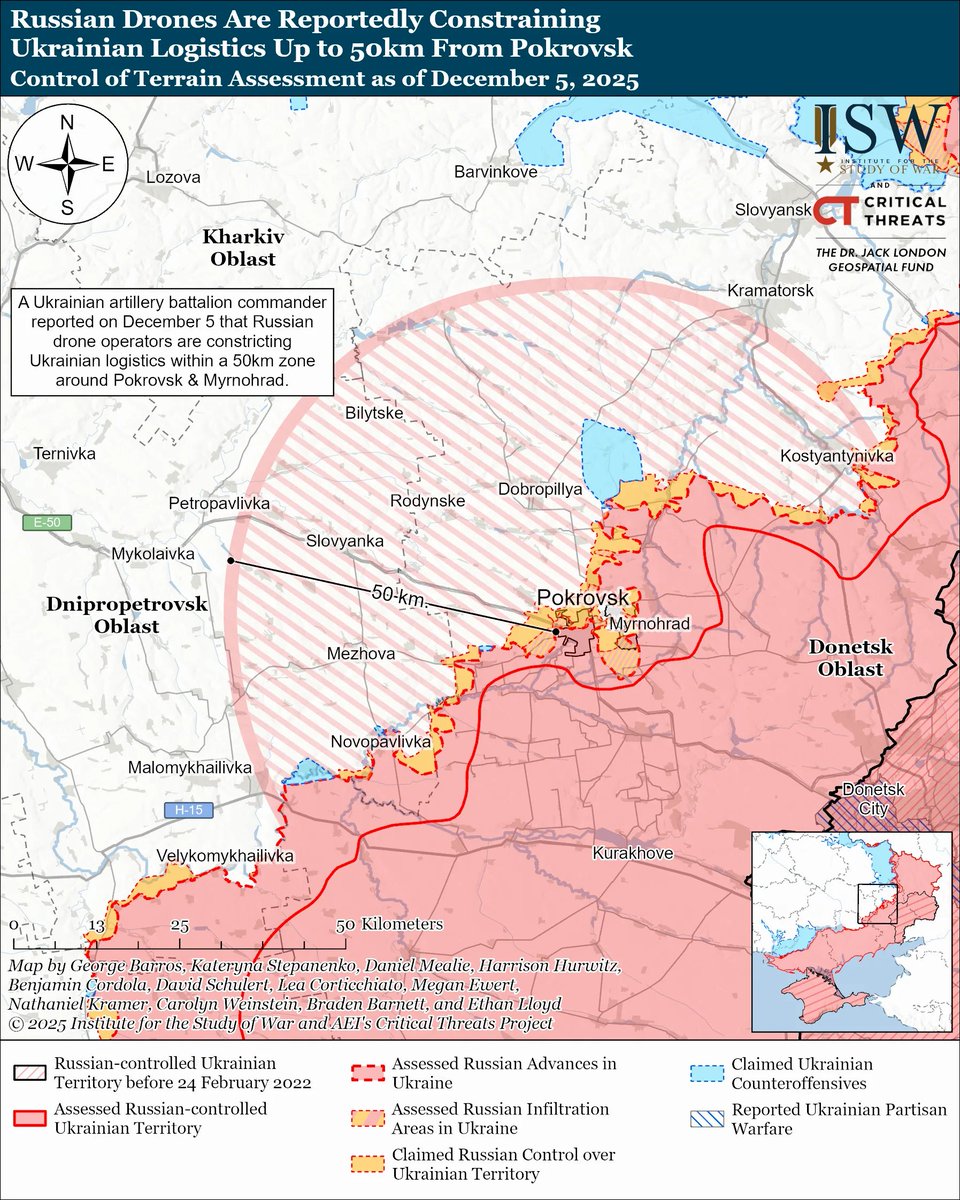
2/ Russia’s major attempt to restore operational maneuver to the battlefield made slow progress in 2025 but has been largely ineffective. The Russian command attempted to restore operational maneuver to the battlefield through a concept of operations leveraging intermediate-range drones to interdict Ukrainian logistics at operational depth. ISW dubbed this phenomenon partial battlefield interdiction (BAI) effects, with BAI referring to the use of airpower to strike targets in the near rear of the frontline to impact battlefield operations in the near term. The concept sought to deny Ukraine the ability to sustain frontline forces and conduct redeployments or rotations, enabling a gradual attrition of those Ukrainian forces until they are surrounded or destroyed. Russia’s Rubikon Center for Advanced Unmanned Systems pioneered techniques to dynamically strike Ukrainian logistics at operational depth to hollow out Ukrainian tactical positions starting in early 2025 during Russia’s counteroffensive in Kursk Oblast. By mid-2025, the Russian military command and the Rubikon Center developed a partially effective operational template that achieved a type of slow operational maneuver, demonstrated through the way in which Russian forces managed to seize Pokrovsk through a 22-month campaign by systematically disrupting Ukraine’s main logistics routes sustaining Pokrovsk’s frontline defenders. This form of maneuver fundamentally relied on tactical dismounted infantry attacks across long periods of time, however, and failed to achieve effective operational maneuver. It also generated only modest territorial gains at exorbitant human and material costs. The fall of Pokrovsk has not enabled further Russian maneuvers, and the frontline in the Pokrovsk direction has changed only tactically since Winter 2025.
The effectiveness of Russia’s BAI approach as an operational concept to enable maneuver began to decline in late 2025. Ukraine undertook an effective campaign to kill Rubikon drone operators starting no later than August 2025, greatly degrading Rubikon’s effectiveness by early 2026. Rubikon is also likely losing its initial effectiveness as it struggles with the need to rapidly expand, which is likely degrading the quality of its training and recruits. Rubikon elements embedded within the various Russian groups of forces likely also find their effectiveness constrained by the overall quality of the commands and troops under and alongside whom they are operating. The Kremlin’s recent efforts to ramp up the establishment of the Russian Unmanned Systems Forces (USF) and recruit university students could further suggest that Russia needs to expand Rubikon’s capabilities across the theater but lacks the skilled personnel to do so, since Rubikon was originally an elite unit staffed by innovators and professionals.
The effectiveness of Russia’s BAI approach as an operational concept to enable maneuver began to decline in late 2025. Ukraine undertook an effective campaign to kill Rubikon drone operators starting no later than August 2025, greatly degrading Rubikon’s effectiveness by early 2026. Rubikon is also likely losing its initial effectiveness as it struggles with the need to rapidly expand, which is likely degrading the quality of its training and recruits. Rubikon elements embedded within the various Russian groups of forces likely also find their effectiveness constrained by the overall quality of the commands and troops under and alongside whom they are operating. The Kremlin’s recent efforts to ramp up the establishment of the Russian Unmanned Systems Forces (USF) and recruit university students could further suggest that Russia needs to expand Rubikon’s capabilities across the theater but lacks the skilled personnel to do so, since Rubikon was originally an elite unit staffed by innovators and professionals.

3/ Open data on Russia’s battlefield performance indicates that the character of the war is shifting in favor of Ukrainian forces, at least for now. Russian forces’ rates of advances are stagnating while Ukrainian forces are employing novel tactics and operational concepts in efforts to break out of positional warfare. It remains too early to tell whether Ukrainian forces will successfully restore maneuver to the battlefield, however.
- Russia’s rate of advance is plummeting during the Russian Spring-Summer 2026 offensive.
- Russia is losing more soldiers to make fewer gains, with monthly Russian casualty rates reportedly outpacing monthly recruitment since December 2025.
- Ukraine is starting to regain more ground than it is losing for the first time since 2023.
- Ukraine’s recent counterattacks feature unique characteristics and deviate from key trends that defined the positional character of the war since 2023.
- Ukraine is conducting a pattern of more frequent mechanized counterattacks at the tactical level for the first time since 2023.
- Ukraine’s recent offensive and defensive operations since the start of 2026 have achieved strategic and operational effects across the theater.
There is no single reason why Ukraine has managed to achieve these successes, but rather a combination of mutually supporting factors. Ukraine’s operational art has matured. Ukrainian commanders are achieving positive results by employing a more sophisticated campaign design that includes better shaping operations; intensifying Ukraine’s intermediate-range strike campaign to degrade Russian forces at operational depth; and achieving tactical drone supremacy in space and time to support tactical maneuvers. Ukrainian forces further exploited SpaceX’s blocking of Starlink for Russian users to catalyze battlefield successes built on good foundations, but the Russian forces’ loss of Starlink was not the monocausal reason why Ukrainian forces now have an edge.
- Russia’s rate of advance is plummeting during the Russian Spring-Summer 2026 offensive.
- Russia is losing more soldiers to make fewer gains, with monthly Russian casualty rates reportedly outpacing monthly recruitment since December 2025.
- Ukraine is starting to regain more ground than it is losing for the first time since 2023.
- Ukraine’s recent counterattacks feature unique characteristics and deviate from key trends that defined the positional character of the war since 2023.
- Ukraine is conducting a pattern of more frequent mechanized counterattacks at the tactical level for the first time since 2023.
- Ukraine’s recent offensive and defensive operations since the start of 2026 have achieved strategic and operational effects across the theater.
There is no single reason why Ukraine has managed to achieve these successes, but rather a combination of mutually supporting factors. Ukraine’s operational art has matured. Ukrainian commanders are achieving positive results by employing a more sophisticated campaign design that includes better shaping operations; intensifying Ukraine’s intermediate-range strike campaign to degrade Russian forces at operational depth; and achieving tactical drone supremacy in space and time to support tactical maneuvers. Ukrainian forces further exploited SpaceX’s blocking of Starlink for Russian users to catalyze battlefield successes built on good foundations, but the Russian forces’ loss of Starlink was not the monocausal reason why Ukrainian forces now have an edge.

• • •
Missing some Tweet in this thread? You can try to
force a refresh