Manuel Ruiz Profile picture
May 31 2 tweets 2 min read Read on X
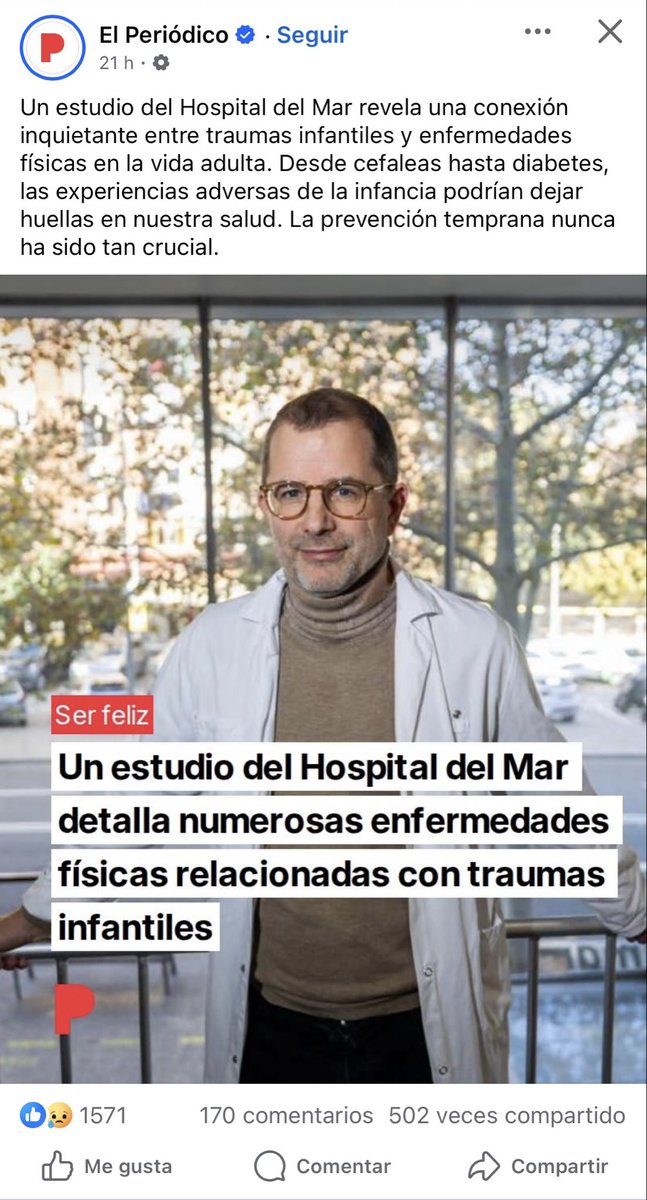
⚠️‼️ I came across this news in Spain, and this discourse keeps doing enormous harm.

The post literally says:
“A study from Hospital del Mar reveals a worrying connection between childhood trauma and physical diseases in adult life. From headaches to diabetes, adverse childhood experiences could leave marks on our health. Early prevention has never been so crucial.”
“A study from Hospital del Mar details numerous physical diseases linked to childhood trauma.”

Not because they literally said that most organic diseases are caused by childhood trauma, but because in practice, many of the diseases they attribute to or reduce to trauma end up being organic diseases whose biomarkers have not yet been discovered, or whose proper medical workup was never even done.

And that is the real problem.

For years, many patients are first filtered through the lens of trauma, psychosomatic illness, or somatization, when in reality what they have is an organic disease that has simply not yet been diagnosed. I would even go further and say that this also happens with diseases we now understand well: before reaching the right specialist and before the appropriate tests are performed, many patients are treated as if the origin of their symptoms were psychological or trauma-related, simply because nobody has investigated their case properly.

That is not precision medicine.
That is a way of covering diagnostic ignorance with a psychological narrative.

The history of medicine shows this again and again: many diseases that in their early stages were treated as “nervous,” “hysterical,” or “psychosomatic” later turned out to be well-defined organic diseases. This happened with multiple autoimmune, neurological, and inflammatory diseases. And it is still happening today.

That is why this discourse is so dangerous. Because it not only delays the real diagnosis, but also blames the patient, isolates them, sends them into the wrong clinical pathways, and steals years of serious medical investigation from them.

Most of these patients do not need their illness to be explained through trauma.
They need the right tests, the right specialist, and serious investigation of their real biology instead of convenient theories being projected onto them.

Enough of turning the absence of known biomarkers into a psychological explanation.
What some people today call trauma or somatization too often ends up tomorrow having a name, a mechanism, and a biological marker.Image

• • •

Missing some Tweet in this thread? You can try to force a refresh

 

Keep Current with Manuel Ruiz

Manuel Ruiz Profile picture

Stay in touch and get notified when new unrolls are available from this author!

Read all threads

This Thread may be Removed Anytime!

PDF

Twitter may remove this content at anytime! Save it as PDF for later use!

Try unrolling a thread yourself!

how to unroll video
  1. Follow @ThreadReaderApp to mention us!

  2. From a Twitter thread mention us with a keyword "unroll"
@threadreaderapp unroll

Practice here first or read more on our help page!

More from @manruipa

Jun 2
‼️⚠️Please read this until the end.

A widely shared article has presented a deeply misleading view of Long COVID, suggesting once again that cognitive behavioral therapy, exercise, and “mind-body” approaches may be the uncomfortable truth patients refuse to accept.

This needs to be challenged.

Not because the nervous system does not matter.
Not because psychological support cannot help.
But because confusing support with cure, physiology with psychology, and heterogeneity with “it might be in your head” is exactly how medicine has harmed post-infectious patients for decades.

There are articles about Long COVID that look like science journalism, but in reality they repackage, in modern language, a very old idea: if we do not fully understand a disease, maybe the problem is in the patient’s mind.

And that is not science. That is repeating history.

The article begins with a striking sentence:

“There isn’t a single approved pharmaceutical treatment, not even a test to verify the presence of the illness.”

This may sound forceful, but it is a very misleading way of presenting the problem.

The fact that there is still no drug specifically approved for Long COVID, or a single diagnostic test, does not mean that “nothing has been found.” It means that we are dealing with a heterogeneous disease, probably with several biological subgroups, and that medicine has not yet converted those findings into validated clinical tools.

“No single diagnostic biomarker” is not the same as “no biology.”

In just a few years, immunological, vascular, neurological, endocrine, and metabolic abnormalities have been described in subgroups of Long COVID patients: autonomic dysfunction, herpesvirus reactivations such as EBV/HHV-6, alterations in the cortisol axis, autoantibodies against GPCR receptors — including adrenergic and muscarinic receptors — persistent viral antigens, endothelial damage, muscle abnormalities after exertion, mitochondrial dysfunction, persistent inflammation, and differential immune changes.

Is everything settled? No.

Does that mean it is psychological? Also no.

Science does not work like that. Multiple sclerosis did not stop existing before we had MRI. Many autoimmune diseases do not show up in routine blood tests. If a complete blood count, a basic biochemistry panel, or an X-ray comes back “normal, normal, normal,” that does not prove the absence of disease. It only proves that you are looking with inadequate tools.

One of the article’s most serious mistakes is this: it confuses the absence of a simple clinical test with the absence of organic disease.

And that mistake has caused harm for decades.

The article also says:

“Almost $2 billion and half a decade of international effort have yielded little more than hypotheses about micro blood clots and spike proteins and mitochondrial dysfunction.”

No. That is not correct.

A hypothesis is a provisional explanation. But when you compare patients and controls and find significant differences in muscle tissue, metabolism, response to exertion, immune biomarkers, viral antigens, autoantibodies, or vascular dysfunction, you are no longer talking about “little more than hypotheses.” You are talking about lines of biomedical evidence that still need to be organized, replicated, stratified, and translated into treatments.

That is not scientific failure. That is research into a complex and new disease.

🔵Continued in the next post.👇🏻
(1/6)
(2/6)The real problem is not that “there is nothing.” The problem is that Long COVID is not one single thing.

There are patients with an ME/CFS phenotype and post-exertional malaise.
There are patients with POTS/dysautonomia.
There are patients with lung damage.
There are patients with viral reactivations.
There are patients with immunological abnormalities.
There are patients with autoantibodies.
There are patients with neurocognitive symptoms.
There are patients with intolerances, MCAS-like symptoms, digestive problems, or worsening with heat.
And there are patients with combinations of all of the above.

If you put everyone into the same bag, any study will come out confusing.

But that heterogeneity does not justify returning to the discourse of “cognitive behavioral therapy and exercise.”

In fact, the most dangerous sentence in the article is the underlying idea: because some patients improve with “mind-body” therapies, maybe the Long COVID community is rejecting an uncomfortable truth.

No.

What the community rejects is not the idea that the nervous system participates in the disease. Of course it participates. What is rejected is using that fact to turn an organic disease into a problem of beliefs, trauma, fear of movement, or a “mental loop.”

Because there is a huge difference between these two sentences:

1. “The autonomic nervous system is altered, and we can help the patient modulate symptoms while we investigate and treat the biological cause.”

2. “Your brain is stuck in a fight-or-flight loop, and you need to retrain it in order to recover.”

The first is supportive medicine.
The second can very quickly become pseudoscience.

And this matters.

Many Long COVID patients describe postural tachycardia, heat intolerance, exertion intolerance, insomnia, tremors, shortness of breath, dizziness, food intolerances, worsening after physical or emotional stress, and the feeling of being in “fight or flight.”

But that state does not have to be psychological.

It can be explained biologically.

If a subgroup of patients develops autoantibodies against autonomic receptors — for example muscarinic or adrenergic receptors — you can alter the sympathetic/parasympathetic balance. If you reduce the parasympathetic “brake” or alter vasoregulation, the patient may live with tachycardia, physiological hyperarousal, poor orthostatic tolerance, fatigue, dizziness, stress intolerance, and a constant feeling of activation.

From the outside, that can look like anxiety.

But it is not the same as primary anxiety.

It is altered autonomic physiology.

And this is the major flaw of many “mind-body” approaches: they observe a real nervous system symptom, but they do not understand why it is happening. So they fill the gap with attractive words: neuroplasticity, trauma, survival brain, mind-body loop, trapped nervous system.

But if you do not identify the mechanism, you are only renaming ignorance.

🔵Continued in the next post.👇🏻
(3/6)The article also presents “astonishing” recoveries as if they were evidence in favor of brain retraining.

But this is scientifically weak too.

In many post-infectious diseases, there is a window in which some patients improve over time. This happens after viral infections such as EBV. Some people have symptoms for months after mononucleosis and then recover. Others do not recover and develop persistent symptoms, autoimmunity, or post-infectious syndromes.

If a person improves at 6, 9, or 12 months while doing a “brain retraining” program, that does not prove the program cured them. It may have coincided with natural recovery, pacing, rest, reduced workload, symptomatic treatment, beta-blockers, antihistamines, aspirin, LDN, antivirals, better sleep, less physical stress, fewer infections, or simply fluctuation of the disease.

Testimonials matter. But they do not replace causality.

And you cannot use patients who improve to invalidate patients who worsen with exercise.

Another point from the article:

“If exercise did indeed trigger post-exertional malaise in most patients, this level of caution would be warranted.”

This approach is extremely dangerous.

First, because post-exertional malaise does not always appear during exercise. Many times it appears 24, 48, or 72 hours later. If you perform a test in a controlled setting and only look at the immediate response, you may not be capturing the main problem.

Second, because Long COVID is heterogeneous. The fact that one subgroup tolerates rehabilitation does not mean that another subgroup with PEM, POTS, or autonomic autoimmunity can tolerate it.

Third, because there are already studies showing objective abnormalities after inducing PEM in Long COVID patients, including muscle abnormalities, metabolic alterations, and worsening muscle damage after exertion.

That is why the cautious recommendation is not “everyone should exercise.”

The cautious recommendation is: first stratify.

Does the patient have PEM?
Do they have POTS?
Do they have dysautonomia?
Do they have autonomic autoantibodies?
Do they have muscle damage or metabolic intolerance to exertion?
Are they in a flare?
Are they mild, moderate, severe, or bedbound?
Do they worsen 24–48 hours after physical or cognitive activity?

Without answering that, recommending exercise globally is not personalized medicine. It is playing roulette with vulnerable patients.

The sentence “not exercising increases the risk of cardiovascular disease, metabolic disease, diabetes, depression, or Alzheimer’s” is true in the general population.

But using it to pressure patients with PEM is a bad extrapolation.

We could also say that sunlight is necessary for vitamin D. But that does not mean you send someone with photosensitive lupus into the sun during a flare.
We could also say that exposure to pollen is harmless for many people. But that does not mean you run a trial putting patients allergic to olive pollen in an olive grove to prove to them that nothing happens.
We could also say that movement is healthy. But if a person with severe Long COVID worsens every time they exceed their limit, the scientific thing to do is to investigate why, not tell them they are deconditioned.

When you have an acute flu, the doctor does not say: “go for a run, otherwise you will become deconditioned.”

They say: rest, hydration, and caution.

🔵Continued in the next post.👇🏻
Read 7 tweets
May 27
⚠️🚩Long COVID is not AIDS: why this comparison confuses more than it clarifies

Following the huge debate that has emerged around this topic, I’m going to explain in more detail why Long COVID, ME/CFS, and AIDS are not the same thing, even if they may share some superficial immunological features.

Mega thread 🧵

I’ve been seeing comparisons between Long COVID, ME/CFS, and HIV/AIDS for quite some time. I understand where they come from: chronicity, immune dysfunction, T-cell exhaustion, viral reactivations, persistent inflammation. All of that exists. But the problem is that sharing downstream immunological features does not mean we are dealing with the same biology, the same clinical trajectory, or the same type of immunodeficiency. That is where the comparison breaks down.

And yes, to be rigorous, it should be stated properly: HIV is the virus and AIDS is the acquired immunodeficiency syndrome to which untreated HIV infection progresses. But precisely because so many people on social media use “HIV” when what they really mean is the immunodeficiency state caused by CD4 depletion, it is worth clarifying why Long COVID and ME/CFS do not behave like AIDS, even if they may share some features of chronic immune dysfunction.

The main difference is this: in untreated HIV infection, the dominant axis of the disease is the progressive destruction and numerical depletion of CD4 lymphocytes, eventually leading to AIDS, which is defined, among other things, by a CD4 count below 200 cells/µL or by stage 3-defining illnesses. That progression leads to a classical, structural acquired immunodeficiency, with real loss of the CD4 compartment.

By contrast, in Long COVID and in many cases of post-infectious ME/CFS, the dominant pattern appears to be different: antigen persistence or sustained antigenic stimulation, chronic immune activation, altered inflammatory pathways, exhaustion signatures, immune dysfunction, and, in an important subgroup, autoimmunity. In other words, immunodeficiency may be present, but it is often a functional immunodeficiency due to exhaustion and dysregulation, not an immunodeficiency whose central axis is the massive destruction of the CD4 compartment. This is not a simple copy of HIV; it is a different type of immunopathological chronicity.

The first major difference is temporal and clinical. In HIV infection, there is often an initial phase that is relatively nonspecific or even asymptomatic, and the major consequences appear later, as CD4 depletion progresses. In Long COVID and ME/CFS, symptoms usually appear immediately or shortly after the triggering infection. That difference alone should already make us cautious about the comparison. From that perspective, Long COVID and ME/CFS resemble a kind of chronic infectious mononucleosis-like state much more than AIDS.

And that matters a lot immunologically. Infectious mononucleosis caused by EBV is characterized by a marked expansion of mononuclear cells, especially CD8 T lymphocytes, and by an intense inflammatory response. In that context, IFN-γ rises, the antigen-presentation machinery is amplified, and an environment is created in which CD4 cells are not disappearing, but rather actively participating in the response. Precisely for that reason, EBV infectious mononucleosis has been linked to a higher later risk of autoimmune diseases and to the pathogenesis of multiple sclerosis.

Continued in the next post ⬇️
1/Image
2/ This leads to the second major difference: the role of CD4 cells. In HIV/AIDS, the central problem is that CD4 cells are progressively lost. In Long COVID and ME/CFS, CD4 cells are not usually the compartment being massively destroyed as the main axis of the disease. On the contrary, in many patients they may continue contributing to the pathology, sustaining inflammation, helping autoreactive B cells, and favoring autoimmune responses. That is why, whereas HIV progresses toward immunodeficiency through depletion, Long COVID/ME/CFS fit much better with chronic immune activation + functional exhaustion + autoimmunity.

That difference also explains why sustained autoimmunity is easier to understand in Long COVID/ME/CFS than in AIDS. In susceptible hosts, persistent hyperreactivity can lead to ongoing release of pro-inflammatory cytokines, continuous activation of T and B cells, and increased expression of MHC-II/HLA-II in tissues that previously were not presenting antigens so intensely. Since all of us carry a small reservoir of autoreactive clones that escaped negative selection, that inflammatory environment makes it easier for them to become activated. By contrast, in AIDS, the progressive loss of CD4 help reduces precisely one of the central components of the machinery that sustains many complex autoimmune responses.

So although there may be convergence at the level of immune dysfunction, convergence does not mean equivalence. Two different pathogens can converge on exhaustion, inflammation, monocyte activation, endothelial damage, or neuroinflammation, and still remain very different in:

-which cells they primarily target
-which immune-evasion mechanisms they use
-how the disease begins
-how it is maintained
-and what chronic clinical state it ultimately evolves into

This matters because some people try to defend the “HIV-like” comparison by pointing to features such as antigen persistence, interferon dysfunction, exhaustion, monocyte/macrophage activation, or endothelial injury. But that does not make Long COVID specifically similar to HIV. It makes it similar to many persistent intracellular infections. These features can also be seen with herpesviruses, Borrelia, toxoplasma, parvovirus B19, and other chronic pathogens, precisely because all of them can sustain ongoing antigen presentation and prolonged immune dysregulation. The mistake is to take those general overlaps and conclude that the best mirror is HIV/AIDS. It is not.

In fact, if we want biologically useful comparators, Long COVID and ME/CFS are better understood alongside other post-infectious or chronic syndromes caused by intracellular pathogens:

Ancestral HLA-II haplotypes + SARS-CoV-2 = Long COVID

Ancestral HLA-II haplotypes + EBV = ME/CFS

Ancestral HLA-II haplotypes + HHV-6 = ME/CFS

Ancestral HLA-II haplotypes + enteroviruses = ME/CFS

Ancestral HLA-II haplotypes + CMV = ME/CFS

Ancestral HLA-II haplotypes + toxoplasma = ME/CFS

Ancestral HLA-II haplotypes + Borrelia = Lyme disease / chronic post-infectious pathology

Ancestral HLA-II haplotypes + EBV = lupus, multiple sclerosis, rheumatoid arthritis, Sjögren’s, etc.

Continued in the next post ⬇️
3/ The repeating constant is not “one particular virus = one particular disease.” The constant is something else: hyperreactive ancestral HLA-II haplotypes + persistent intracellular pathogen / chronic antigen + sustained inflammation = higher risk of autoimmunity or post-infectious syndromes. Then the pathogen changes, the target tissue changes, the autoantigen changes, and the final clinical phenotype changes. But the underlying immunological logic can be very similar.

It is also helpful here to distinguish between numerical immunodeficiency and functional immunodeficiency. HIV/AIDS is the classical example of the first: progressive loss of CD4 cells. In Long COVID, ME/CFS, and other chronic intracellular infections, what we often see is a functional acquired immunodeficiency: exhaustion, tolerance, loss of effective coordination, reactivations, T- and B-cell dysfunction. And when autoimmunity also appears, that functional immunodeficiency can become double: one part from the persistent pathogen itself and another from the ongoing response against the autoantigen that the process has generated. The system is not only worn down by the infection; it is also worn down by the autoimmunity that the infection helped trigger.

From a molecular point of view, they are not equivalent either. HIV is a retrovirus: it carries reverse transcriptase, converts its RNA into DNA, and that viral DNA integrates into the host cell genome as a normal part of its replicative cycle. That detail is central, because it largely explains its ability to establish such a stable chronic infection and to progressively erode the immune system from within. In addition, its main targets are cells expressing CD4, especially CD4 T lymphocytes, together with coreceptors such as CCR5 or CXCR4, so the very core of the disease revolves around the infection and progressive destruction of the CD4 compartment.

SARS-CoV-2 is not a retrovirus. It is a positive-sense RNA coronavirus, it does not carry its own reverse transcriptase, and it does not physiologically integrate its genome into host DNA as part of its normal cycle. It replicates mainly in the cytoplasm and enters primarily through ACE2, with the help of proteases such as TMPRSS2 and other routes depending on the tissue. Its main targets are above all respiratory epithelia, vascular tissue, intestine, and other ACE2-expressing tissues, not the CD4 compartment as the dominant axis. Although SARS-CoV-2 has been described as being able to affect or even enter T lymphocytes in certain contexts, that is not equivalent to the central biology of HIV: we are not dealing with an infection whose main mechanism is infection and progressive depletion of CD4 cells.

Continued in the next post ⬇️
Read 5 tweets
Mar 10
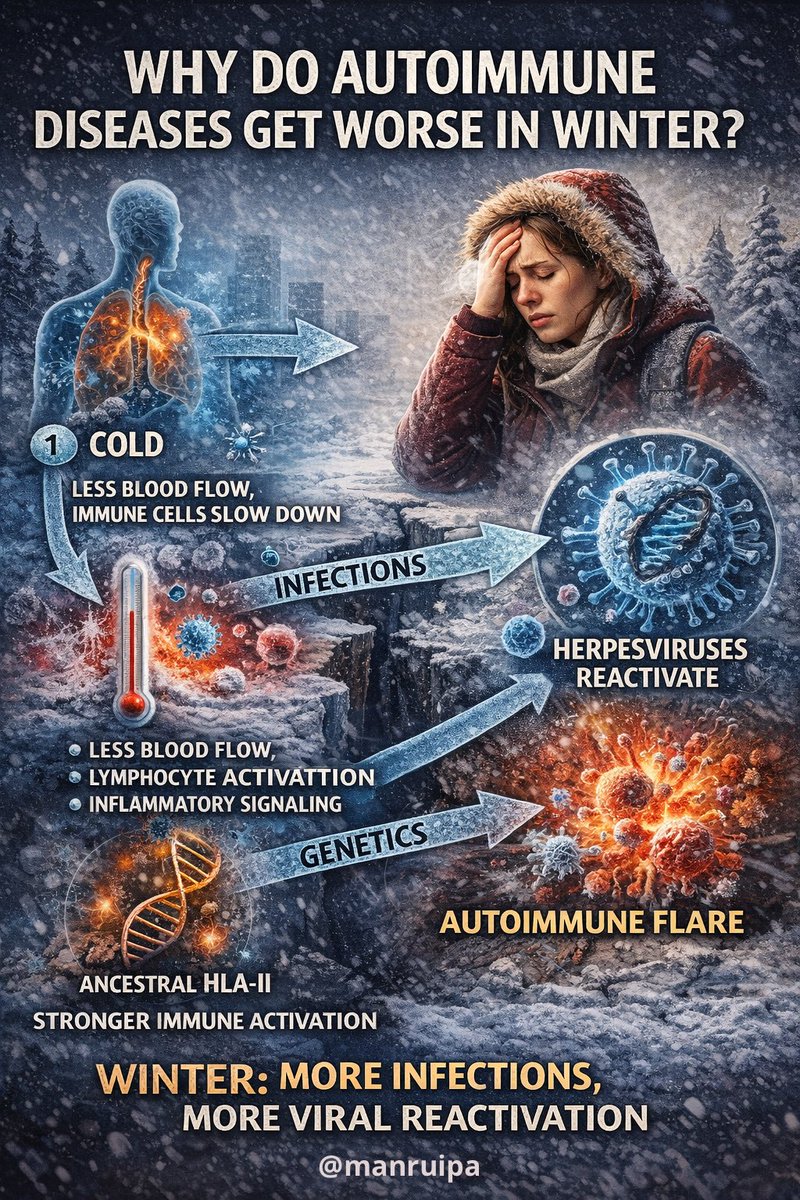
🧵Why do many autoimmune diseases worsen in winter?

It’s often blamed on low vitamin D and less sunlight.

But the real explanation may be more interesting, and more biological. 👇 Image
1️⃣ Cold changes how our immune system protects mucosal surfaces.

When temperatures drop, vasoconstriction occurs in nasal and respiratory mucosa.

That means:

• less blood flow
• slower lymphocyte trafficking
• slower immune surveillance

At the same time, mucociliary clearance becomes less efficient because cilia move more slowly in cold conditions.

Result: respiratory infections become more likely.
2️⃣ More infections = more immune activation

For people with autoimmune susceptibility, every infection acts like an immune accelerator:

infection → cytokine release → lymphocyte activation → inflammation

Which can trigger autoimmune flares.
Read 9 tweets
Feb 23
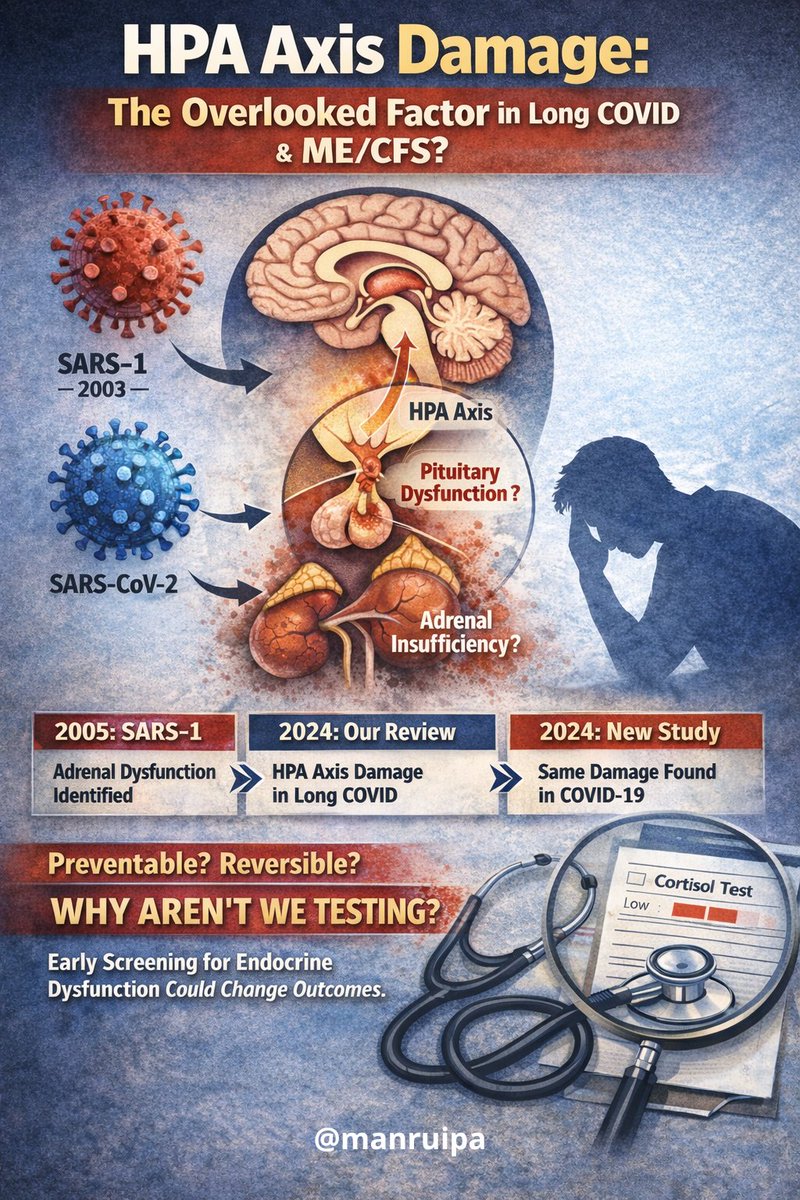
🔴🚩🧵 What if part of severe Long COVID and ME/CFS is not “mysterious”, but untreated, potentially reversible HPA-axis damage?

We already saw this after SARS-1.
It happened again with SARS-CoV-2.
And almost no one is screening for it.

Some of the worst symptoms may be preventable.

Read this thread, and consider discussing testing with your doctor. 👇Image
1️⃣ HPA axis damage in Long COVID and ME/CFS is not new. We’ve seen this before.

In July 2024, in our review, we discussed something many still overlook:

👉 Hypocortisolism in ME/CFS and Long COVID may result from direct infection or immune-mediated damage of the HPA axis (hypothalamus–pituitary–adrenal).

Our review:
frontiersin.org/journals/immun…
3️⃣ What did we write in 2024?

In our review, we argued that:

• SARS-CoV-2 shares high genetic similarity with SARS-CoV
• Therefore, similar HPA-axis vulnerability is biologically plausible
• Hypocortisolism in Long COVID may reflect:
– direct viral injury
– inflammatory hypophysitis
– or autoimmune processes targeting hypothalamus/pituitary

Because this pattern had already happened.
Read 10 tweets
Feb 15
⚠️🧵 The “other side of the coin” in Long COVID / ME-CFS / post-vaccinal syndromes: anti-M3 positive

For years we’ve talked about the subgroup with HPA-axis damage (hypothalamus–pituitary–cortisol).
But there is another large subgroup that can look the same symptomatically… and it is NOT hypocortisolism:

➡️ Autoimmune dysautonomia due to anti-M3 autoantibodies (and sometimes other GPCRs).

Read the entire thread — the mechanism is the key point.👇Image
1) Why does anti-M3 matter?
Because the muscarinic M3 receptor participates in fundamental parasympathetic functions:
• autonomic regulation (vessels, orthostatic tolerance)
• glands (tears/saliva/sweat)
• digestive tract (motility/secretion)
• eye: ciliary muscle → visual accommodation

When M3 fails, symptoms many patients instantly recognize appear:
• POTS / orthostatic intolerance (tachycardia, dizziness, “empty head”)
• extreme fatigue + dysautonomia crashes
• ocular/oral dryness, poor thermoregulation
• slow/irritable digestion
• heat hypersensitivity (sometimes also cold)
2) And yes: it can also explain visual fatigue
People often attribute this only to “dry eye”, but in anti-M3 there’s another key factor:

🧠 M3 controls the ciliary muscle.
If M3 is blocked/altered → slow or insufficient accommodation → blurred vision, eye pain, headache, screen intolerance.

That’s why bright/blue light worsens symptoms: if focusing is impaired, the eye must “work harder”.
Read 9 tweets
Feb 8
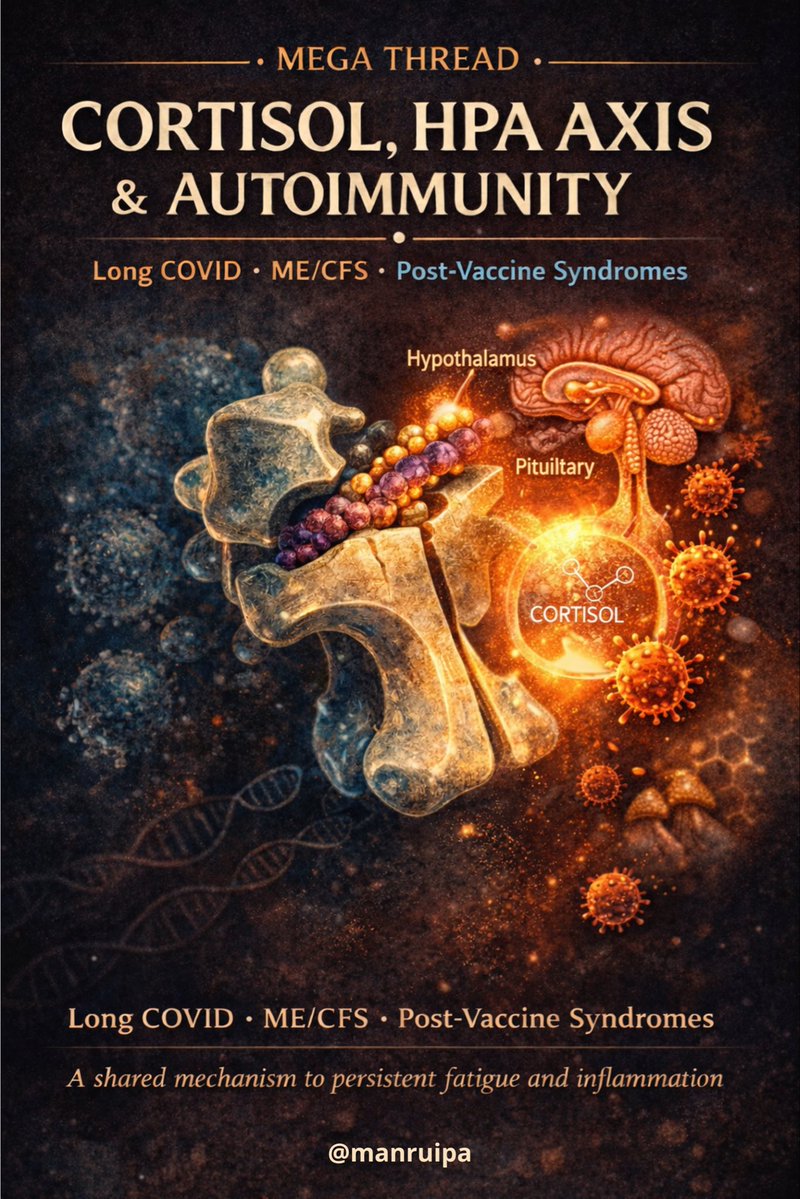
⚠️ 🧵 MEGA THREAD | Cortisol, the HPA axis & autoimmunity

Why do so many patients with Long COVID, ME/CFS, and post-vaccinal syndromes share extreme fatigue, PEM, dysautonomia, and persistent inflammation?

The answer may lie in a key but under-explained mechanism: hypocortisolism due to damage of the HPA axis.

This thread brings together years of evidence, recent papers, and all my previous posts to explain what is happening, why it happens, and what can be done 👇Image
1)🔴 New evidence

Another recent article reports morning hypocortisolism in Long COVID, a finding strikingly similar to what is consistently observed in ME/CFS:
👇🏻
2)🧠 The hypothesis we discussed years ago

Long COVID, ME/CFS, and some post-vaccinal syndromes may share hypocortisolism caused by autoimmune damage or direct infection of the HPA axis:
👇🏻
Read 22 tweets

Did Thread Reader help you today?

Support us! We are indie developers!


This site is made by just two indie developers on a laptop doing marketing, support and development! Read more about the story.

Become a Premium Member ($3/month or $30/year) and get exclusive features!

Become Premium

Don't want to be a Premium member but still want to support us?

Make a small donation by buying us coffee ($5) or help with server cost ($10)

Donate via Paypal

Or Donate anonymously using crypto!

Ethereum

0xfe58350B80634f60Fa6Dc149a72b4DFbc17D341E copy

Bitcoin

3ATGMxNzCUFzxpMCHL5sWSt4DVtS8UqXpi copy

Thank you for your support!

Follow Us!

:(