
Did Nikol Pashinyan save Armenia 🇦🇲 from disappearing?
One week before historic parliamentary elections in which he leads the polls, the outgoing prime minister defends his record.
Russian 🇷🇺 interference in the country has been increasing recently.
🧵THREAD🧵1/19 ⬇️
One week before historic parliamentary elections in which he leads the polls, the outgoing prime minister defends his record.
Russian 🇷🇺 interference in the country has been increasing recently.
🧵THREAD🧵1/19 ⬇️

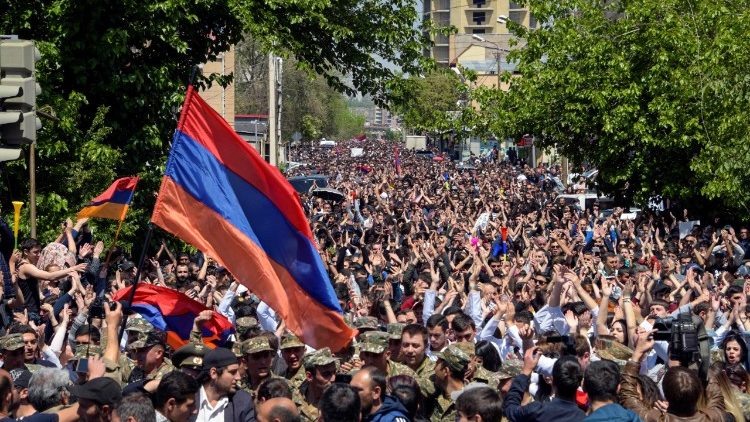
In 2018, a popular uprising erupted in Armenia after President Serzh Sargsyan circumvented the constitution to secure his re-election as prime minister.
Riding the wave of the Velvet Revolution, Nikol Pashinyan arrived with a promise: to reduce corruption and the influence of the oligarchs.
Riding the wave of the Velvet Revolution, Nikol Pashinyan arrived with a promise: to reduce corruption and the influence of the oligarchs.
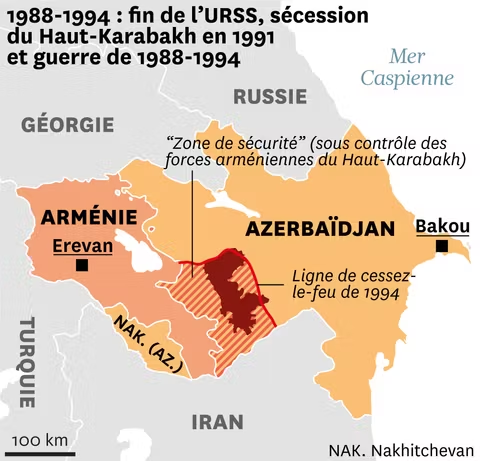
The country's independence in 1991 came amidst pogroms and war with Azerbaijan. Backed by Moscow, Yerevan and the Nagorno-Karabakh separatists won the war and established the separatist Republic of Artsakh.
This republic encompassed the territories of Nagorno-Karabakh, as well as the surrounding areas, historically home to approximately one million Azerbaijanis and Kurds, who were expelled and forced to live in overcrowded Baku for years. Azerbaijan was humiliated.
This republic encompassed the territories of Nagorno-Karabakh, as well as the surrounding areas, historically home to approximately one million Azerbaijanis and Kurds, who were expelled and forced to live in overcrowded Baku for years. Azerbaijan was humiliated.
Presidents Robert Kocharyan (1998-2008) and Serge Sarkisian (2008-2018), both supported by Moscow, strengthened the Armenian oligarchy, while 700,000 to 1.3 million Armenians emigrated due to a lack of economic prospects.
These oligarchs have woven a network that extends into the political sphere. Here are the main ones and their positions:
🔹G. Tsaroukyan: Cement, casinos, gas | Opportunistic opponent | Pro-Russian
🔹S. Karapetyan: Armenian electricity, real estate | Financier of the former regime | Pawn of the Kremlin
🔹S. Aleksanyan: Imports, supermarkets | Allied with Pashinyan | Pragmatic (Business first)
🔹R. Vardanyan: Former banker, former Karabakh minister | Opponent (detained in Baku) | Independent / Abandoned by Moscow
🔹Former regime (Hayrapetyan/Bagdasarov): Oil, tobacco | Deposed and prosecuted | Pro-Russian (exiled in Moscow)
🔹G. Tsaroukyan: Cement, casinos, gas | Opportunistic opponent | Pro-Russian
🔹S. Karapetyan: Armenian electricity, real estate | Financier of the former regime | Pawn of the Kremlin
🔹S. Aleksanyan: Imports, supermarkets | Allied with Pashinyan | Pragmatic (Business first)
🔹R. Vardanyan: Former banker, former Karabakh minister | Opponent (detained in Baku) | Independent / Abandoned by Moscow
🔹Former regime (Hayrapetyan/Bagdasarov): Oil, tobacco | Deposed and prosecuted | Pro-Russian (exiled in Moscow)
Between 1993 and 2020, Armenia stagnated, power was indirectly controlled by oligarchs who became increasingly self-serving, and the country neither developed nor built much, particularly in the Nagorno-Karabakh region.
Meanwhile, Azerbaijan developed rapidly, thanks to Caspian gas and its geopolitical position. The country grew wealthy, its population exploded, and its army was strengthened by Israel and Turkey.
Meanwhile, Azerbaijan developed rapidly, thanks to Caspian gas and its geopolitical position. The country grew wealthy, its population exploded, and its army was strengthened by Israel and Turkey.

In 2020, the Armenian army and the separatists were humiliated during the 44-day war. Azerbaijani forces seized Shusha, and Pashinyan was forced to cede control of the Nagorno-Karabakh territories to Baku, in a show of support from Moscow.
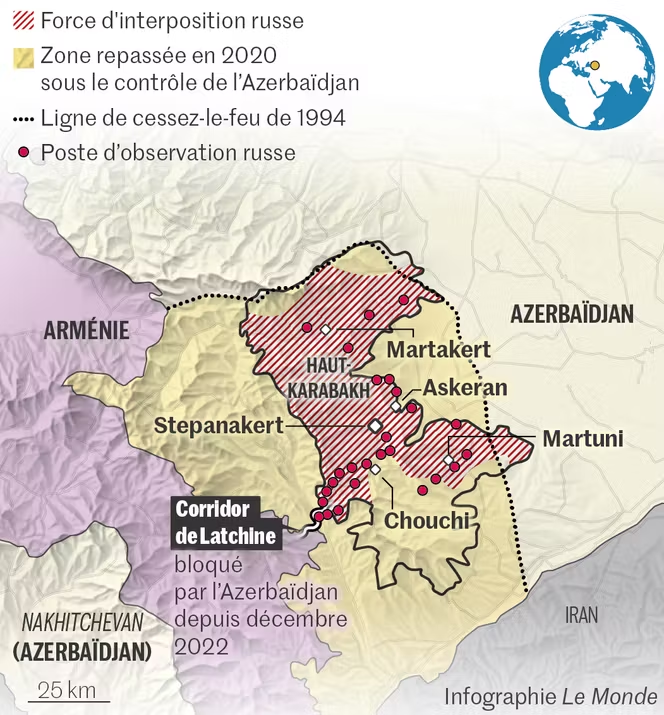
This defeat is not Pashinyan's fault. 5,000 young Armenians lost their lives fighting a superior Azerbaijani army.
The blame should rightfully be placed on the previous leaders who did nothing to strengthen the army and develop the country. At the end of November, Pashinyan withdrew the bulk of the nearly encircled Armenian army, leaving the separatists alone.
The blame should rightfully be placed on the previous leaders who did nothing to strengthen the army and develop the country. At the end of November, Pashinyan withdrew the bulk of the nearly encircled Armenian army, leaving the separatists alone.
Azerbaijan attacked because Moscow did nothing, choosing instead to punish the revolution and Pashinyan's pro-Western shift.
Russian peacekeepers are deployed to Nagorno-Karabakh, but do not intervene, both during the blockade and until the ethnic cleansing at the end of 2023.
Russian peacekeepers are deployed to Nagorno-Karabakh, but do not intervene, both during the blockade and until the ethnic cleansing at the end of 2023.

Meanwhile, Pashinyan was being pressured domestically by nationalists and the Church to reignite the war.
Yet, all signs indicate that Armenia would have been crushed, particularly with the Azerbaijani offensive on the border in September 2022.
Yet, all signs indicate that Armenia would have been crushed, particularly with the Azerbaijani offensive on the border in September 2022.

Armenia was completely surrounded. On both sides, by Azerbaijan; to the west and east, to the west by Turkiye, which supported Baku; to the north, by a passive Georgia; and to the south, by a pariah Iran.
Furthermore, Armenia had no foreign military support at the time, as most states refused to support what they considered the occupation of territory internationally recognized by Yerevan.
Furthermore, Armenia had no foreign military support at the time, as most states refused to support what they considered the occupation of territory internationally recognized by Yerevan.

Pashinyan may have abandoned Nagorno-Karabakh, but he saved Armenia from annihilation.
His numerous negotiation efforts are slowly beginning to bear fruit, allowing for the redrawing of the border (Armenia occupies approximately 80 km² of Azerbaijani border territory) and Azerbaijan slightly more than 200 km².
His numerous negotiation efforts are slowly beginning to bear fruit, allowing for the redrawing of the border (Armenia occupies approximately 80 km² of Azerbaijani border territory) and Azerbaijan slightly more than 200 km².
Furthermore, between 2018 and 2026, Armenia's GDP more than doubled, boosted by the arrival of young Russians fleeing the mobilization at the end of 2022. The country is developing faster than ever and is gradually emerging from poverty.
Yerevan has a key role to play, as a pivotal point in the Caucasus, on the North-South and East-West trade routes.
Yerevan has a key role to play, as a pivotal point in the Caucasus, on the North-South and East-West trade routes.
Since 2023, Armenia has found two powerful allies: India and France, which have significantly increased arms sales, enabling the army to strengthen itself and regain its deterrent role.
Relations with Turkey have improved considerably, and détente with Azerbaijan has slowly begun.
Relations with Turkey have improved considerably, and détente with Azerbaijan has slowly begun.
But Pashinyan also steered the country in a new political direction. The country is now a candidate for the European Union 🇪🇺, moving closer to Europe and further away from Russia, while also making progress in press freedom and the fight against corruption.

This record, which he is defending in the upcoming elections, faces a largely divided opposition, which, if he fails to secure a majority, could complicate his work.
Russian interference is increasing in the country, even though the intelligence services have already thwarted some attempts.
Russian interference is increasing in the country, even though the intelligence services have already thwarted some attempts.

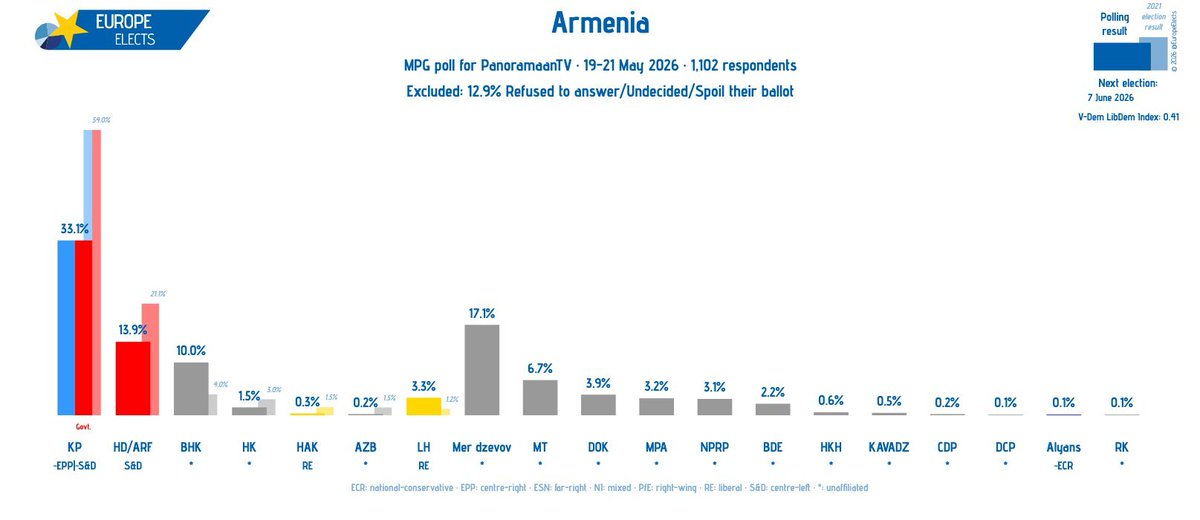
Fearing that the victory of the Civil Contract party candidate would definitively seal Yerevan's rapprochement with the West, Russia implemented extensive disinformation campaigns in favor of pro-Russian Armenian candidates.
Since Armenians are not allowed to vote from abroad, Moscow could organize the transport of tens of thousands of Armenians living in Russia to vote and influence the election.
Online disinformation campaigns have also intensified in recent weeks to discredit Nikol Pashinyan's government ahead of the elections, which aim to renew the 101 seats in the National Assembly.
Online disinformation campaigns have also intensified in recent weeks to discredit Nikol Pashinyan's government ahead of the elections, which aim to renew the 101 seats in the National Assembly.
Next weekend's elections are primarily about the opposition between a liberal, pro-European and pro-peace project and a more conservative, religious, pro-Russian project that favors confrontation with Azerbaijan.

• • •
Missing some Tweet in this thread? You can try to
force a refresh






