
With all the excitement around daraxonrasib, I needed to refresh my RAS inhibitor knowledge, so here we go:
KRAS is a GTPase that toggles between and GDP-bound OFF state and GTP-bound ON state. In healthy cells RAS becomes transiently activated in response to extracellular growth signals and starts downstream signaling. 
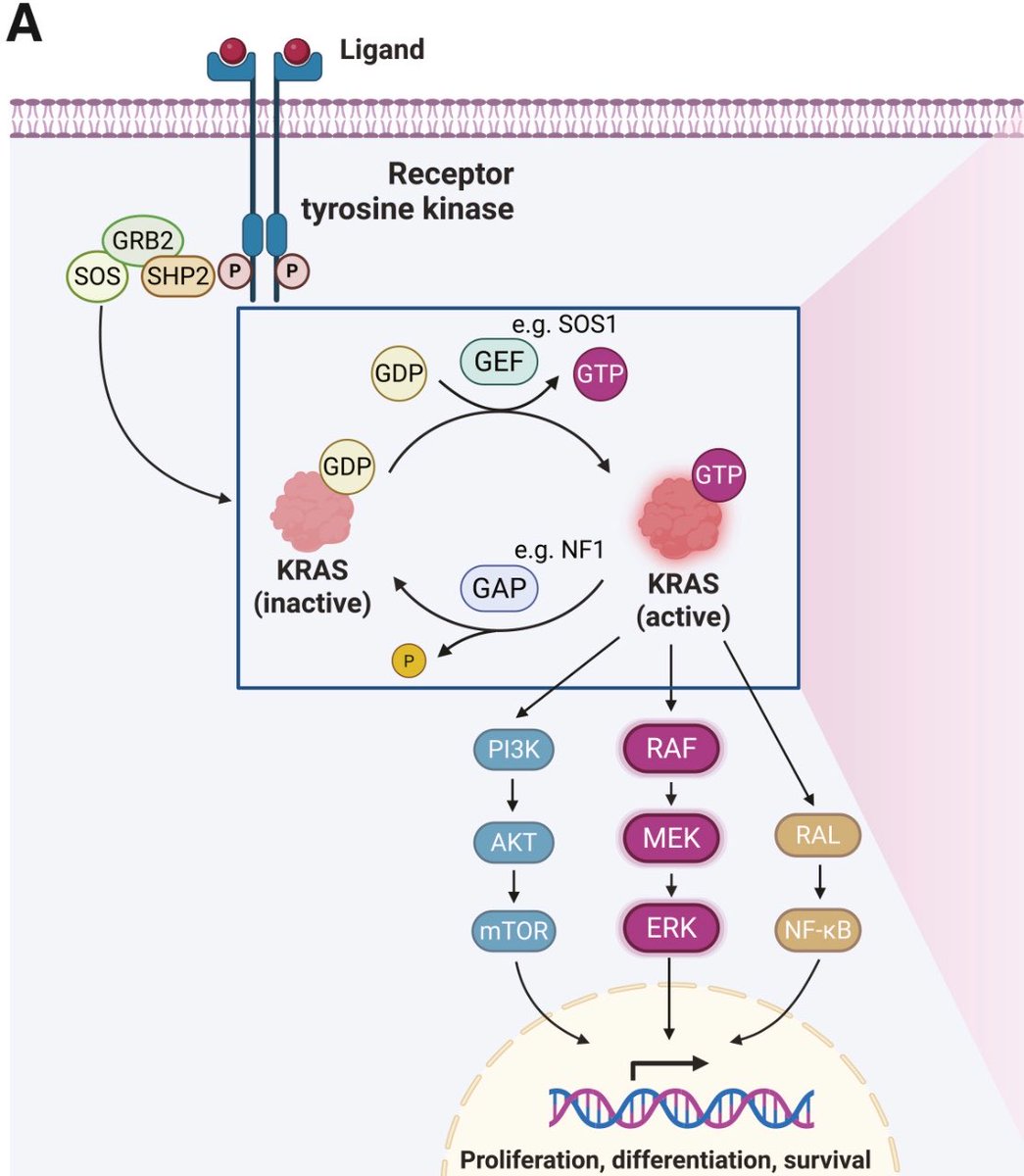
90% of RAS mutations are at codons 12, 13 and 16. These cause the proteins catalytic domain to change and be unable to remove GTP, forcing it to be stuck ON.
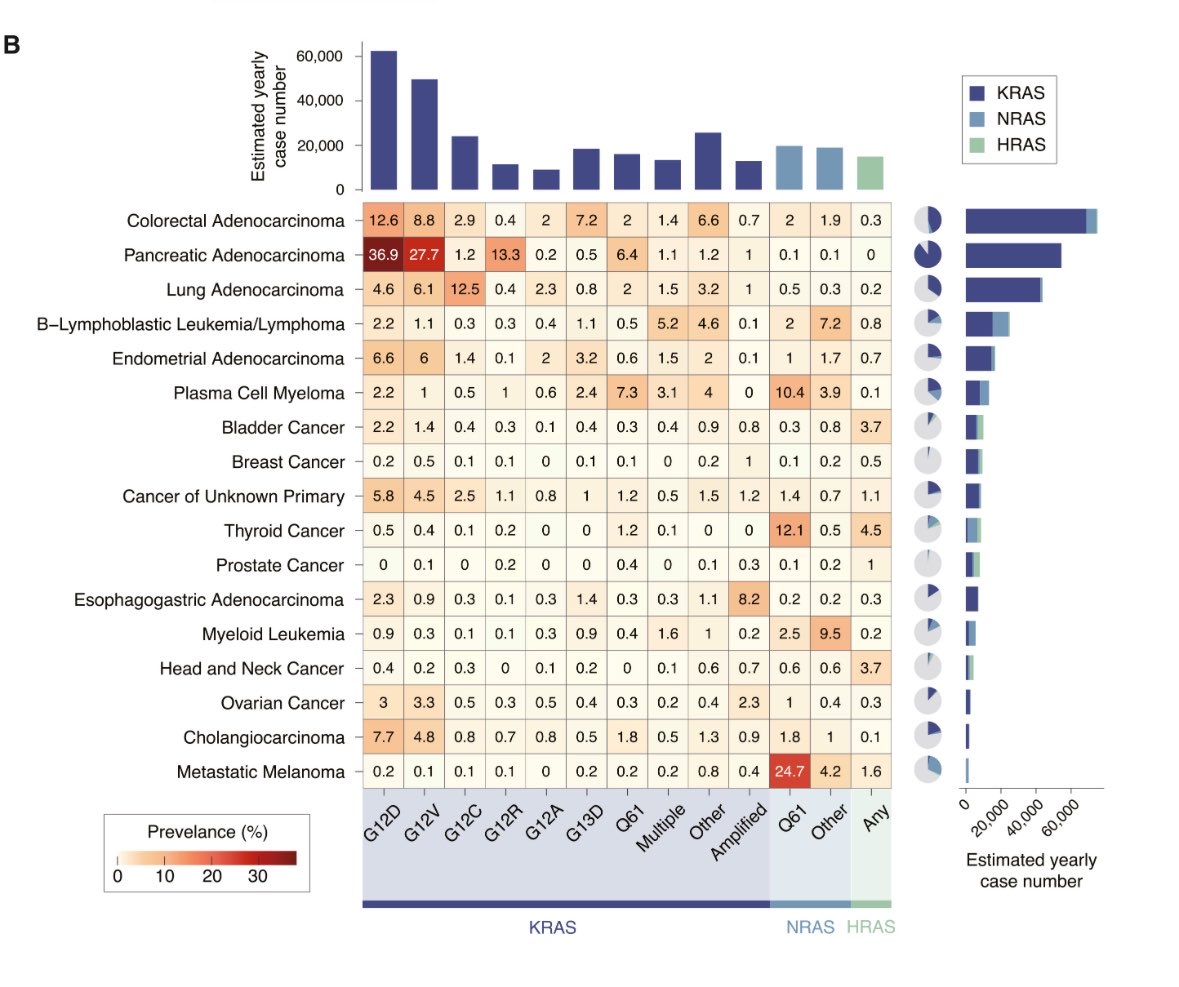
Different tumors have different prevalence of RAS mutations. Lung has G12C. Pancreas is G12D and G12V.
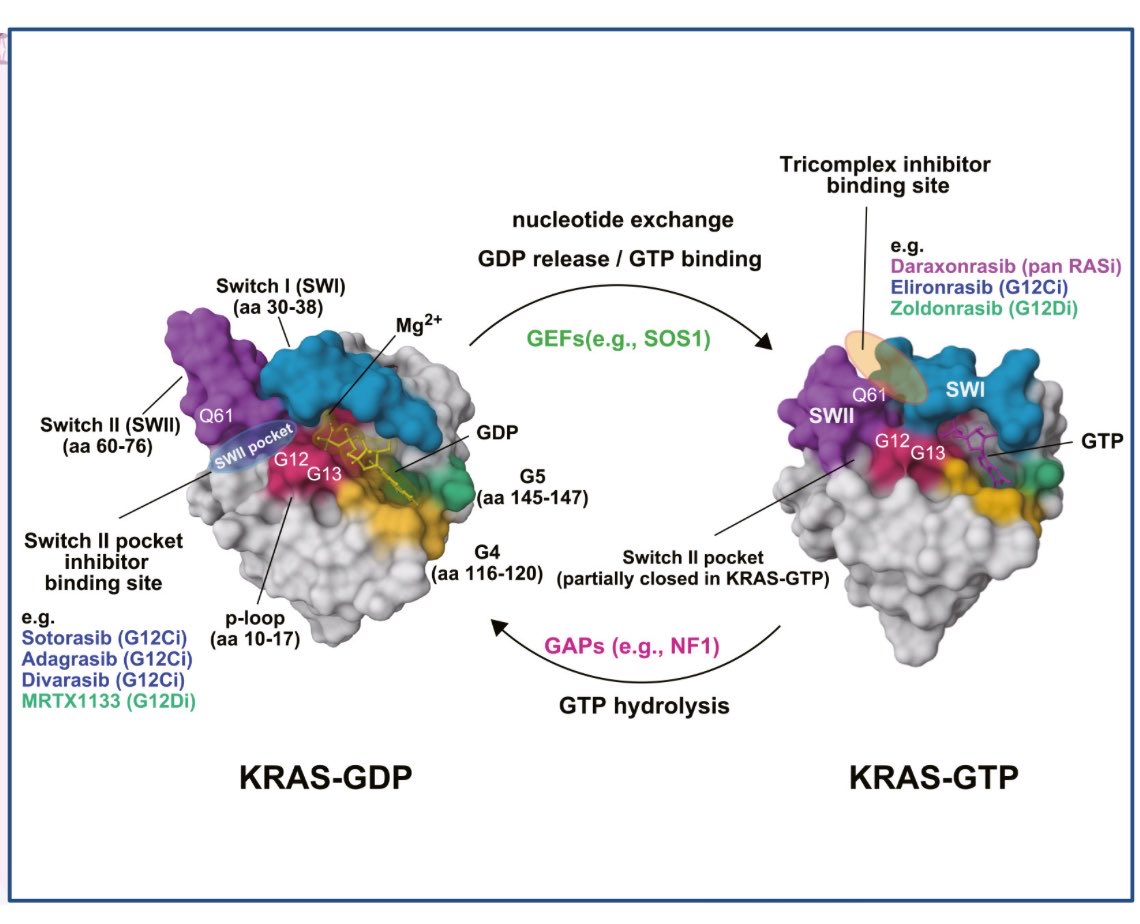
Some mutations retain other methods to turn itself off. KRAS G12C is the most able to turn itself off. This is why sotarasib and adagrasib can bind KRAS G12C mutant RAS in the OFF state. These are “allele specific” RAS inhibitors
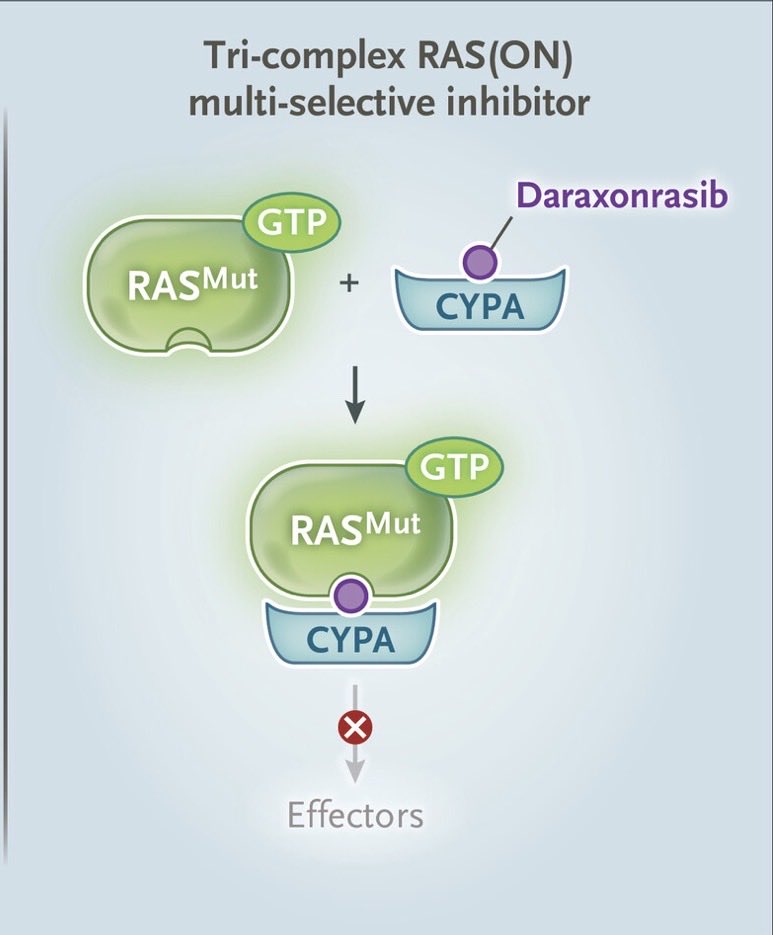
Daraxonrasib is a “pan RAS” inhibitor (inhibiting KRAS, NRAS and HRAS). It’s a RAS ON inhibitor that “glues” RAS to CYPA. This “tri-complex” is then too bulky to interact with RAS partners, making it unable to signal. Because non-specific, it also inhibits wild type RAS.
• • •
Missing some Tweet in this thread? You can try to
force a refresh




