Since its disconnection from Starlink, Russia is urgently pushing forward its own LEO high-speed satellite constellation called “Rassvet”.
Ukrainian communications expert Serhii “Flash” Beskrestnov analyses its status and prospects. 1/
“1. The enemy needs a ‘Russian StarLink’. Undoubtedly, Russia understands the importance of a high-speed data transmission system via low-orbit satellites, and it would be foolish to think they wouldn't pursue this direction. The question is just about timing.
2/
“2. I have no idea which agencies or structures in our country are monitoring this project and considering potential problems. I can only speak for myself. Since the first day of the war, I've been collecting all the information on this topic, trying to analyze and monitor it. 3/
“3. Why aren't we taking any countermeasures against this project? Because it doesn't show any signs or evidence of military use.
4/
“Well, I'm curious - how do you envision countermeasures? Attacking our UAVs at the Plesetsk, Vostochny, and Baikonur cosmodromes to stop them from launching more mobile internet satellites? It sounds like nonsense to me.
5/
“4. There are already the first 16 ‘Rassvet’ satellites in orbit. To ensure continuous and stable data transmission, at least 200-250 satellites need to be launched. 6/
“The plan is to launch 300 more satellites in the next few years, and then another 700. We'll see when and how many will actually be launched. The timelines and plans are constantly changing.
7/
“5. Can the existing satellites already be used against us for military purposes?
Theoretically, yes. A satellite can provide high-speed data transmission within 6-10 minutes as it passes over us. They pass over approximately once a day.
8/
“Anyone interested in when and where they pass can download an app like Satellite Tracker.
Theoretically, the enemy could already install satellite internet terminals on Shahed drones and plan an attack during the satellites' passage, …
9/
“… but I believe this would be too difficult from an organizational point of view, and until there are enough satellites for stable communication, there will be no military application. 10/
“6. If the "Rassvet" satellites start being used militarily, we'll detect it through satellite traffic, intelligence reports, or trophies. It depends on the type of use.
11/
“7. What countermeasures against the "Rassvet" satellites could we take? Has Russia, with its scientific and technological potential, been able to do anything with ‘Starlinks’ in 4 years?
12/
“No. So I think we won't be able to do anything either when there are too many satellites. But I do have some sneaky ideas 🙂 It's too early to test them now. The 16 satellites currently in orbit are operating in test mode.”
13/13
Russian sources report that Ukraine has started dropping anti-vehicle landmines on the M-14 highway between Melitopol and Mariupol.
This key logistical route to Crimea is 100–150 km from the front lines and would require fixed-wing UAVs to reach that far.
1/
This highway has been the primary focus of Ukraine’s sharp rise in strikes on Russian trucks using mid-range UAVs like the “Hornet.”
Landmines at operational depth on this and other routes will greatly increase pressure on Russian logistics. 2/
The Russians have recovered cassettes containing either 48 or 10 landmines of the IBM anti-vehicle/anti-personnel series.
These devices are equipped with “PDP” movement-sensitive fuzes and are powerful enough to immobilize vehicles, leaving them easy targets for strike UAVs. 3/
Serhii “Flash” clarifies new Russian tactics that combine “Geran-2” attacks on Ukrainian air defense units while another UAV simultaneously strikes the main target.
First, a “Gerbera” reconnaissance UAV studies the air defenses to determine their movements and locations. 1/
Then, a double strike is applied—one Geran-2 strikes and distracts the ground-based air defenses, while another attacks the target.
“Flash” advises using camouflage, changing to backup positions, and closely monitoring reconnaissance UAV flights.
2/
While the crew is engaged in targeting, the radar must be monitored closely for other UAVs nearby.
It is important not to fire too early or ineffectively, as this can prematurely reveal the defensive position. 3/
Russian blogger “Philologist in Ambush” (Svyatoslav Golikov) warns Ukraine is no longer just flooding the front with drones.
It is building an adaptive, networked strike system that is increasingly outpacing Russian EW and logistics defenses. 1/
“At the root of the sharply increased activity of Ukrainian UAVs, I see a progressive increase in the volume of deliveries of small strike drones to the troops.
2/
“However, the issue is not just about the increase in activity itself, but also about the effectiveness of this increased activity. For example, you can dramatically intensify offensive actions, but not achieve any significant progress and at the same time suffer heavy losses.
3/
Russian blogger Alexei Rogozin warns that the American company Palantir has provided Ukraine with AI tools that process vast amounts of data to integrate with and leverage long-range UAV strike capabilities. 1/
“Ukraine's long-range strikes on Russian targets cannot be viewed solely as a problem of air defense. An unmanned aerial vehicle (UAV) or missile is just the final link in the chain.
2/
“The main work begins earlier: reconnaissance, accumulation of digital traces, analysis of satellite and aerial photos, comparison of open and closed data, assessment of the vulnerability of objects, and review of the results of previous strikes.
3/
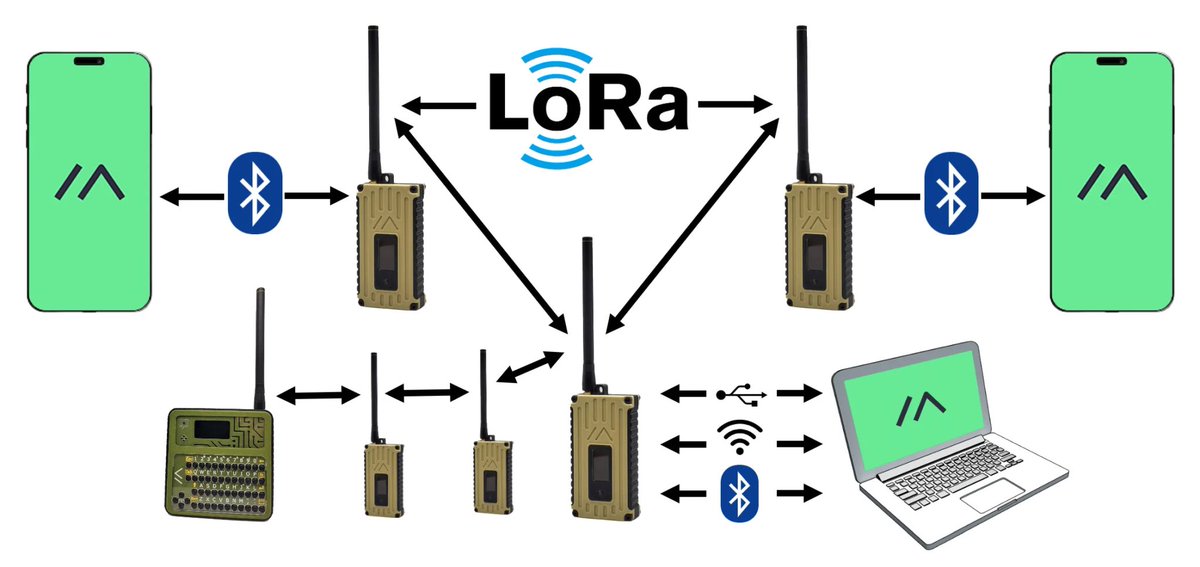
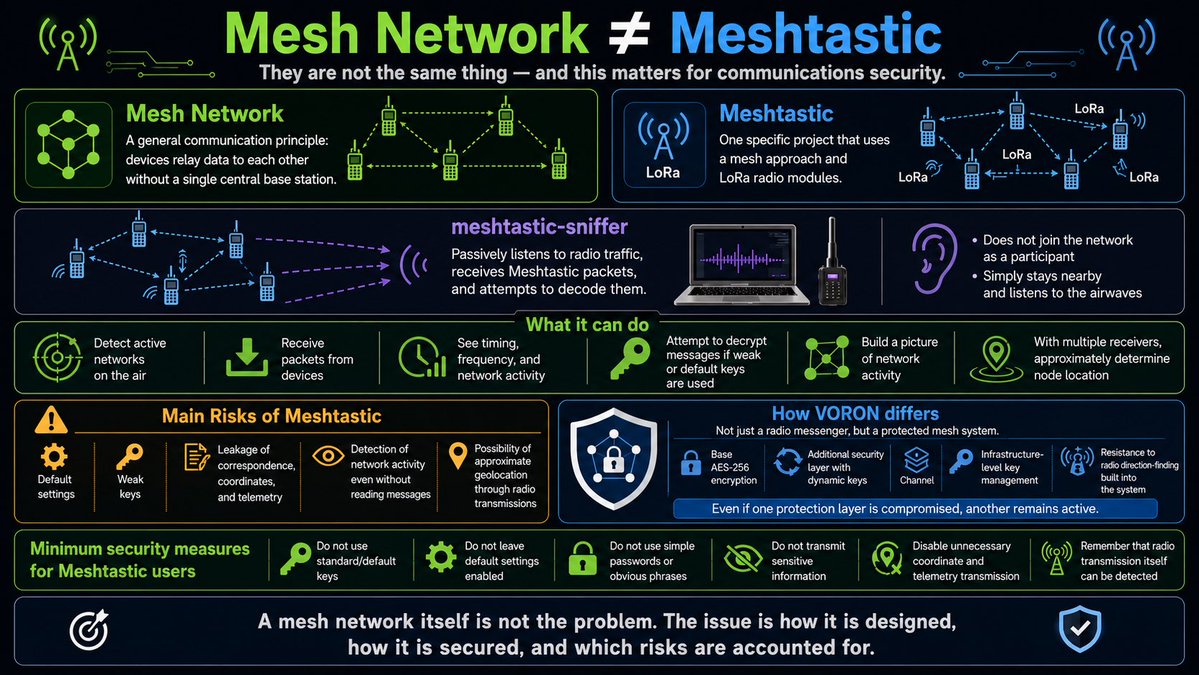
The Russians have developed a new radio reconnaissance system called the “Meshtastic-Sniffer” for detecting and analyzing Ukrainian Meshtastic/LoRa mesh networks.
Using multiple synchronized receivers, it can geolocate transmitting nodes via TDOA (Time Difference of Arrival). 1/
It is important to note that mesh networks and Meshtastic are different.
A mesh network is a general communications architecture in which devices relay data to one another without a central base station.
Meshtastic is one specific implementation that uses LoRa radio modules. 2/
The “Meshtastic-Sniffer” can exploit the security risks of poorly configured Meshtastic networks.
It passively listens to radio traffic, intercepts packets, analyzes network activity, and attempts to decrypt messages using default or weak keys.
3/
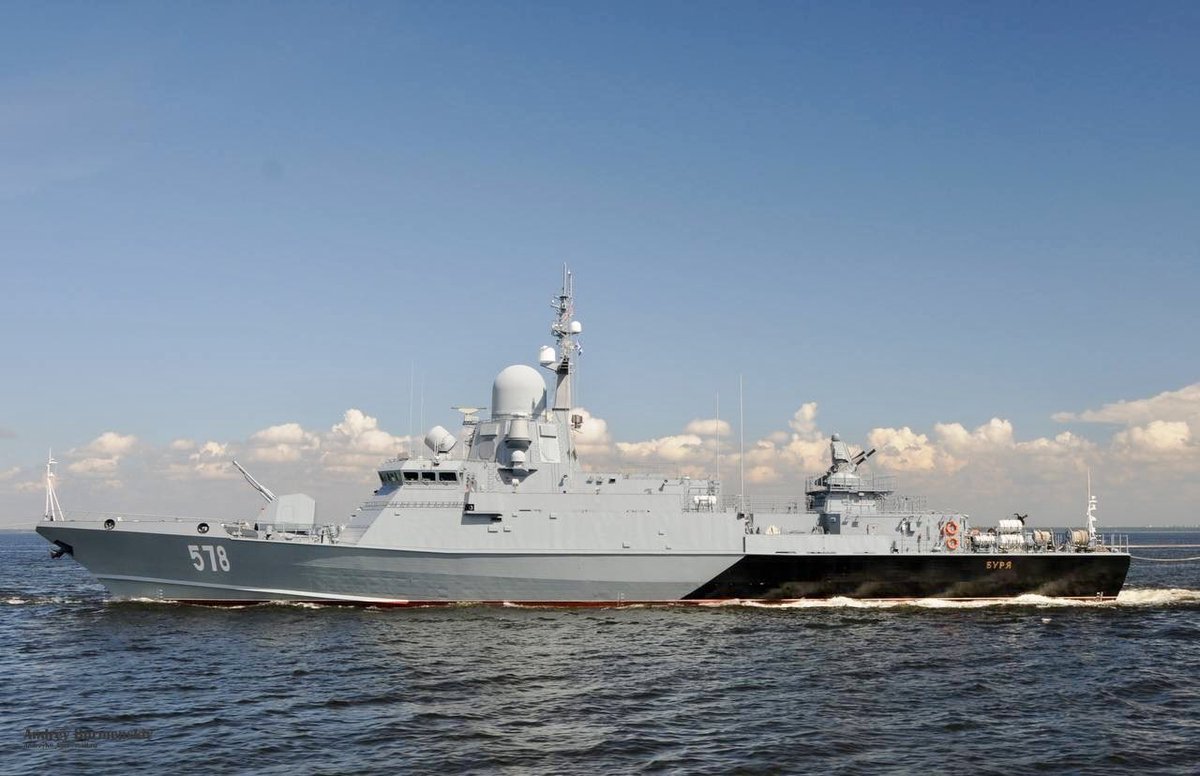
The sorry state of Russian surface warship construction is exemplified by the long-delayed commissioning of the small 800-ton missile ship Burya.
Laid down in December 2016 and launched in October 2018, it then sat idle for years awaiting its diesel engines. 1/
Even then, sea trials dragged on for another three-and-a-half years due to chronic engine problems.
Originally, German high-speed diesel engines had been intended, but sanctions imposed after the 2014 annexation of Crimea cut off supplies.
2/
Russia shifted to domestic “import substitution,” but the Zvezda factory in St. Petersburg has lacked the capacity, facilities, and supply chain to keep up with demand.
When engines have finally been delivered, they have been plagued by breakdowns and warranty disputes. 3/