‼️⚠️Please read this until the end.
A widely shared article has presented a deeply misleading view of Long COVID, suggesting once again that cognitive behavioral therapy, exercise, and “mind-body” approaches may be the uncomfortable truth patients refuse to accept.
This needs to be challenged.
Not because the nervous system does not matter.
Not because psychological support cannot help.
But because confusing support with cure, physiology with psychology, and heterogeneity with “it might be in your head” is exactly how medicine has harmed post-infectious patients for decades.
There are articles about Long COVID that look like science journalism, but in reality they repackage, in modern language, a very old idea: if we do not fully understand a disease, maybe the problem is in the patient’s mind.
And that is not science. That is repeating history.
The article begins with a striking sentence:
“There isn’t a single approved pharmaceutical treatment, not even a test to verify the presence of the illness.”
This may sound forceful, but it is a very misleading way of presenting the problem.
The fact that there is still no drug specifically approved for Long COVID, or a single diagnostic test, does not mean that “nothing has been found.” It means that we are dealing with a heterogeneous disease, probably with several biological subgroups, and that medicine has not yet converted those findings into validated clinical tools.
“No single diagnostic biomarker” is not the same as “no biology.”
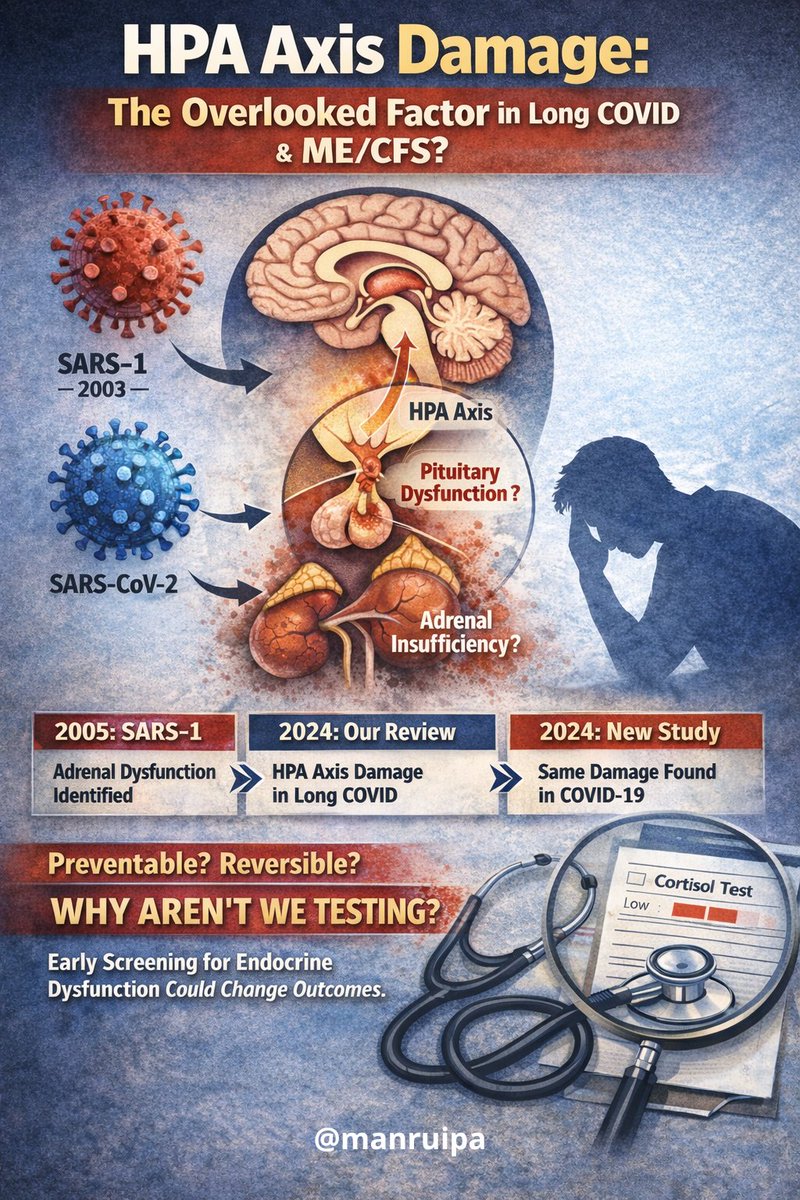
In just a few years, immunological, vascular, neurological, endocrine, and metabolic abnormalities have been described in subgroups of Long COVID patients: autonomic dysfunction, herpesvirus reactivations such as EBV/HHV-6, alterations in the cortisol axis, autoantibodies against GPCR receptors — including adrenergic and muscarinic receptors — persistent viral antigens, endothelial damage, muscle abnormalities after exertion, mitochondrial dysfunction, persistent inflammation, and differential immune changes.
Is everything settled? No.
Does that mean it is psychological? Also no.
Science does not work like that. Multiple sclerosis did not stop existing before we had MRI. Many autoimmune diseases do not show up in routine blood tests. If a complete blood count, a basic biochemistry panel, or an X-ray comes back “normal, normal, normal,” that does not prove the absence of disease. It only proves that you are looking with inadequate tools.
One of the article’s most serious mistakes is this: it confuses the absence of a simple clinical test with the absence of organic disease.
And that mistake has caused harm for decades.
The article also says:
“Almost $2 billion and half a decade of international effort have yielded little more than hypotheses about micro blood clots and spike proteins and mitochondrial dysfunction.”
No. That is not correct.
A hypothesis is a provisional explanation. But when you compare patients and controls and find significant differences in muscle tissue, metabolism, response to exertion, immune biomarkers, viral antigens, autoantibodies, or vascular dysfunction, you are no longer talking about “little more than hypotheses.” You are talking about lines of biomedical evidence that still need to be organized, replicated, stratified, and translated into treatments.
That is not scientific failure. That is research into a complex and new disease.
🔵Continued in the next post.👇🏻
(1/6)
A widely shared article has presented a deeply misleading view of Long COVID, suggesting once again that cognitive behavioral therapy, exercise, and “mind-body” approaches may be the uncomfortable truth patients refuse to accept.
This needs to be challenged.
Not because the nervous system does not matter.
Not because psychological support cannot help.
But because confusing support with cure, physiology with psychology, and heterogeneity with “it might be in your head” is exactly how medicine has harmed post-infectious patients for decades.
There are articles about Long COVID that look like science journalism, but in reality they repackage, in modern language, a very old idea: if we do not fully understand a disease, maybe the problem is in the patient’s mind.
And that is not science. That is repeating history.
The article begins with a striking sentence:
“There isn’t a single approved pharmaceutical treatment, not even a test to verify the presence of the illness.”
This may sound forceful, but it is a very misleading way of presenting the problem.
The fact that there is still no drug specifically approved for Long COVID, or a single diagnostic test, does not mean that “nothing has been found.” It means that we are dealing with a heterogeneous disease, probably with several biological subgroups, and that medicine has not yet converted those findings into validated clinical tools.
“No single diagnostic biomarker” is not the same as “no biology.”
In just a few years, immunological, vascular, neurological, endocrine, and metabolic abnormalities have been described in subgroups of Long COVID patients: autonomic dysfunction, herpesvirus reactivations such as EBV/HHV-6, alterations in the cortisol axis, autoantibodies against GPCR receptors — including adrenergic and muscarinic receptors — persistent viral antigens, endothelial damage, muscle abnormalities after exertion, mitochondrial dysfunction, persistent inflammation, and differential immune changes.
Is everything settled? No.
Does that mean it is psychological? Also no.
Science does not work like that. Multiple sclerosis did not stop existing before we had MRI. Many autoimmune diseases do not show up in routine blood tests. If a complete blood count, a basic biochemistry panel, or an X-ray comes back “normal, normal, normal,” that does not prove the absence of disease. It only proves that you are looking with inadequate tools.
One of the article’s most serious mistakes is this: it confuses the absence of a simple clinical test with the absence of organic disease.
And that mistake has caused harm for decades.
The article also says:
“Almost $2 billion and half a decade of international effort have yielded little more than hypotheses about micro blood clots and spike proteins and mitochondrial dysfunction.”
No. That is not correct.
A hypothesis is a provisional explanation. But when you compare patients and controls and find significant differences in muscle tissue, metabolism, response to exertion, immune biomarkers, viral antigens, autoantibodies, or vascular dysfunction, you are no longer talking about “little more than hypotheses.” You are talking about lines of biomedical evidence that still need to be organized, replicated, stratified, and translated into treatments.
That is not scientific failure. That is research into a complex and new disease.
🔵Continued in the next post.👇🏻
(1/6)
https://x.com/manruipa/status/2061486964176777270
(2/6)The real problem is not that “there is nothing.” The problem is that Long COVID is not one single thing.
There are patients with an ME/CFS phenotype and post-exertional malaise.
There are patients with POTS/dysautonomia.
There are patients with lung damage.
There are patients with viral reactivations.
There are patients with immunological abnormalities.
There are patients with autoantibodies.
There are patients with neurocognitive symptoms.
There are patients with intolerances, MCAS-like symptoms, digestive problems, or worsening with heat.
And there are patients with combinations of all of the above.
If you put everyone into the same bag, any study will come out confusing.
But that heterogeneity does not justify returning to the discourse of “cognitive behavioral therapy and exercise.”
In fact, the most dangerous sentence in the article is the underlying idea: because some patients improve with “mind-body” therapies, maybe the Long COVID community is rejecting an uncomfortable truth.
No.
What the community rejects is not the idea that the nervous system participates in the disease. Of course it participates. What is rejected is using that fact to turn an organic disease into a problem of beliefs, trauma, fear of movement, or a “mental loop.”
Because there is a huge difference between these two sentences:
1. “The autonomic nervous system is altered, and we can help the patient modulate symptoms while we investigate and treat the biological cause.”
2. “Your brain is stuck in a fight-or-flight loop, and you need to retrain it in order to recover.”
The first is supportive medicine.
The second can very quickly become pseudoscience.
And this matters.
Many Long COVID patients describe postural tachycardia, heat intolerance, exertion intolerance, insomnia, tremors, shortness of breath, dizziness, food intolerances, worsening after physical or emotional stress, and the feeling of being in “fight or flight.”
But that state does not have to be psychological.
It can be explained biologically.
If a subgroup of patients develops autoantibodies against autonomic receptors — for example muscarinic or adrenergic receptors — you can alter the sympathetic/parasympathetic balance. If you reduce the parasympathetic “brake” or alter vasoregulation, the patient may live with tachycardia, physiological hyperarousal, poor orthostatic tolerance, fatigue, dizziness, stress intolerance, and a constant feeling of activation.
From the outside, that can look like anxiety.
But it is not the same as primary anxiety.
It is altered autonomic physiology.
And this is the major flaw of many “mind-body” approaches: they observe a real nervous system symptom, but they do not understand why it is happening. So they fill the gap with attractive words: neuroplasticity, trauma, survival brain, mind-body loop, trapped nervous system.
But if you do not identify the mechanism, you are only renaming ignorance.
🔵Continued in the next post.👇🏻
There are patients with an ME/CFS phenotype and post-exertional malaise.
There are patients with POTS/dysautonomia.
There are patients with lung damage.
There are patients with viral reactivations.
There are patients with immunological abnormalities.
There are patients with autoantibodies.
There are patients with neurocognitive symptoms.
There are patients with intolerances, MCAS-like symptoms, digestive problems, or worsening with heat.
And there are patients with combinations of all of the above.
If you put everyone into the same bag, any study will come out confusing.
But that heterogeneity does not justify returning to the discourse of “cognitive behavioral therapy and exercise.”
In fact, the most dangerous sentence in the article is the underlying idea: because some patients improve with “mind-body” therapies, maybe the Long COVID community is rejecting an uncomfortable truth.
No.
What the community rejects is not the idea that the nervous system participates in the disease. Of course it participates. What is rejected is using that fact to turn an organic disease into a problem of beliefs, trauma, fear of movement, or a “mental loop.”
Because there is a huge difference between these two sentences:
1. “The autonomic nervous system is altered, and we can help the patient modulate symptoms while we investigate and treat the biological cause.”
2. “Your brain is stuck in a fight-or-flight loop, and you need to retrain it in order to recover.”
The first is supportive medicine.
The second can very quickly become pseudoscience.
And this matters.
Many Long COVID patients describe postural tachycardia, heat intolerance, exertion intolerance, insomnia, tremors, shortness of breath, dizziness, food intolerances, worsening after physical or emotional stress, and the feeling of being in “fight or flight.”
But that state does not have to be psychological.
It can be explained biologically.
If a subgroup of patients develops autoantibodies against autonomic receptors — for example muscarinic or adrenergic receptors — you can alter the sympathetic/parasympathetic balance. If you reduce the parasympathetic “brake” or alter vasoregulation, the patient may live with tachycardia, physiological hyperarousal, poor orthostatic tolerance, fatigue, dizziness, stress intolerance, and a constant feeling of activation.
From the outside, that can look like anxiety.
But it is not the same as primary anxiety.
It is altered autonomic physiology.
And this is the major flaw of many “mind-body” approaches: they observe a real nervous system symptom, but they do not understand why it is happening. So they fill the gap with attractive words: neuroplasticity, trauma, survival brain, mind-body loop, trapped nervous system.
But if you do not identify the mechanism, you are only renaming ignorance.
🔵Continued in the next post.👇🏻
(3/6)The article also presents “astonishing” recoveries as if they were evidence in favor of brain retraining.
But this is scientifically weak too.
In many post-infectious diseases, there is a window in which some patients improve over time. This happens after viral infections such as EBV. Some people have symptoms for months after mononucleosis and then recover. Others do not recover and develop persistent symptoms, autoimmunity, or post-infectious syndromes.
If a person improves at 6, 9, or 12 months while doing a “brain retraining” program, that does not prove the program cured them. It may have coincided with natural recovery, pacing, rest, reduced workload, symptomatic treatment, beta-blockers, antihistamines, aspirin, LDN, antivirals, better sleep, less physical stress, fewer infections, or simply fluctuation of the disease.
Testimonials matter. But they do not replace causality.
And you cannot use patients who improve to invalidate patients who worsen with exercise.
Another point from the article:
“If exercise did indeed trigger post-exertional malaise in most patients, this level of caution would be warranted.”
This approach is extremely dangerous.
First, because post-exertional malaise does not always appear during exercise. Many times it appears 24, 48, or 72 hours later. If you perform a test in a controlled setting and only look at the immediate response, you may not be capturing the main problem.
Second, because Long COVID is heterogeneous. The fact that one subgroup tolerates rehabilitation does not mean that another subgroup with PEM, POTS, or autonomic autoimmunity can tolerate it.
Third, because there are already studies showing objective abnormalities after inducing PEM in Long COVID patients, including muscle abnormalities, metabolic alterations, and worsening muscle damage after exertion.
That is why the cautious recommendation is not “everyone should exercise.”
The cautious recommendation is: first stratify.
Does the patient have PEM?
Do they have POTS?
Do they have dysautonomia?
Do they have autonomic autoantibodies?
Do they have muscle damage or metabolic intolerance to exertion?
Are they in a flare?
Are they mild, moderate, severe, or bedbound?
Do they worsen 24–48 hours after physical or cognitive activity?
Without answering that, recommending exercise globally is not personalized medicine. It is playing roulette with vulnerable patients.
The sentence “not exercising increases the risk of cardiovascular disease, metabolic disease, diabetes, depression, or Alzheimer’s” is true in the general population.
But using it to pressure patients with PEM is a bad extrapolation.
We could also say that sunlight is necessary for vitamin D. But that does not mean you send someone with photosensitive lupus into the sun during a flare.
We could also say that exposure to pollen is harmless for many people. But that does not mean you run a trial putting patients allergic to olive pollen in an olive grove to prove to them that nothing happens.
We could also say that movement is healthy. But if a person with severe Long COVID worsens every time they exceed their limit, the scientific thing to do is to investigate why, not tell them they are deconditioned.
When you have an acute flu, the doctor does not say: “go for a run, otherwise you will become deconditioned.”
They say: rest, hydration, and caution.
🔵Continued in the next post.👇🏻
But this is scientifically weak too.
In many post-infectious diseases, there is a window in which some patients improve over time. This happens after viral infections such as EBV. Some people have symptoms for months after mononucleosis and then recover. Others do not recover and develop persistent symptoms, autoimmunity, or post-infectious syndromes.
If a person improves at 6, 9, or 12 months while doing a “brain retraining” program, that does not prove the program cured them. It may have coincided with natural recovery, pacing, rest, reduced workload, symptomatic treatment, beta-blockers, antihistamines, aspirin, LDN, antivirals, better sleep, less physical stress, fewer infections, or simply fluctuation of the disease.
Testimonials matter. But they do not replace causality.
And you cannot use patients who improve to invalidate patients who worsen with exercise.
Another point from the article:
“If exercise did indeed trigger post-exertional malaise in most patients, this level of caution would be warranted.”
This approach is extremely dangerous.
First, because post-exertional malaise does not always appear during exercise. Many times it appears 24, 48, or 72 hours later. If you perform a test in a controlled setting and only look at the immediate response, you may not be capturing the main problem.
Second, because Long COVID is heterogeneous. The fact that one subgroup tolerates rehabilitation does not mean that another subgroup with PEM, POTS, or autonomic autoimmunity can tolerate it.
Third, because there are already studies showing objective abnormalities after inducing PEM in Long COVID patients, including muscle abnormalities, metabolic alterations, and worsening muscle damage after exertion.
That is why the cautious recommendation is not “everyone should exercise.”
The cautious recommendation is: first stratify.
Does the patient have PEM?
Do they have POTS?
Do they have dysautonomia?
Do they have autonomic autoantibodies?
Do they have muscle damage or metabolic intolerance to exertion?
Are they in a flare?
Are they mild, moderate, severe, or bedbound?
Do they worsen 24–48 hours after physical or cognitive activity?
Without answering that, recommending exercise globally is not personalized medicine. It is playing roulette with vulnerable patients.
The sentence “not exercising increases the risk of cardiovascular disease, metabolic disease, diabetes, depression, or Alzheimer’s” is true in the general population.
But using it to pressure patients with PEM is a bad extrapolation.
We could also say that sunlight is necessary for vitamin D. But that does not mean you send someone with photosensitive lupus into the sun during a flare.
We could also say that exposure to pollen is harmless for many people. But that does not mean you run a trial putting patients allergic to olive pollen in an olive grove to prove to them that nothing happens.
We could also say that movement is healthy. But if a person with severe Long COVID worsens every time they exceed their limit, the scientific thing to do is to investigate why, not tell them they are deconditioned.
When you have an acute flu, the doctor does not say: “go for a run, otherwise you will become deconditioned.”
They say: rest, hydration, and caution.
🔵Continued in the next post.👇🏻
(4/6)
So in a chronic post-infectious disease with flares, PEM, inflammation, dysautonomia, and possible immunometabolic dysfunction, exertion can be an additional biological burden. It can increase oxidative stress, energy demand, sympathetic activation, and symptomatic worsening in certain patients.
It is not fear of exercise.
It is physiological intolerance to exertion.
And when thousands of patients say that exercise makes them worse, they are not “reading too much on the internet.” Many have tested it in their own bodies before they even knew what PEM was.
Another very problematic point:
“Talking about psychology can destroy your career.”
No. The problem is not talking about psychology.
The problem is using psychology to cover up medical ignorance.
Patients do not reject psychological support. They reject being told that their symptoms come from childhood trauma, anxiety, depression, false beliefs, or fear of movement when they have postural tachycardia, orthostatic intolerance, PEM, viral reactivations, autoantibodies, immune abnormalities, or muscle damage after exertion.
One thing is psychologically supporting a person with a chronic illness.
Another thing is turning the illness into something psychological.
CBT can help someone cope with a real disease. It can help with insomnia, adaptation, loss of a previous life, grief, secondary anxiety, boundary-setting, pacing, or the understandable fear that comes after worsening many times.
But CBT does not remove autoantibodies.
It does not eliminate viral reservoirs.
It does not clear persistent antigens.
It does not repair endothelial damage.
It does not cure exertion-induced myopathy.
It does not turn autoimmune dysautonomia into health.
It can be support. Not causal cure.
And that nuance is everything.
The same applies to reducing stress, resting, or pausing work.
If a patient improves after resting, taking beta-blockers, reducing workload, doing very gradual walks, and receiving cognitive support, that does not prove Long COVID is psychological. It may prove exactly the opposite: that their autonomic nervous system was overloaded and that by reducing sympathetic load, controlling heart rate, and spacing activities, they can tolerate activity better.
That is biology.
If a patient with dysautonomia improves by reducing stimuli, sleeping better, avoiding heat, controlling heart rate, using beta-blockers, or spacing tasks, it does not mean “the mind cured it.” It means you reduced physiological triggers.
🔵Continued in the next post.👇🏻
So in a chronic post-infectious disease with flares, PEM, inflammation, dysautonomia, and possible immunometabolic dysfunction, exertion can be an additional biological burden. It can increase oxidative stress, energy demand, sympathetic activation, and symptomatic worsening in certain patients.
It is not fear of exercise.
It is physiological intolerance to exertion.
And when thousands of patients say that exercise makes them worse, they are not “reading too much on the internet.” Many have tested it in their own bodies before they even knew what PEM was.
Another very problematic point:
“Talking about psychology can destroy your career.”
No. The problem is not talking about psychology.
The problem is using psychology to cover up medical ignorance.
Patients do not reject psychological support. They reject being told that their symptoms come from childhood trauma, anxiety, depression, false beliefs, or fear of movement when they have postural tachycardia, orthostatic intolerance, PEM, viral reactivations, autoantibodies, immune abnormalities, or muscle damage after exertion.
One thing is psychologically supporting a person with a chronic illness.
Another thing is turning the illness into something psychological.
CBT can help someone cope with a real disease. It can help with insomnia, adaptation, loss of a previous life, grief, secondary anxiety, boundary-setting, pacing, or the understandable fear that comes after worsening many times.
But CBT does not remove autoantibodies.
It does not eliminate viral reservoirs.
It does not clear persistent antigens.
It does not repair endothelial damage.
It does not cure exertion-induced myopathy.
It does not turn autoimmune dysautonomia into health.
It can be support. Not causal cure.
And that nuance is everything.
The same applies to reducing stress, resting, or pausing work.
If a patient improves after resting, taking beta-blockers, reducing workload, doing very gradual walks, and receiving cognitive support, that does not prove Long COVID is psychological. It may prove exactly the opposite: that their autonomic nervous system was overloaded and that by reducing sympathetic load, controlling heart rate, and spacing activities, they can tolerate activity better.
That is biology.
If a patient with dysautonomia improves by reducing stimuli, sleeping better, avoiding heat, controlling heart rate, using beta-blockers, or spacing tasks, it does not mean “the mind cured it.” It means you reduced physiological triggers.
🔵Continued in the next post.👇🏻
(5/6)
The article constantly confuses “non-pharmacological interventions” with “mind-body therapies.”
Not everything non-pharmacological is psychological.
Rest is not psychotherapy.
Pacing is not positive thinking.
Reducing sympathetic load is not placebo.
Cognitive speech therapy is not “healing with the mind.”
Controlling heart rate in POTS is not pseudoscience.
Avoiding crashes is not fear of movement.
Adapting activity to PEM is not catastrophizing.
It is applied physiology.
And if we want to properly study the role of psychological support, let us do it properly.
For example: select patients with Long COVID and clear dysautonomia. Measure POTS, heart rate variability, orthostatic intolerance, autoantibodies against autonomic receptors, sleep, cortisol, inflammation, and PEM. Give one group tools for activity regulation, breathing, pacing, reduction of sympathetic load, and management of physiological stress. Compare with controls. Measure objective and subjective outcomes.
That would be interesting.
But saying “mind-body” without defining subgroups, without a mechanism, without biomarkers, without concrete goals, and without separating support from causality opens the door to gurus, coaches, and expensive programs for desperate patients.
And that also needs to be discussed.
Because the article criticizes those who sell microclots, antivirals, or supplements without enough evidence, but seems much more lenient toward those who sell neuroplasticity, brain retraining, and mind-body healing.
Pseudoscience does not only wear an alternative medicine coat. Sometimes it also speaks the language of neuroscience.
The term “neuroplasticity” does not make an intervention scientific. Neuroplasticity exists, yes. But using a real word does not validate every commercial program built around it.
Immunology also exists. And that does not mean every “immune-modulating” supplement cures an autoimmune disease.
The question is not whether the brain can influence symptoms. Of course it can.
The question is whether that intervention proves it can modify the disease, in which subgroup, through what mechanism, with what safety, for how long, and with what objective outcomes.
Without that, it is not medicine. It is narrative.
The article ends by arguing that “believing all patients” also means believing those who say they improved with mind-body therapies.
Agreed. We should listen to them.
But listening does not mean concluding causality.
Listening does not mean extrapolating to everyone.
Listening does not mean turning testimonials into treatment.
Listening does not mean ignoring those who worsened.
Listening does not mean recommending exercise to patients with PEM.
Listening does not mean psychologizing post-infectious diseases all over again.
Believing patients also means believing those who say:
“Every time I exercise, I crash for days.”
“My body does not regulate heart rate.”
“Heat destroys me.”
“I wake up with tachycardia.”
“Antihistamines help me.”
“Physical stress triggers flares.”
“After a viral infection, I never returned to normal.”
“They told me it was anxiety, and years later they found autoimmunity.”
Patients are not an obstacle to science. Very often, they are the ones who give the first clues.
If you listen to patients, patterns appear: PEM, POTS, orthostatic intolerance, worsening with heat, food intolerances, responses to antihistamines, viral reactivations, sensitivity to stimuli, crashes after cognitive exertion, flares after infections, improvement with real rest, worsening from overload.
That is not noise. Those are clinical data.
🔵Continued in the next post.👇🏻
The article constantly confuses “non-pharmacological interventions” with “mind-body therapies.”
Not everything non-pharmacological is psychological.
Rest is not psychotherapy.
Pacing is not positive thinking.
Reducing sympathetic load is not placebo.
Cognitive speech therapy is not “healing with the mind.”
Controlling heart rate in POTS is not pseudoscience.
Avoiding crashes is not fear of movement.
Adapting activity to PEM is not catastrophizing.
It is applied physiology.
And if we want to properly study the role of psychological support, let us do it properly.
For example: select patients with Long COVID and clear dysautonomia. Measure POTS, heart rate variability, orthostatic intolerance, autoantibodies against autonomic receptors, sleep, cortisol, inflammation, and PEM. Give one group tools for activity regulation, breathing, pacing, reduction of sympathetic load, and management of physiological stress. Compare with controls. Measure objective and subjective outcomes.
That would be interesting.
But saying “mind-body” without defining subgroups, without a mechanism, without biomarkers, without concrete goals, and without separating support from causality opens the door to gurus, coaches, and expensive programs for desperate patients.
And that also needs to be discussed.
Because the article criticizes those who sell microclots, antivirals, or supplements without enough evidence, but seems much more lenient toward those who sell neuroplasticity, brain retraining, and mind-body healing.
Pseudoscience does not only wear an alternative medicine coat. Sometimes it also speaks the language of neuroscience.
The term “neuroplasticity” does not make an intervention scientific. Neuroplasticity exists, yes. But using a real word does not validate every commercial program built around it.
Immunology also exists. And that does not mean every “immune-modulating” supplement cures an autoimmune disease.
The question is not whether the brain can influence symptoms. Of course it can.
The question is whether that intervention proves it can modify the disease, in which subgroup, through what mechanism, with what safety, for how long, and with what objective outcomes.
Without that, it is not medicine. It is narrative.
The article ends by arguing that “believing all patients” also means believing those who say they improved with mind-body therapies.
Agreed. We should listen to them.
But listening does not mean concluding causality.
Listening does not mean extrapolating to everyone.
Listening does not mean turning testimonials into treatment.
Listening does not mean ignoring those who worsened.
Listening does not mean recommending exercise to patients with PEM.
Listening does not mean psychologizing post-infectious diseases all over again.
Believing patients also means believing those who say:
“Every time I exercise, I crash for days.”
“My body does not regulate heart rate.”
“Heat destroys me.”
“I wake up with tachycardia.”
“Antihistamines help me.”
“Physical stress triggers flares.”
“After a viral infection, I never returned to normal.”
“They told me it was anxiety, and years later they found autoimmunity.”
Patients are not an obstacle to science. Very often, they are the ones who give the first clues.
If you listen to patients, patterns appear: PEM, POTS, orthostatic intolerance, worsening with heat, food intolerances, responses to antihistamines, viral reactivations, sensitivity to stimuli, crashes after cognitive exertion, flares after infections, improvement with real rest, worsening from overload.
That is not noise. Those are clinical data.
🔵Continued in the next post.👇🏻
(6/6)
The real problem with the article is not that it asks for more research. That is fine.
The problem is that it presents a false dichotomy: either you accept mind-body therapies as a brave possibility, or you are part of a dogmatic community blocking science.
No.
The real scientific position is much simpler:
Long COVID is a real, biological, heterogeneous disease.
The absence of a single test does not invalidate the illness.
CBT can be support, not a causal cure.
Exercise can help some patients, but harm others, especially those with PEM.
Pacing is not fear: it is prevention of worsening.
Dysautonomia can look like anxiety, but have a physiological basis.
Stress can worsen symptoms without being the primary cause.
Neuroplasticity must not be used as a commercial wildcard.
Recovery testimonials do not replace well-designed trials.
And no treatment should be globally recommended without stratifying subgroups.
Medicine has already made this mistake before.
Patients with multiple sclerosis, lupus, autoimmune diseases, ulcers caused by Helicobacter pylori, endometriosis, or ME/CFS were treated for years as exaggerated, hysterical, anxious, or somatizing until technology and research caught up with what patients had been saying all along.
Let us not repeat the same mistake with Long COVID.
The future is not in denying the nervous system.
It is in understanding it properly.
But understanding the nervous system does not mean selling “mind-body” as a cure.
It means studying immunology, dysautonomia, autoantibodies, persistent viruses, endothelium, metabolism, muscle, the HPA axis, mast cells, microbiota, and neuroinflammation.
And then, if a psychological tool helps a patient live better with an organic disease, it is welcome.
But let us call it by its name: support.
Not cure.
Not a total explanation.
Not a substitute for biomedical research.
Not an excuse to prescribe exercise to someone with PEM.
Not another elegant way of saying “it is all in your head.”
Because it is not all in the head.
It is in the immune system.
It is in the vascular system.
It is in the autonomic nervous system.
It is in metabolism.
It is in muscle.
It is in the tissues.
It is in a biology we are still learning how to measure.
And precisely for that reason, we need more science, not more gurus.
The real problem with the article is not that it asks for more research. That is fine.
The problem is that it presents a false dichotomy: either you accept mind-body therapies as a brave possibility, or you are part of a dogmatic community blocking science.
No.
The real scientific position is much simpler:
Long COVID is a real, biological, heterogeneous disease.
The absence of a single test does not invalidate the illness.
CBT can be support, not a causal cure.
Exercise can help some patients, but harm others, especially those with PEM.
Pacing is not fear: it is prevention of worsening.
Dysautonomia can look like anxiety, but have a physiological basis.
Stress can worsen symptoms without being the primary cause.
Neuroplasticity must not be used as a commercial wildcard.
Recovery testimonials do not replace well-designed trials.
And no treatment should be globally recommended without stratifying subgroups.
Medicine has already made this mistake before.
Patients with multiple sclerosis, lupus, autoimmune diseases, ulcers caused by Helicobacter pylori, endometriosis, or ME/CFS were treated for years as exaggerated, hysterical, anxious, or somatizing until technology and research caught up with what patients had been saying all along.
Let us not repeat the same mistake with Long COVID.
The future is not in denying the nervous system.
It is in understanding it properly.
But understanding the nervous system does not mean selling “mind-body” as a cure.
It means studying immunology, dysautonomia, autoantibodies, persistent viruses, endothelium, metabolism, muscle, the HPA axis, mast cells, microbiota, and neuroinflammation.
And then, if a psychological tool helps a patient live better with an organic disease, it is welcome.
But let us call it by its name: support.
Not cure.
Not a total explanation.
Not a substitute for biomedical research.
Not an excuse to prescribe exercise to someone with PEM.
Not another elegant way of saying “it is all in your head.”
Because it is not all in the head.
It is in the immune system.
It is in the vascular system.
It is in the autonomic nervous system.
It is in metabolism.
It is in muscle.
It is in the tissues.
It is in a biology we are still learning how to measure.
And precisely for that reason, we need more science, not more gurus.
If this topic matters to you, feel free to visit my profile. I write about Long COVID, ME/CFS, autoimmunity, dysautonomia and the immunology behind complex chronic diseases.
My goal is to make complex biology easier to understand, because patients deserve mechanisms, not stigma.
My goal is to make complex biology easier to understand, because patients deserve mechanisms, not stigma.
• • •
Missing some Tweet in this thread? You can try to
force a refresh