Ed Miliband’s Clean Power 2030 plan is officially off the rails. Soaring costs, missed wind & solar
targets, and now Drax walking away from BECCS. The promises of cheaper bills? Gone. A thread 🧵(1/12)
targets, and now Drax walking away from BECCS. The promises of cheaper bills? Gone. A thread 🧵(1/12)

NESO and DESNZ claimed CP2030 could be delivered “without increasing costs for consumers” and would “bring down bills for good”. Reality: grid integration and generation cost are exploding. (2/12)
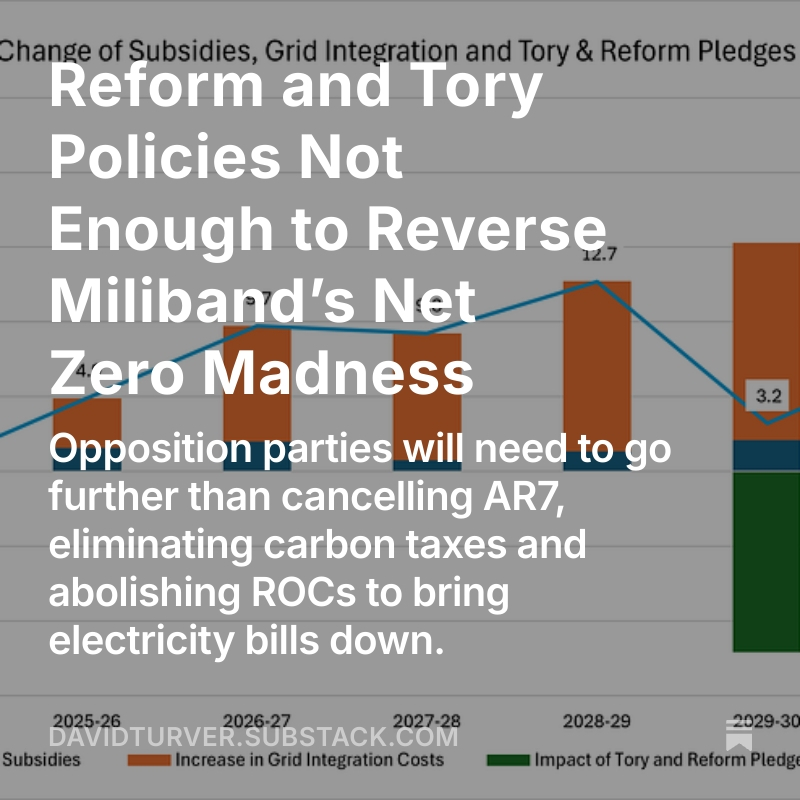
Grid balancing, transmission and Capacity Market costs are forecast to rise £17bn — from £8bn in 2024/25 to £25bn by 2030/31. That’s ~£600 extra per household. (3/12)

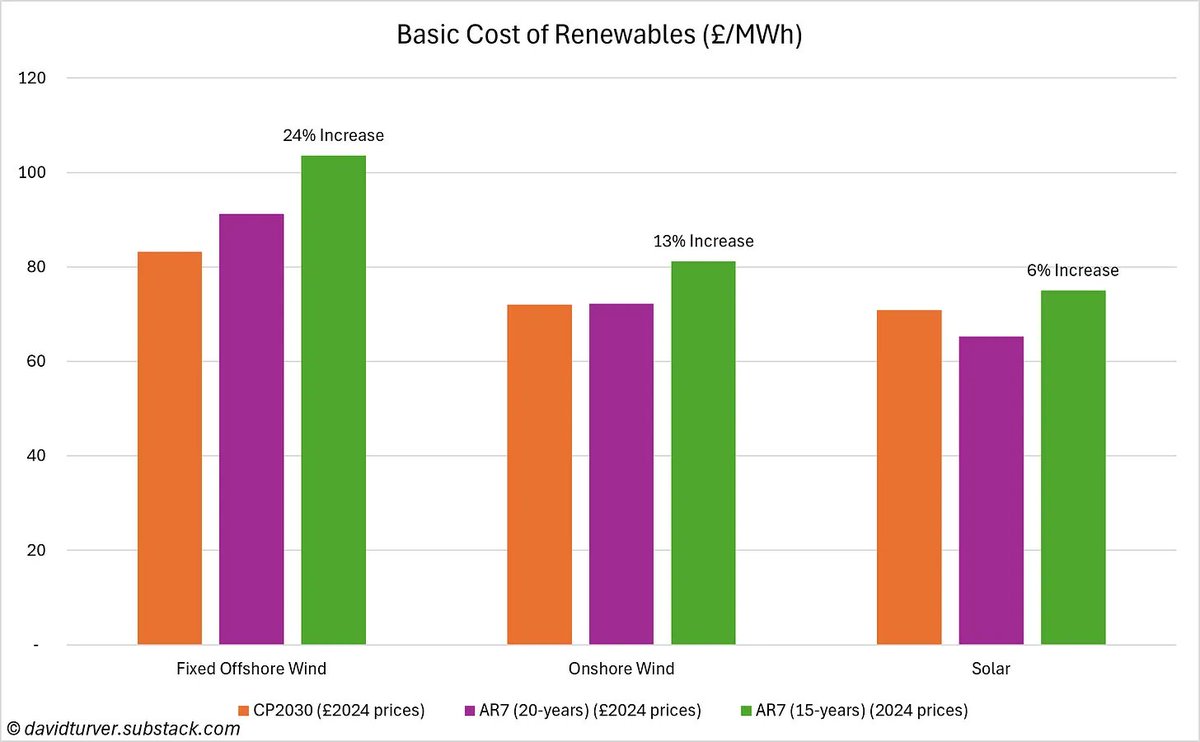
Generation costs are also higher than assumed. On a like-for-like basis, offshore wind strike
prices are 24% above CP2030 estimates, onshore wind 23% higher, and solar 6% higher. (4/12)
prices are 24% above CP2030 estimates, onshore wind 23% higher, and solar 6% higher. (4/12)
Offshore wind was meant to be the backbone — tripling to over 50GW by 2030.
Reality: just 0.7GW installed in 2025 vs 5.1GW needed every year. Already 8.4GW behind at
end-2025. (5/12)
Reality: just 0.7GW installed in 2025 vs 5.1GW needed every year. Already 8.4GW behind at
end-2025. (5/12)
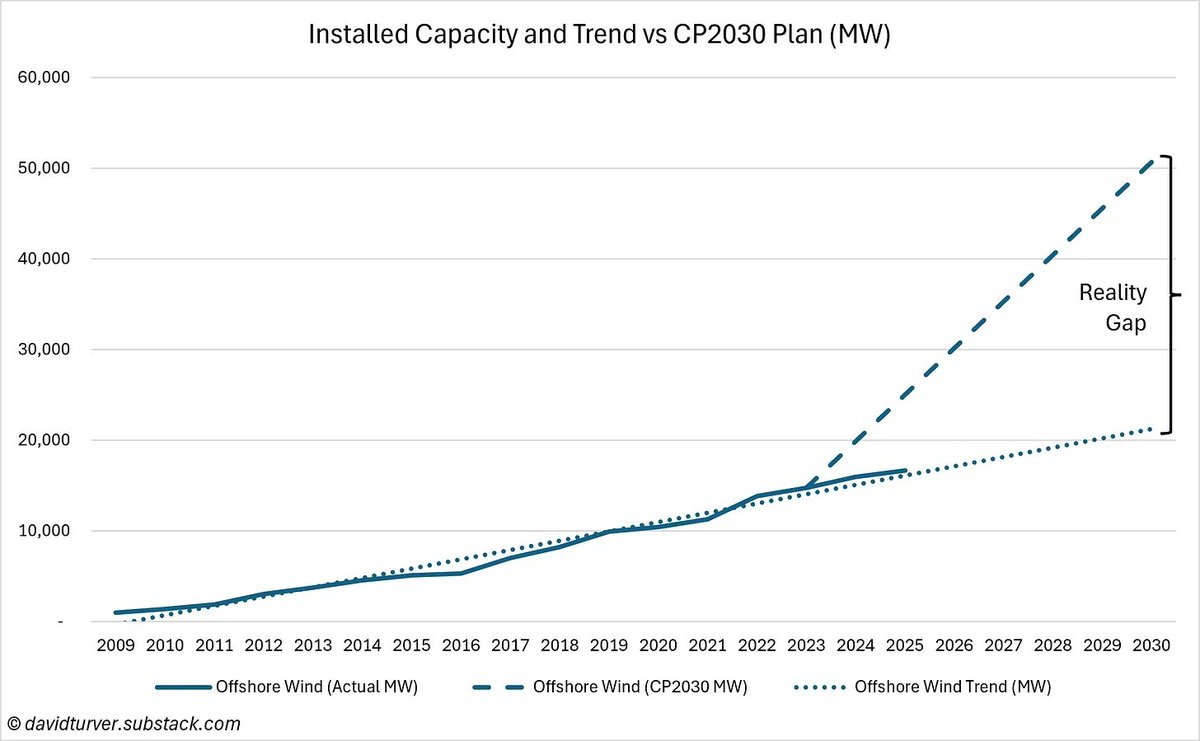
On current trends, offshore wind will be 29.5GW short by 2030 in the aggressive scenario. Even
the milder scenario misses by 21.9GW. (6/12)
the milder scenario misses by 21.9GW. (6/12)
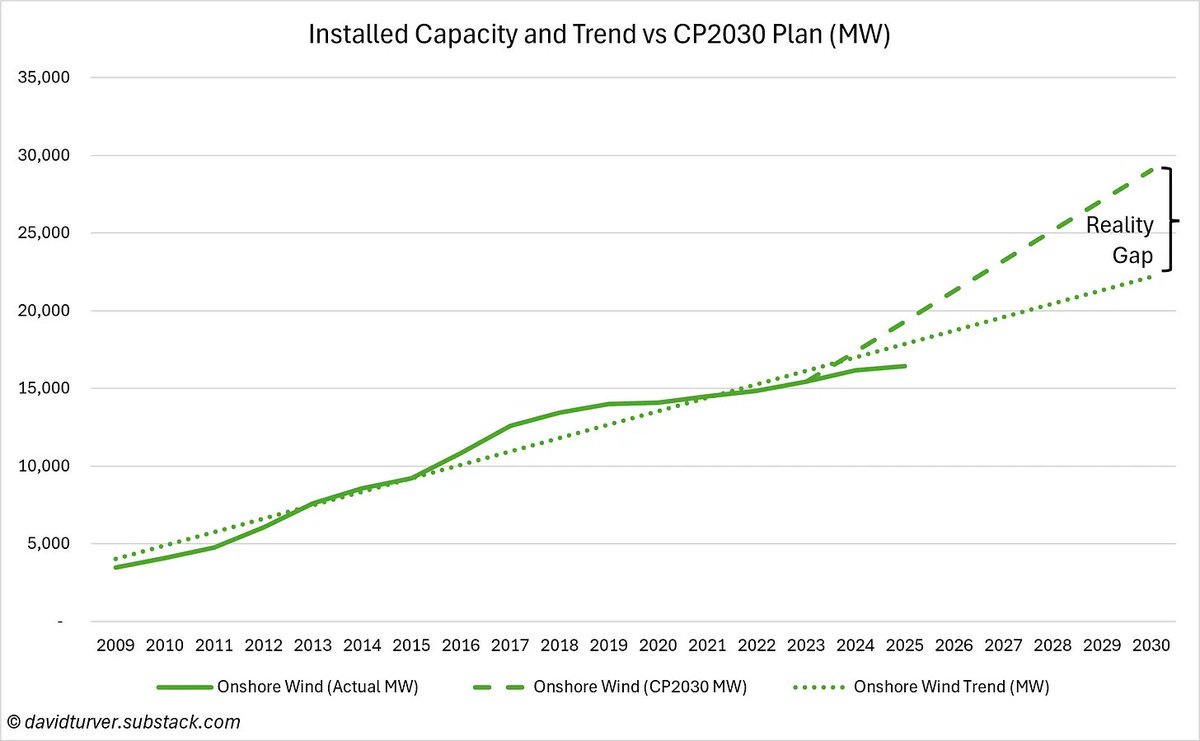
Onshore wind was supposed to almost double to 29GW. Only 0.7GW installed in 2024-25 vs
1.9GW needed annually. On track to be 6.9GW short by 2030. (7/12)
1.9GW needed annually. On track to be 6.9GW short by 2030. (7/12)
Solar was meant to triple to 48.5GW. Just 2.8GW installed in 2025 vs 4.6GW needed every year.
Already 3.7GW behind — heading for a 21GW shortfall by 2030. (8/12)
Already 3.7GW behind — heading for a 21GW shortfall by 2030. (8/12)

Now the killer blow: Drax has pulled the plug on BECCS, writing off £47.6m. They cite the
“current political environment and absence of an appropriate regulatory framework”. In other
words, the generous subsidies on offer are not enough to make the project viable (9/12)
“current political environment and absence of an appropriate regulatory framework”. In other
words, the generous subsidies on offer are not enough to make the project viable (9/12)
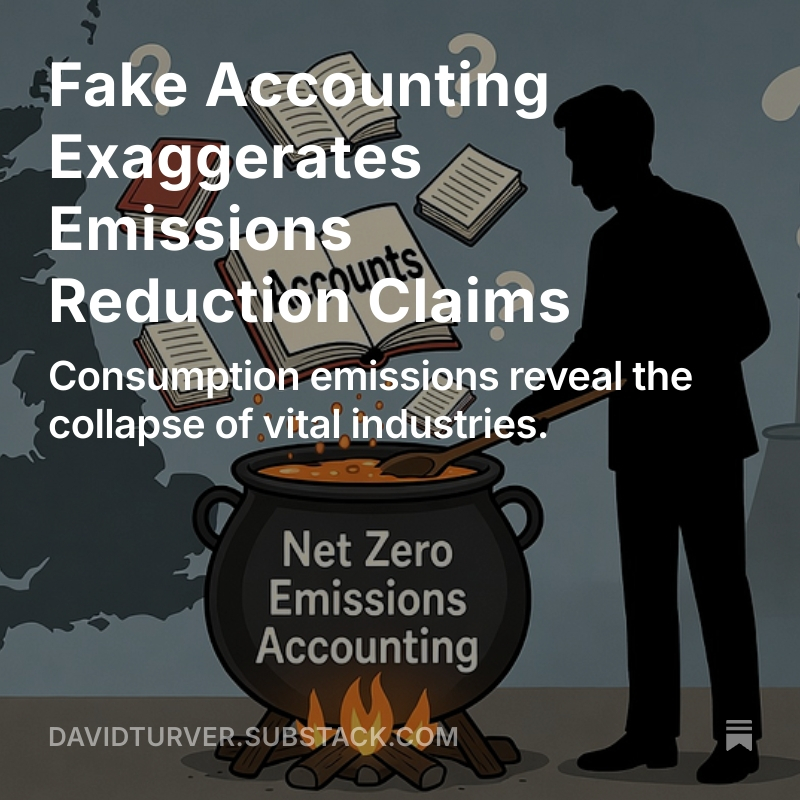
CP2030 relied on BECCS for negative emissions. Without it, Miliband is short 3.4–6.9 MtCO₂ per
year. Emissions targets are now in serious trouble. (10/12)
year. Emissions targets are now in serious trouble. (10/12)

The plan is failing on every measure: cost, schedule and quality. The shortfall will have to be met by reliable power — but the nuclear fleet is retiring and gas is ageing. Time for a Parliamentary investigation and cancellation. (11/12)
If you enjoyed this thread, please like and share. You can sign up for free to read the full article
on the link below (12/12):
open.substack.com/pub/davidturve…
on the link below (12/12):
open.substack.com/pub/davidturve…

Hi @threadreaderapp unroll please
If you enjoyed this thread, please like and share. You can sign up for free to read the full article
on the link below (12/12):
open.substack.com/pub/davidturve…
on the link below (12/12):
open.substack.com/pub/davidturve…

Hi @threadreaderapp unroll please.
• • •
Missing some Tweet in this thread? You can try to
force a refresh