There are four Gospels.
Matthew, Mark, and Luke share so much material that scholars call them the "Synoptics" — seen together.
Then there is John.
John omits 90% of what the other three include.
John includes 90% that none of them have.
It was written last, and it reads like someone who has spent 60 years thinking about what the others didn't say.
A thread on why the Gospel of John is unlike anything else in Scripture. 🧵
Matthew, Mark, and Luke share so much material that scholars call them the "Synoptics" — seen together.
Then there is John.
John omits 90% of what the other three include.
John includes 90% that none of them have.
It was written last, and it reads like someone who has spent 60 years thinking about what the others didn't say.
A thread on why the Gospel of John is unlike anything else in Scripture. 🧵

John opens with the most theologically explosive sentence in the New Testament:
"In the beginning was the Word, and the Word was with God, and the Word was God." (1:1)
Three phrases. Each one a theological earthquake:
1. "In the beginning" — echoes Genesis 1:1. Jesus pre-exists creation.
2. "The Word was with God" — distinct from the Father. Two persons.
3. "The Word was God" — not a god. Not like God. Was God.
John answers the question of who Jesus is before the story even begins.
Everything else in the Gospel is unpacking that first sentence.
"In the beginning was the Word, and the Word was with God, and the Word was God." (1:1)
Three phrases. Each one a theological earthquake:
1. "In the beginning" — echoes Genesis 1:1. Jesus pre-exists creation.
2. "The Word was with God" — distinct from the Father. Two persons.
3. "The Word was God" — not a god. Not like God. Was God.
John answers the question of who Jesus is before the story even begins.
Everything else in the Gospel is unpacking that first sentence.
What John deliberately leaves out is as significant as what he includes.
No birth narrative.
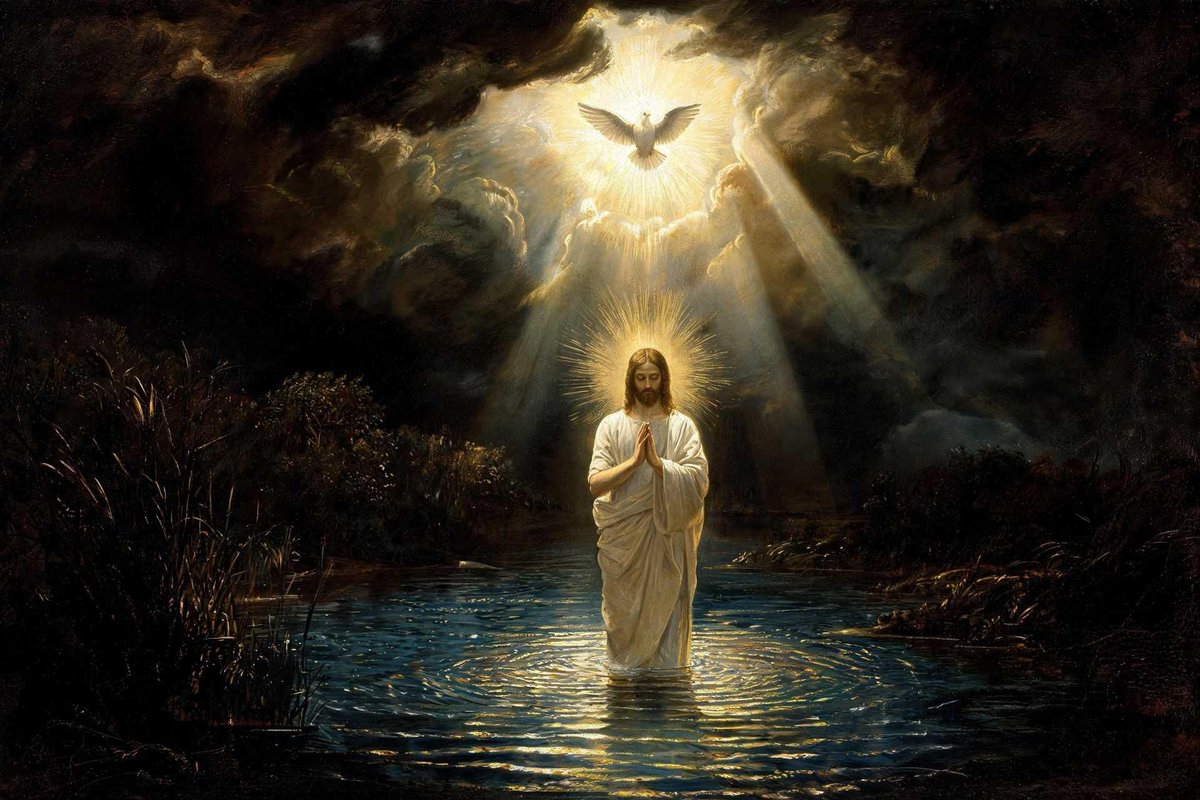
No baptism scene.
No temptation in the wilderness.
No transfiguration.
No Lord's Supper institution.
No Gethsemane agony.
No exorcisms.
John assumes you have read the others.
He is not writing a biography. He is writing theology.
His stated purpose is unlike any other Gospel writer:
"These things are written so that you may believe that Jesus is the Christ, the Son of God." (20:31)
Every word is selected with that single aim.
No birth narrative.
No baptism scene.
No temptation in the wilderness.
No transfiguration.
No Lord's Supper institution.
No Gethsemane agony.
No exorcisms.
John assumes you have read the others.
He is not writing a biography. He is writing theology.
His stated purpose is unlike any other Gospel writer:
"These things are written so that you may believe that Jesus is the Christ, the Son of God." (20:31)
Every word is selected with that single aim.
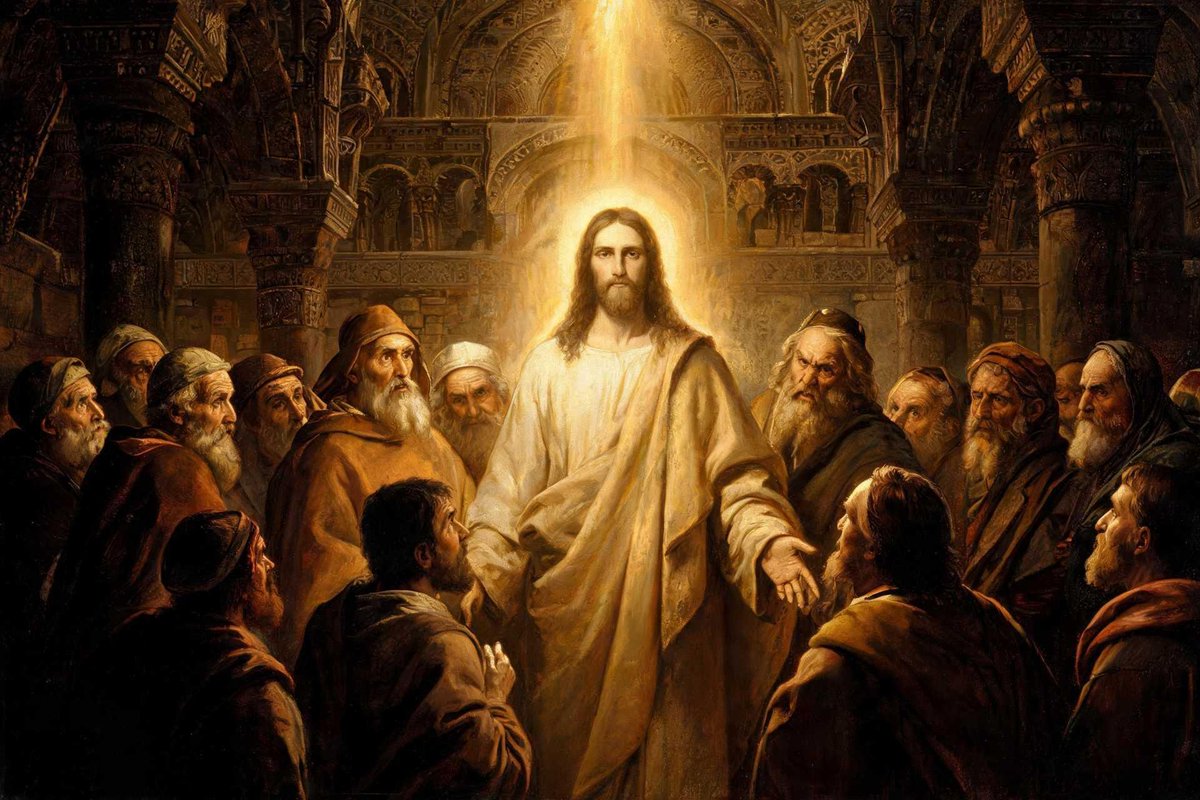
John structures his Gospel around 7 signs, not miracles.
The Greek word is σημεῖον (sēmeion) — sign.
A pointer to something beyond itself.
1. Water to wine (2:1–11)
2. Healing the official's son (4:46–54)
3. Healing at the Pool of Bethesda (5:1–15)
4. Feeding the 5,000 (6:1–14)
5. Walking on water (6:16–21)
6. Healing the man born blind (9:1–41)
7. Raising Lazarus (11:1–44)
Each sign is paired with a theological discourse.
John never lets you just watch the miracle.
He makes you wrestle with what it means.
The Greek word is σημεῖον (sēmeion) — sign.
A pointer to something beyond itself.
1. Water to wine (2:1–11)
2. Healing the official's son (4:46–54)
3. Healing at the Pool of Bethesda (5:1–15)
4. Feeding the 5,000 (6:1–14)
5. Walking on water (6:16–21)
6. Healing the man born blind (9:1–41)
7. Raising Lazarus (11:1–44)
Each sign is paired with a theological discourse.
John never lets you just watch the miracle.
He makes you wrestle with what it means.
John gives us conversations that the other Gospels don't.
Nicodemus — born again (ch. 3)
The woman at the well — living water (ch. 4)
The bread of life discourse (ch. 6)
The good shepherd (ch. 10)
The raising of Lazarus (ch. 11)
The upper room discourse (ch. 13–17)
The High Priestly Prayer (ch. 17)
These are not action scenes.
They are intimate theological conversations.
John takes you inside rooms the other Gospel writers never entered and lets you hear things spoken in private that changed the world.
Nicodemus — born again (ch. 3)
The woman at the well — living water (ch. 4)
The bread of life discourse (ch. 6)
The good shepherd (ch. 10)
The raising of Lazarus (ch. 11)
The upper room discourse (ch. 13–17)
The High Priestly Prayer (ch. 17)
These are not action scenes.
They are intimate theological conversations.
John takes you inside rooms the other Gospel writers never entered and lets you hear things spoken in private that changed the world.

John 11:35 — the shortest verse in the Bible:
"Jesus wept."
In the context of Lazarus' tomb, Jesus, who is about to raise the dead, stops and weeps.
Why? He knows what He is about to do.
John includes this moment for one reason: to show that the Son of God fully entered human grief not as a performance, not as sympathy, but as genuine sorrow.
The God who raises the dead also weeps at the grave.
That is not a weakness.
That is the most profound statement of the Incarnation in two words.
"Jesus wept."
In the context of Lazarus' tomb, Jesus, who is about to raise the dead, stops and weeps.
Why? He knows what He is about to do.
John includes this moment for one reason: to show that the Son of God fully entered human grief not as a performance, not as sympathy, but as genuine sorrow.
The God who raises the dead also weeps at the grave.
That is not a weakness.
That is the most profound statement of the Incarnation in two words.
The Upper Room Discourse — John 13–17 — has no parallel in Scripture.
Five chapters.
One night.
The last hours before the cross.
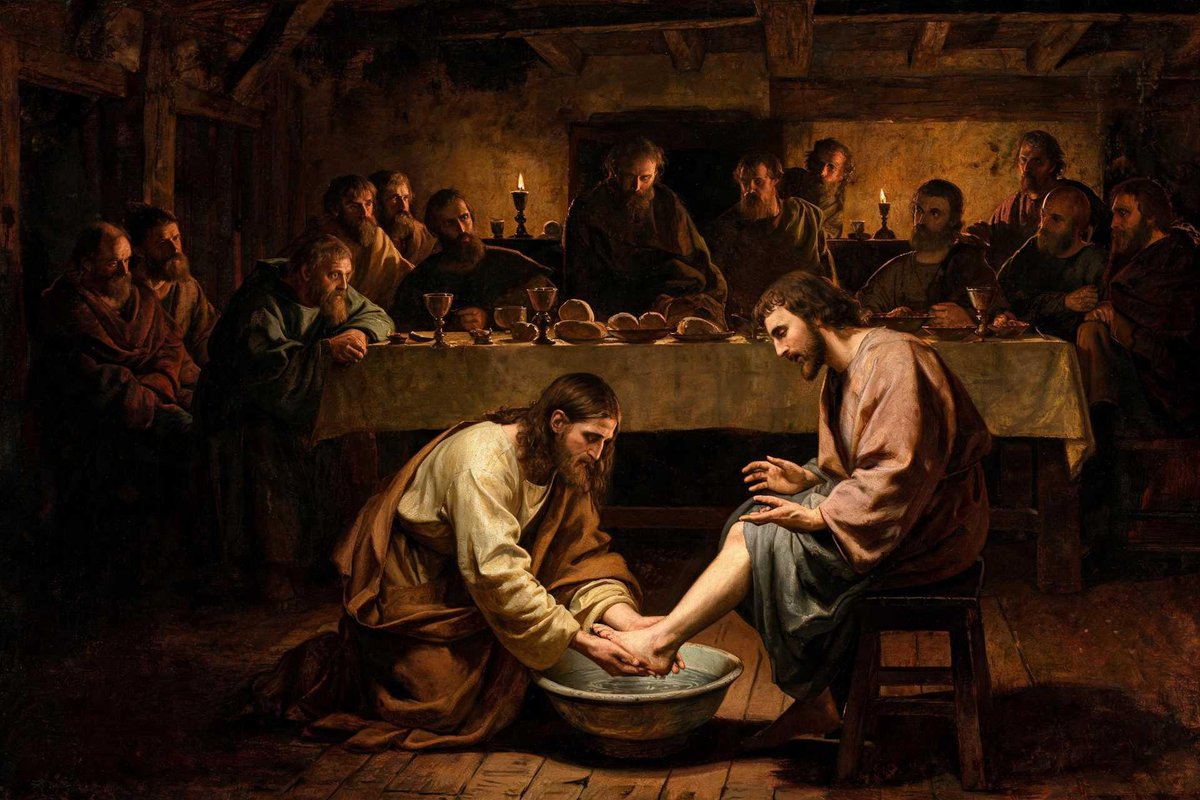
Jesus washes feet.
Predicts betrayal and denial.
Promises the Holy Spirit — the Paraclete.
Teaches on abiding in the vine.
Prays for every future believer by name.
"I do not ask for these only, but also for those who will believe in me through their word." (17:20)
He prayed for you specifically the night before He died.
John preserved it.
No other Gospel writer was in the room.
Five chapters.
One night.
The last hours before the cross.
Jesus washes feet.
Predicts betrayal and denial.
Promises the Holy Spirit — the Paraclete.
Teaches on abiding in the vine.
Prays for every future believer by name.
"I do not ask for these only, but also for those who will believe in me through their word." (17:20)
He prayed for you specifically the night before He died.
John preserved it.
No other Gospel writer was in the room.
Why the Gospel of John is unlike any other:
1. Opens before creation, not with a birth but with eternity
2. Written with a stated theological purpose — belief, not biography
3. Structured around 7 signs paired with discourse — never just miracles
4. Gives us private conversations that no other Gospel records
5. Contains the shortest verse and the deepest theology simultaneously
6. Preserves 5 chapters of Jesus' final night — the Upper Room Discourse
7. Closes with an impossible claim: "The world itself could not contain the books that would be written." (21:25)
John didn't write everything.
He wrote what was enough.
1. Opens before creation, not with a birth but with eternity
2. Written with a stated theological purpose — belief, not biography
3. Structured around 7 signs paired with discourse — never just miracles
4. Gives us private conversations that no other Gospel records
5. Contains the shortest verse and the deepest theology simultaneously
6. Preserves 5 chapters of Jesus' final night — the Upper Room Discourse
7. Closes with an impossible claim: "The world itself could not contain the books that would be written." (21:25)
John didn't write everything.
He wrote what was enough.
John closes his Gospel with the most staggering authorial statement in ancient literature:
"Jesus did many other things as well. If every one of them were written down, I suppose that even the whole world would not have room for the books that would be written." (21:25)
He is not exaggerating for effect.
He spent 60 years with what he saw and heard.
And he still couldn't fit it all in.
What we have in John is not everything.
It is enough.
Follow for regular deep-dive Bible threads.
Which moment in the Gospel of John has stayed with you the longest?
"Jesus did many other things as well. If every one of them were written down, I suppose that even the whole world would not have room for the books that would be written." (21:25)
He is not exaggerating for effect.
He spent 60 years with what he saw and heard.
And he still couldn't fit it all in.
What we have in John is not everything.
It is enough.
Follow for regular deep-dive Bible threads.
Which moment in the Gospel of John has stayed with you the longest?
If this thread fed your soul, there's more where that came from.
Join more than 200 believers at Faithful Messages 🔗
faithfulmessages.beehiiv.com
Join more than 200 believers at Faithful Messages 🔗
faithfulmessages.beehiiv.com
• • •
Missing some Tweet in this thread? You can try to
force a refresh