Adam | Faithful Messenger Profile picture
Conservative Christian | Jesus is King! 👑 Subscribe to my newsletter ⤵️
Jun 26 11 tweets 5 min read
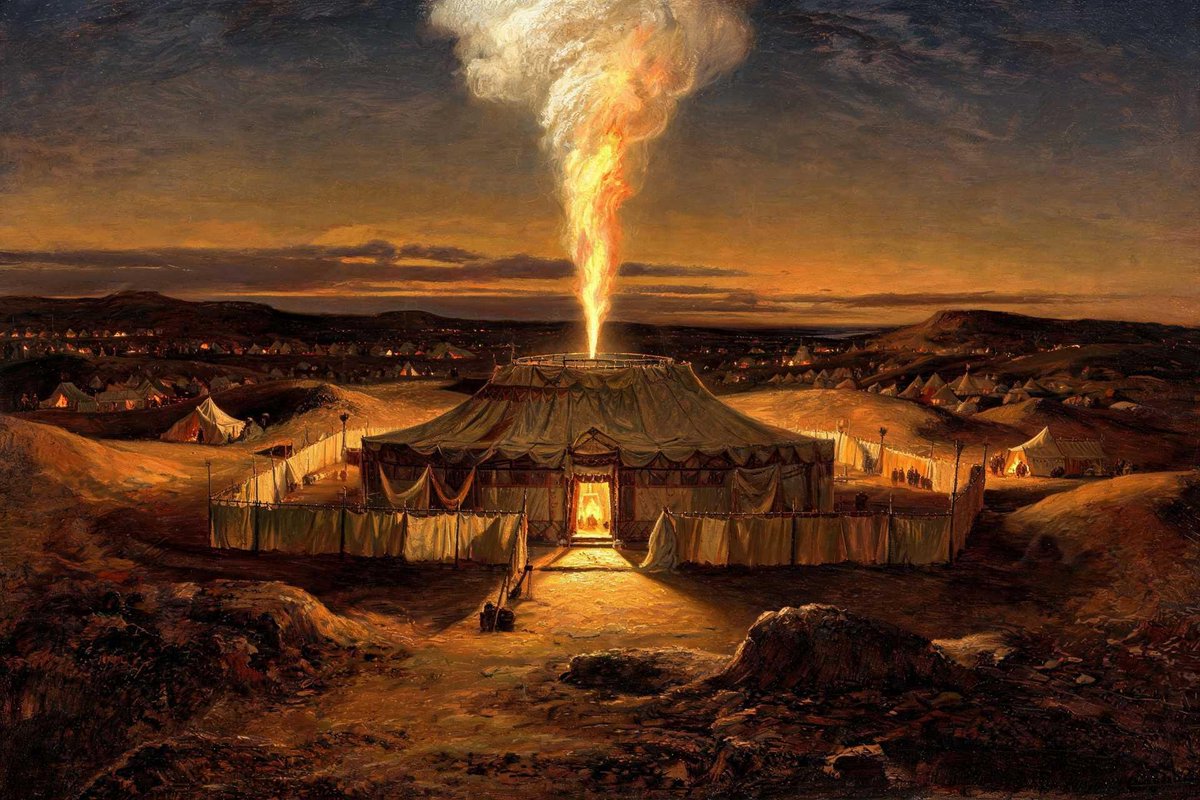
God gave Moses 50 chapters of instructions for a tent.

Fifty.

More space in the Bible is devoted to the design of the Tabernacle than to the creation of the universe.

That's not an accident.

Every measurement, material, and color was pointing to something, and once you see it, you can't unsee it.

A thread. 🧵Image The reason for the Tabernacle is stated plainly:

Exodus 25:8 — "Let them make me a sanctuary, that I may dwell in their midst."

This is staggering.
The infinite God of the universe wanted to live among a wandering group of former slaves in a desert.

The Hebrew word מִשְׁכָּן (mishkan) means "dwelling place."

The entire structure exists to answer one question that runs through all of Scripture:

How can a holy God dwell among an unholy people without destroying them?

Everything in the design is an answer to that question.
Jun 25 12 tweets 5 min read
Paul wrote Ephesians 6 from a prison cell.

Chained to Roman soldiers in full armor, day and night, for years.

He had stared at every buckle, every plate, every weapon close enough to touch.

Then he picked up his pen and used all of it to describe how you're meant to fight.

Piece by piece. A thread. 🧵Image Ephesians 6:10–11 — the command before any piece of armor is named:

"Be strong in the Lord and in the strength of his might. Put on the whole armor of God, that you may be able to stand against the schemes of the devil."

Notice: strength comes from the Lord, not from you gritting your teeth harder.

And the goal stated here is to stand, not necessarily to advance, conquer, or win some visible victory.

Sometimes the most spiritually significant thing you do in a season is simply not to fall down.
Jun 23 11 tweets 5 min read
Every person who has ever lived eventually asks this question.

If God is good, why does He allow suffering?

If He is powerful enough to stop it, why doesn't He?

The Bible doesn't give one tidy answer that resolves every case.

But it gives more than people think, and it starts somewhere most people skip. A thread. 🧵Image Start where the Bible starts: suffering was not part of the original design.

Genesis 1:31 — God looked at everything He made and called it "very good."

Death, decay, disease, and pain enter the story in Genesis 3 after humanity chose independence from God.

This matters enormously.

The Bible never treats suffering as something God casually built into creation.

It treats it as an intrusion, a rupture of something that was originally whole.

Whatever else is true about suffering, the Bible refuses to call it "the way things are supposed to be."
Jun 23 6 tweets 2 min read
John never calls himself by name in his own Gospel.

He calls himself one thing, over and over:
"the disciple Jesus loved."

Not the smartest.
Not the boldest.
Not the most faithful.

Just loved.

🧵 A devotional on an identity that has nothing to do with performance. Image Think about how unusual this is.

John was an apostle.
An eyewitness to the resurrection.
The author of the Gospel, three letters, and Revelation.

He had every reason to identify himself by his résumé.

Instead, at the Last Supper, at the cross, at the empty tomb, he calls himself "the one Jesus loved." (John 13:23, 19:26, 21:20)

He didn't anchor his identity in what he had done for Jesus.

He anchored it in what Jesus felt about him.
Jun 21 12 tweets 5 min read
The Beatitudes are the most quoted, least understood words Jesus ever spoke.

8 statements. Each one begins "Blessed are."

Each one names a kind of person the ancient world considered anything but blessed.

This is not a feel-good list. It is a complete reversal of how human beings have always measured a good life.

Here's what each one actually means. 🧵Image "Blessed are the poor in spirit, for theirs is the kingdom of heaven." (5:3)
Not financially poor, though that's not excluded.

πτωχός (ptōchos) — utterly destitute, having nothing to offer.

This is the posture of someone who has stopped pretending they're spiritually self-sufficient.

The kingdom doesn't belong to those who have impressive spiritual résumés.

It belongs to those who know they have nothing to bring and come anyway.

This is the foundation everything else stands on.

You can't build genuine faith on self-sufficiency.
Jun 20 11 tweets 5 min read
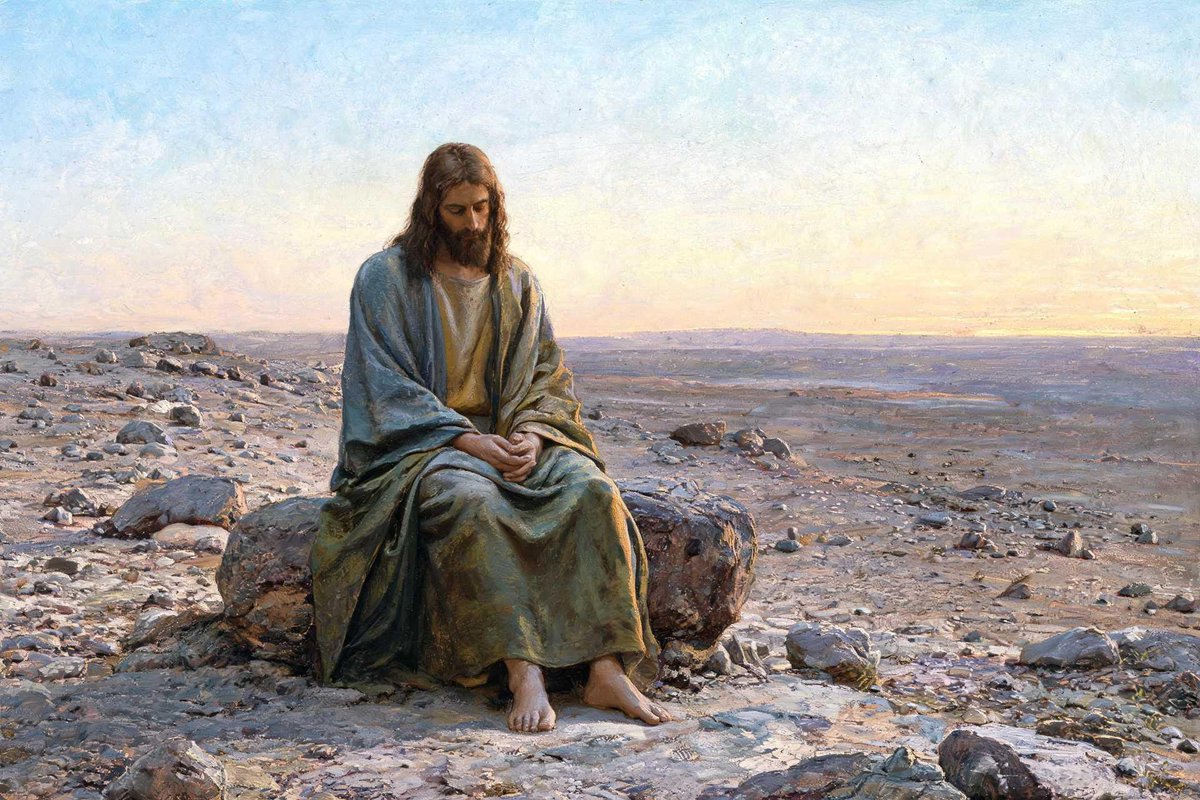
Right after Jesus' baptism, the moment heaven declared, "This is my beloved Son."

The Spirit led Him into the desert.

No food. No comfort. No crowd.

Just 40 days alone with hunger, isolation, and the devil himself.

Most people think temptation means God has abandoned them.

This story says the opposite. A thread. 🧵Image Matthew 4:1 — "Then Jesus was led up by the Spirit into the wilderness to be tempted by the devil."

Notice who led Him there: the Spirit. Not the enemy.

This was not Jesus stumbling into temptation by accident.

It was the Father's design to test before the start of His public ministry.

If the sinless Son of God was led into a season of testing immediately after the highest spiritual affirmation of His life, being tempted is not evidence that you've done something wrong.

Sometimes it's evidence you're about to do something significant.
Jun 16 11 tweets 5 min read
What happens the moment you die?

Most Christians have a vague idea involving clouds and harps.

The Bible is far more specific and far more extraordinary than that.

It also completely dismantles several things most people believe about heaven, hell, and the resurrection.

Here's what Scripture actually says happens after death, step by step. 🧵Image First, the moment of death itself.

Hebrews 9:27 — "It is appointed for man to die once, and after that comes judgment."

No reincarnation. No second chances. No soul sleep for most believers.

2 Corinthians 5:8 — "We would rather be away from the body and at home with the Lord."

Away from the body — at home with the Lord.

The transition is immediate for the believer.

Not a waiting room. Not a long sleep.

The moment you close your eyes here, you open them in His presence.

Paul calls this "far better." (Philippians 1:23)
Jun 15 11 tweets 5 min read
You're exhausted.

You're reading more. Praying more. Serving more.

And somehow feeling further from God than ever.

Here's what nobody told you:

Trying harder is not the answer.

Jesus explained the entire secret of the Christian life in one sentence in John 15.

And it has nothing to do with effort.

A thread. 🧵Image Most Christians live like this:

Wake up → try to be more patient
Fail → feel guilty
Try harder → fail again
Read more → still feel empty
Serve more → burn out
Wonder why God feels distant

Sound familiar?

This cycle has a name. It's called striving.

And Jesus never asked you to do it.

In fact, John 15 is His direct answer to striving.

He didn't say "try harder." He said, "Stay closer."

Those are not the same thing.
Jun 13 11 tweets 5 min read
Most Christians treat the Holy Spirit like a feeling.

A warm sensation in worship.
An emotional moment at an altar.
A vague sense of peace.

He is none of those things.

He is a Person. Fully God. With a mind, a will, and emotions.

And Jesus said it was better for us that He came than if Jesus Himself had stayed.

Here's who the Holy Spirit actually is and what He actually does. 🧵Image First, he is not a force, an energy, or an "it."

The Greek word Jesus uses in John 14–16 is παράκλητος (Paraklētos) — the Paraclete.

It means: one called alongside to help. Advocate. Counselor. Comforter.

Jesus uses the masculine pronoun ἐκεῖνος (ekeinos) — "He" — not the neuter form you would use for a thing.

He grieves (Ephesians 4:30).
He intercedes (Romans 8:26).
He teaches (John 14:26).
He decides (Acts 16:6–7).

Grief, intercession, teaching, decision — these are not the actions of a force.

They are the actions of a Person.
Jun 10 12 tweets 5 min read
Why couldn't God just forgive sin?

Why did Jesus have to die?

Couldn't an all-powerful God simply declare everyone forgiven and move on?

This is the most important question in all of theology.

And the answer reveals something about God's nature that most Christians have never fully grasped.

A thread on why the cross was the only way. 🧵Image Start with the nature of God, not the nature of sin.

God is not just loving. He is also perfectly just.

These are not two separate attributes in tension.
They are both expressions of the same perfect character.

A perfectly just God cannot simply overlook sin, the way a corrupt judge might dismiss a case.

To declare guilty people innocent without dealing with the guilt is not mercy.

It is an injustice.

The problem of atonement is not: how can God forgive?

It is: how can God be both perfectly just AND perfectly merciful at the same time?
Jun 10 12 tweets 5 min read
"Take up your cross daily."

People use this phrase for:
— a difficult marriage
— a health problem
— a demanding job
— a difficult personality

That is not what Jesus meant.

When His audience heard "take up your cross," they had one immediate image in their minds.

And it had nothing to do with inconvenience.

Here's what Jesus actually meant and why it changes everything about how you follow Him. 🧵Image In the Roman world, carrying a cross meant one thing:

You were about to be publicly executed.

A condemned man carried his own crossbeam through the streets to the execution site, a final act of humiliation, stripping him of dignity, identity, and future.

Everyone watching knew exactly where that walk ended.

So when Jesus said, "Take up your cross and follow me," His audience didn't think of hardship.

They thought of death.

Deliberate. Public. Final.
Jun 9 6 tweets 2 min read
If you want to know what God is like, don't just study what Jesus taught.

Study how He prayed.

The way the Son talked to the Father reveals everything about who God is and how He wants to be known.

🧵 A devotional on the prayers of Jesus. Image The first thing Jesus teaches us about prayer is the address.

Not "Almighty God." Not "Supreme Being."

"Our Father." — Matthew 6:9

In Gethsemane, even more intimate: "Abba" — the word a child uses for their dad. (Mark 14:36)

Jesus didn't approach God as a subject approaching a king.

He approached Him as a son coming home.

That's the posture He invites you into, too.
Jun 7 10 tweets 5 min read
There are four Gospels.

Matthew, Mark, and Luke share so much material that scholars call them the "Synoptics" — seen together.

Then there is John.

John omits 90% of what the other three include.
John includes 90% that none of them have.

It was written last, and it reads like someone who has spent 60 years thinking about what the others didn't say.

A thread on why the Gospel of John is unlike anything else in Scripture. 🧵Image John opens with the most theologically explosive sentence in the New Testament:

"In the beginning was the Word, and the Word was with God, and the Word was God." (1:1)

Three phrases. Each one a theological earthquake:

1. "In the beginning" — echoes Genesis 1:1. Jesus pre-exists creation.
2. "The Word was with God" — distinct from the Father. Two persons.
3. "The Word was God" — not a god. Not like God. Was God.

John answers the question of who Jesus is before the story even begins.

Everything else in the Gospel is unpacking that first sentence.
Jun 6 12 tweets 5 min read
Jesus talked about money more than heaven and hell combined.

11 of His 39 parables are about money and possessions.

1 in every 7 verses in the Gospel of Luke touches on wealth.

He wasn't uncomfortable with the topic.

He was relentless about it because He knew what it does to the human heart.

Here's what He actually taught.
Not the prosperity version.
Not the poverty version.
The real one. 🧵Image First, the verse everyone misquotes.

1 Timothy 6:10: "The love of money is a root of all kinds of evil."

Not money. The love of it.

Jesus never condemned wealth itself.

Abraham, David, Solomon, Joseph of Arimathea, all wealthy, all commended.

What he consistently targeted was the posture of the heart toward wealth.

The question is never: how much do you have?

The question is always: what does it have of you?
Jun 4 10 tweets 4 min read
Most Christians pray.

Very few pray the way the Bible actually describes.

The gap between what we do and what Scripture teaches about prayer is wider than almost any other area of the Christian life.

Here are the things the Bible says clearly about prayer that most of us quietly ignore.

A thread. 🧵Image 1. The Bible says prayer should be persistent, not polite.

Luke 18:1 — Jesus told a parable "to the effect that they ought always to pray and not lose heart."

The parable: a widow who hammers a corrupt judge day and night until he grants her request.

Jesus holds her up as the model.

Not quiet resignation.
Not one respectful request.

Relentless, shameless, returning persistence.

Most of us pray once, hear nothing, and conclude the answer is no.

The Bible calls that losing heart, not faith.
Jun 1 9 tweets 4 min read
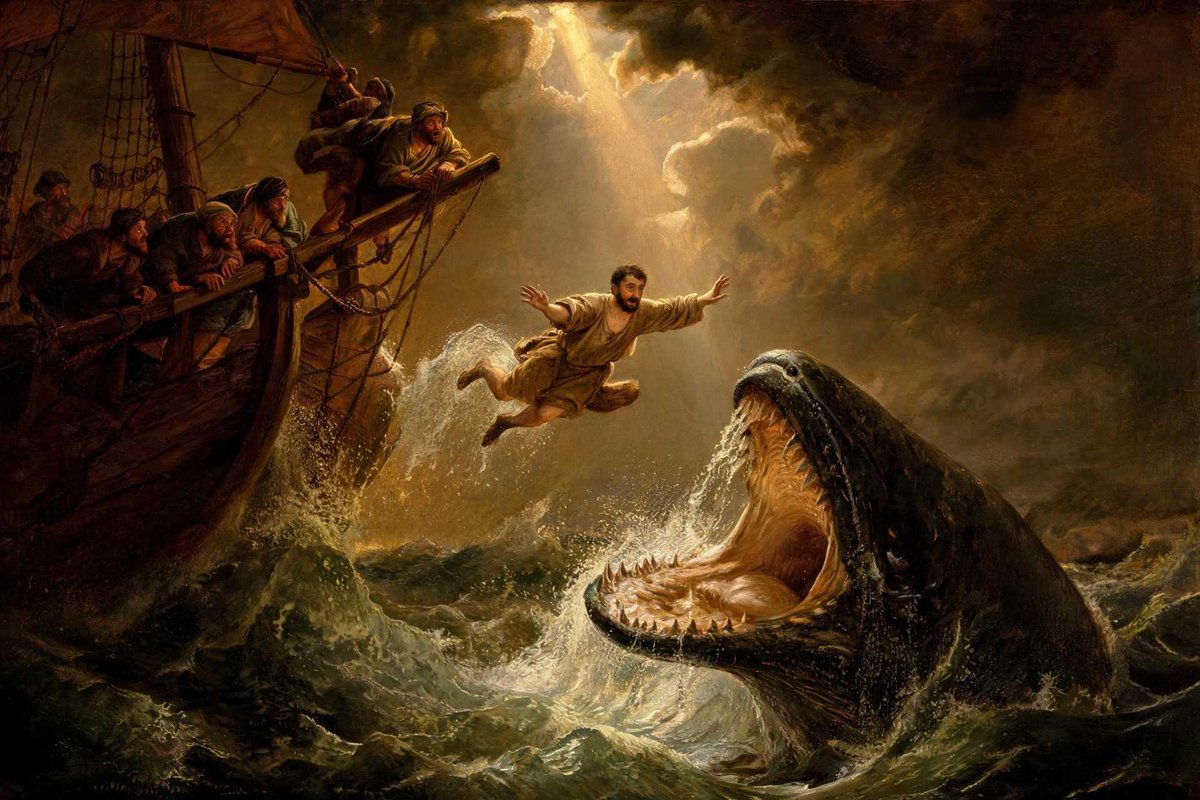
Job was the most righteous man on earth.

God Himself said so.

Then God allowed everything to be taken from him — his wealth, his children, his health.

And for 35 chapters, God said nothing.

The Book of Job is not a book about why good people suffer.

It is a book about who God is when He doesn't explain Himself.

A thread. 🧵Image First, the prologue that the reader sees, but Job never does.

Job 1:8 — God initiates the conversation about Job:

"Have you considered my servant Job? There is no one on earth like him."

Satan's response: "Does Job fear God for nothing? You have blessed him. Remove the blessing, and he will curse you."

God accepts the challenge.

This is the most disturbing opening in Scripture.

The man suffering most severely on earth has no idea he is the subject of a cosmic wager and that God Himself offered his name.
May 30 9 tweets 4 min read
The Trinity is the most important doctrine in Christianity.

It is also the one most Christians cannot explain and the one most often attacked.

It's not irrational.
It's not three Gods.
It's not God wearing three masks.

Every popular analogy you've heard is actually a heresy.

Here's what the Trinity actually is and why it changes everything about how you understand God. 🧵Image First, what the Trinity actually is.

The doctrine in one sentence:
There is one God who exists eternally as three distinct persons — Father, Son, and Holy Spirit — each fully God, none greater than the other, sharing one divine essence.

Key distinctions:
— One in essence (οὐσία — ousia)
— Three in person (ὑπόστασις — hypostasis)

Not one God appearing in three modes.
Not three separate Gods cooperating.

One Being.
Three Persons.
Eternally and simultaneously.
May 28 9 tweets 4 min read
Some Christians see a demon behind every bad day.

Others don't believe spiritual warfare is real at all.

Both are wrong.

The Bible is remarkably specific about what spiritual warfare actually is, how it works, what your weapons are, and why most Christians are fighting it completely wrong.

A thread on what Scripture actually says. 🧵Image Start with what Paul actually says in Ephesians 6:12:

"We do not wrestle against flesh and blood, but against the rulers, against the authorities, against the cosmic powers over this present darkness, against the spiritual forces of evil in the heavenly places."

Four distinct categories of spiritual opposition.

The Greek word is πάλη (palē) — wrestling.

Hand-to-hand combat.
Intimate.
Personal.
Not distant artillery.

This is not a war you watch.
It is a war you are already in.
May 26 9 tweets 4 min read
Everyone reads the Prodigal Son as a story about a rebellious boy who came home.

It isn't.

Jesus told this parable to show us what God is actually like.

And the portrait He paints of the father is so scandalous, so undignified, that it offended every person in His audience.

It should offend us, too.

A thread on the father nobody talks about. 🧵Image First, understand what the son actually did.

"Father, give me the share of property that is coming to me." (Luke 15:12)

In Jewish culture, this request had one meaning:

I wish you were dead.

Demanding your inheritance while your father is still alive was an act of profound cultural and moral violence.
It declared the relationship worth less than the money.

The father had every legal and social right to disown him publicly on the spot.

He divided his property between them instead.
May 26 9 tweets 4 min read
If the resurrection didn't happen, Christianity is the greatest lie ever told.

If it did happen, it would be the most important event in human history.

There is no middle ground.

Paul said it himself: "If Christ has not been raised, your faith is futile." (1 Cor 15:17)

So let's look at the evidence.

And then at what it actually means.

A thread.🧵Image The empty tomb is the starting point, and it is not seriously disputed.

Jewish leaders, Roman authorities, and early critics never claimed the body was still there.

Their response was not "the tomb is occupied" — it was "the disciples stole the body." (Matthew 28:13)

You don't invent a theft story for a tomb that still has a body in it.

The emptiness of the tomb was the one fact every party in Jerusalem agreed on.
May 21 9 tweets 4 min read
"Abide in me."

Jesus says it 11 times in John 15 alone.

Yet most Christians couldn't tell you what it actually means, let alone how to do it.

It's not a feeling. It's not a spiritual mood.

It's one of the most practical and demanding commands Jesus ever gave.

Here's what abiding actually means and what happens when you don't.🧵Image First — the timing matters enormously.

Jesus speaks in John 15 on the night of His arrest.
Hours before the cross.

He and the disciples are almost certainly walking past the vineyards outside Jerusalem, and some scholars believe they could see the golden vine above the temple gate.

With that image in view, He says: I am the true vine.

This is His final extended teaching before Gethsemane.
He chose this metaphor for a reason.