In 1942 a Black mess attendant saved 15 shipmates by towing them through shark-infested water for eight hours.
The Navy gave him a letter, and the country forgot him.
He died at 37, worn down by a war that never let go of him.
Eighty years later, the Navy named a warship after him.
This is the story of Charles Jackson French..🧵1/6
The Navy gave him a letter, and the country forgot him.
He died at 37, worn down by a war that never let go of him.
Eighty years later, the Navy named a warship after him.
This is the story of Charles Jackson French..🧵1/6
🧵 2/6
Charles Jackson French was born in 1919 in Foreman, Arkansas. His parents died when he was young, and he was raised by his older sister Viola in Omaha, Nebraska.
As a boy in the segregated South, he was barred from the whites-only swimming pools. So he learned to swim in the Red River. It was a skill that would one day save 15 lives.
At 18 he enlisted in the United States Navy. It was 1937, and the Navy, like almost everything else in America at the time, was segregated. At the time, the Navy severely restricted Black sailors to the Steward's Branch and related service roles. French served as a mess attendant, cooking, cleaning, and serving meals to white officers.
He finished his first enlistment and left the Navy in late 1941. Then, just days after the attack on Pearl Harbor, Charles French walked into a recruiting office and signed up again.
He was sent to the Pacific.
Charles Jackson French was born in 1919 in Foreman, Arkansas. His parents died when he was young, and he was raised by his older sister Viola in Omaha, Nebraska.
As a boy in the segregated South, he was barred from the whites-only swimming pools. So he learned to swim in the Red River. It was a skill that would one day save 15 lives.
At 18 he enlisted in the United States Navy. It was 1937, and the Navy, like almost everything else in America at the time, was segregated. At the time, the Navy severely restricted Black sailors to the Steward's Branch and related service roles. French served as a mess attendant, cooking, cleaning, and serving meals to white officers.
He finished his first enlistment and left the Navy in late 1941. Then, just days after the attack on Pearl Harbor, Charles French walked into a recruiting office and signed up again.
He was sent to the Pacific.
🧵 3/6
In the early hours of September 5 1942, French was aboard the USS Gregory, a lightly armed high-speed transport, patrolling the black water between Savo Island and Guadalcanal.
In the darkness a US aircraft accidentally dropped a flare that lit up the Gregory and her sister ship like targets on a stage. Three Japanese destroyers opened fire. The Gregory was hit again and again and sank within minutes.
The survivors were thrown into the open ocean. Many were badly wounded. Sharks moved through the water around them, and a Japanese-held island lay nearby where capture would likely mean death.
French was one of the few men who was uninjured. He helped gather 15 wounded shipmates onto a raft. But the current was slowly dragging them toward the enemy shore.
So French made a decision that should have been impossible.
He tied a rope from the raft around his own waist, slipped into the shark-infested water, and began to swim, pulling all 15 men behind him.
In the early hours of September 5 1942, French was aboard the USS Gregory, a lightly armed high-speed transport, patrolling the black water between Savo Island and Guadalcanal.
In the darkness a US aircraft accidentally dropped a flare that lit up the Gregory and her sister ship like targets on a stage. Three Japanese destroyers opened fire. The Gregory was hit again and again and sank within minutes.
The survivors were thrown into the open ocean. Many were badly wounded. Sharks moved through the water around them, and a Japanese-held island lay nearby where capture would likely mean death.
French was one of the few men who was uninjured. He helped gather 15 wounded shipmates onto a raft. But the current was slowly dragging them toward the enemy shore.
So French made a decision that should have been impossible.
He tied a rope from the raft around his own waist, slipped into the shark-infested water, and began to swim, pulling all 15 men behind him.
🧵 4/6
An officer on the raft, Ensign Robert Adrian, warned him about the sharks.
By Adrian's account, French answered that he was more afraid of the Japanese than he was of the sharks, and told the men to just keep telling him if he was going the right way.
Then he swam. For six to eight hours, through the dark, with a rope cutting into his waist and a raft of wounded men dragging behind him. Survivors remembered sharks circling so close they brushed against him. He never stopped.
At dawn a US scout plane spotted the raft and sent a landing craft to pick them up. Every man French had towed was still alive.
When they finally reached safety, French, soaked in oil and exhausted, was reportedly told to go wait apart from the others, where the Black sailors stayed. His white shipmates refused to allow it. They said he was a member of the crew and he would stay with the crew, and that anyone who tried to take him away would have to deal with all of them.
An officer on the raft, Ensign Robert Adrian, warned him about the sharks.
By Adrian's account, French answered that he was more afraid of the Japanese than he was of the sharks, and told the men to just keep telling him if he was going the right way.
Then he swam. For six to eight hours, through the dark, with a rope cutting into his waist and a raft of wounded men dragging behind him. Survivors remembered sharks circling so close they brushed against him. He never stopped.
At dawn a US scout plane spotted the raft and sent a landing craft to pick them up. Every man French had towed was still alive.
When they finally reached safety, French, soaked in oil and exhausted, was reportedly told to go wait apart from the others, where the Black sailors stayed. His white shipmates refused to allow it. They said he was a member of the crew and he would stay with the crew, and that anyone who tried to take him away would have to deal with all of them.
🧵 5/6
His shipmates believed Charles French deserved the Medal of Honor.
What he received, eight months later, was a letter. A short commendation from Admiral William Halsey that understated what he had done, describing only about two hours of towing. Many historians and advocates have argued that racial segregation played a role in French receiving only a commendation despite the extraordinary nature of his actions.
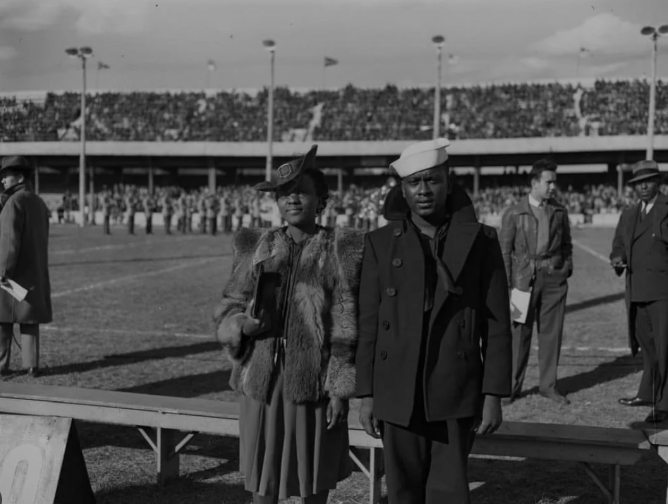
For a brief moment he was famous. His face appeared on a wartime trading card. His story ran in comic strips and newspapers. He toured to sell war bonds and was honored at a football game in Omaha with his sister Viola at his side.
Then the war ended, the country moved on, and Charles French was forgotten.
He took a civilian job in San Diego, married, and had a daughter. But the war had left wounds that no one then knew how to treat. He struggled with what we would now recognize as post-traumatic stress, and with the alcoholism that came with it.
Charles Jackson French died in 1956. He was only 37 years old.
His shipmates believed Charles French deserved the Medal of Honor.
What he received, eight months later, was a letter. A short commendation from Admiral William Halsey that understated what he had done, describing only about two hours of towing. Many historians and advocates have argued that racial segregation played a role in French receiving only a commendation despite the extraordinary nature of his actions.
For a brief moment he was famous. His face appeared on a wartime trading card. His story ran in comic strips and newspapers. He toured to sell war bonds and was honored at a football game in Omaha with his sister Viola at his side.
Then the war ended, the country moved on, and Charles French was forgotten.
He took a civilian job in San Diego, married, and had a daughter. But the war had left wounds that no one then knew how to treat. He struggled with what we would now recognize as post-traumatic stress, and with the alcoholism that came with it.
Charles Jackson French died in 1956. He was only 37 years old.
🧵 6/6
For decades almost no one remembered the man they had once called the Human Tugboat.
Then, in recent years, his story was rediscovered. Historians, swimmers, and his own family pushed to give him the recognition he had been denied in life.
In 2022 the United States Navy dedicated a rescue swimmer training pool at Naval Base San Diego in his honor, a place where sailors learn to save lives in the water, named for the man who saved 15 in the dark off Guadalcanal.
Then in 2024 the Navy announced something greater. A new Arleigh Burke-class destroyer, one of the most powerful warships in the fleet, would carry his name into the future. The USS Charles J. French.
A Black orphan from Arkansas who was restricted to cooking and cleaning, who saved 15 lives and was handed a letter, who died young and forgotten, will now have his name on an American warship for as long as it sails.
I post a story like this every single day. Most people never see them. Follow so you don't miss the next one.
For decades almost no one remembered the man they had once called the Human Tugboat.
Then, in recent years, his story was rediscovered. Historians, swimmers, and his own family pushed to give him the recognition he had been denied in life.
In 2022 the United States Navy dedicated a rescue swimmer training pool at Naval Base San Diego in his honor, a place where sailors learn to save lives in the water, named for the man who saved 15 in the dark off Guadalcanal.
Then in 2024 the Navy announced something greater. A new Arleigh Burke-class destroyer, one of the most powerful warships in the fleet, would carry his name into the future. The USS Charles J. French.
A Black orphan from Arkansas who was restricted to cooking and cleaning, who saved 15 lives and was handed a letter, who died young and forgotten, will now have his name on an American warship for as long as it sails.
I post a story like this every single day. Most people never see them. Follow so you don't miss the next one.
• • •
Missing some Tweet in this thread? You can try to
force a refresh