The Government is about to approve the 7th Carbon Budget (CB7) on the basis of an Impact Assessment that its own numbers show is worse than a cheaper alternative. Is it time to put Ed Miliband in the dock and test his arguments in a fair judicial review? A thread 🧵(1/11)
The IA compares three options. The “Looser Option” (84% cut) delivers a higher Net Present Value (£905bn) and better benefit-cost ratio (2.3) than the recommended 87% Option 2 (£865bn, BCR 2.1). Yet Ed Miliband chose Option 2 anyway. (2/11)
This looks like an irrational decision. The Minister’s own evidence favours the cheaper, looser target — but he overruled it with vague claims about “transformational change”. Classic Wednesbury unreasonableness territory? (3/11)
The biggest “benefits” in the IA come from carbon savings valued at up to £679/tCO2e. These prices are derived from the very targets they’re trying to justify. Circular reasoning that inflates the benefits dramatically. (4/11)
All the real costs of CB7 fall on UK bill-payers and taxpayers. The vast majority of the claimed benefits are notional global carbon savings. The IA fails to properly weigh who pays versus who supposedly benefits. (5/11)
UK territorial emissions are falling, but global emissions keep rising. Much of our “success” has come from offshoring heavy industry. CB7’s deeper cuts risk accelerating this without delivering real global reductions. (6/11)
The Government’s pathway relies on 70-80 MtCO2e of engineered removals by 2050 — more than double the CCC’s estimate. This depends heavily on unproven, expensive tech like CCUS, DACCS and BECCS at massive scale. (7/11)
Many CCUS and BECCS projects worldwide are being cancelled as uneconomic. The IA itself admits these technologies are immature and high-risk. Yet the entire budget rests on them working perfectly. (8/11)
The IA ducks proper analysis of impacts on families, fuel poverty, and businesses — calling it a “level-setting” decision. This looks like a breach of the duty to properly assess effects on UK society before locking in the target. (9/11)
It questionable whether the legally binding 7th carbon budget can be approved based on such dodgy foundations. It is surely time to put Ed Miliband in the dock and test his arguments in a fair judicial review. (10/11)
If you enjoyed this thread, please like and share. You can sign up for free to read the full article on the link below: (11/11) open.substack.com/pub/davidturve…
Hi @threadreaderapp unroll please.
• • •
Missing some Tweet in this thread? You can try to
force a refresh

Ed Miliband’s Clean Power 2030 plan is officially off the rails. Soaring costs, missed wind & solar
targets, and now Drax walking away from BECCS. The promises of cheaper bills? Gone. A thread 🧵(1/12)
NESO and DESNZ claimed CP2030 could be delivered “without increasing costs for consumers” and would “bring down bills for good”. Reality: grid integration and generation cost are exploding. (2/12)
Grid balancing, transmission and Capacity Market costs are forecast to rise £17bn — from £8bn in 2024/25 to £25bn by 2030/31. That’s ~£600 extra per household. (3/12)
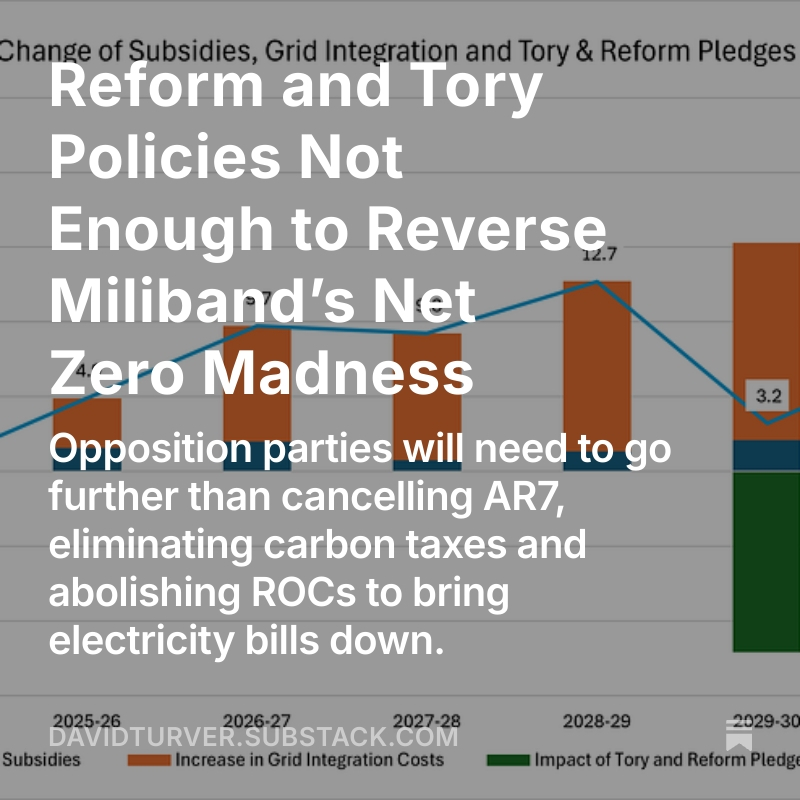
UK electricity bills are heading sharply higher — despite all the “clean energy superpower” promises. My new article reveals how subsidies & grid costs will explode to £40bn+ by 2030/31. Tory and Reform policies will not be enough to reverse the trend. A thread 🧵(1/11)
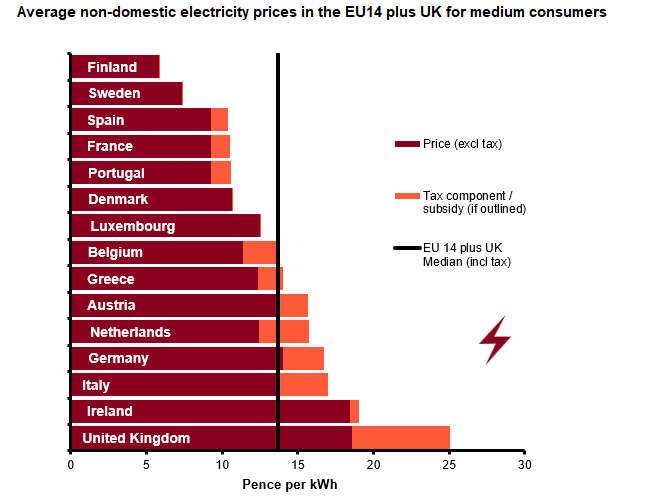
We have the highest industrial electricity prices. The Government claims renewables will bring down energy bills for good. But Octopus & E.On bosses said to Parliament that even if wholesale gas prices halve or go to zero, bills will rise. (2/11)
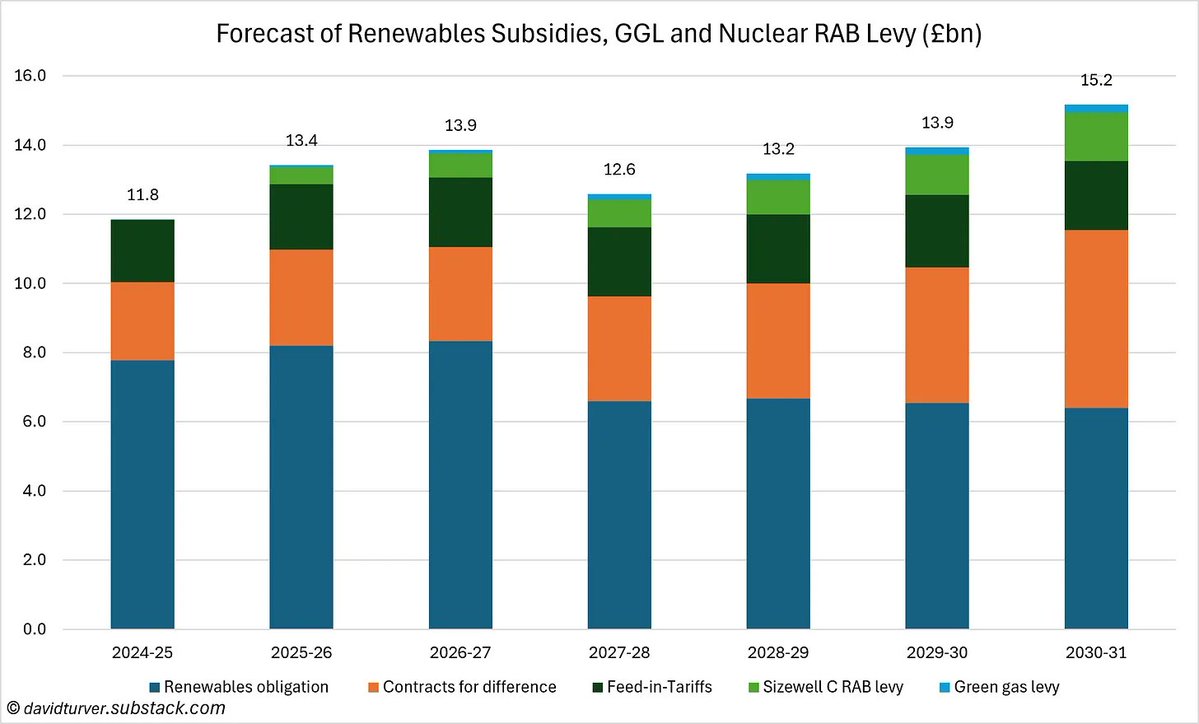
OBR (& DESNZ) forecasts show direct subsidies (ROCs, CfDs, FiTs, Sizewell C, GGL etc.) rising from £11.8bn to £15.2bn by 2030/31 (3/11)
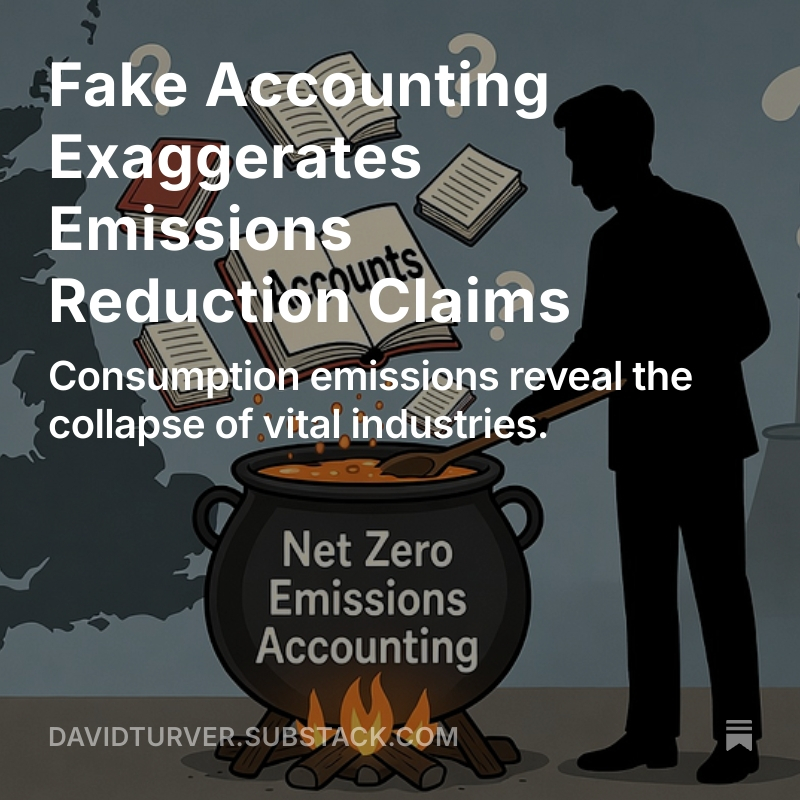
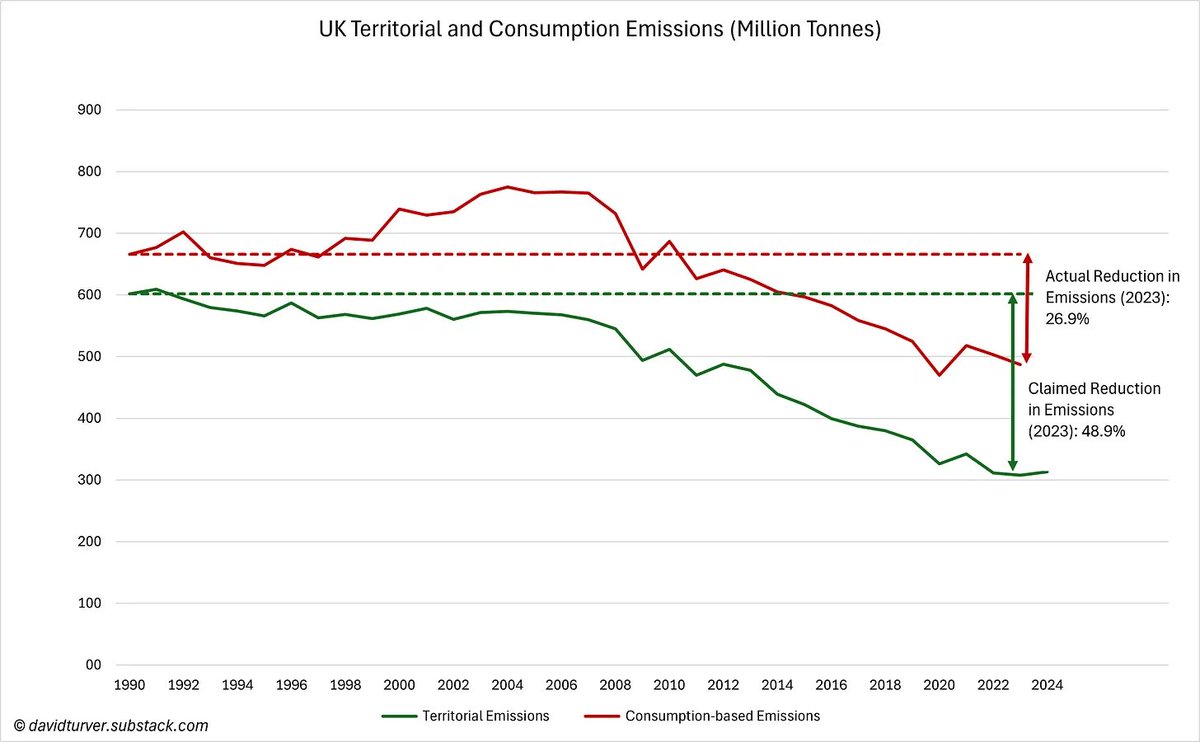
The UK government loves celebrating how it has halved emissions since 1990. But is it real… or just clever accounting? My new thread exposing how official claims of emissions reduction are cooking the books. (1/8)
Official figures show ~49% territorial CO₂ cuts. But look at consumption emissions (what we actually use, including imports): only ~27% reduction. (2/8)
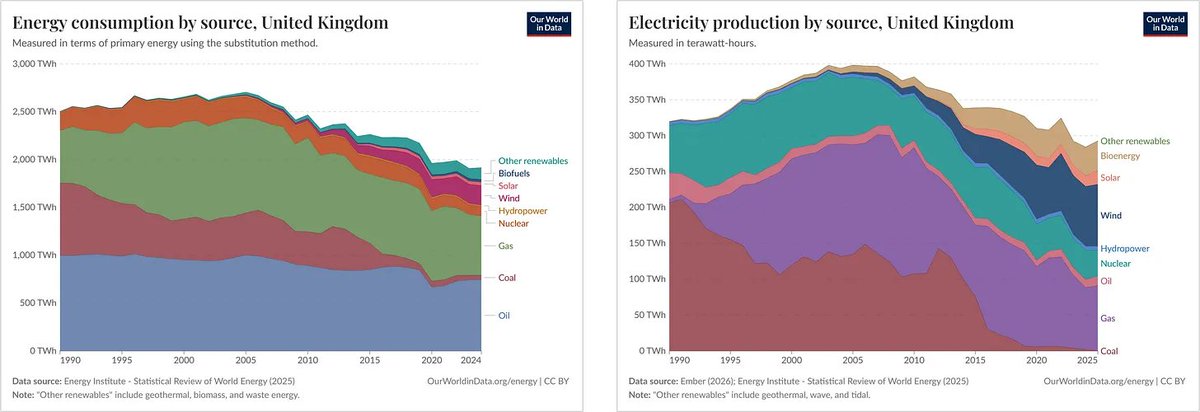
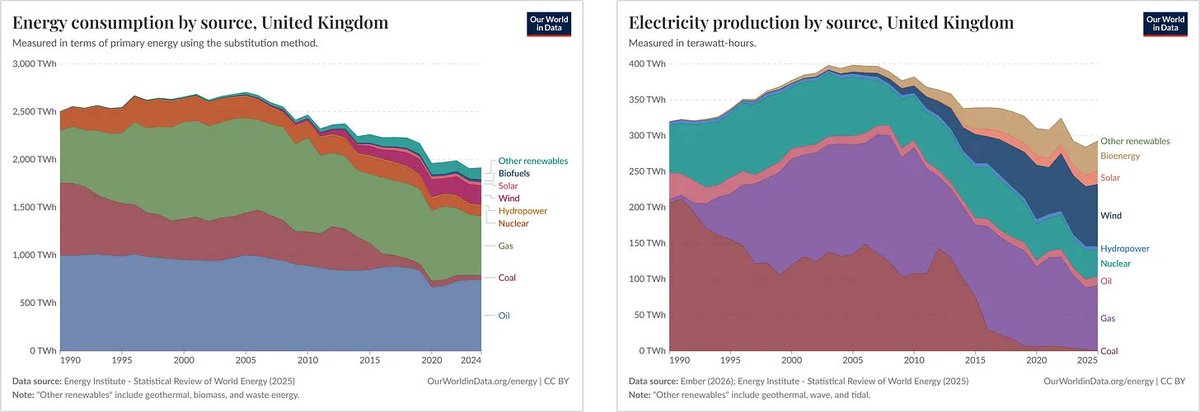
Much of the “success” comes from destroying UK industry. Industrial energy use down over 40%. We’re not greening the economy — we’re de-industrialising and both energy and electricity generation are down sharply. (3/8)
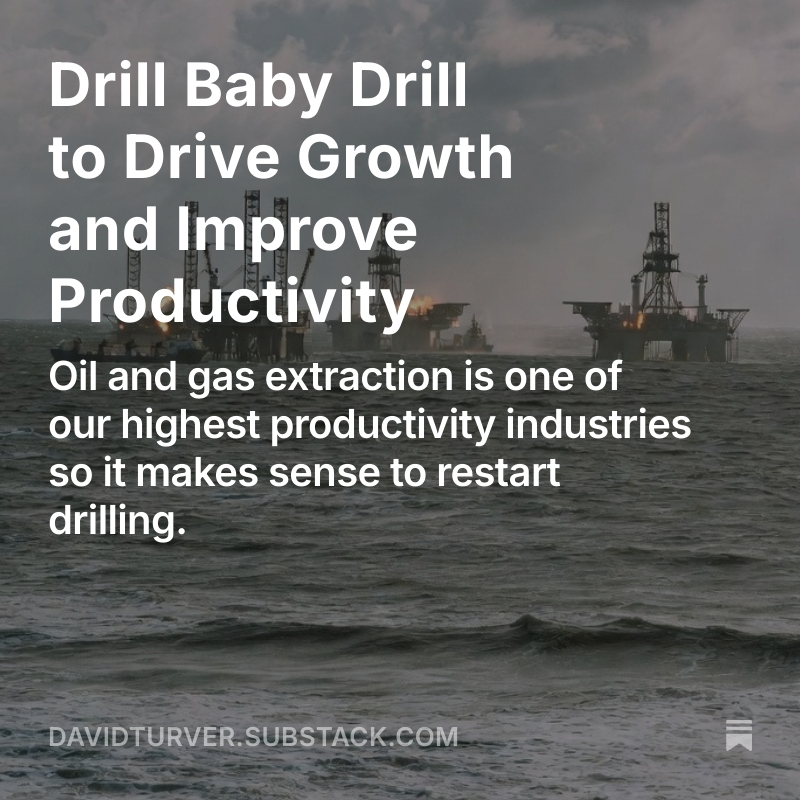
UK energy policy is economic self-harm. Labour banning new North Sea drilling licences + fracking — right as the Strait of Hormuz crisis hits. Yet oil & gas extraction is one of our MOST productive industries. A thread (1/10)
UK per capita energy consumption has fallen 2.4% per year — faster than most G7 countries. Result? GDP per capita growth is a miserable 0.4% annually. Energy is the foundation of modern economies. Without abundant supply, we stagnate. (2/10)
Globally, GDP per capita grows ~2% with rising energy use. Asia boomed by embracing energy-intensive growth. Britain chose “energy austerity” instead — and now uses less energy per person than Poland or Malaysia. This is a self-inflicted wound. (3/10)
Renewables funds like Greencoat UK Wind (UKW), Octopus Renewables (ORIT) & The Renewables Infrastructure Group (TRIG) market themselves as low-risk investments. But plunging share prices and wide discounts to NAV suggest management in denial. A thread (1/11)
Labour govt changes: ROC indexation cut (RPI to CPI) & Carbon Price Support removal in 2028. Funds took NAV hits but downplayed them. New Wholesale CfDs offered as partial offset. These are minor vs. what could come from Reform & Tories. (2/11)
Bigger risks: Tories & Reform pledge to scrap Net Zero elements. Remove CPS + ETS (carbon taxes boosting wholesale prices), abolish ROC scheme early. This would slash revenues for ROC-dependent assets far more than current tweaks, further impacting NAV & share prices. (3/11)
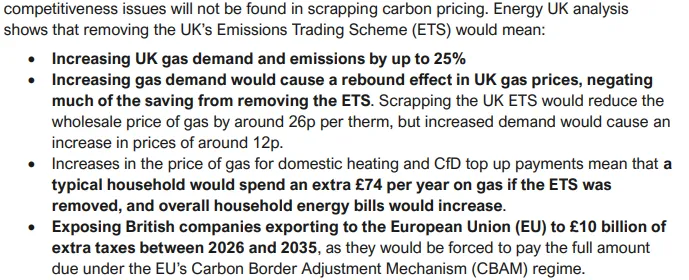
Yesterday, @EnergyUKcomms caught a bad case of Net Zero Derangement Syndrome by claiming that removing carbon taxes will increase bills. A thread (1/n)
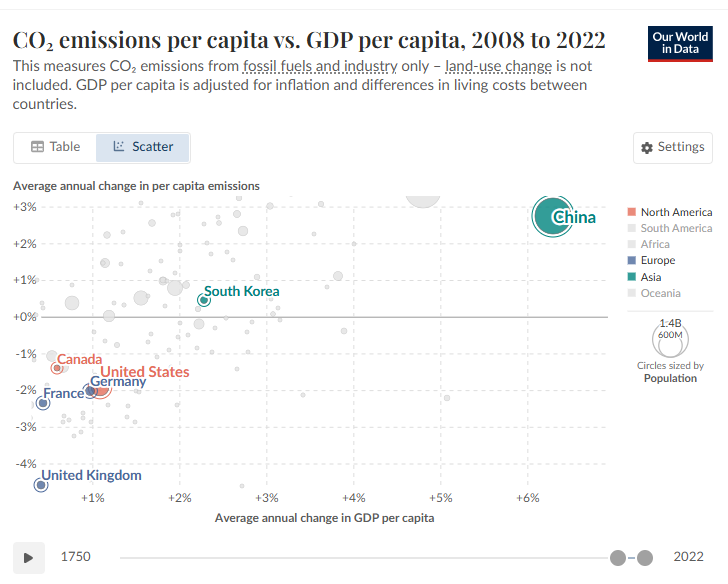
They first claimed that decarbonisation and economic growth go hand-in-hand. But data from OWID shows that faster decarbonisation leads to slower growth (2/n)
They went on to claim that scrapping the Emissions Trading Scheme (ETS) would increase gas demand by 25%. This claim would mean almost doubling the amount of gas used for electricity, which is implausible (3/n)