1/🧵
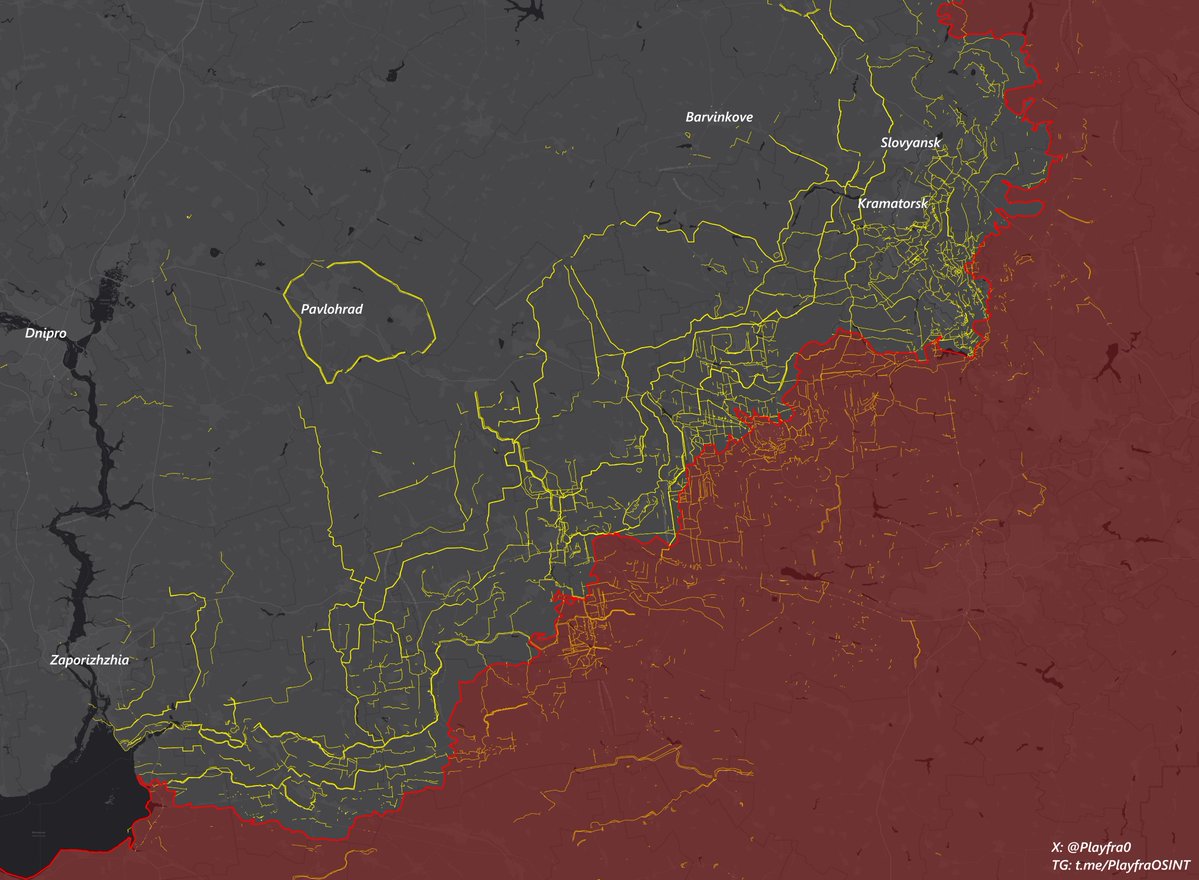
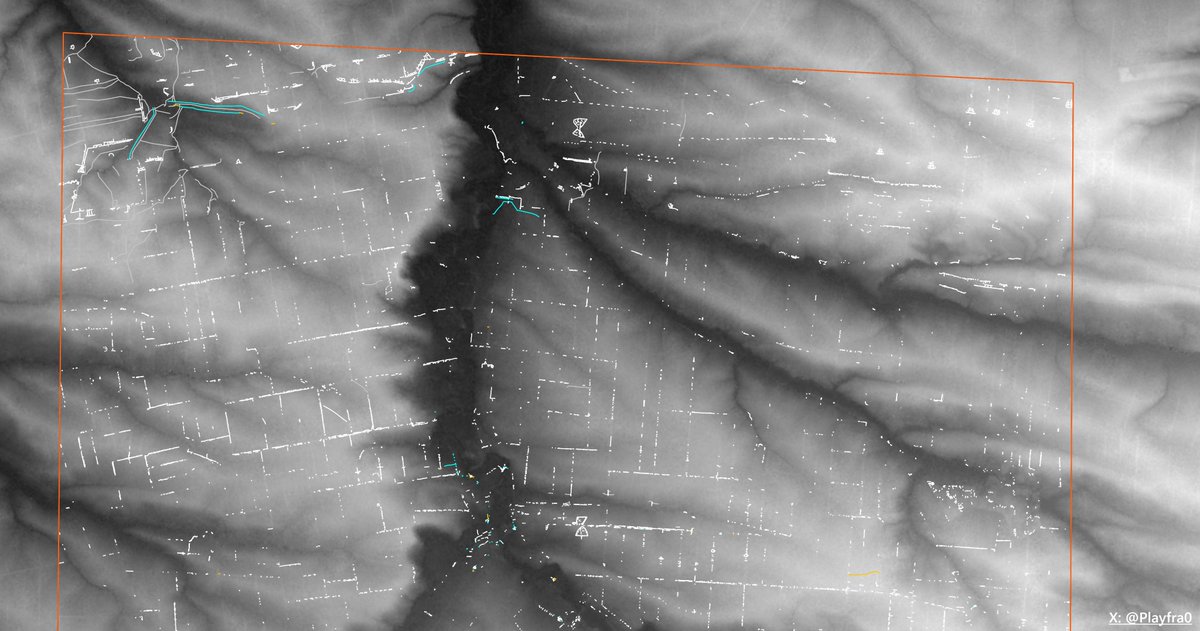
Over 1.5 years, Ukraine 🇺🇦 has slowly but consistently implemented its obstacle-based fortification strategy and now has a solid and complex fallback line grid for most of the country.
Let's look at the results achieved and draw some conclusions, with bonus reviews from the soldiers!
1/⬇️
Over 1.5 years, Ukraine 🇺🇦 has slowly but consistently implemented its obstacle-based fortification strategy and now has a solid and complex fallback line grid for most of the country.
Let's look at the results achieved and draw some conclusions, with bonus reviews from the soldiers!
1/⬇️

2/🧵
Over almost 5 years of war, fortification strategies have evolved a lot, with Ukraine having been on the defensive for the most part of these years, evolving the most.
With technology itself evolving, fortifications had to mirror it. In the case of drones, camouflage and sturdiness are now key to avoiding detection in the first place and withstanding strong fire from the enemy.
Attack and defense strategies have also evolved: the Russians employ large amounts of firepower and small groups of infiltrators, while Ukraine counters with stronger positions, engineering obstacles, and frequent drone reconnaissance and strike missions.
Over almost 5 years of war, fortification strategies have evolved a lot, with Ukraine having been on the defensive for the most part of these years, evolving the most.
With technology itself evolving, fortifications had to mirror it. In the case of drones, camouflage and sturdiness are now key to avoiding detection in the first place and withstanding strong fire from the enemy.
Attack and defense strategies have also evolved: the Russians employ large amounts of firepower and small groups of infiltrators, while Ukraine counters with stronger positions, engineering obstacles, and frequent drone reconnaissance and strike missions.

3/🧵
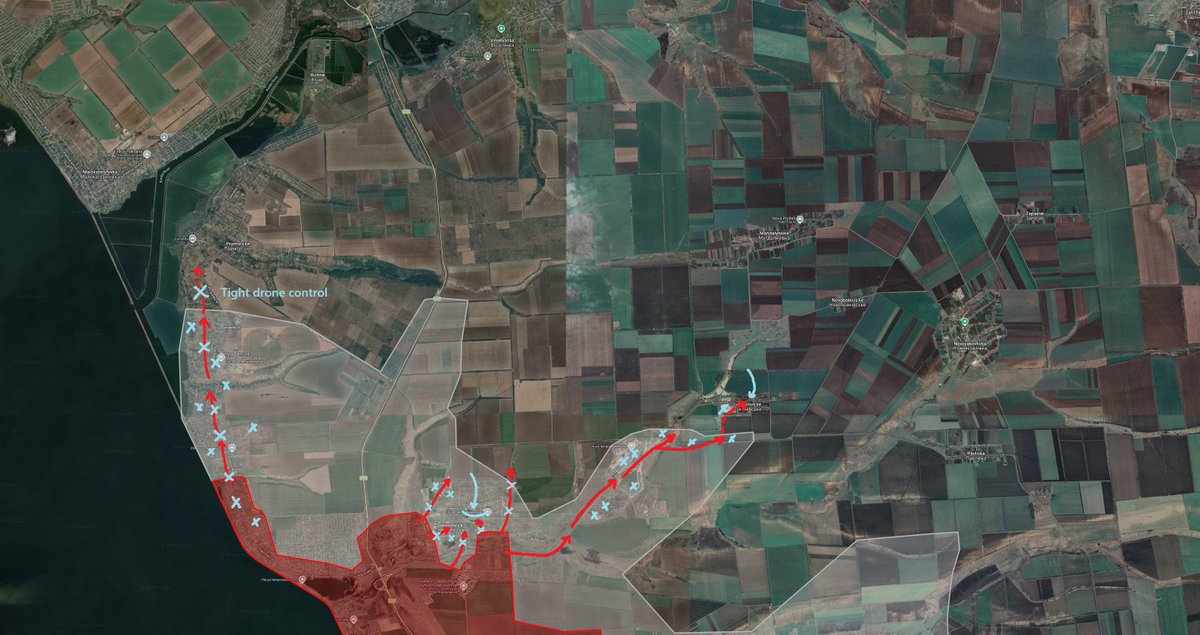
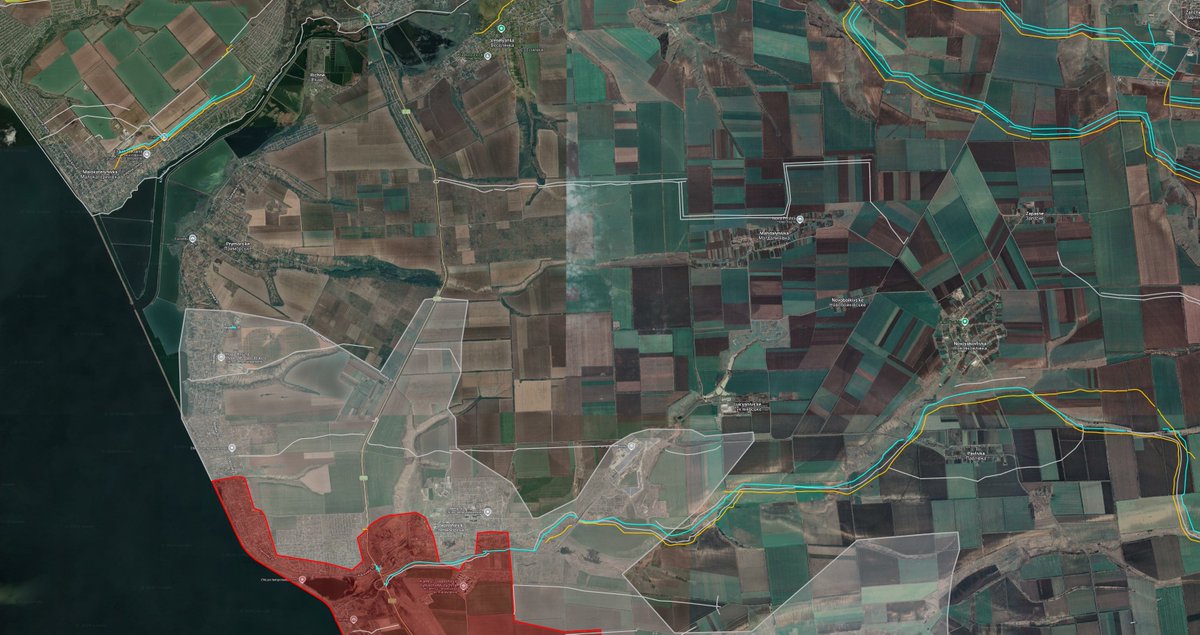
All this led Ukraine, at the start of 2025, to develop their now preferred style of fortifications, based on engineering obstacles, very sturdy and small trenches, and tight drone control, partially mitigating their pressing manpower problem and significantly complicating Russia's go-to attack strategy (infiltrations).
All this led Ukraine, at the start of 2025, to develop their now preferred style of fortifications, based on engineering obstacles, very sturdy and small trenches, and tight drone control, partially mitigating their pressing manpower problem and significantly complicating Russia's go-to attack strategy (infiltrations).
4/🧵
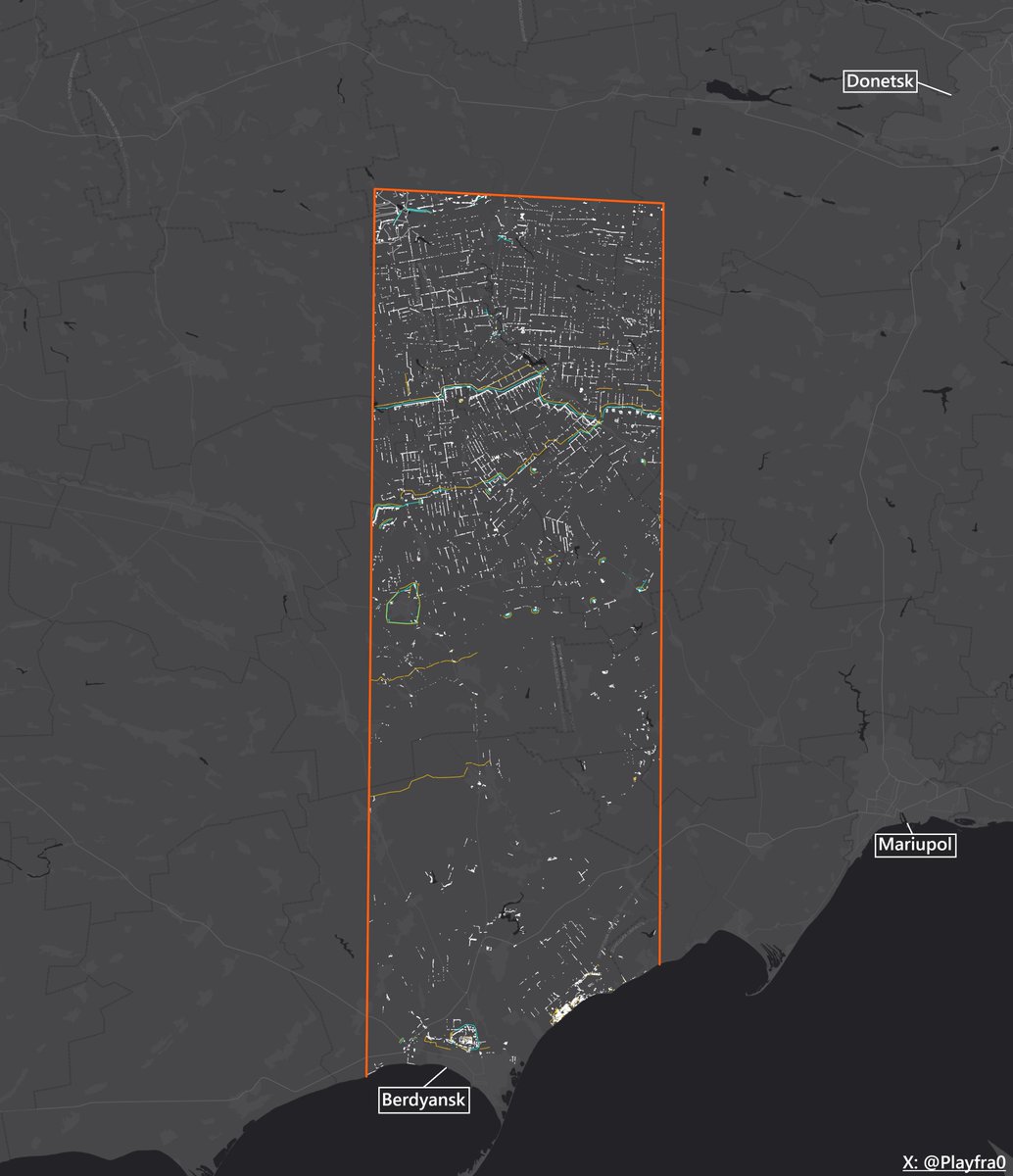
In Southern Ukraine, in addition to the two 2023 "Zaluzhniy Lines," in red you can see the new lines built by Ukraine ever since.
A half ring for Zaporizhzhia, 3 north-south lines to defend against Russia's Huljajpole offensive, a ring around Novomykolaivka and Pokrovske.
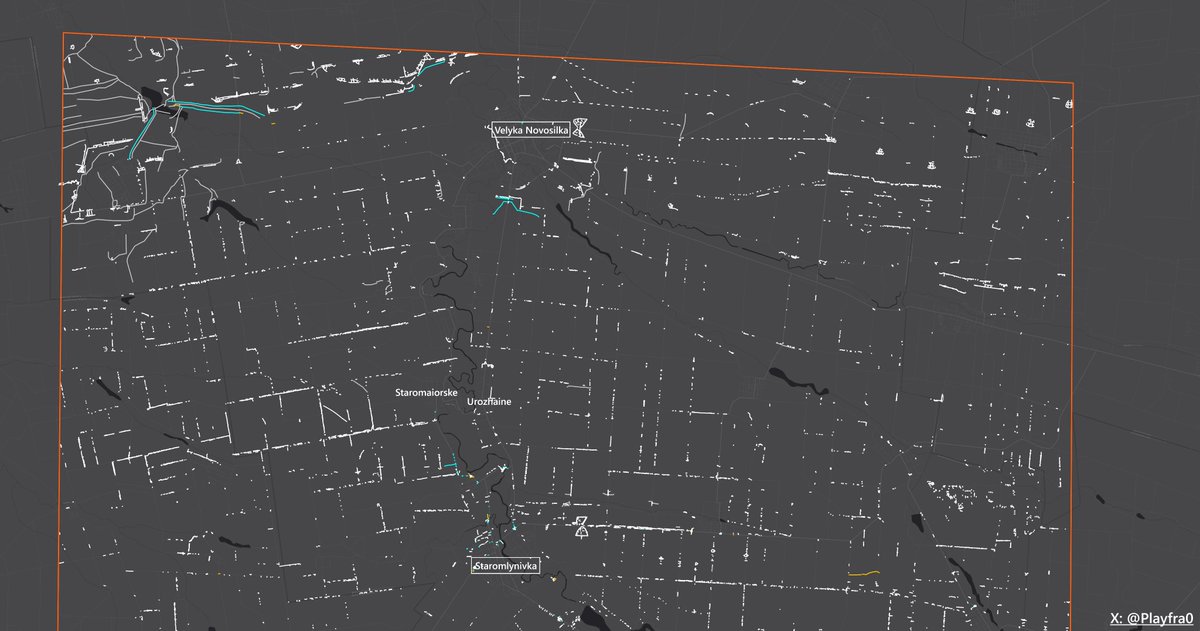
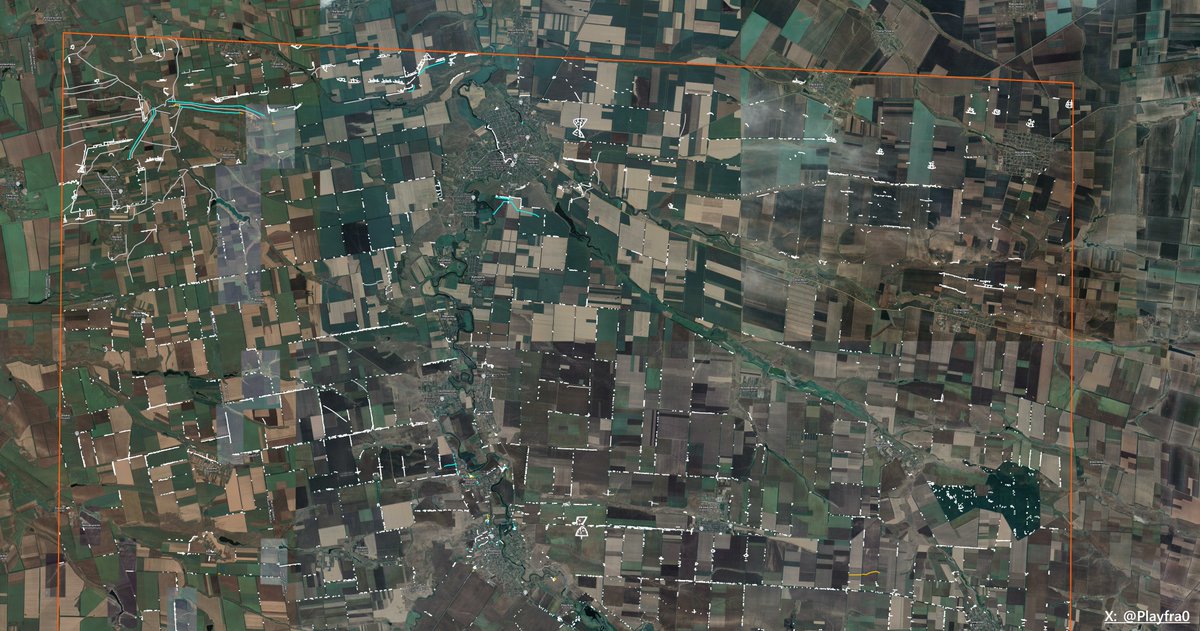
In between and in front of all this lie dozens of small barbed wire or ditch lines that will significantly dampen Russian infiltration efforts.
Some of these lines still have to be completed and are missing one or two elements relative to the conventional doctrine, but they're all at a sufficient level of preparation to make a difference when making contact with large amounts of Russian infiltrators.
At the moment, the new pink line is at the very first stages of building.
In Southern Ukraine, in addition to the two 2023 "Zaluzhniy Lines," in red you can see the new lines built by Ukraine ever since.
A half ring for Zaporizhzhia, 3 north-south lines to defend against Russia's Huljajpole offensive, a ring around Novomykolaivka and Pokrovske.
In between and in front of all this lie dozens of small barbed wire or ditch lines that will significantly dampen Russian infiltration efforts.
Some of these lines still have to be completed and are missing one or two elements relative to the conventional doctrine, but they're all at a sufficient level of preparation to make a difference when making contact with large amounts of Russian infiltrators.
At the moment, the new pink line is at the very first stages of building.

5/🧵
Also note the building order of these lines that the Ukrainians adopted: when the Russians first broke through at Uspenivka, the line defending Zaporizhzhia's south and east flanks was built first as a worst-case scenario fallback line, and only then did they gradually move eastwards when possible.
This always gave the Ukrainians a fallback line in case any breakthrough were to happen.
Also note the building order of these lines that the Ukrainians adopted: when the Russians first broke through at Uspenivka, the line defending Zaporizhzhia's south and east flanks was built first as a worst-case scenario fallback line, and only then did they gradually move eastwards when possible.
This always gave the Ukrainians a fallback line in case any breakthrough were to happen.
6/🧵
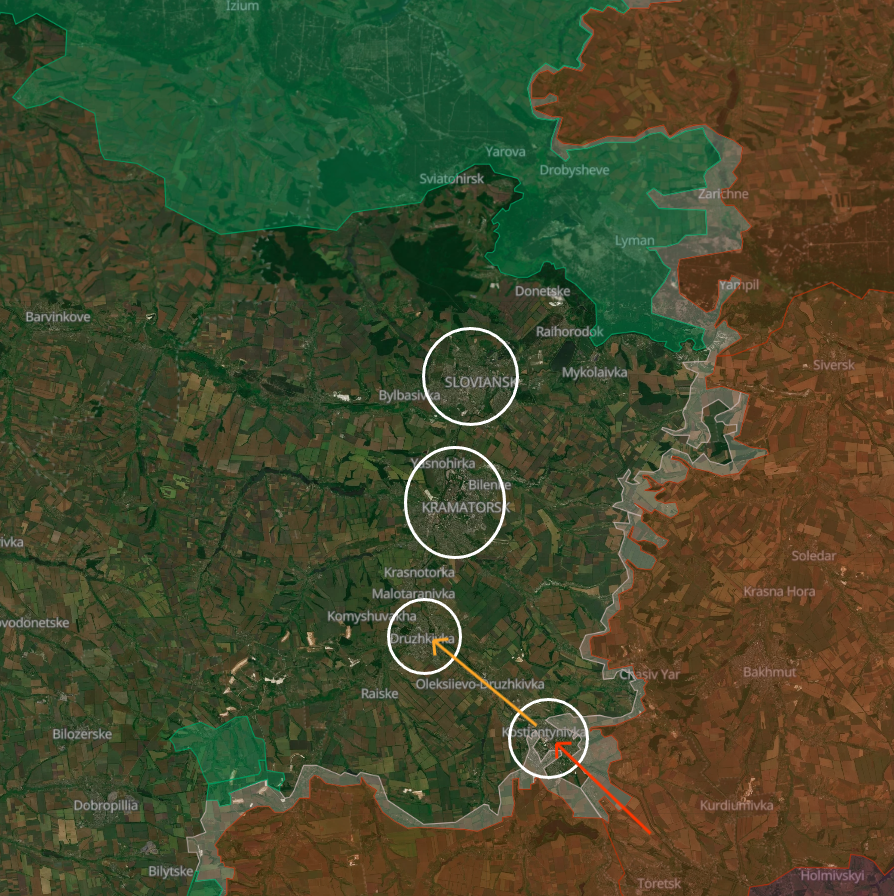
The Dnipropetrovsk Oblast is definitely the region with the most upgrades.
Pavlohrad's ring was upgraded from 1 to 3 ditches; the Synelnykove line is in the process of doing the same; Vasylkivka now has a half ring; Shakhtarske was made into a fortress city by multiple rings, something I had hoped to see for a long time; Mezhova now has 3 or 4 fallback lines behind it, just like Dobropillia and all of the Kramatorsk-Slovyansk agglomeration. Even Barvinkove is currently being fortified.
And, again, dozens of smaller engineering obstacle lines in front and in between all these lines, where they're impossible to replicate due to the proximity of the frontline.
The Dnipropetrovsk Oblast is definitely the region with the most upgrades.
Pavlohrad's ring was upgraded from 1 to 3 ditches; the Synelnykove line is in the process of doing the same; Vasylkivka now has a half ring; Shakhtarske was made into a fortress city by multiple rings, something I had hoped to see for a long time; Mezhova now has 3 or 4 fallback lines behind it, just like Dobropillia and all of the Kramatorsk-Slovyansk agglomeration. Even Barvinkove is currently being fortified.
And, again, dozens of smaller engineering obstacle lines in front and in between all these lines, where they're impossible to replicate due to the proximity of the frontline.

7/🧵
The Kharkiv area is characterized by a complex mix of old and new lines.
Behind the Oskil River lie a partially complete and a complete defensive line.
A strong line has been built on top of a previous one as a fallback from all the Velikyi Burluk salients.
Velikyi Burluk is now a crucial node of the new defensive line behind Vovchansk and Kupyansk and is itself enclosed by a ring.
Kharkiv's front is defended by a complex overlap of an old and up to two new lines, effectively forcing the Russians to the flanks, which are also covered by new lines.
Older lines further towards Sumy and Bohodukhiv have and are in the process of being reinforced.
The Kharkiv area is characterized by a complex mix of old and new lines.
Behind the Oskil River lie a partially complete and a complete defensive line.
A strong line has been built on top of a previous one as a fallback from all the Velikyi Burluk salients.
Velikyi Burluk is now a crucial node of the new defensive line behind Vovchansk and Kupyansk and is itself enclosed by a ring.
Kharkiv's front is defended by a complex overlap of an old and up to two new lines, effectively forcing the Russians to the flanks, which are also covered by new lines.
Older lines further towards Sumy and Bohodukhiv have and are in the process of being reinforced.

8/🧵
In general, for the first time since late 2024, I feel like saying Ukraine's whole east is now adequately fortified according to modern standards.
Don't get me wrong: there is still a lot of work to do, there are still weak spots and passages that need to be covered, but work is currently being done in these regards at the moment.
New lines are and will continue to be built in many new places around Ukraine, and older ones will be slowly but surely upgraded.
In general, for the first time since late 2024, I feel like saying Ukraine's whole east is now adequately fortified according to modern standards.
Don't get me wrong: there is still a lot of work to do, there are still weak spots and passages that need to be covered, but work is currently being done in these regards at the moment.
New lines are and will continue to be built in many new places around Ukraine, and older ones will be slowly but surely upgraded.
9/🧵
The "review" of these lines from the soldiers I've talked to is overwhelmingly positive.
They significantly slow down Russian infiltrations and give enough time to Ukrainian drones to detect and strike them before they enter the greenery.
They also mitigate the manpower problem, as these lines are not made for infantry to hold constantly but for drones to observe and strike promptly.
The "review" of these lines from the soldiers I've talked to is overwhelmingly positive.
They significantly slow down Russian infiltrations and give enough time to Ukrainian drones to detect and strike them before they enter the greenery.
They also mitigate the manpower problem, as these lines are not made for infantry to hold constantly but for drones to observe and strike promptly.
10/🧵
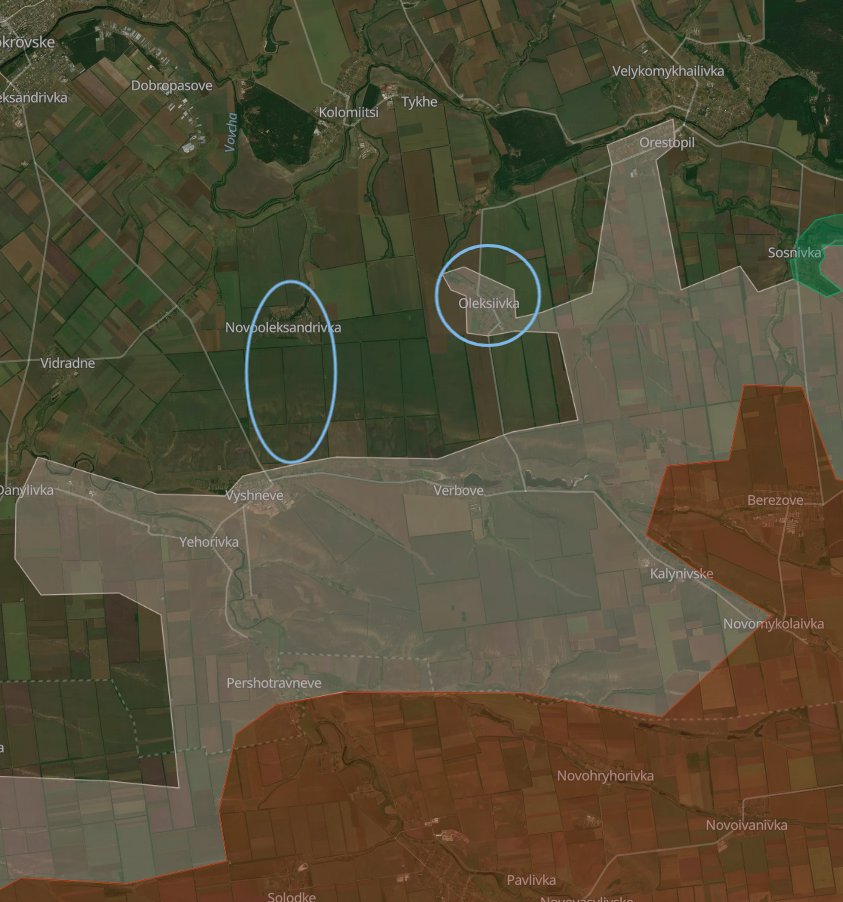
I would also like to direct your attention to a practical case: Ivanivka, Novopavlivka direction, Dnipropetrovsk Oblast.
In October 2025 the Russians had finally reached one of Ukraine's obstacle lines for the first time north of Novokhatske and Zelenyi Hai and, with difficulties, were even able to cross it, the Vovcha River, and consolidate in Ivanivka itself but were eventually cleared out.
At the moment, the Russians still weren't able to regain lost positions in the settlement, and footage of Russian infantry eliminated while trying to cross this obstacle line is abundant, together with footage of Russians attempting to cross other smaller engineering obstacles all around Ukraine's frontlines.
This practically and objectively testifies to the utility of such lines, and I can only hope more and more will be built in the future, without forgetting about drone development, which is key to maintaining control over these engineering obstacles.
I would also like to direct your attention to a practical case: Ivanivka, Novopavlivka direction, Dnipropetrovsk Oblast.
In October 2025 the Russians had finally reached one of Ukraine's obstacle lines for the first time north of Novokhatske and Zelenyi Hai and, with difficulties, were even able to cross it, the Vovcha River, and consolidate in Ivanivka itself but were eventually cleared out.
At the moment, the Russians still weren't able to regain lost positions in the settlement, and footage of Russian infantry eliminated while trying to cross this obstacle line is abundant, together with footage of Russians attempting to cross other smaller engineering obstacles all around Ukraine's frontlines.
This practically and objectively testifies to the utility of such lines, and I can only hope more and more will be built in the future, without forgetting about drone development, which is key to maintaining control over these engineering obstacles.

11/🧵
Summing everything up, I feel like the weakest areas are currently Ukraine's Chernihiv-Sumy borderlands due to the comparatively lower amount of fortification work having been done and due to the high amount of safe and covered infiltration routes available to possible Russian infiltrators.
The Dobropillia direction also doesn't have a high margin of error but is held by capable units, and the fortifications are also not bad.
The Stepnohirsk direction is also a bit weak in terms of fortifications, but natural obstacles, Zaporizhzhia's proximity as a logistical and accumulation hub, and Ukraine's "half-initiative" should compensate.
In the Prosyana direction, fortifications are also a bit weak, but they're in the process of being upgraded, and the terrain is complex for possible Russian advances.
Izyum's eastern flank, too, needs some upgrades, especially due to the big forest suitable for deep Russian infiltrations, but Ukrainian units are attempting to give the city some breathing room as of now.
Summing everything up, I feel like the weakest areas are currently Ukraine's Chernihiv-Sumy borderlands due to the comparatively lower amount of fortification work having been done and due to the high amount of safe and covered infiltration routes available to possible Russian infiltrators.
The Dobropillia direction also doesn't have a high margin of error but is held by capable units, and the fortifications are also not bad.
The Stepnohirsk direction is also a bit weak in terms of fortifications, but natural obstacles, Zaporizhzhia's proximity as a logistical and accumulation hub, and Ukraine's "half-initiative" should compensate.
In the Prosyana direction, fortifications are also a bit weak, but they're in the process of being upgraded, and the terrain is complex for possible Russian advances.
Izyum's eastern flank, too, needs some upgrades, especially due to the big forest suitable for deep Russian infiltrations, but Ukrainian units are attempting to give the city some breathing room as of now.
12/🧵
Thanks for reading! Feel free to leave your feedback, questions, tips, criticisms, or whatever you'd like down here in the comments, and as always, remember to join my Discord: discord.gg/P3XsgQFBPV.
If you'd like to support my work with a donation instead: coff.ee/playfra
Or, even better, if you'd like to support the defenders of Kostyantynivka and make the difference in this battle:
• PrivatBank: privat24.ua/send/iz0y5
• Card number: 5168752151822858
• PayPal: l.knyazhytsky@gmail.com
• Wise: wise.com/pay/me/vratkos
• BuyMeACoffee: coff.ee/playfra
*The maps shown do not in any way break OPSEC or represent sensitive data. Everything that was mapped was done using public sources, and both sides know well about what is shown in these maps.
Thanks for reading! Feel free to leave your feedback, questions, tips, criticisms, or whatever you'd like down here in the comments, and as always, remember to join my Discord: discord.gg/P3XsgQFBPV.
If you'd like to support my work with a donation instead: coff.ee/playfra
Or, even better, if you'd like to support the defenders of Kostyantynivka and make the difference in this battle:
• PrivatBank: privat24.ua/send/iz0y5
• Card number: 5168752151822858
• PayPal: l.knyazhytsky@gmail.com
• Wise: wise.com/pay/me/vratkos
• BuyMeACoffee: coff.ee/playfra
*The maps shown do not in any way break OPSEC or represent sensitive data. Everything that was mapped was done using public sources, and both sides know well about what is shown in these maps.
• • •
Missing some Tweet in this thread? You can try to
force a refresh