Thread with excerpts from the Spanish Conquest section of T. R. Fehrenbach's "Fire and Blood: A History of Mexico" (1973). 

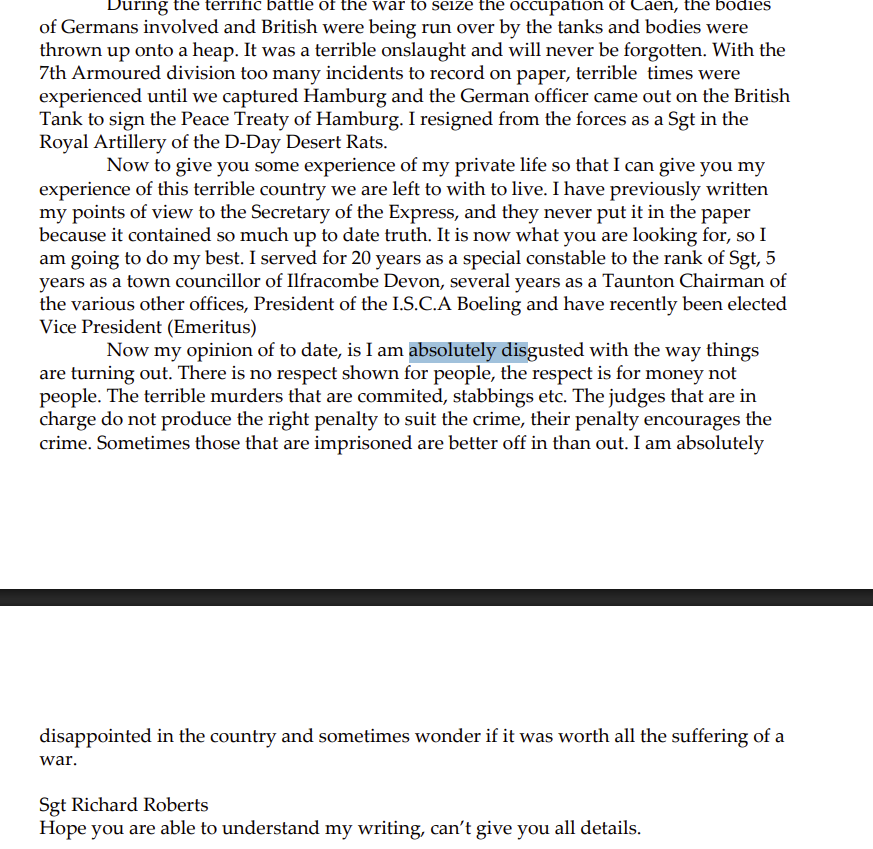
According to the Mexic accounts, the years leading up to the arrival of Cortes were full of terrible omens. To avert the prophesized disaster, Montezuma (disastrously) greatly increased tribute from subject cities and even replaced the govt of his (now former) ally Texcoco.
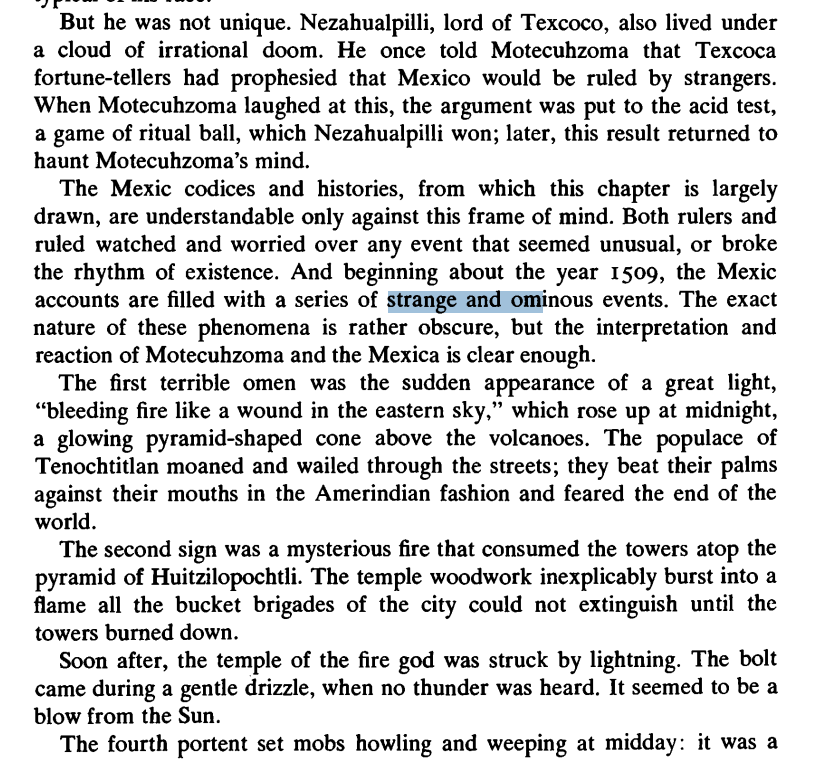


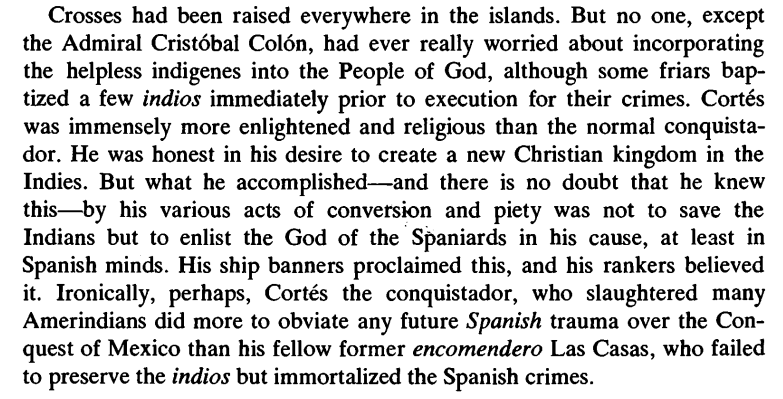
Repartimiento and encomienda, systems by which Indians were 'entrusted' to a Spaniard and owed him labor for protection, were not at all unusual; most Eurasian farmers bore similar burdens and both were long-standing Iberian institutions.
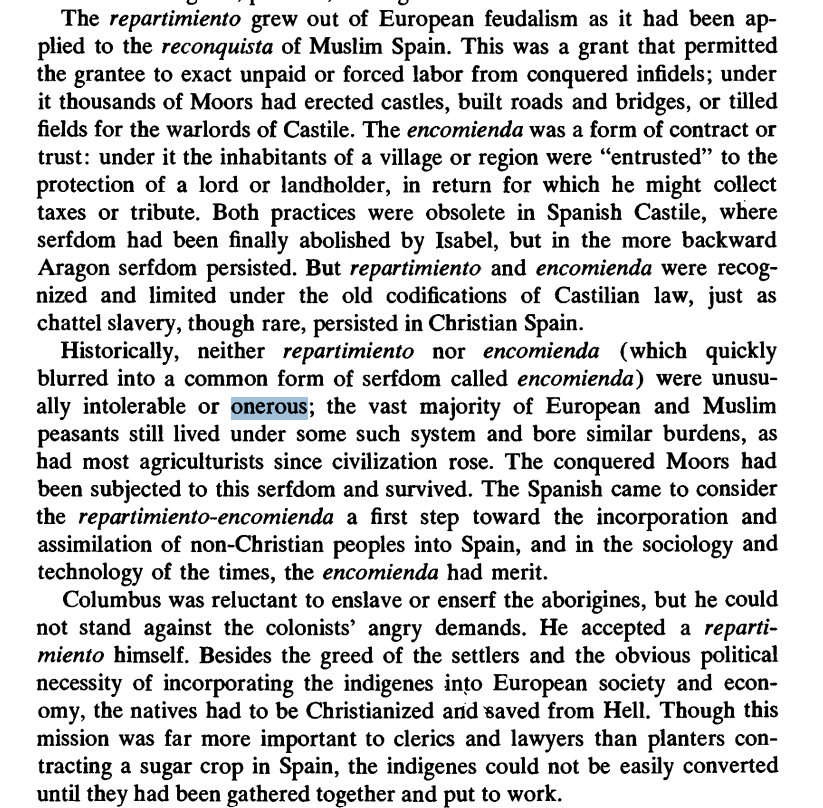
What made encomienda such a disaster in the Caribbean was that the islanders, unlike their Eurasian or Mesoamerican counterparts, were primitives, not long-settled peasants used to such burdens, and had zero resistance to Eurasian disease.
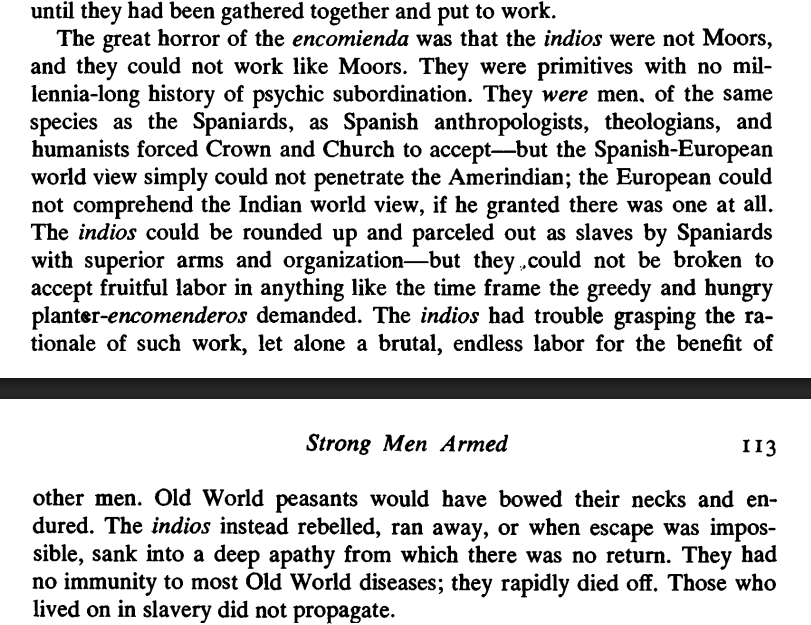
Fehrenbach is very complimentary to Cortes, who saw himself as a Spanish patriot and Christian knight, and was smarter, more visionary, more ambitious, more loyal, and even more humane than other Conquistadores.

If Cortes had been a prince, he might have been one of the world's remembered kings; instead he had to carve out a kingdom himself.
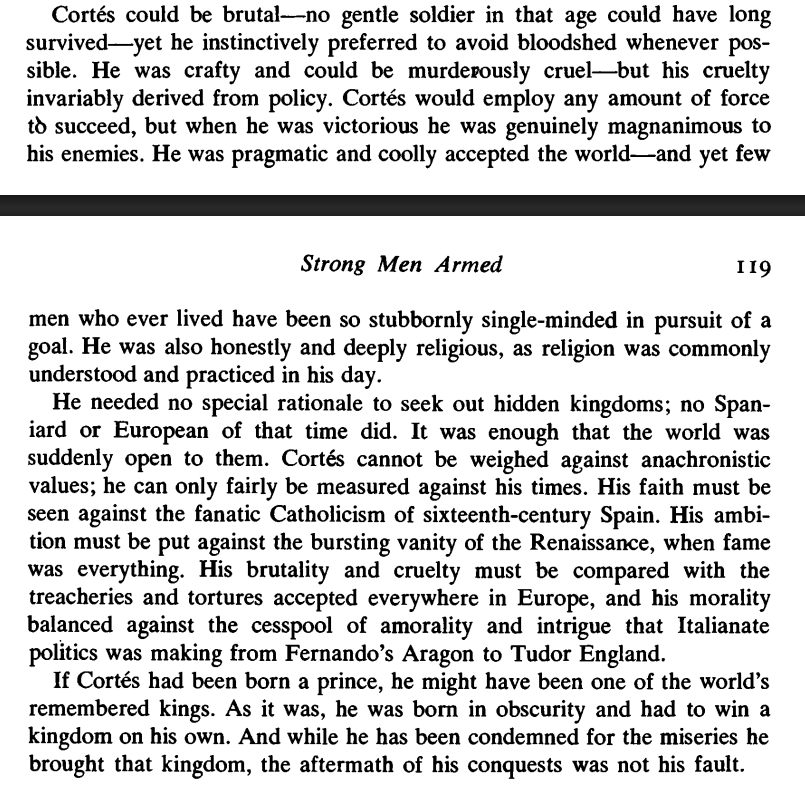
Upon going ashore on the mainland, one of Cortes' lieutenants, Alvarado, immediately robbed an Indian village; Cortes reprimanded him and restored their property, saying that they came to conquer a kingdom and not to rob, and would need local support to win.
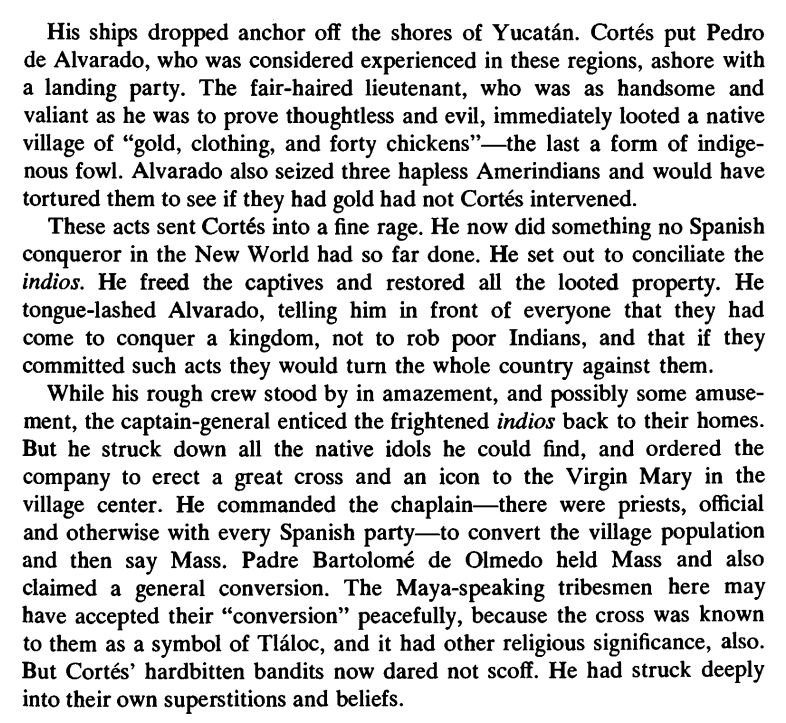
Cortes, unlike most of the major Spanish figures except Columbus himself, really was concerned with converting the Indians, but the result of his acts of conversion and piety was to fire Spanish convictions instead.
In Tabasco, Cortes defeated a Maya attack (learning the value of horses). He converted accepted them as vassals of the king of Spain; they turned over food and nubile girls. One of the girls was Malinche, who was to prove essential; through her he could converse in Nahuatl.
Montezuma learned of Cortes' landing in a few hours. He was unsure if Cortes was Quetzalcoatl or an agent of his, and sent him Quetzalcoatl's mask to check. Cortes contemptuously refused the mask and scared the messengers with cannon as psychological warfare.

Montezuma was terrified of his messenger's description of Cortes and the Spaniards, especially their cannons, iron, dogs, and horses and continued temporizing rather than acting.
Having discovered a kingdom to conquer, Cortes set about making sure he wasn't conquering for the benefit of the governor of Cuba. To do this, he legally founded a town, Veracruz; under Spanish law citizens of a city were governed directly by the crown.

Cortes visited the Totonac-speaking subjugated state of Cempoala, and, knowing his Roman history, successfully forced them into an alliance by kidnapping Montezuma's tribute collectors and negotiating with them through Malinche.
Shortly thereafter, he famously burned his ships to prevent his men from abandoning the enterprise.

Cortes then visited (independent, anti-Mexica) Tlaxcala, where the Tlaxcalans had some allies attack to test the Spaniards; the Indian accounts say the Spaniards won easily, but according to the Spanish it was very close. The Tlaxcalans chose to join to Spaniards as a result.
Montezuma kept sending envoys and embassies, but used poor tactics; one embassy would claim poverty and the next would offer tribute if Cortes would go away. This failing, he planned to ambush and massacre the Spaniards at Cholula.
This failed because the Tlaxcalans hated the Cholulans and because Malinche warned Cortes of the treachery; he struck first and massacred the would-be ambushers, but then brought the survivors into his alliance as vassals of Spain rather than exterminate or enslave them.


Modern Mexicans hate Malinche, but Fehrenbach sees her as entirely reasonable; she was not Mexica and was enslaved by other Amerindians; she owed them no loyalty, and Cortes treated her well.
Cortes' stay in Tenochtitlan was bizarre; the Spaniards easily imprisoned Montezuma and without his say-so no other Mexica was willing to take initiative. Instead, they brought enormous amounts of gold to the Spaniards.
This ended when another, bigger Spanish army from Cuba landed to seize Cortes for his disobedience; Cortes took the initiative, marched a small force to take the new army by surprise, captured the army's leader, and subverted the men, gaining men, cannon, and horses.

Unfortunately for him, Cortes' lieutenant, Pedro de Alvarado, who he left in charge in Tenochtitlan, was something of a madman and wound up massacring a Mexica religious festival.
When he returned, Cortes tried to have Montezuma salvage the affair, but the massacre had successfully riled up the Mexica to the point that they no longer obeyed him.

At this point, Cortes and the Spaniards fled Tenochtitlan in 'La Noche Triste'; all the cannon were lost, hundreds of Spaniards drowned, almost all of the Mexica gold fell into the lake, and all the camp followers but three (including, crucially, Malinche) were killed.


Moctezuma was killed in the chaos, but Cortes was able to salvage some of his army by working through the night; the attacking Mexica failed to fully destroy the Spaniards because they stopped the attack upon seizing enough prisoners.
Cortes was able to keep his army together and retreat to the Tepaneca, who hated the Mexica.
The decisive battle of the Conquest was fought at Otumba by the remaining Spaniards, who had lost all their guns and most of their armor and fought with swords and spears; 400 Spaniards vs thousands of Mexica and allies.

Cortex used the tactics of Alexander the Great, a mixed square and phalanx, and the Spanish were able to hold out against far superior numbers. He took the day by personally leading a charge with his 20-40 horses to kill the Mexica general, at which point the Mexica fled.

The Mexica thought they had won after La Noche Triste, and returned to their normal lives, but Cortes, now taking refuge in Tlaxcala, was absolutely committed to conquering Mexico and refused to give up. He was willing to do anything to win.
Fortunately for Cortes, one of his men had smallpox [Juan Eguía, a black slave], and the disease, already bad enough for Europeans, devastated Tenochtitlan and killed the king who had organized Mexica resistance after Montezuma's capture.
Even better for Cortes, more Spanish expeditions, having heard of Mexico, started arriving, even some from Cuba to arrest him. He successfully recruited and charmed all of them, gaining precious guns and horses and another 500 Spaniards, bringing the total up to 900.
With a reinvigorated force of Spaniards and his Tlaxcalan allies, Cortes forged a great Amerindian confederation against the Mexica and quickly swept them from most of the Valley. To besiege Tenochtitlan on its island, he built a Spanish fleet on Lake Texcoco.
Some modern Mexicans have chosen to depict Cortes as a twisted syphilitic cripple, but this demeans the Amerindians he conquered; he was so good at gaining their allegiance that in 1521 only one single people, the Tarasca, even considered aiding Tenochtitlan.
After his Spanish squadron gained command of the lake, Cortes began a naval assault; since urban warfare was so incredibly dangerous, he had to demolish Tenochtitlan piece by piece with cannonfire, almost a 16th century Stalingrad.

Even after all this, the Spaniards suffered many reverses in Tenochtitlan itself; the Mexica did not give up when the perimeter was breached and fought building-by-building. To win, Cortes destroyed the aqueduct, starved out the city, and blew it to pieces with cannon.


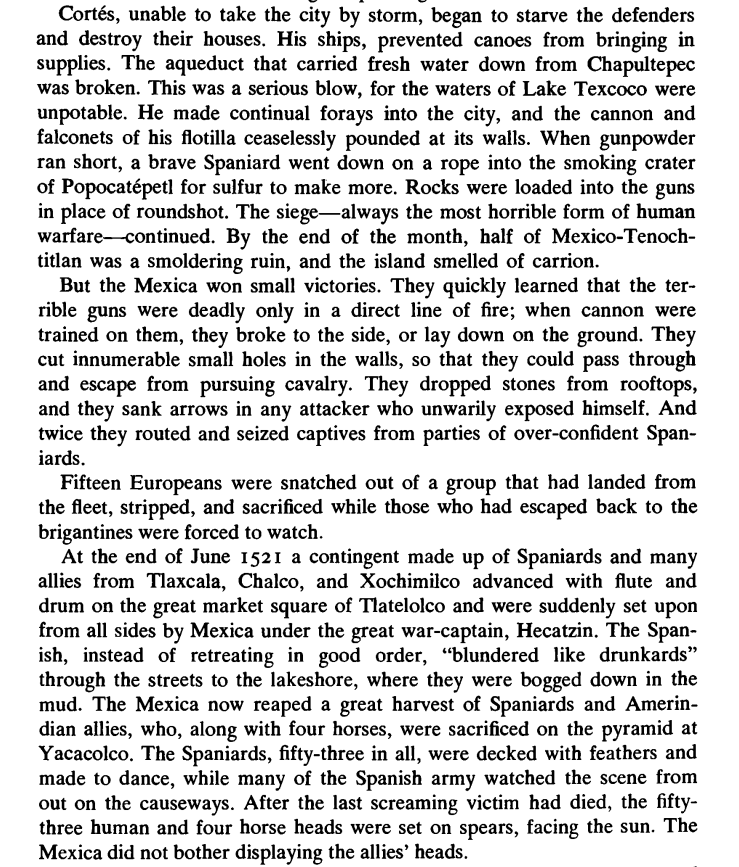
Cutting off the water produced a dysentery outbreak among the defenders, who also starved as they were shelled by cannon. After months of this, the defenders finally surrendered.

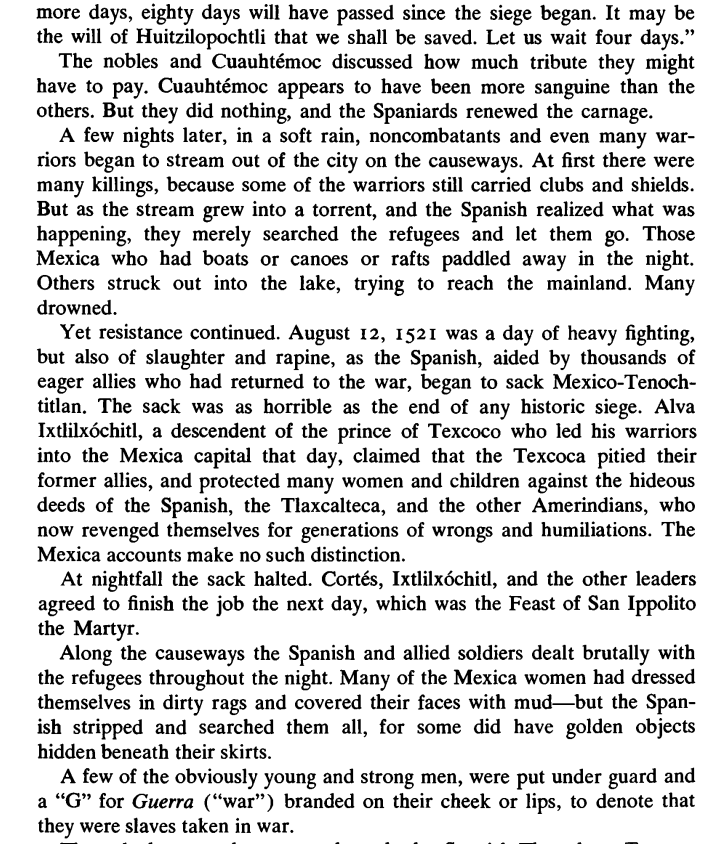
After winning, Cortes faced a problem: almost all the gold had been lost in La Noche Triste, and his army was not happy and did not share his vision of a great Christianized Amerindian realm.
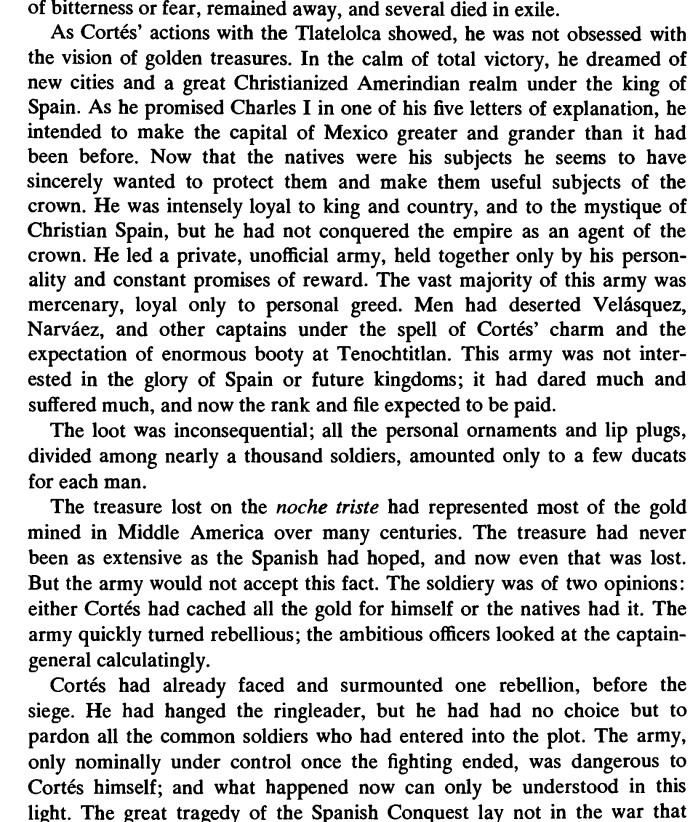
Searching for gold, Cortes' army began to tyrannize the Indians, who were sufficiently docile and civilized that without their hereditary leadership they were totally unable to resist a few hundred armed men.

The destruction of the Indian aristocracy was also the destruction of the entire civilization which they bore; the great mass of Amerindians were uninvolved in it. The only surviving contributions of Mesoamerican civilization were their crops.

• • •
Missing some Tweet in this thread? You can try to
force a refresh