More excerpts on Colonial Mexico from TR Fehrenbach's "Fire and Blood" (1973). Fehrenbach saw the discovery of silver in Mexico, mostly in the arid north, as a disaster, as it led to Spain administering Mexico as a loot box rather than developing the productive economy. 

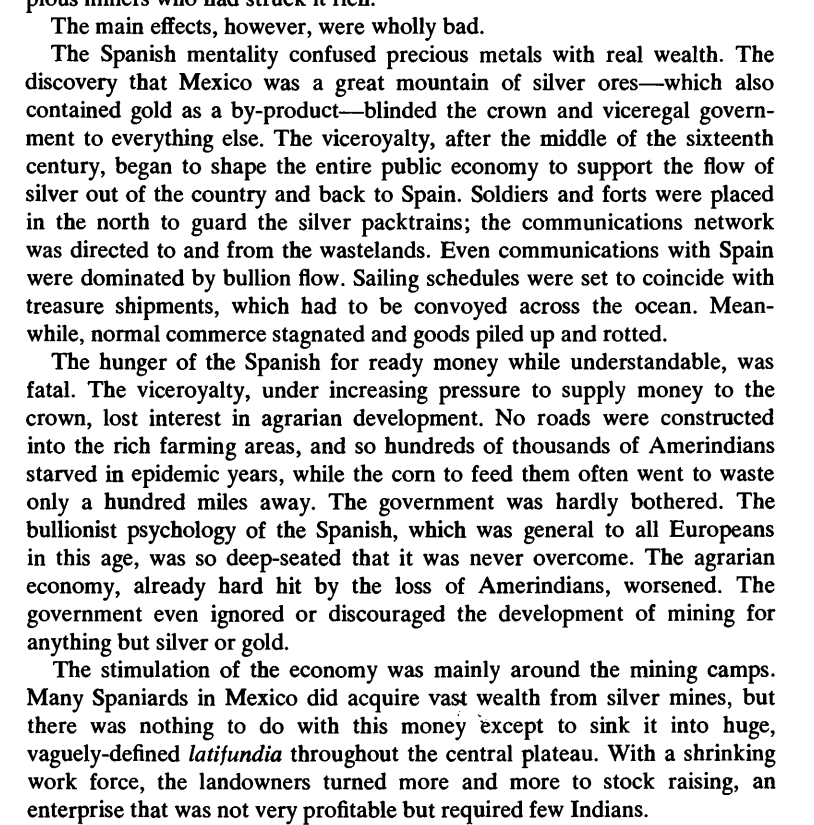
The thinly-populated, but silver-rich North became a military frontier.

The suspicious Spanish Crown gave those born in Spain, the peninsulares, a monopoly on offices (and commerce) in New Spain. As offices were the main route to upwards mobility, the local creoles resented this.
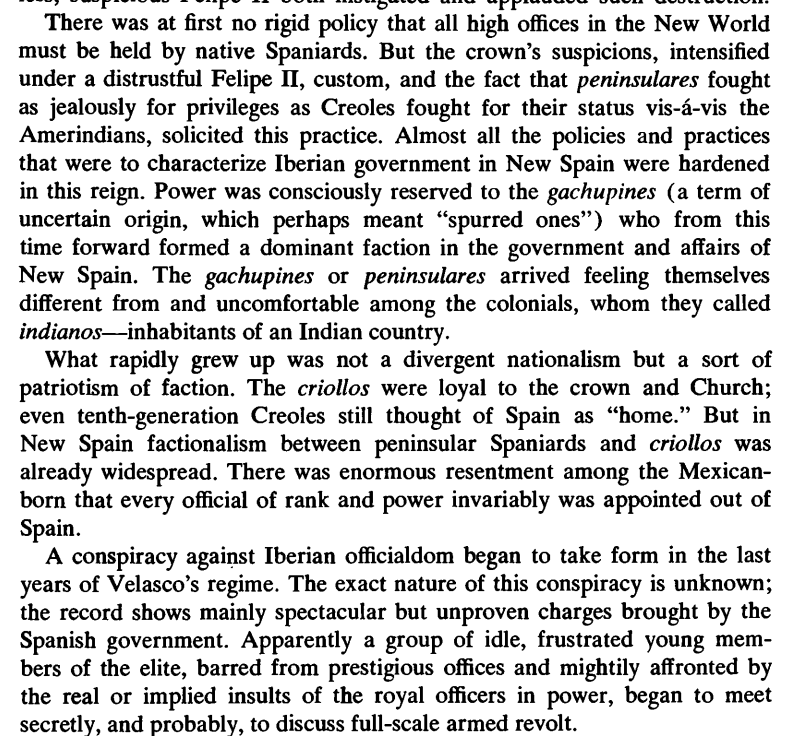
Some disgruntled creoles symbolically crowned one of Cortes' sons, but nothing came of it beyond the major conspirators being executed.

Another source of creole resentment was the (correct) belief that most carried some Indian blood. Even a century after the Conquest, the ratio of European males to females in New Spain was 9:1, and many women married peninsulares.
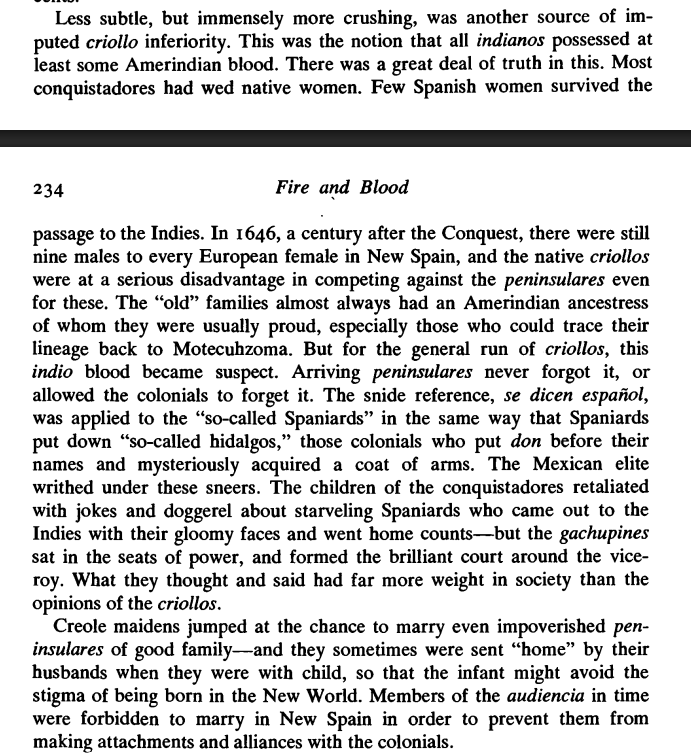
Almost all of the first generations of encomenderos and conquistadors married native women (mostly aristocrats), and the first generation of mixed children passed easily into creole society. But by the 1550s, interracial marriage between Indians and Spaniards ~stopped.
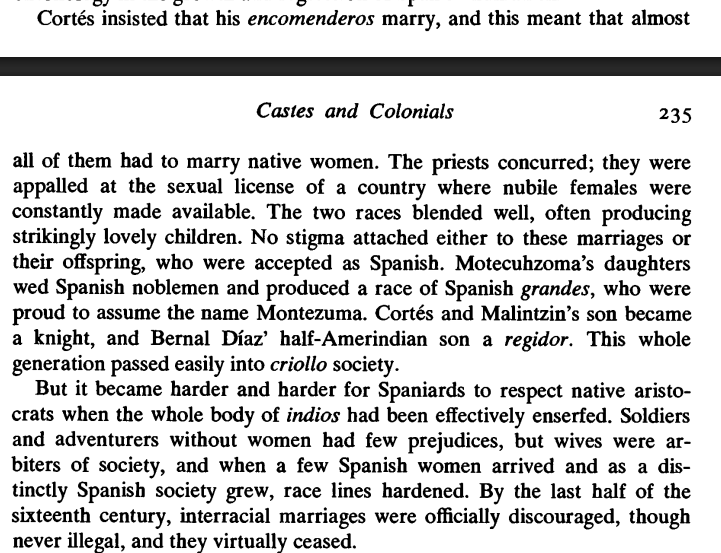
Indios were effectively made wards of the state, treated almost as children, denied the right to European firearms or to assume debts larger the 5 pesos, and immune to the death penalty except for returning to heathenism.

The end interracial marriage in New Spain did not stop interracial sex; bastardry became the norm (and it still is in Latin America today). The casta mixed-race population exploded, which presented a legal and social problem.

Historically, relationships between conquered and conquering peoples inevitably become one of slavery or serfdom, a caste system, or miscegenation. All three occurred in New Spain.

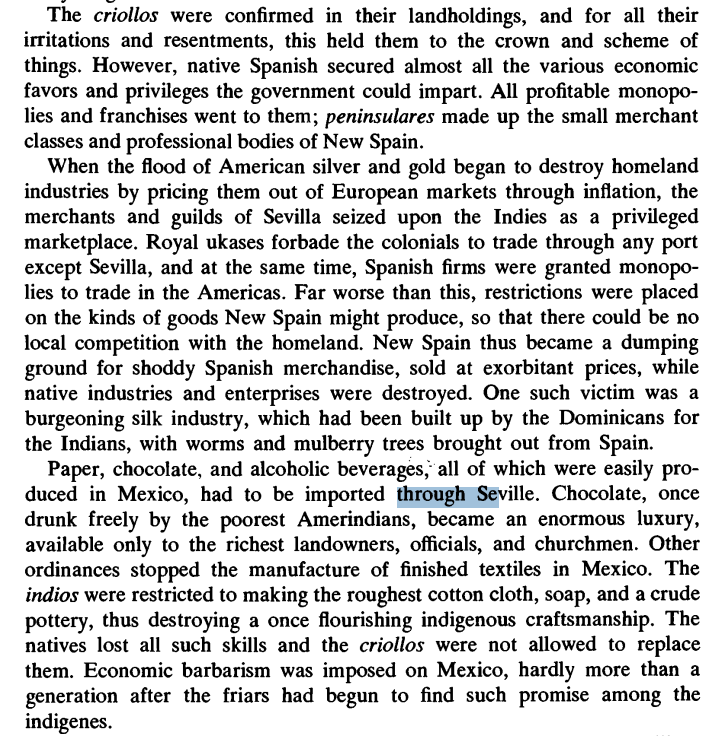
The criollos were pretty much confined to landownership; peninsulares legally monopolized trade and the professions. When the Spanish economy declined, New Spanish industry was banned to turn it into a captive market, immiserating the country.
The Spanish economy collapsed in the 16th and early 17th century due to massive royal expenditure and inflation from American bullion; the Crown had the highest revenues in Europe but was perpetually bankrupt owing to the decline of the productive Spanish economy.

To raise revenue, the crown sold offices, titles, and privileges. By 1541, there were 100,000 nobles in Castile. In the 1600s, 1/7 male Castilians were noble, and a full 1 in 4 were noble, clergy, officers, or soldiers and so exempt from both taxation and productive labor.

Between 1580 and 1680, Spanish cultural life and art became almost unreal. Sophisticated audiences 'appreciated the futility of action' and became cynical; the Spanish masculine ideal shifted from El Cid, a man of honor and action, to a playboy good at seducing women.

In New Spain, the mass Indians die offs were so bad the forced labor became inviable for mining in the 17th century, and the silver mines shifted to a free wage system.
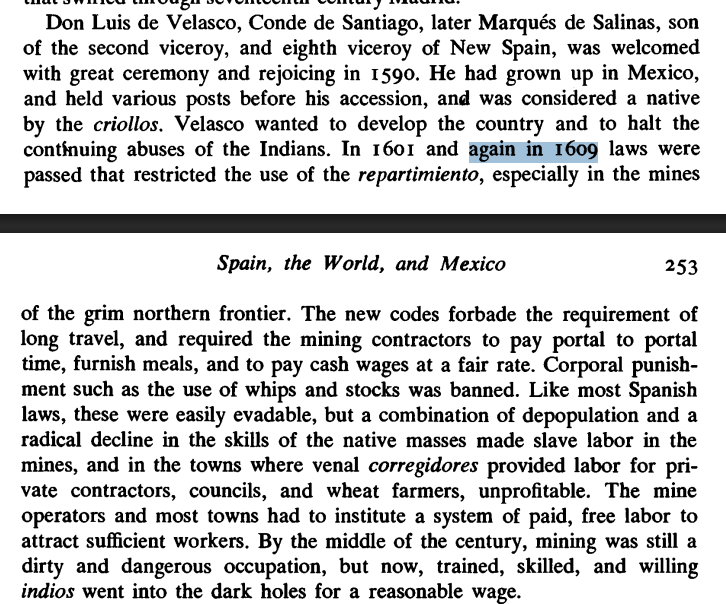
Encomienda and repartimiento were also phased out due to lack of Indians; they were replaced with haciendas, basically just very large landed properties made possible by depopulation.

Haciendas were superficially similar to plantation agriculture, which elsewhere produced surplus, but there was no spur to efficient use of land or development and experimentation; hacenderos were content to simply own land. Haciendas were effectively just bundled peasant farms.
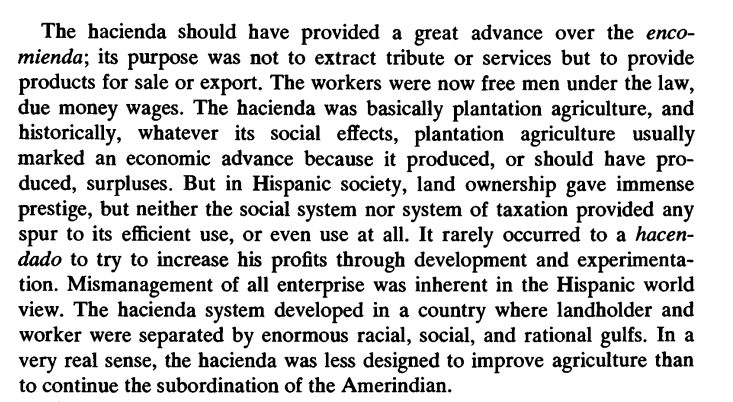


Despite its incredible land endowment, New Spain was not a major food exporter and even had regular famines, due to bureaucratic regulations preventing the production of many crops. Even a meat market failed to develop due to occupational licensing restrictions on butchers.

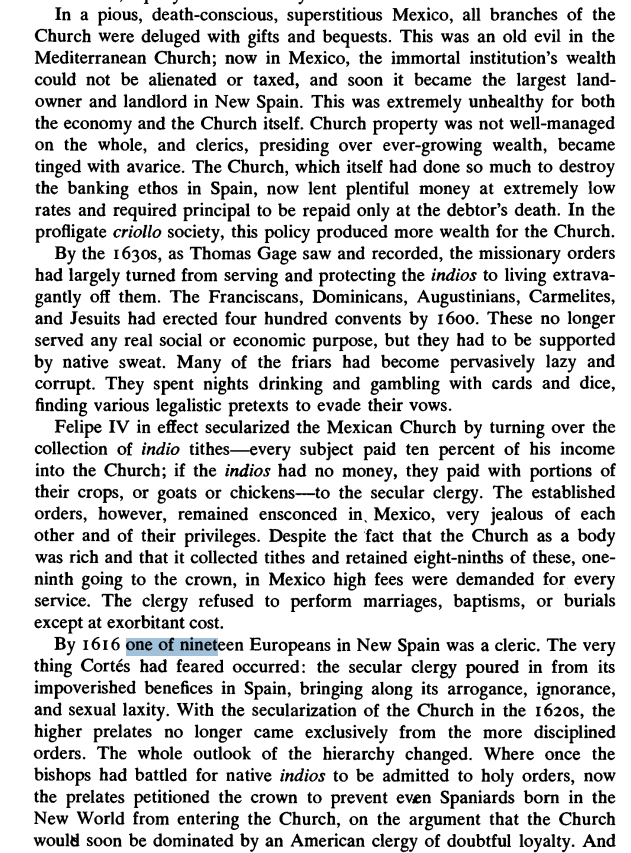
The Catholic Church, privileged with wealth that could not be alienated or taxes, quickly became the biggest landowner in New Spain, and became comically corrupt at the highest levels.
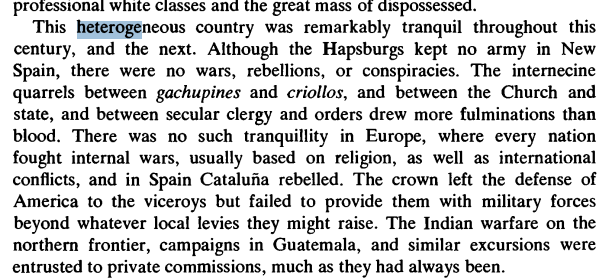
Still, for all that New Spain was stagnant, it was also very tranquil in the 16th and 17th centuries, with no army, no wars, no major rebellions or conspiracies. Not too terrible compared to the contemporary European wars of religion.
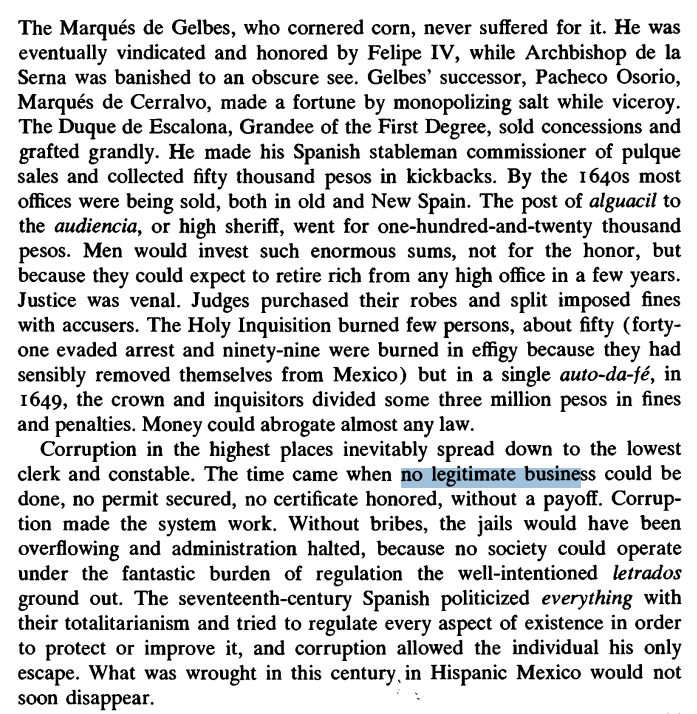
Officers in New Spain were ludicriously corrupt. This was actually a good thing, because New Spain was so overregulated that productive activity would have been impossible without the ability to purchase licenses, permits, and certificates.
Successful merchants, miners, and bureaucrats quickly bought land, became stagnant hacenderos producing little for export, and exited their productive or useful professions.

Notably these landowners did not have a public role; Mexico was governed by peninsulare bureaucrats. Lawyers, jurists, minor officers, and petty magistrates enjoyed more power in a highly regulated society than an egalitarian or aristocratic one.
• • •
Missing some Tweet in this thread? You can try to
force a refresh