
Timothy Snyder: The memory war is far more comfortable for Polish politicians than the real one.
They get to say: we're right, we're innocent. I know the history. But you start with what's happening now, not memory. Skip that, and you start from a falsehood.
1/
They get to say: we're right, we're innocent. I know the history. But you start with what's happening now, not memory. Skip that, and you start from a falsehood.
1/
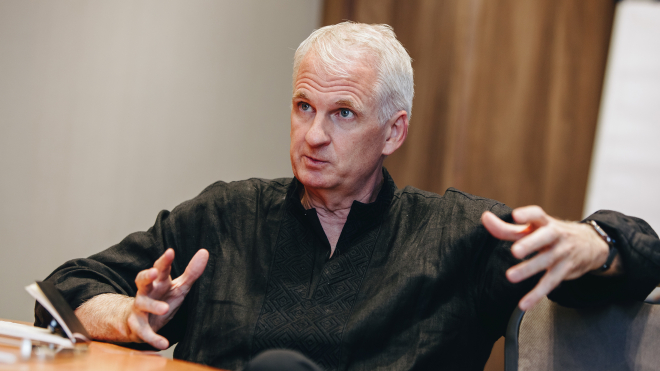
Snyder: Treat Ukrainians as partners and allies — even when they make mistakes.
Remember that every day they lose people in this war, partly so that Poland can keep living normally.
2/
Remember that every day they lose people in this war, partly so that Poland can keep living normally.
2/
Snyder: Judging Zelenskyy's decision to name a unit after UPA without the context of nearly four and a half years of war would be a mistake.
This is the longest war of this century, longer than World War I — it stirs emotions the West struggles to understand.
3/
This is the longest war of this century, longer than World War I — it stirs emotions the West struggles to understand.
3/
Snyder: Ukrainians now think of UPA only through its third phase — fighting the Red Army from 1945.
Poles remember the first phase: 1943, when UPA murdered tens of thousands of Poles in Volhynia. That's the mistake — forgetting the rest of the story.
4/
Poles remember the first phase: 1943, when UPA murdered tens of thousands of Poles in Volhynia. That's the mistake — forgetting the rest of the story.
4/
Snyder: Saying Ukrainians now owe Poles something is terrible. They fight and lose people every day, partly so Poland can keep living normally.
Poles killed thousands of Ukrainians too — pacified villages, closed churches, stayed silent during the Great Famine.
5/
Poles killed thousands of Ukrainians too — pacified villages, closed churches, stayed silent during the Great Famine.
5/
Snyder: On the battlefield Russia is losing. In Warsaw and Kyiv, Russia wins the memory war.
Ukraine thinks UPA references provoke Moscow. The opposite, Moscow celebrates it. Poland forgets Ukraine should always be its ally. Both sides do exactly what Moscow wants.6/
Ukraine thinks UPA references provoke Moscow. The opposite, Moscow celebrates it. Poland forgets Ukraine should always be its ally. Both sides do exactly what Moscow wants.6/
Snyder: In Ukraine, anti-Polish sentiment barely exists. In Poland, anti-Ukrainian emotions keep growing, waiting for an excuse to surface.
Poland trusts the US and NATO too much. Your situation depends more on Ukrainians than Americans and Americans aren't fighting this war.7/
Poland trusts the US and NATO too much. Your situation depends more on Ukrainians than Americans and Americans aren't fighting this war.7/
Snyder: Poland trusts the US too much. When Ukrainians err, Poles attack publicly. When Americans err constantly, nobody reacts that way.
Poland treats Ukrainians as younger brothers, Americans as the older brother who's right even when he isn't.
8/
Poland treats Ukrainians as younger brothers, Americans as the older brother who's right even when he isn't.
8/
Snyder: Ukrainians make mistakes — so do Americans, so do Germans.
If Poland has real geopolitics, its leaders stay consistent: treat Ukrainians as partners and allies, always, even when they err. That's the dimension missing from Poland's reaction.
9/
If Poland has real geopolitics, its leaders stay consistent: treat Ukrainians as partners and allies, always, even when they err. That's the dimension missing from Poland's reaction.
9/
Snyder: Dmowski's school assumes Russian imperialism isn't the primary problem. That's simply a mistake today.
Russian imperialism is the primary problem — Poland has nothing comparable. Acting on emotion alone can become Russia's game. Raison d'état can't be forgotten.
10/
Russian imperialism is the primary problem — Poland has nothing comparable. Acting on emotion alone can become Russia's game. Raison d'état can't be forgotten.
10/
Snyder: For decades Poles told the West it didn't understand Russia. Now Poles commit that same sin.
If Ukraine loses, Poland couldn't fight a Russia that controls all Ukrainian resources. Not supporting Ukraine means asking for the end of Polish sovereignty.
11X
If Ukraine loses, Poland couldn't fight a Russia that controls all Ukrainian resources. Not supporting Ukraine means asking for the end of Polish sovereignty.
11X
Source: newsweek.pl/polska/polityk…
Thank you for reading this post!
Please also consider donating to support Ukrainian students who study during the war if this cause resonates with you.
foundation.kse.ua/en/donate-to-e…
Please also consider donating to support Ukrainian students who study during the war if this cause resonates with you.
foundation.kse.ua/en/donate-to-e…

• • •
Missing some Tweet in this thread? You can try to
force a refresh






