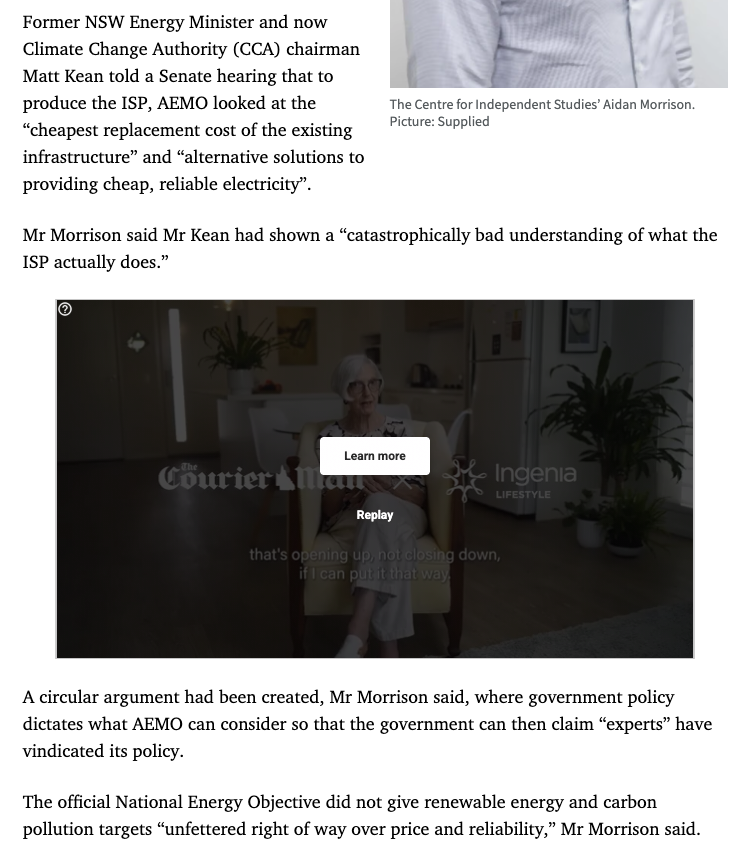
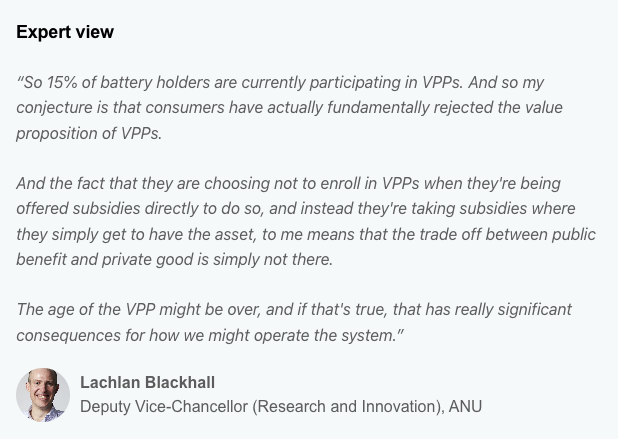
Ok, following @PaulineHansonOz's speech yesterday, I've done a deep-dive to check her intuition that Snowy 2.0 is a useless money pit.
She's right.
It's not 70% done. The hard parts are barely started.
And the deception and obfuscation is only increasing.
Mega 🧵.
1/
She's right.
It's not 70% done. The hard parts are barely started.
And the deception and obfuscation is only increasing.
Mega 🧵.
1/

The latest information we have is from the recent Senate Estimates appearance of the Snowy Hydro CEO, Dennis Barnes.
His section is here. Worth a watch, but I'll highlight the find in transcripts.
He's a decent bloke, but hiding the bad news.
2/
youtube.com/live/fixgC1h_v…
His section is here. Worth a watch, but I'll highlight the find in transcripts.
He's a decent bloke, but hiding the bad news.
2/
youtube.com/live/fixgC1h_v…
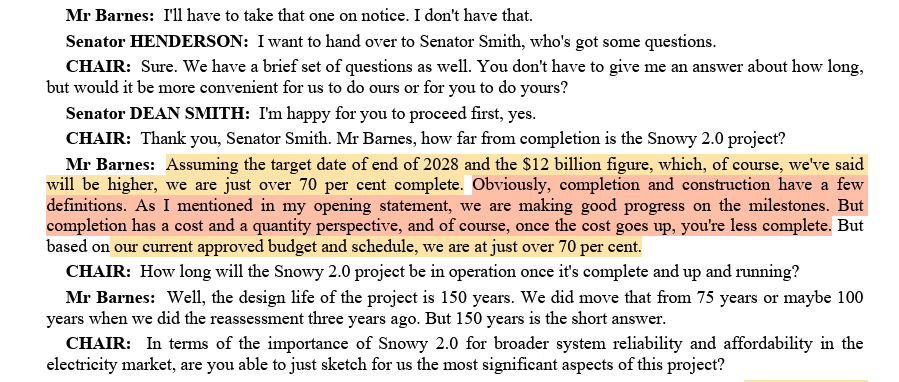
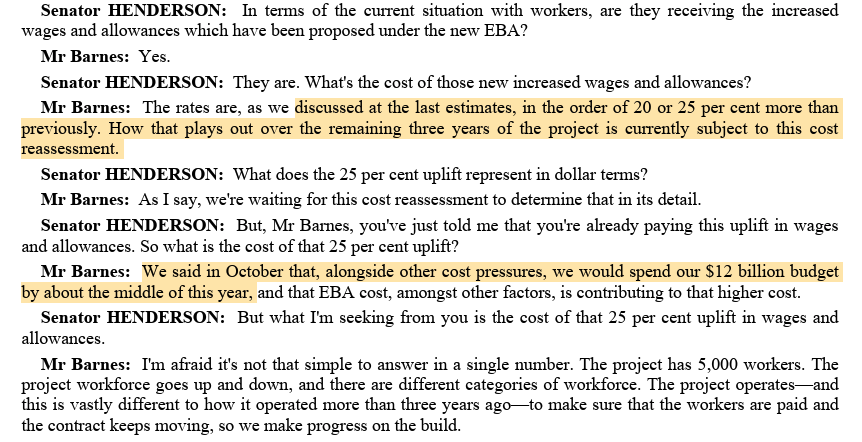
Here's the crucial admission about the 70% complete claim.
He's admitting we're 70% of the way through a budget, and schedule, that now can't be met.
Look at the squirming about how this doesn't correspond to any technical milestones.
It's based on approved budget and timeline, and he's admitted the budget ($12billion) can't be met, and will be exceeded. 2/
He's admitting we're 70% of the way through a budget, and schedule, that now can't be met.
Look at the squirming about how this doesn't correspond to any technical milestones.
It's based on approved budget and timeline, and he's admitted the budget ($12billion) can't be met, and will be exceeded. 2/
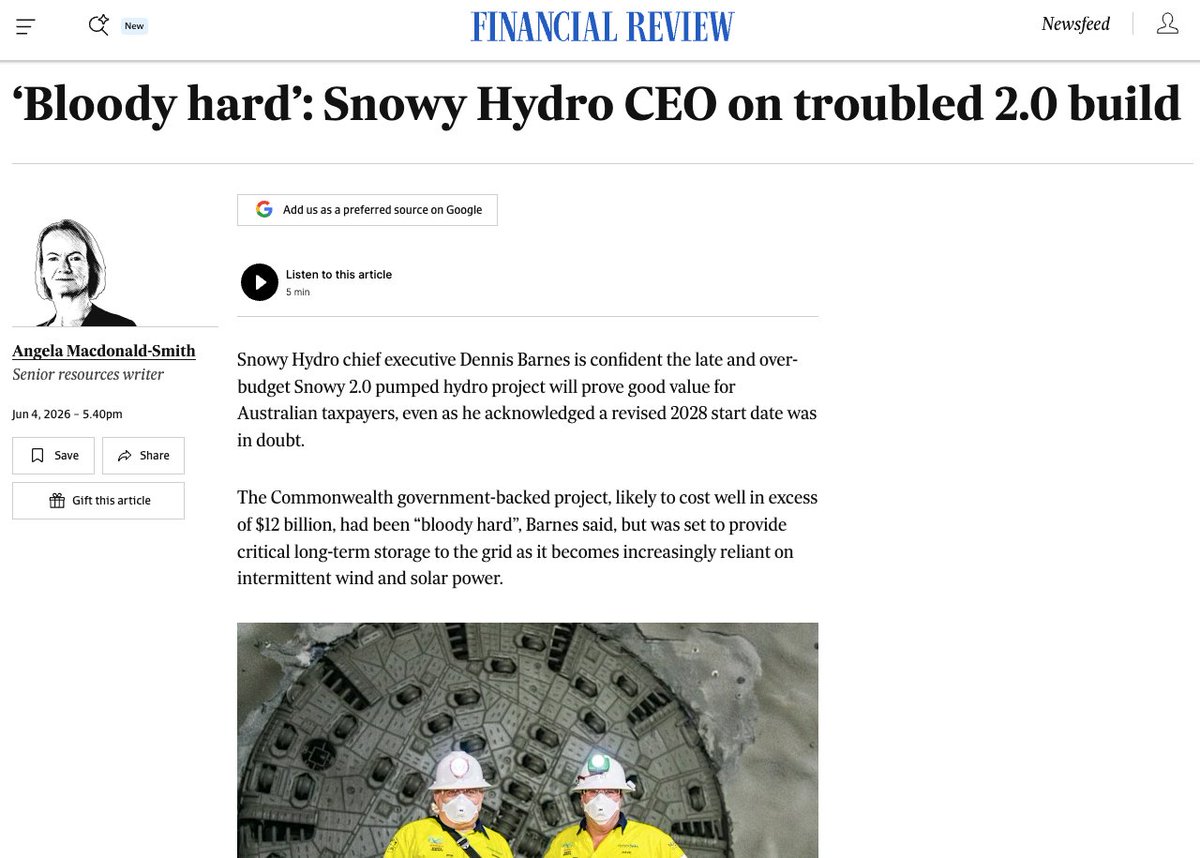
Since this senate hearing, Barnes has admitted to the AFR that the schedule is in doubt too.
So we know the budget won't be met, nor the schedule. But on the assumption they are, we're 70% of the way through.
That's obfuscation. 3/
afr.com/companies/ener…
So we know the budget won't be met, nor the schedule. But on the assumption they are, we're 70% of the way through.
That's obfuscation. 3/
afr.com/companies/ener…
It's June, which means that it's the middle of the year.
Which means that the project has spent about $12 billion, as of now.
If 70% of the actual construction, engineering etc was done, (it's not, as I'll explain) then the price will be $17 billion. 4/
Which means that the project has spent about $12 billion, as of now.
If 70% of the actual construction, engineering etc was done, (it's not, as I'll explain) then the price will be $17 billion. 4/
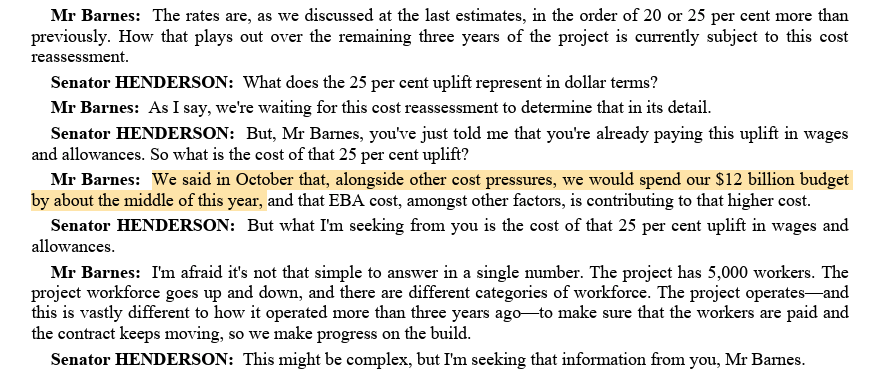
Now the $12 billion budget, (or the $17 billion from the 70% extrapolation) doesn't include any cost of interest, or transmission.
It's just the overnight construction cost of the pumped hydro system itself. 5/
It's just the overnight construction cost of the pumped hydro system itself. 5/
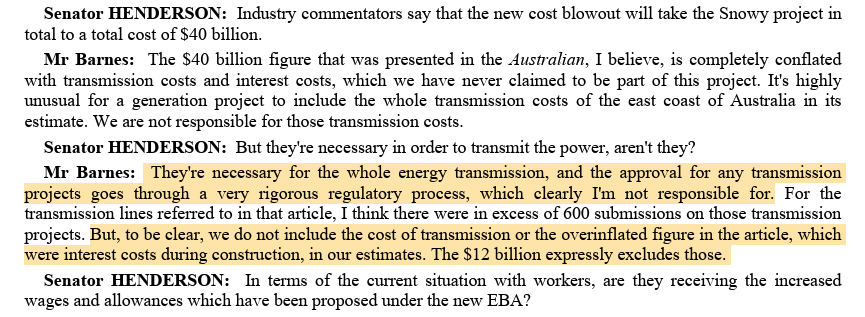
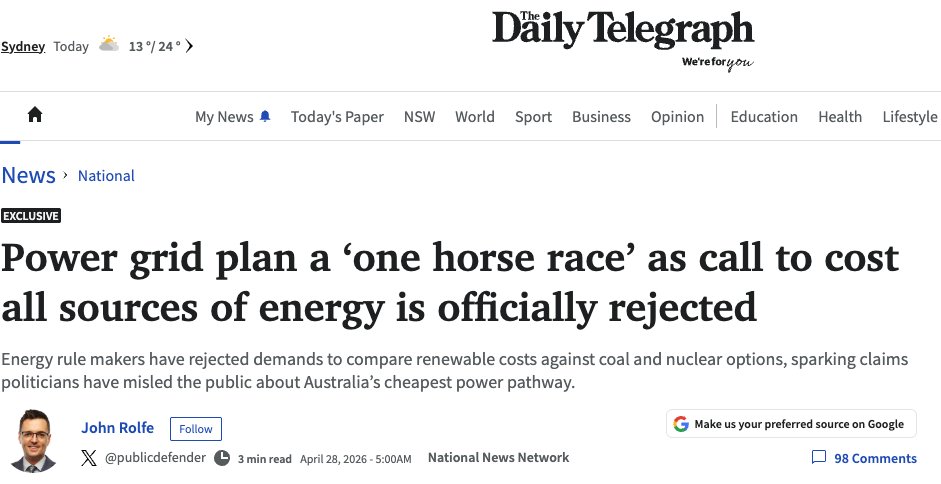
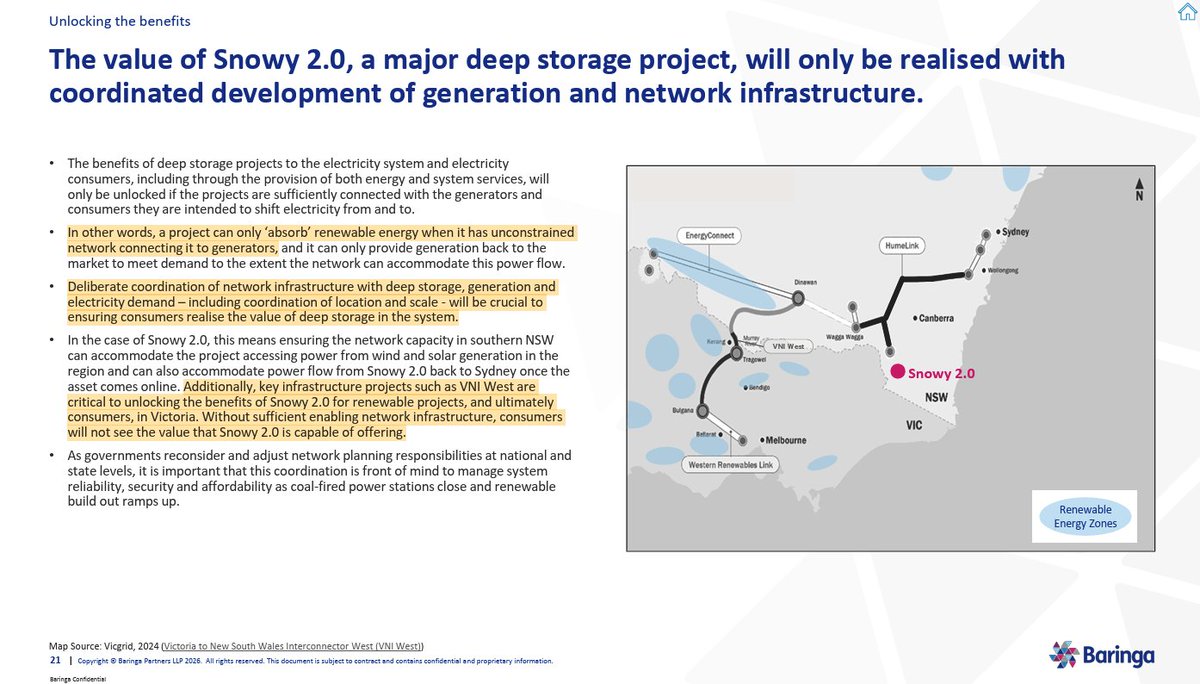
This recently released think-piece arguing the case to support Snowy 2.0 has made it crystal clear that it relies upon this massive transmission build to actually work at all.
It is the longest-running crime against common-sense that this has been excluded from the business case for Snowy 2.0. 6/
It is the longest-running crime against common-sense that this has been excluded from the business case for Snowy 2.0. 6/
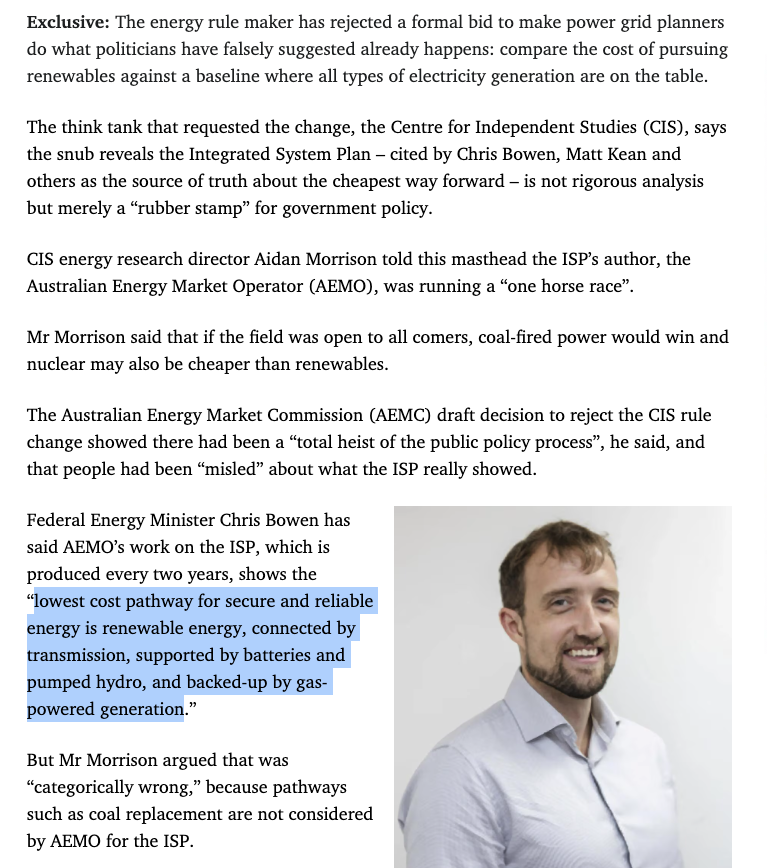
This is a pet peeve of mine, the Integrated System Plan (which justifies this massive transmission build-out) has always treated Snowy 2.0 as 'committed' hence a sunk cost.
It's horrendous that Barnes claims that it meets some 'need' that the ISP states about storage. The 350 hours of storage that the ISP has modelled for Snowy 2.0 is forced into their model as an exogenous input. Not an output that demonstrates this is the cheapest way to meet that need.
They do precisely nothing that suggests that full amount is required, or could be reduced with more short-term storage, let alone sticking with coal for longer. 7/
It's horrendous that Barnes claims that it meets some 'need' that the ISP states about storage. The 350 hours of storage that the ISP has modelled for Snowy 2.0 is forced into their model as an exogenous input. Not an output that demonstrates this is the cheapest way to meet that need.
They do precisely nothing that suggests that full amount is required, or could be reduced with more short-term storage, let alone sticking with coal for longer. 7/

In fact, the recently released Baringa modelling tests what would happen in 2032 with and without Snowy 2.0 in the system for a week with very little solar and wind.
And a hypothetical 2041 week without any coal left in the NSW and VIC markets. What that show?? 8/
And a hypothetical 2041 week without any coal left in the NSW and VIC markets. What that show?? 8/

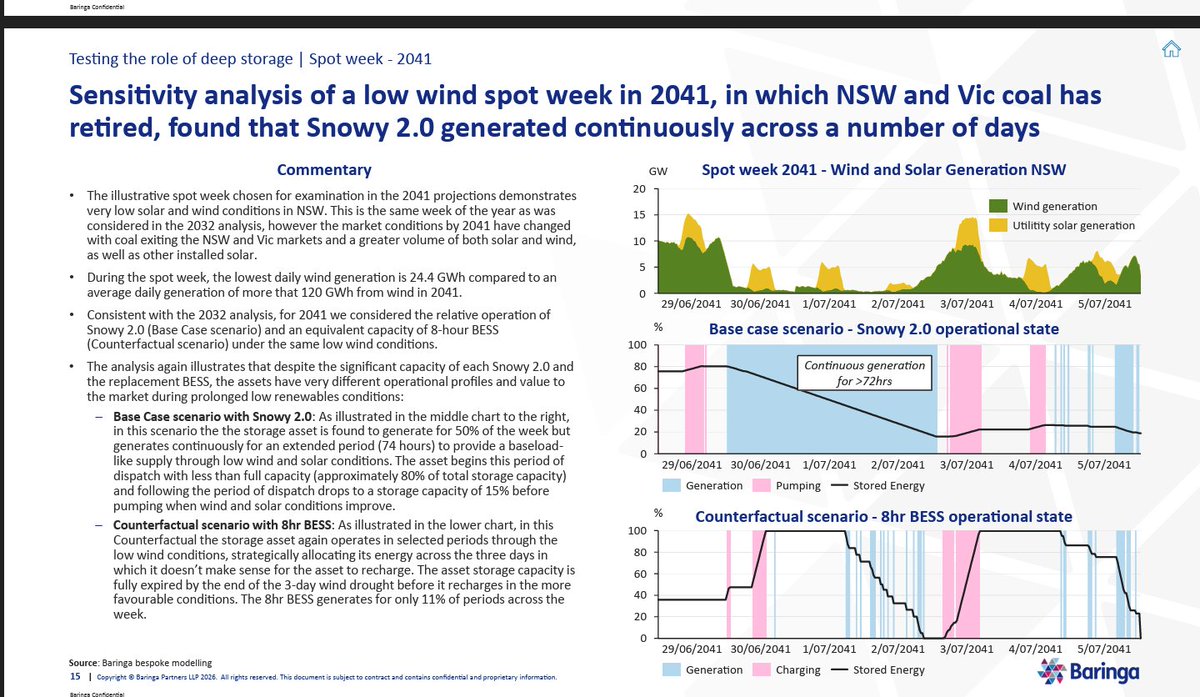
This showed that with some coal in the system (2031), Snowy Hydro does ALMOST NOTHING to lower spot prices.
And without coal (2041) we're screwed anyway! Spot prices averaging $7k over a week! WITH Snowy 2.)
(70X normal week. Price armageddon)
Without Snowy it's twice as bad. Double armageddon.
But this is really just is proof that we can't go without coal. Neither 2GW of 8hour batteries, nor Snowy 2.0 change that fact.
This is perhaps the most damning analysis for the business case for Snowy 2.0 I've seen. We have to keep coal in the system is all that it proves. 9/
And without coal (2041) we're screwed anyway! Spot prices averaging $7k over a week! WITH Snowy 2.)
(70X normal week. Price armageddon)
Without Snowy it's twice as bad. Double armageddon.
But this is really just is proof that we can't go without coal. Neither 2GW of 8hour batteries, nor Snowy 2.0 change that fact.
This is perhaps the most damning analysis for the business case for Snowy 2.0 I've seen. We have to keep coal in the system is all that it proves. 9/

Barnes has clearly already seen this report when he appeared at Senate Estimates.
He's got such a crap job. Carefully choosing words like this to avoid the obvious truth that this project makes no sense.
"Once all of the coal plants have closed"
"very demonstrable effect"
10/
He's got such a crap job. Carefully choosing words like this to avoid the obvious truth that this project makes no sense.
"Once all of the coal plants have closed"
"very demonstrable effect"
10/

Anyway, things get worse from there... There's no estimate of the new cost, in part because of a new Enterprise Bargain Agreement (EBA).
The new rates took hold from 2023 😯 and Barnes only asked for the contractor to reassess what the project will cost from 2025.
They provided a "no objection" to the contractor, so essentially a nod to accept whatever the unions asked for so long as it was deemed 'at market'. 11/
The new rates took hold from 2023 😯 and Barnes only asked for the contractor to reassess what the project will cost from 2025.
They provided a "no objection" to the contractor, so essentially a nod to accept whatever the unions asked for so long as it was deemed 'at market'. 11/

Blunt refusal all the time to be drawn on the cost implications. Doesn't comment or react to a $1 billion estimate (I think that's low).
Again, 'at market' is the only check or balance on this.
That matters. 12/
Again, 'at market' is the only check or balance on this.
That matters. 12/

He does admit that it's about a 25% increase in wages.
This is a pretty significant step up, from 2023, maybe late 2023. And we've blown through $12 billion already. 13/
This is a pretty significant step up, from 2023, maybe late 2023. And we've blown through $12 billion already. 13/
The really bad news for Australia is that the "market" for major tunnelling projects is set by one project.
The big build for the rail loop in Victoria, which has basically seen $15 billion go into union corruption. 14/
The big build for the rail loop in Victoria, which has basically seen $15 billion go into union corruption. 14/
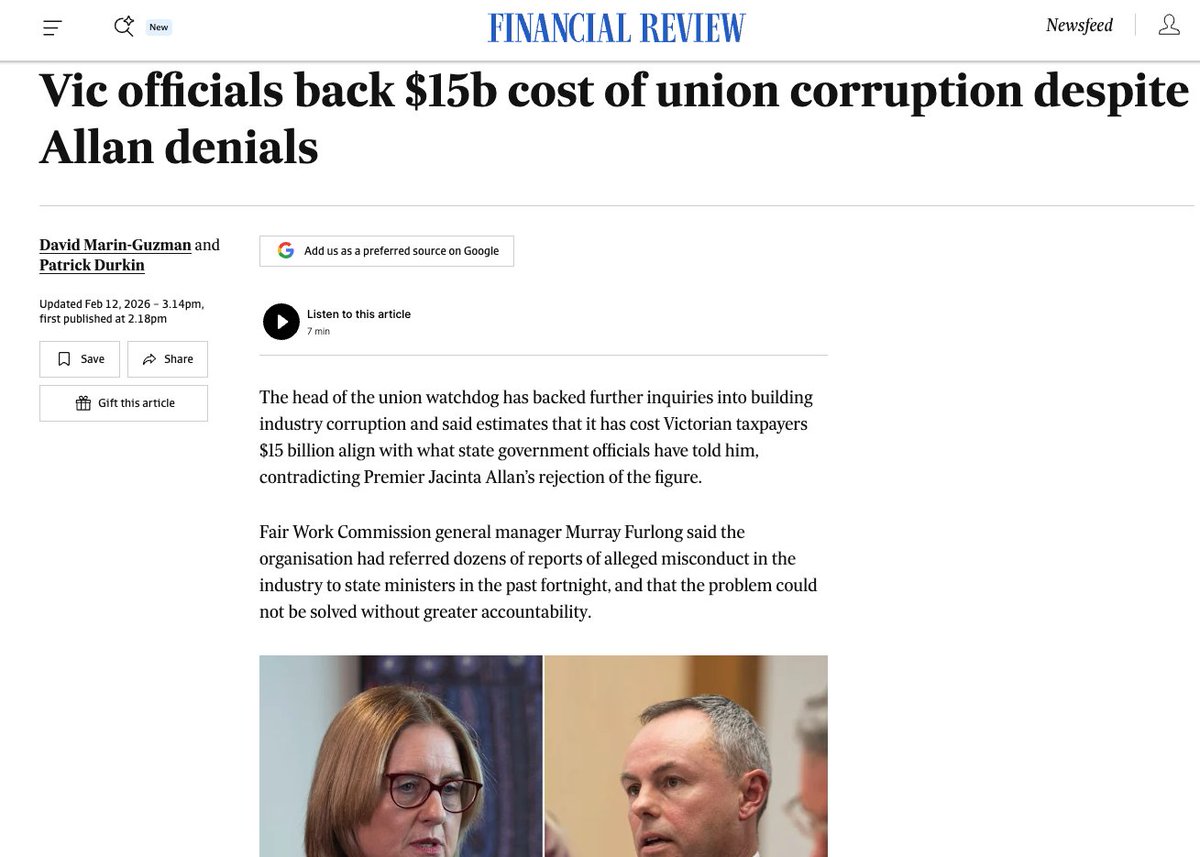
So if a check that the wage increase is "at market" is the only defence for what amounts to a blank-check, that means that the (allegedly correupt) unions are firmly in control of Snowy 2.0 and future costs.
I think this means we should cancel even if at 90% complete.
And we know for sure that we can't trust the 70% figure, as I'll go on to explain. 15/
I think this means we should cancel even if at 90% complete.
And we know for sure that we can't trust the 70% figure, as I'll go on to explain. 15/
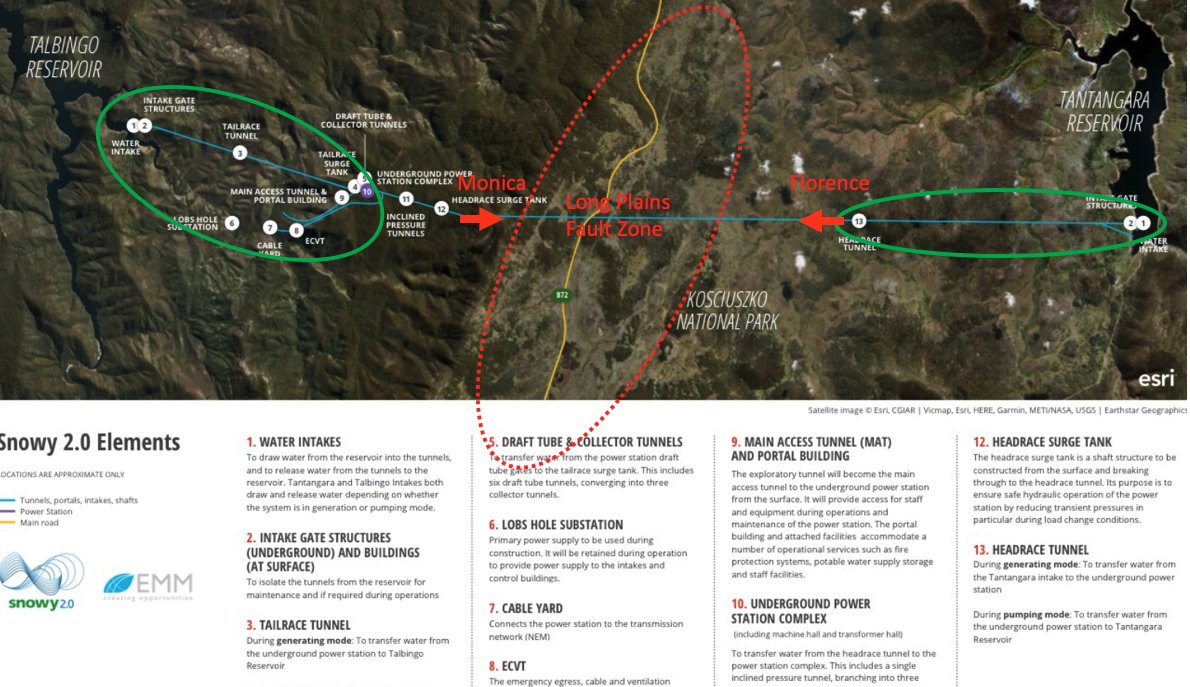
Here's the projects, and with green basically highlighting the 'done' bits. First 7km of the headrace. All of the tailrace, entry tunnel, ECVT tunnel, power station cavern is done I think too. 16/
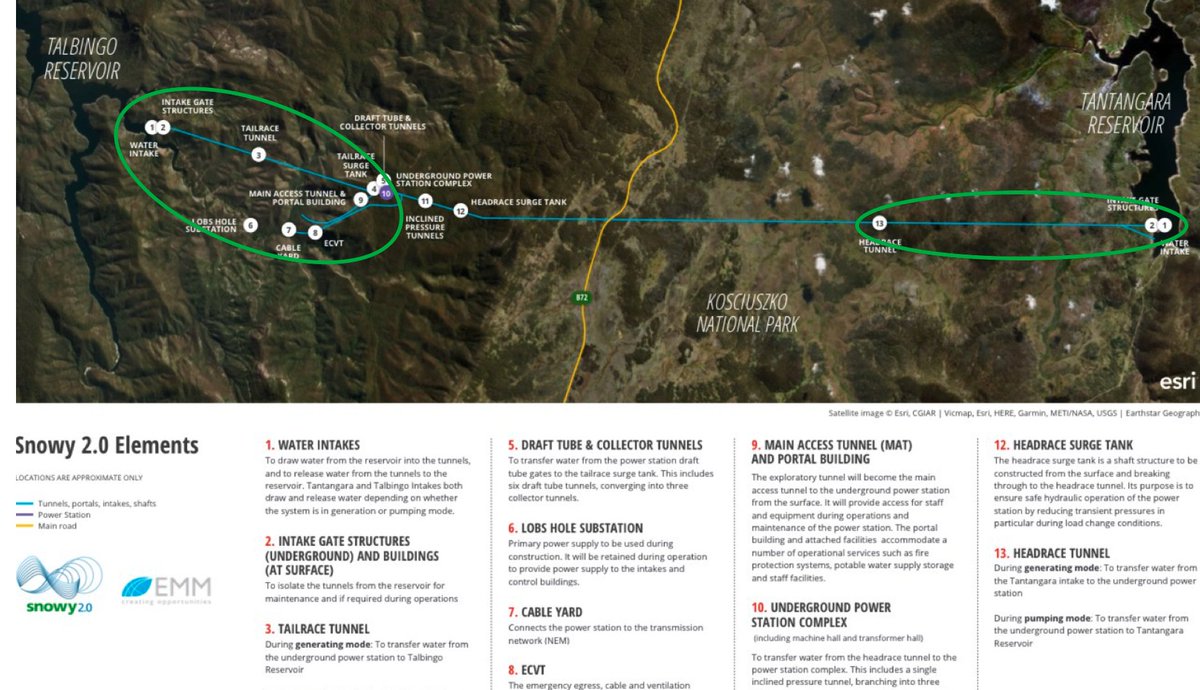
Here's my google maps view, just to check where 7km of the tailrace roughly lies. But there's still a good ~7km of the headrace to go.
And this is bad. Because Florence tunnel boring machine has had so much trouble already in the headrace. 17/
And this is bad. Because Florence tunnel boring machine has had so much trouble already in the headrace. 17/

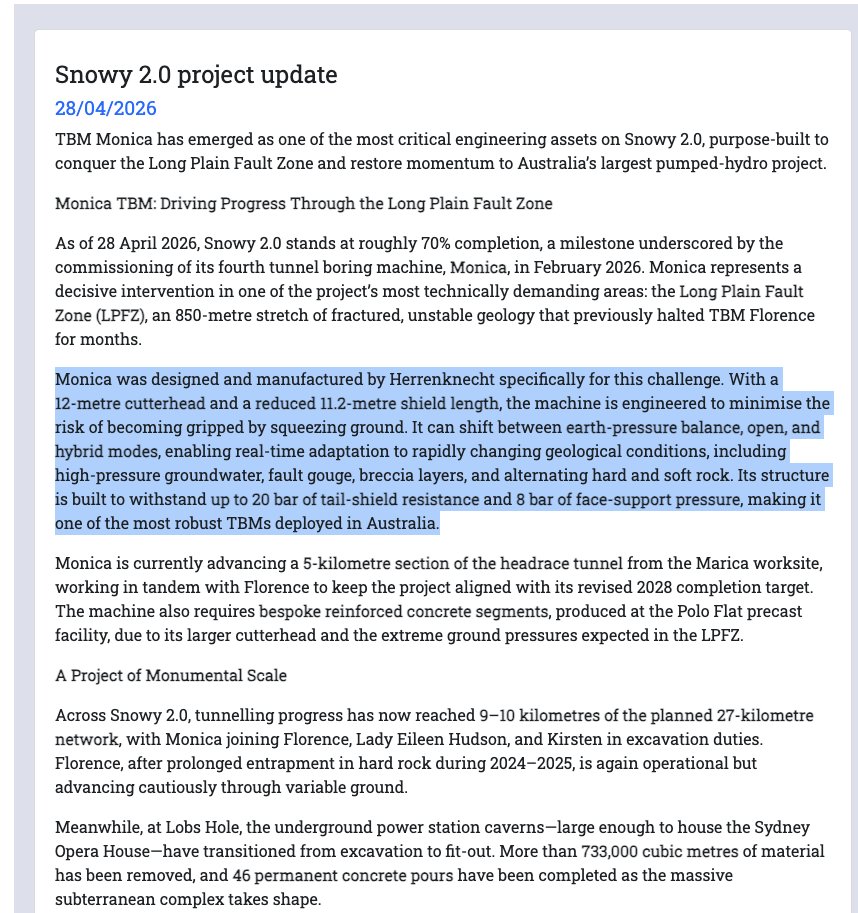
So why is the news really bad? Long Plain Fault Zone.
The challenging geology, that "previously halted TBM florence for months" is mostly still to come.
In fact, a brand new specialised TBM, ordered specifically to takcle this, has only just been commissioned in February. 18/
tunnelbuilder.com/News/Snowy-20-…
The challenging geology, that "previously halted TBM florence for months" is mostly still to come.
In fact, a brand new specialised TBM, ordered specifically to takcle this, has only just been commissioned in February. 18/
tunnelbuilder.com/News/Snowy-20-…
And so here's the problem. Where exactly is this Long Plain Fault Zone?
I'm highlighting 3 Mile Dam, which appears here on google maps, and an academic paper that discusses this fault zone.
Basically, Florence hadn't even entered the worst of it when she got stuck. 18/
aees.org.au/wp-content/upl…
I'm highlighting 3 Mile Dam, which appears here on google maps, and an academic paper that discusses this fault zone.
Basically, Florence hadn't even entered the worst of it when she got stuck. 18/
aees.org.au/wp-content/upl…


In other words, the hard part is just getting started.
Becuase the geology has already caused terrible trouble for Forence, which has now completed 7km, and Monica is joining at the other end, which seems like where the fault actually is. 19/
Becuase the geology has already caused terrible trouble for Forence, which has now completed 7km, and Monica is joining at the other end, which seems like where the fault actually is. 19/
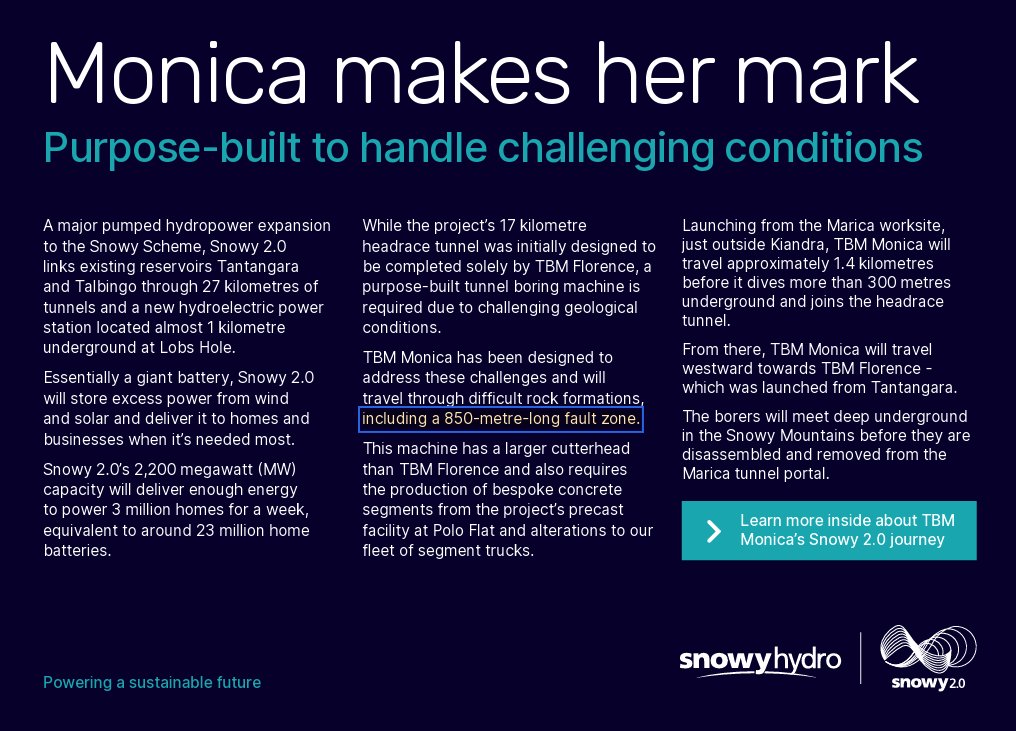
Apparently, it's only 850m of a fault zone.
I dunno.
If Florence has already hit it, then it must be a zone of several km, or Forence is going nowhere while Monica goes the full 5 or 6km.
Btw, very custom, bigger TMB. And has to travel 1.4km, to dive 300m, to start. 20/
I dunno.
If Florence has already hit it, then it must be a zone of several km, or Forence is going nowhere while Monica goes the full 5 or 6km.
Btw, very custom, bigger TMB. And has to travel 1.4km, to dive 300m, to start. 20/
All of which is to say, if things have been hard so far, we're just getting started.
And oh look, the Australian National Audit Office just released a report on Snowy 2.0 today!
21/
And oh look, the Australian National Audit Office just released a report on Snowy 2.0 today!
21/
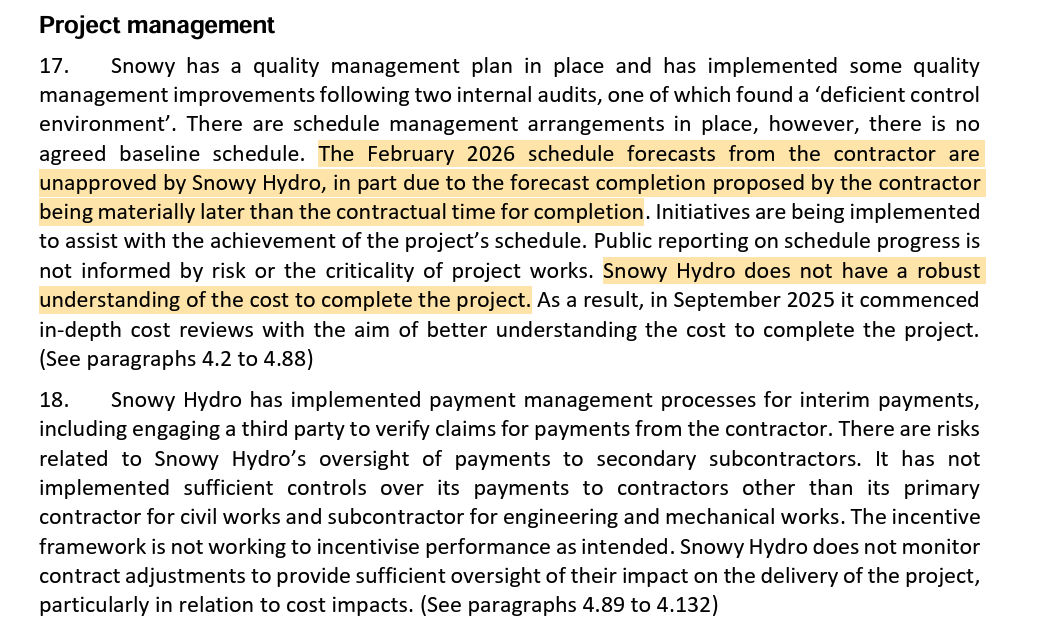
Read these bullet points.
Was I right? Is Pauline right?
They have no baseline, expected gains aren't being made, don't have a cost forecast, incentives aren't working, no monitoring on value...
22/
Was I right? Is Pauline right?
They have no baseline, expected gains aren't being made, don't have a cost forecast, incentives aren't working, no monitoring on value...
22/

Oh look, the contractor did advice a new schedule in February! This hasn't been accepted or released by the government, because it's "materially later than the contractual time for completion".
It's worse than I thought. Barnes knows how bad the schedule has slipped. 23/23
It's worse than I thought. Barnes knows how bad the schedule has slipped. 23/23
• • •
Missing some Tweet in this thread? You can try to
force a refresh