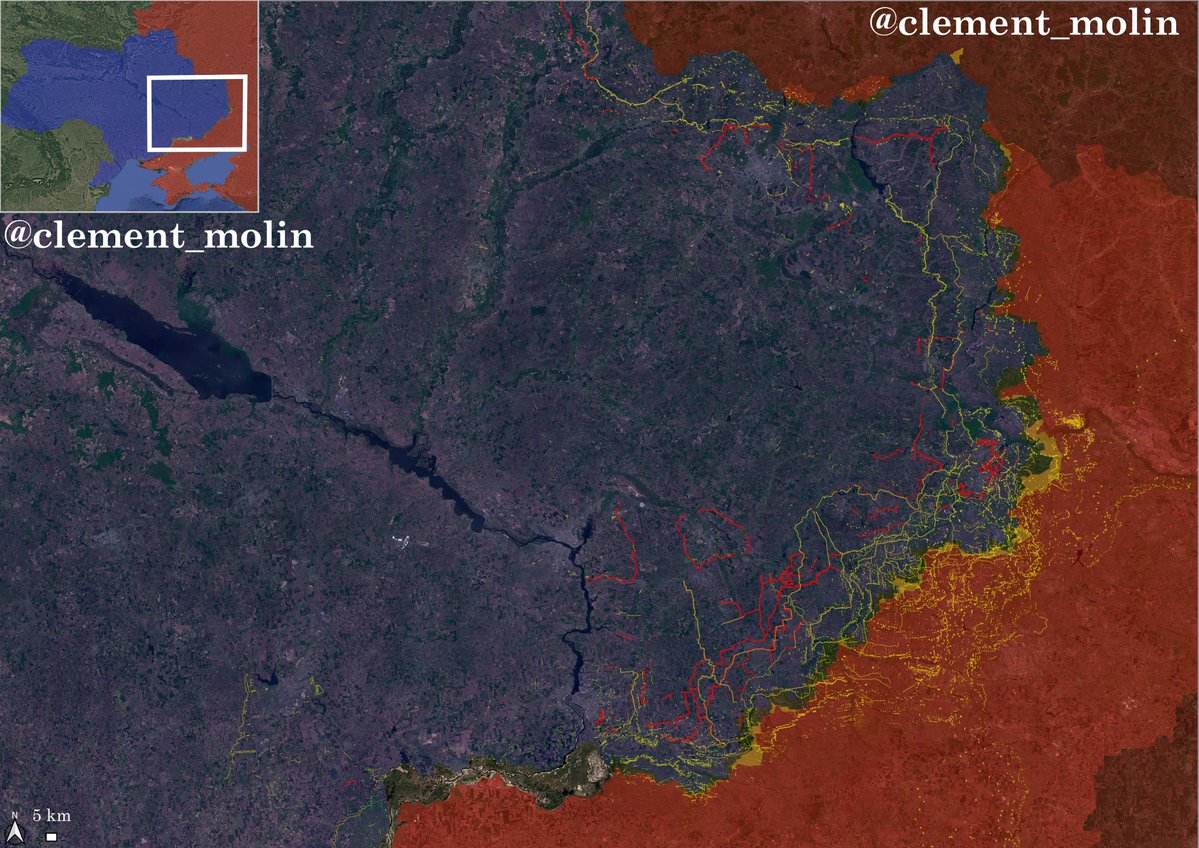
Ukraine 🇺🇦 has now targeted around 500 russian 🇷🇺 trucks and vehicles during the last 48 days.
Mid-range strikes continue to expand across occupied territories, on roads, bridges and rear base. This continues to slow down russian offensive.
🧵THREAD🧵1/13 ⬇️
Mid-range strikes continue to expand across occupied territories, on roads, bridges and rear base. This continues to slow down russian offensive.
🧵THREAD🧵1/13 ⬇️
From tomorrow, I will be off for more than 1 week, which means there won't be any new map/airstrike/fortification/mid-range strikes update, apart from some small tweets.
I will however continue to follow the overall trends.
I will however continue to follow the overall trends.
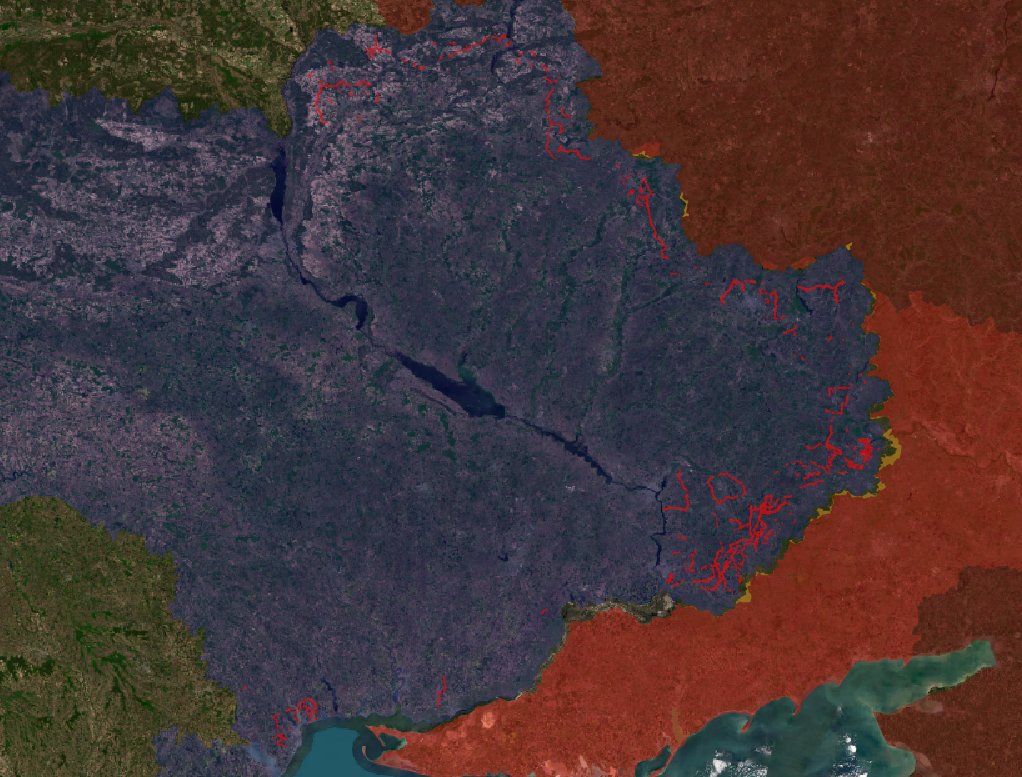
In total, I have 270 geolocated strikes on trucks and vehicles since january, most of those are from May to June.
The key Rostov-Crimea road remains the priority target, but roads in Donetsk, Luhansk and Kherson oblast have also been largely targeted.
The key Rostov-Crimea road remains the priority target, but roads in Donetsk, Luhansk and Kherson oblast have also been largely targeted.

Yesterday, the Ukrainian GUR published this long video featuring a large number of strikes on russian trucks in occupied Ukraine, many of which are in small roads, not on ground videos.
In total, more than 40 fuel trucks have been hit by the Ukrainians these last few months.
In total, more than 40 fuel trucks have been hit by the Ukrainians these last few months.
These strikes are still largely documented on the ground by civilians and soldiers, which are helping the Ukrainians to assess the results of the campaign.
With around 10 trucks/vehicles a day (with a recent scaling), just with visible proof, we can soon reach 100 trucks a week.
With around 10 trucks/vehicles a day (with a recent scaling), just with visible proof, we can soon reach 100 trucks a week.
For russian forces, it can have a devastating effect on frontline logistics, since I'm counting only the mid-range strikes (more than 20km).
Here is a zoom for Donetsk and Luhansk, but the geolocated ones are very few in this area, knowing many videos come from here, it can be 4 times more.
Here is a zoom for Donetsk and Luhansk, but the geolocated ones are very few in this area, knowing many videos come from here, it can be 4 times more.

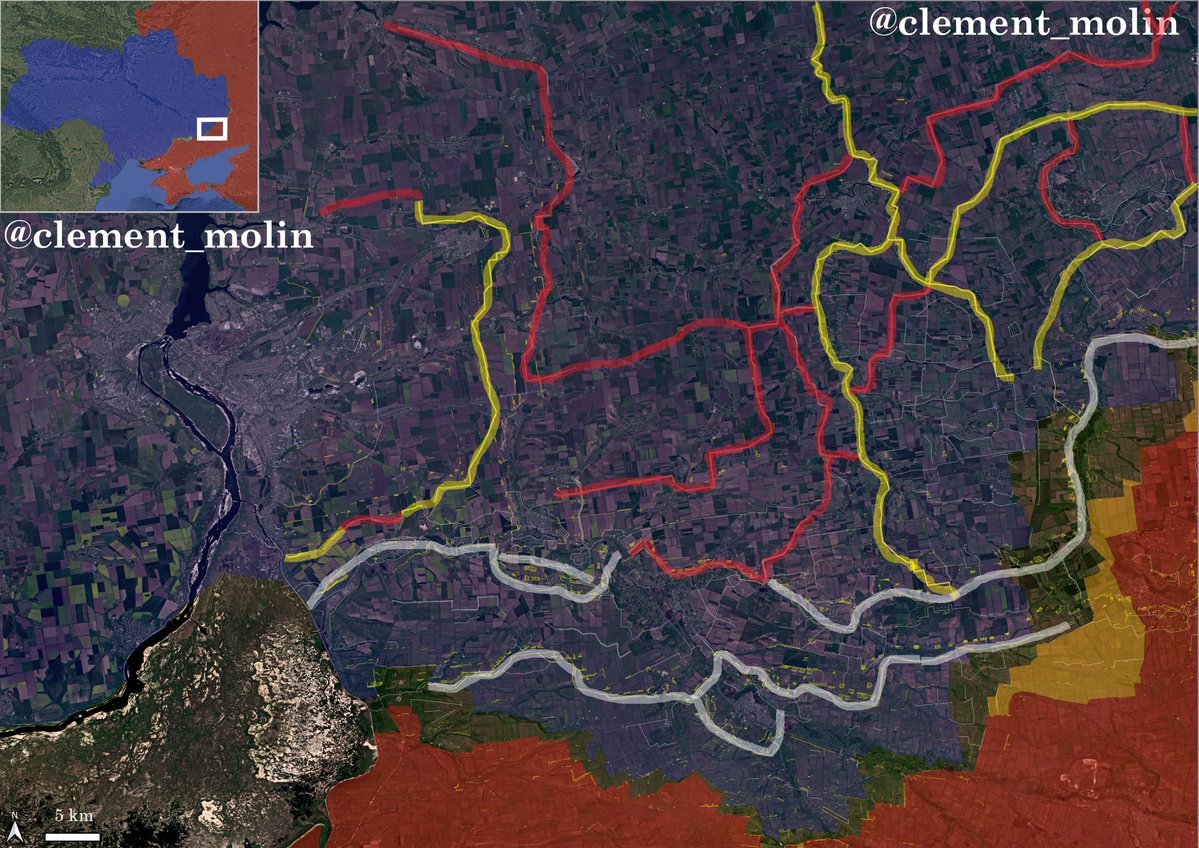
In Crimea, as I already explain, Ukrainian forces are trying to set a blockade of the peninsula, mainly by targeting fuel, bridges and trucks.
This blockade cannot be 100% in effect, but a pontoon bridge is more vulnerable and binding for logistics. (@GarbuzYe in Henichesk)
This blockade cannot be 100% in effect, but a pontoon bridge is more vulnerable and binding for logistics. (@GarbuzYe in Henichesk)

Other strikes targeted bridges on the Mariupol-Taganrog road, which is also further complicating the ground movement.
People trying to minimise the consequences of this campaign shouldn't be taken seriously at all...
People trying to minimise the consequences of this campaign shouldn't be taken seriously at all...
https://x.com/bayraktar_1love/status/2066834334670017011?s=20
I don't need to say anything about the strikes in Moscow, since many accounts are talking about it with hundreds of videos.
But :
🔹The Ukrainians went through more than 100 air-defense systems
🔹Russian air-defense has been widely ineffective
🔹Strikes on the Moscow reffinery are very important and we can see how the strike campaign is sclaing up (more than just 3 drones)
But :
🔹The Ukrainians went through more than 100 air-defense systems
🔹Russian air-defense has been widely ineffective
🔹Strikes on the Moscow reffinery are very important and we can see how the strike campaign is sclaing up (more than just 3 drones)
About the fortifications :
Ukraine has largely slowed down its defensive preparations now that the main lines are complete. Work is ongoing along the borders, east of Zaporizhzhia (2nd and 4th lines), at Dnipro, north of Dobropilla, towards Sloviansk and Kharkiv.
Ukraine has largely slowed down its defensive preparations now that the main lines are complete. Work is ongoing along the borders, east of Zaporizhzhia (2nd and 4th lines), at Dnipro, north of Dobropilla, towards Sloviansk and Kharkiv.
About airstrikes :
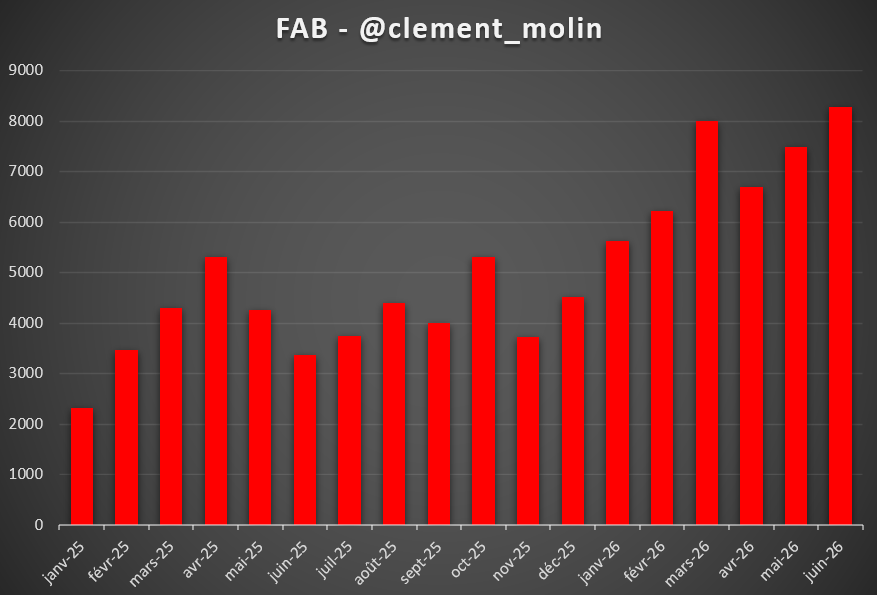
Russian airstrikes continue at a relentless pace.
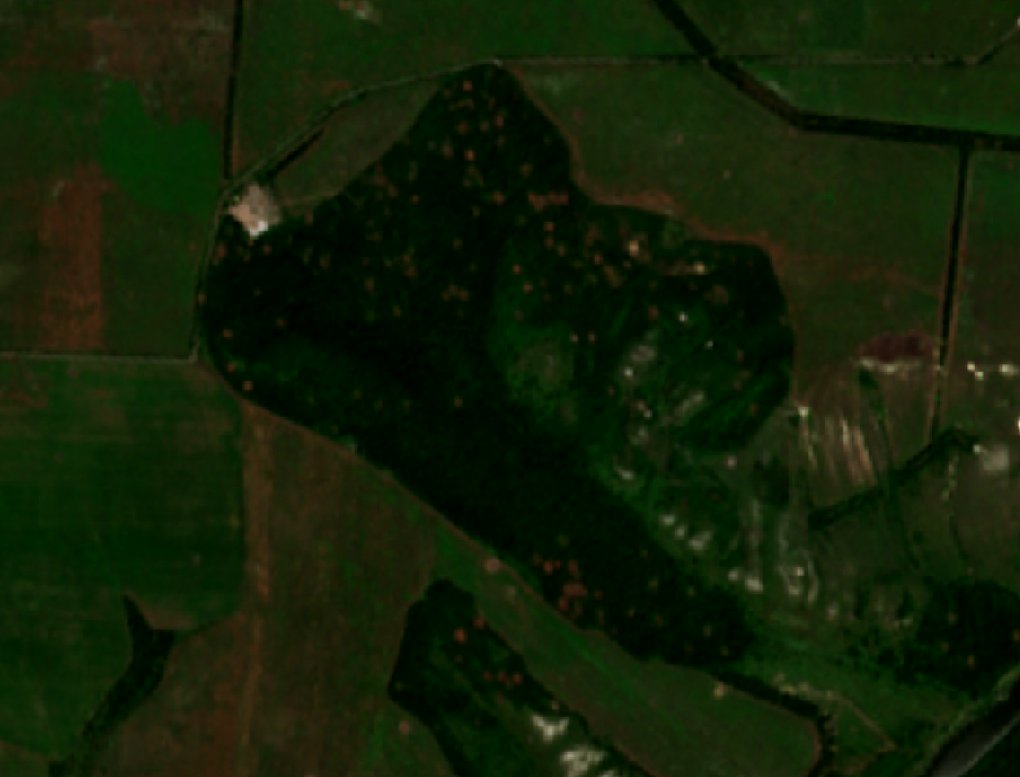
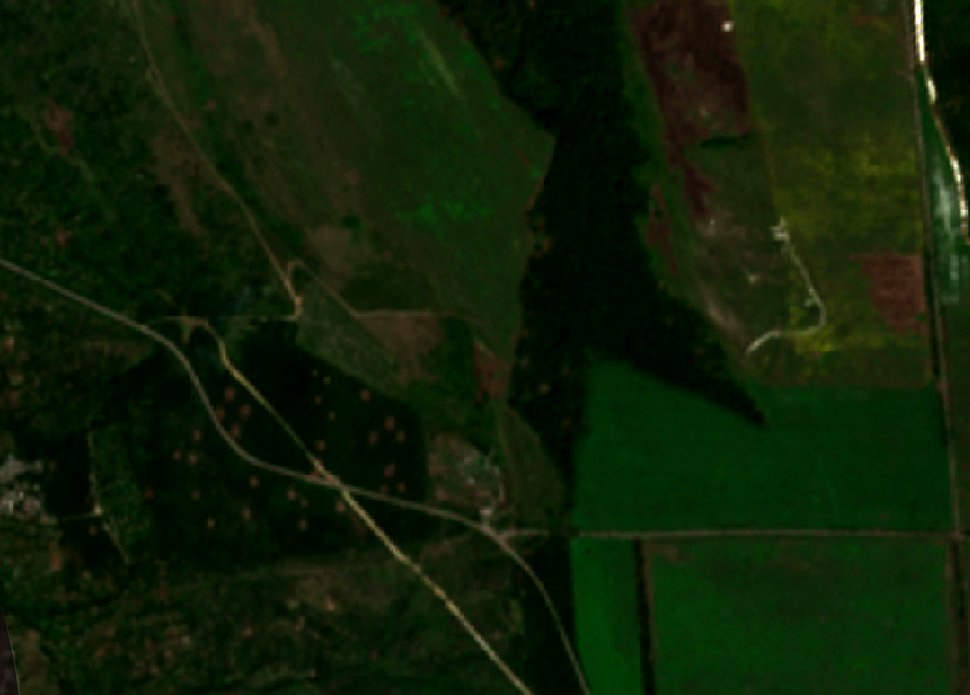
The priorities remain the same: west of Hulialpole (but not Ternuvat), west and north of Pokrovsk, east of Siversk, and the forests west of Lyman (on the other side of the river).
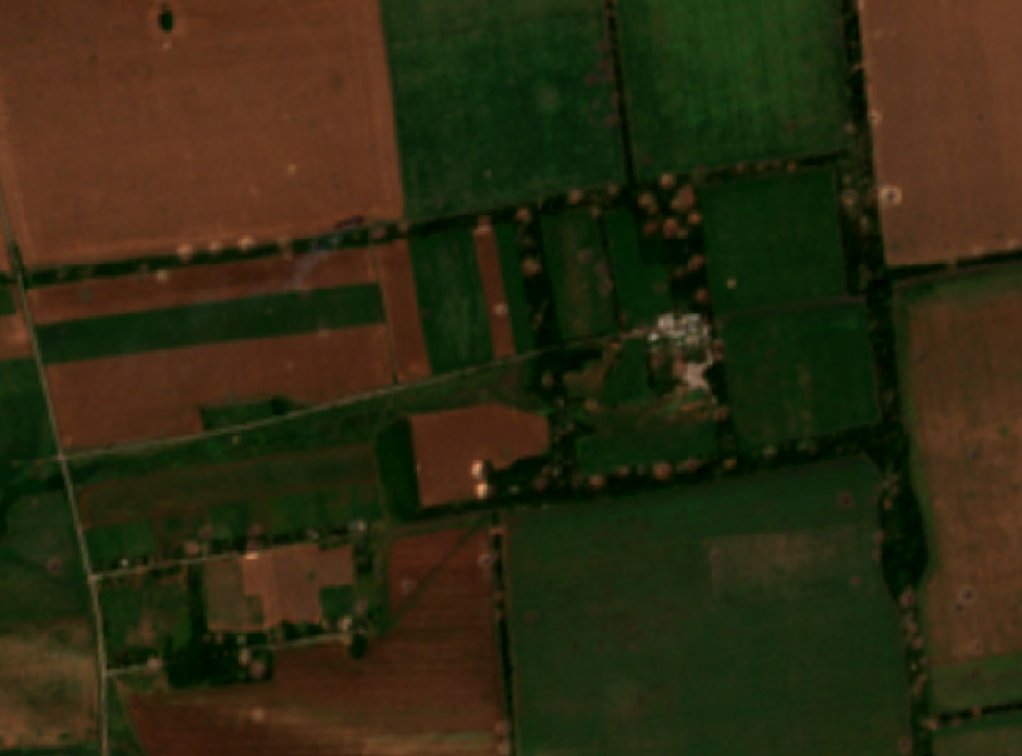
A new and recent focus has been placed on southern Zaporizhzhia, Chaplyne, Druzhkivka, and the few forests west of Kupyansk.
Russian airstrikes continue at a relentless pace.
The priorities remain the same: west of Hulialpole (but not Ternuvat), west and north of Pokrovsk, east of Siversk, and the forests west of Lyman (on the other side of the river).
A new and recent focus has been placed on southern Zaporizhzhia, Chaplyne, Druzhkivka, and the few forests west of Kupyansk.
Regarding the situation on the front:
- Ukrainians are continuing the clearing operation around Stepnohirsk; the Russian advance has slowed west of Hulialpole; an assault on Mala Tokmashka has again been repelled.
- Ukrainians are pursuing a large counter-attack between Ternuvat and Novopavlivka, pushing towards two major villages, Uspenivka and Komar, to prevent their use as logistical hubs.
- Pressure continues west of Pokrovsk and towards Dobropilla, but the advance has slowed considerably thanks to a strong Ukrainian defense.
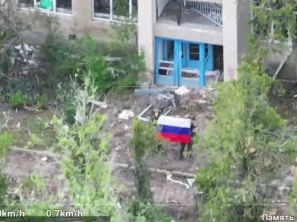
- Russian forces are beginning to take control of several districts in eastern Kostiantynivka, expelling Ukrainian forces from some strongholds. Infiltration and urban fighting continue throughout the city, with flag-raising actions that should not be interpreted as a sign of control. Overall, we are nearing the end of the battle for the city, the fall of which could be staggered until mid-summer. This is Russia's first strategic victory of the year.
-In Siversk, Russian infiltrations continue toward Sloviansk, with the first flags appearing in Rai Oleksandrivka, a strategic height east of the city. Fighting in the sector is currently in favor of Russian forces.
-In Lyman, the Ukrainians are continuing their counter-attack on the northern flank with success (although the maps do not yet show this), while Russian infiltrations continue (as they have for months) toward the city center.
-Nothing to report in Borova.
-In Kupiansk, as in Lyman, Russian infiltrations have been ongoing for months, this time concentrated on the eastern part of the city.
-No significant activity along the border, as the Russian offensive launched in the spring failed to threaten the Ukrainian rear.
- Ukrainians are continuing the clearing operation around Stepnohirsk; the Russian advance has slowed west of Hulialpole; an assault on Mala Tokmashka has again been repelled.
- Ukrainians are pursuing a large counter-attack between Ternuvat and Novopavlivka, pushing towards two major villages, Uspenivka and Komar, to prevent their use as logistical hubs.
- Pressure continues west of Pokrovsk and towards Dobropilla, but the advance has slowed considerably thanks to a strong Ukrainian defense.
- Russian forces are beginning to take control of several districts in eastern Kostiantynivka, expelling Ukrainian forces from some strongholds. Infiltration and urban fighting continue throughout the city, with flag-raising actions that should not be interpreted as a sign of control. Overall, we are nearing the end of the battle for the city, the fall of which could be staggered until mid-summer. This is Russia's first strategic victory of the year.
-In Siversk, Russian infiltrations continue toward Sloviansk, with the first flags appearing in Rai Oleksandrivka, a strategic height east of the city. Fighting in the sector is currently in favor of Russian forces.
-In Lyman, the Ukrainians are continuing their counter-attack on the northern flank with success (although the maps do not yet show this), while Russian infiltrations continue (as they have for months) toward the city center.
-Nothing to report in Borova.
-In Kupiansk, as in Lyman, Russian infiltrations have been ongoing for months, this time concentrated on the eastern part of the city.
-No significant activity along the border, as the Russian offensive launched in the spring failed to threaten the Ukrainian rear.
That's all I gathered this afternoon about the situation in Ukraine.
Thank you for following and supporting my work. I will keep an eye on the situation.
I'm curious how much more trucks I will have to add in 10 days...
Thank you for following and supporting my work. I will keep an eye on the situation.
I'm curious how much more trucks I will have to add in 10 days...
• • •
Missing some Tweet in this thread? You can try to
force a refresh