Automate your trading strategies in Python
How to build your first trading bot:
(a thread)
How to build your first trading bot:
(a thread)
1. What is a trading bot?
A trading bot is a software program that automates buying and selling financial assets like stocks and cryptocurrencies based on pre-defined strategies and rules.
These automated systems can manage portfolios without human intervention, operating 24/7.
A trading bot is a software program that automates buying and selling financial assets like stocks and cryptocurrencies based on pre-defined strategies and rules.
These automated systems can manage portfolios without human intervention, operating 24/7.
2. Let's make a Bitcoin Trading bot
We'll use investing-algorithm-framework in Python
We'll use investing-algorithm-framework in Python

Step 1: Setup
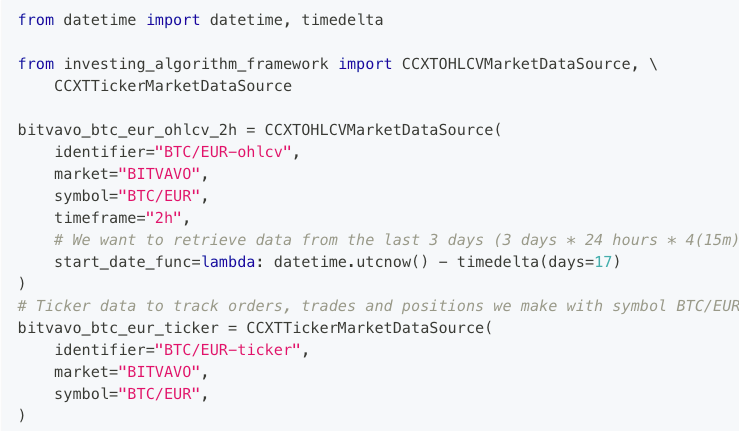
We need to specify how often our trading bot runs and which market data it's going to use
We need to specify how often our trading bot runs and which market data it's going to use
Step 2: Trading Strategy
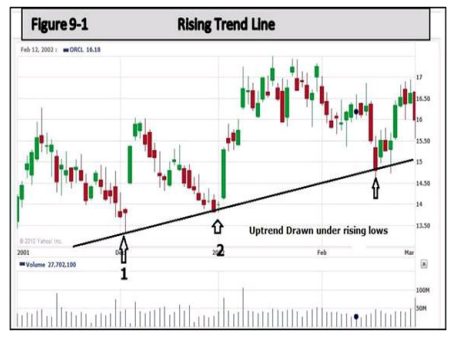
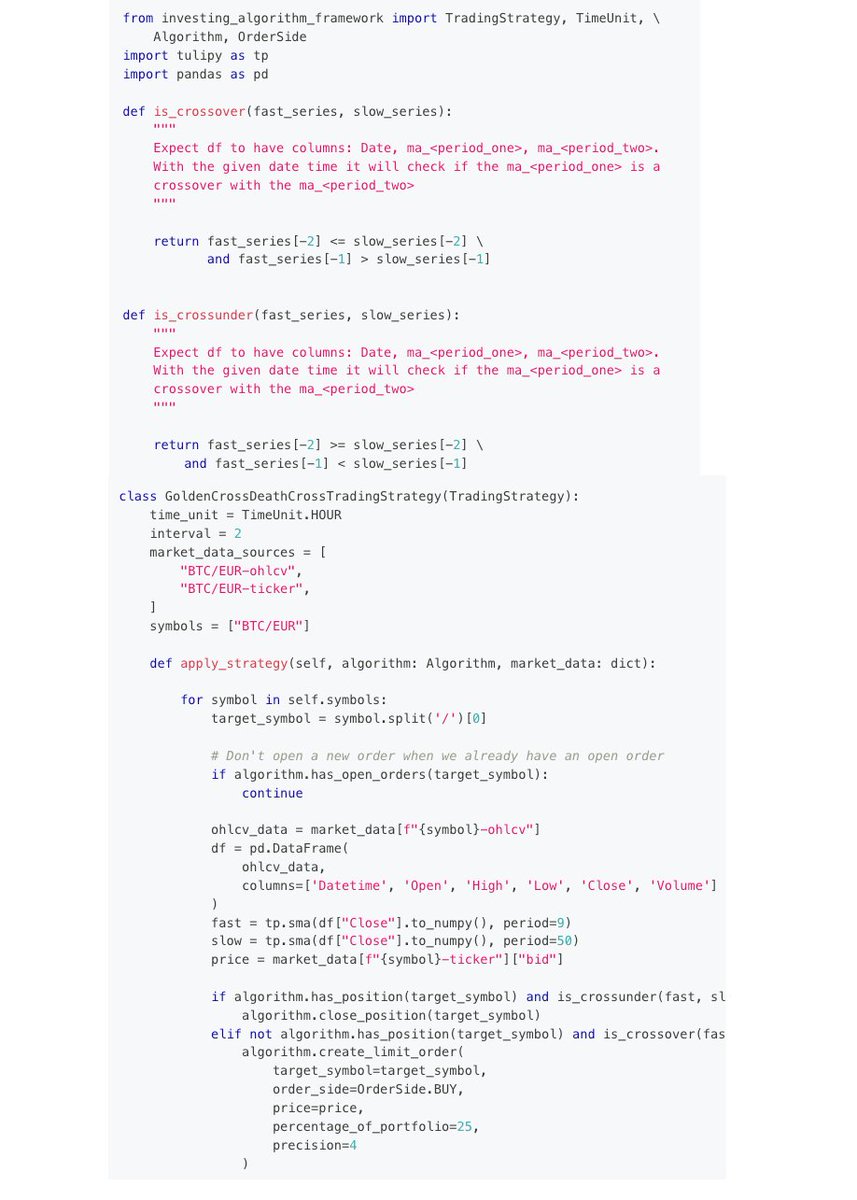
We will implement a simple strategy that buys Bitcoin when there is a golden cross between a fast and slow-moving average
We will implement a simple strategy that buys Bitcoin when there is a golden cross between a fast and slow-moving average
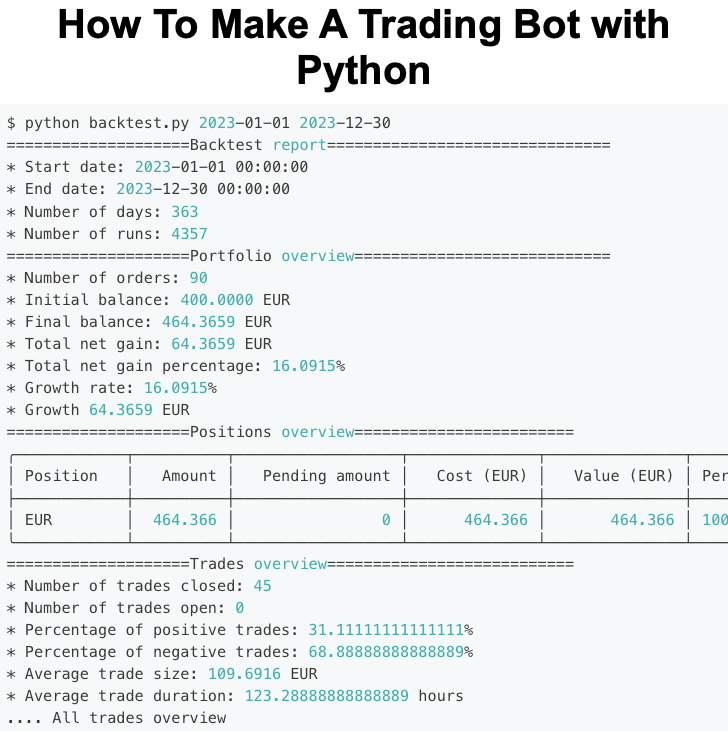
Step 3: Backtest the Strategy
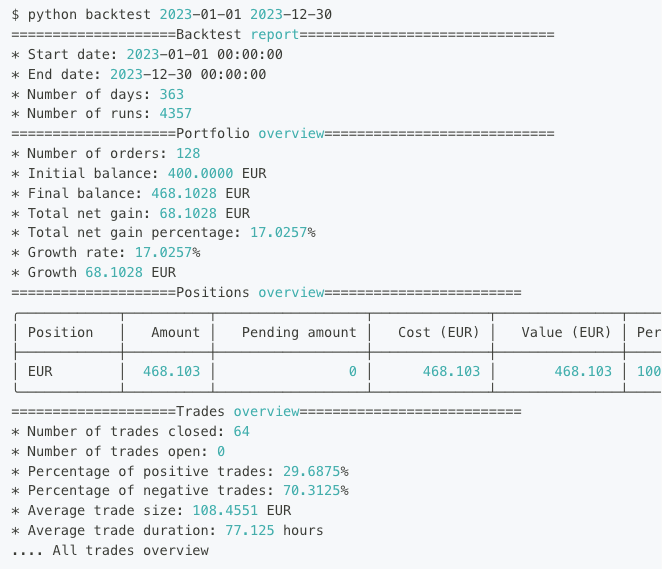
Now that we have implemented our trading strategy, we can test it. To test our strategy, we will use the backtesting functionality of the investing algorithm framework.
Now that we have implemented our trading strategy, we can test it. To test our strategy, we will use the backtesting functionality of the investing algorithm framework.

Step 4: Analyze the Backtest Results
This trading strategy is profitable with a growth rate of 17% on its closed trades.
This trading strategy is profitable with a growth rate of 17% on its closed trades.
Step 5: Deploy the Trading Bot
Once we have found a profitable trading strategy, we can deploy the trading app in the cloud.
Once we have found a profitable trading strategy, we can deploy the trading app in the cloud.

🚨Want to learn Algorithmic Trading Strategies (that actually work)?
On June 25th, we are hosting a free workshop to help you get started with algorithmic trading with Python.
Register here (500 seats): learn.quantscience.io/join
On June 25th, we are hosting a free workshop to help you get started with algorithmic trading with Python.
Register here (500 seats): learn.quantscience.io/join

That's a wrap! Over the next 24 days, I'm sharing my top 24 algorithmic trading concepts to help you get started.
If you enjoyed this thread:
1. Follow me @quantscience_ for more of these
2. RT the tweet below to share this thread with your audience
If you enjoyed this thread:
1. Follow me @quantscience_ for more of these
2. RT the tweet below to share this thread with your audience
https://twitter.com/1683526993059430411/status/2068001915791683991
• • •
Missing some Tweet in this thread? You can try to
force a refresh