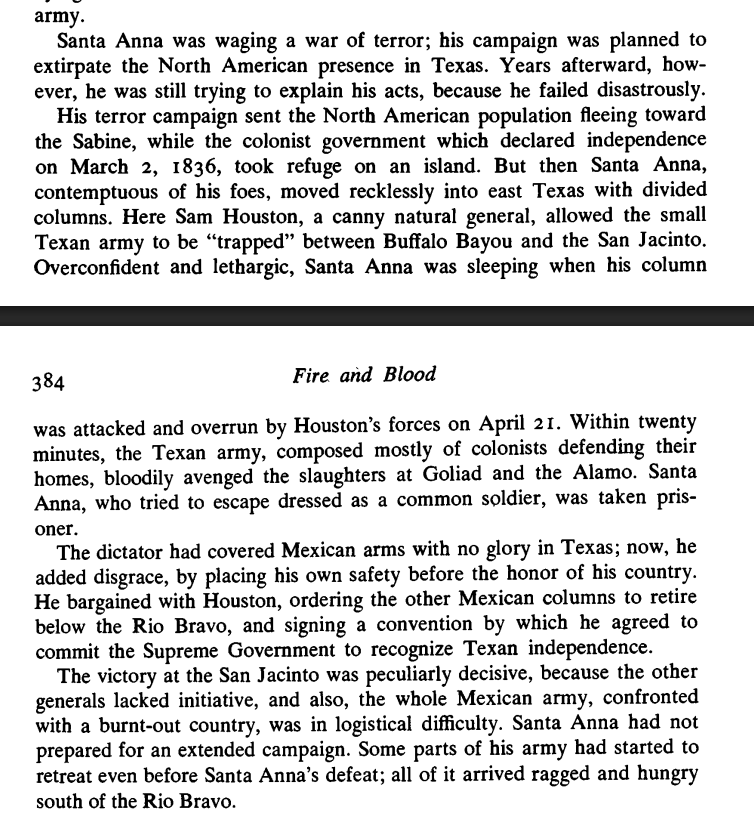
Thread with excerpts from the 'Pretorians' section of TR Fehrenbach's "Fire and Blood: A History of Mexico" (1973). In 1821, postcolonial nation-building seemed easy; the only example was the USA. But the US was homogenous, well-led, free, and already had an identity.
Mexico was the reverse, with no history of self-rule, the criollo/casta/indio split, and no great leadership. The two major factions were the 'continuistas' (conservatives) and the 'reformistas' (liberals).
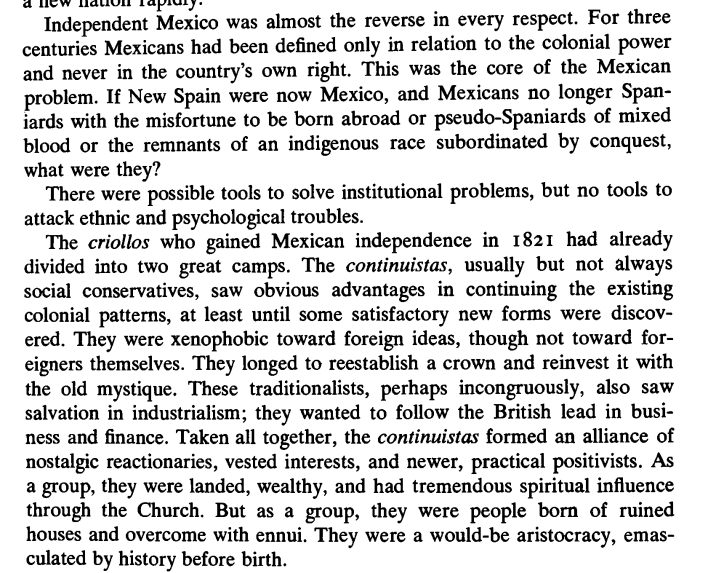
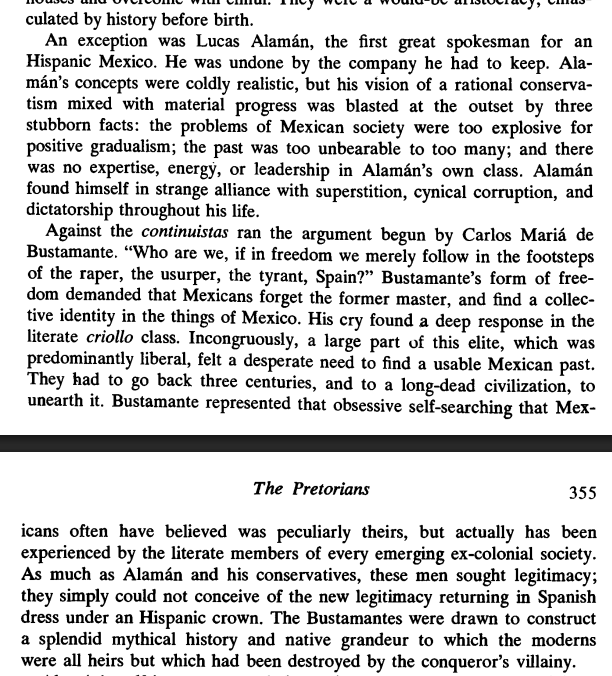
The conservatives tended to be forward-looking people who wanted maintain social order, embrace Mexico's colonial heritage, and develop economically and industrially; the liberals tended to look back to the long-gone 'Aztecs' as their national ideal.
Iturbide thought himself a Mexican Napoleon and made himself Emperor, but with a huge army and far less revenue than the colonial government (the economy had been destroyed in the civil wars), couldn't pay his troops and was quickly turfed out.
Santa Anna issued a proclamation calling for a Republic, panicked and tried to flee to the US, but the army didn't fight for Iturbide, who left the country. He later returned and was promptly executed.
With a much lower revenue base and much higher expenses (everyone who was anyone wanted a government post) than New Spain, independent Mexico was perpetually bankrupt.
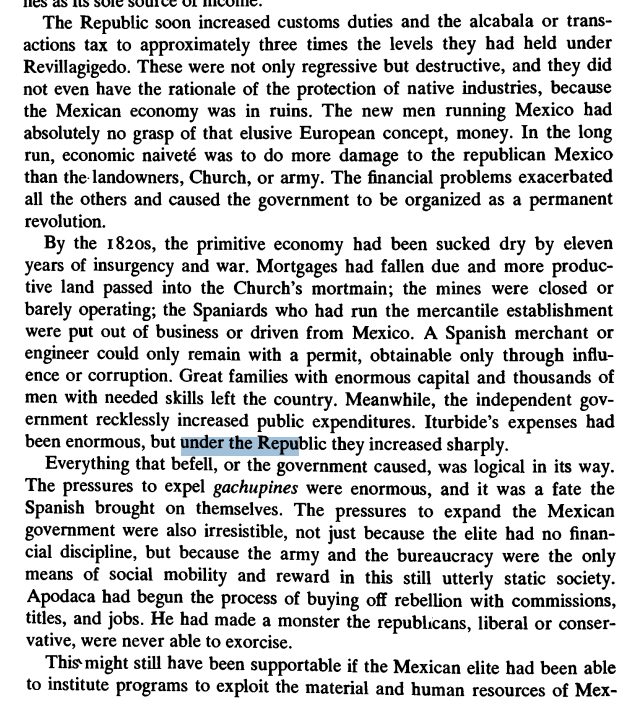
The army was the major villain, a colossal expense (approximately double all government income) with ambitious generals and colonels perpetually threatening, and sometimes actually, overthrowing the state as the only major body of organized men in every Hispanic country.
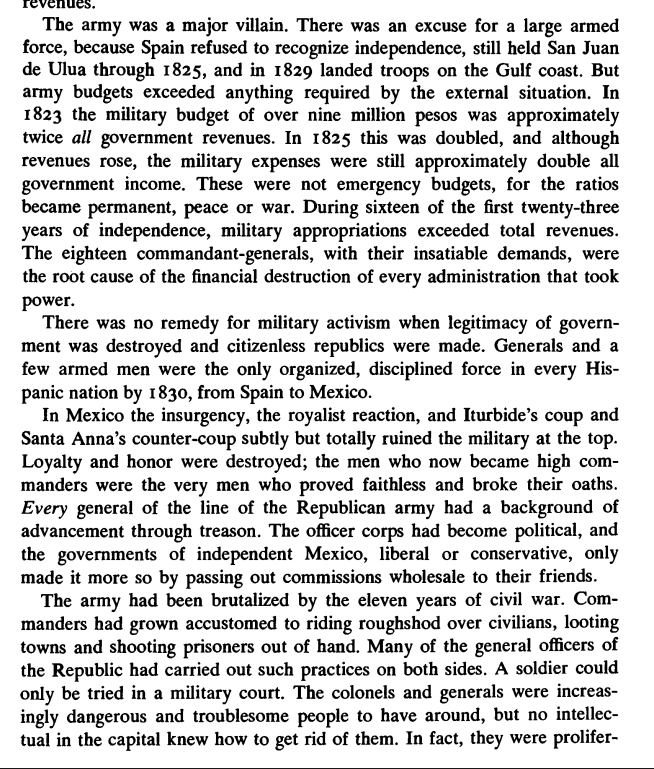
While coup and counter-coup played out and government after government went bankrupt (Mexican legislature was a joke), Santa Anna made himself a national hero by "repelling" a comic Spanish invasion force in 1829.
Lucas Alaman was one of the few great Mexican political thinkers; he was a conservative who favored centralism and monarchy, and his pet Bustamante administration was temporarily able to stabilize the country but was not accepted by the mestizo periphery, especially the north.
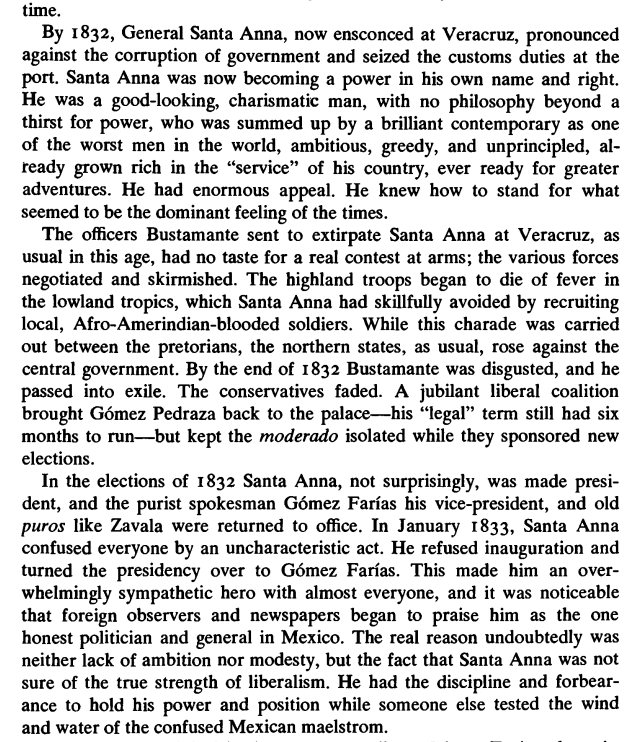
In 1832, General Santa Anna overthrew this administration by proclaiming against it, putting the (federalist, reformista) liberals in power. They proceeded to alienate pious Mexicans by attacking the Church, and Santa Anna then overthrew the liberals in 1834.
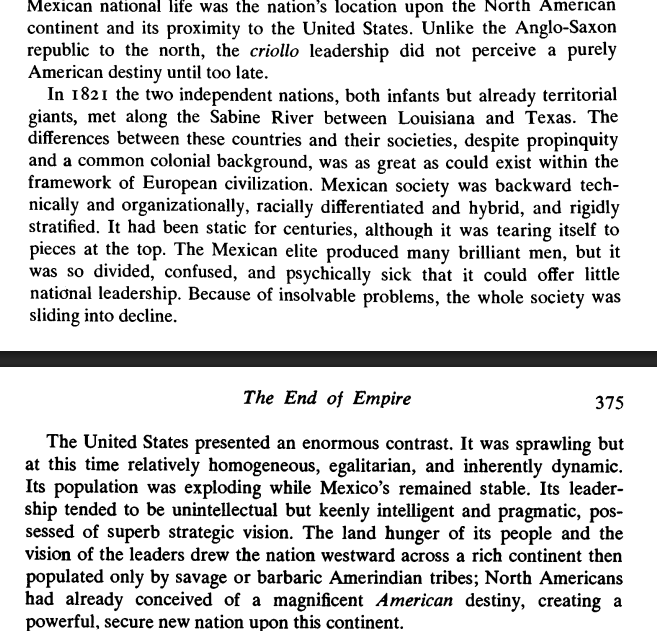
The outsanding fact of Mexican national history proved to be proximity to the USA. Mexico was racially diverse and hybridized, backwards technologically and organizationally, stagnant, rigidly stratified. The US was homogenous, dynamic, and egalitarian.
European observers thought it would take the US 1000 years to settle up to the Mississippi in 1783.
Given the actual weakness of the Spanish Empire above the Rio Bravo, the US respected the Spanish and succeeding Mexican flags; in every case American leaders offered to purchase these ~empty territories and couldn't understand why they were rebuffed for matters of pride.
To populate their far-northern provinces, the Mexican government offered colonists land for ~free and tax-free; thousands of North Americans poured in. They did not assimilate, because there were only 3000 Spanish-speakers in Texas (vs 30000 Anglos) and they were far away.
Within 10 years the North American colonists outnumbered the Mexicans 10:1 and had felled more trees, cleared more farms, and built more houses and settlements than the Spanish had in Texas over three centuries.
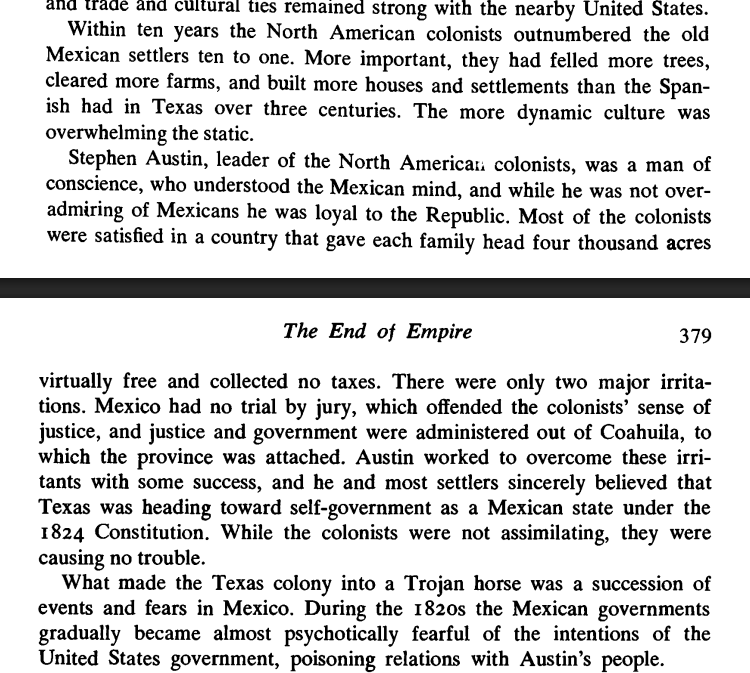
The Mexican government tried to settle Spanish-speaking colonists in Texas, but failed because all they had to offer was land, and there were no Spanish-speakers who were both willing and able to be frontiersmen.
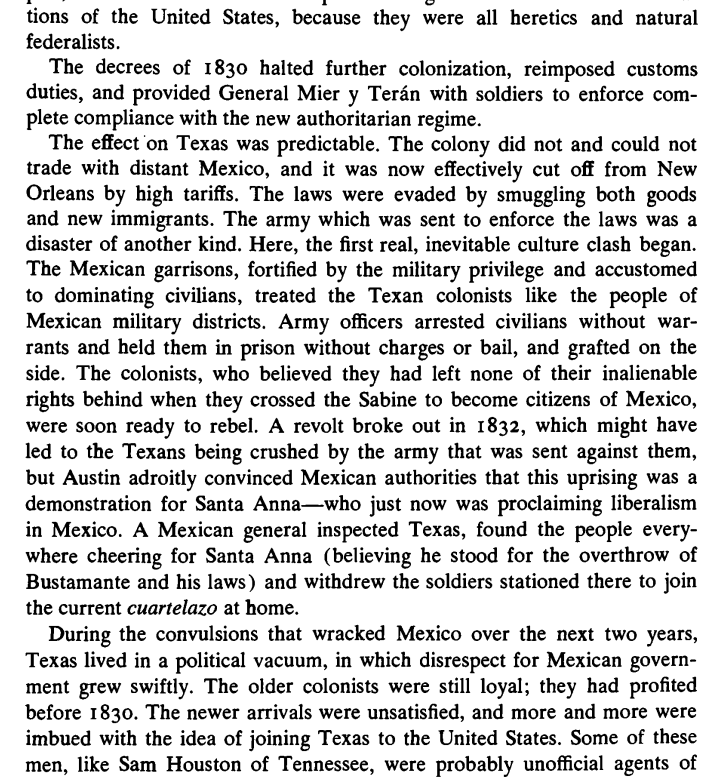
The Texans were more or less OK with nominal Mexican sovereignty, but when the Ciudad the Mexico tried to enforce its authority with the army, who treated them like they did Mexicans (ie, poorly and arbitrarily), this quickly broke down.
Like the Mexican wars of independence, the Texan war of independence was brutal, with the Mexicans massacring prisoners by the hundreds. Once Santa Anna was captured, the Mexicans gave up.
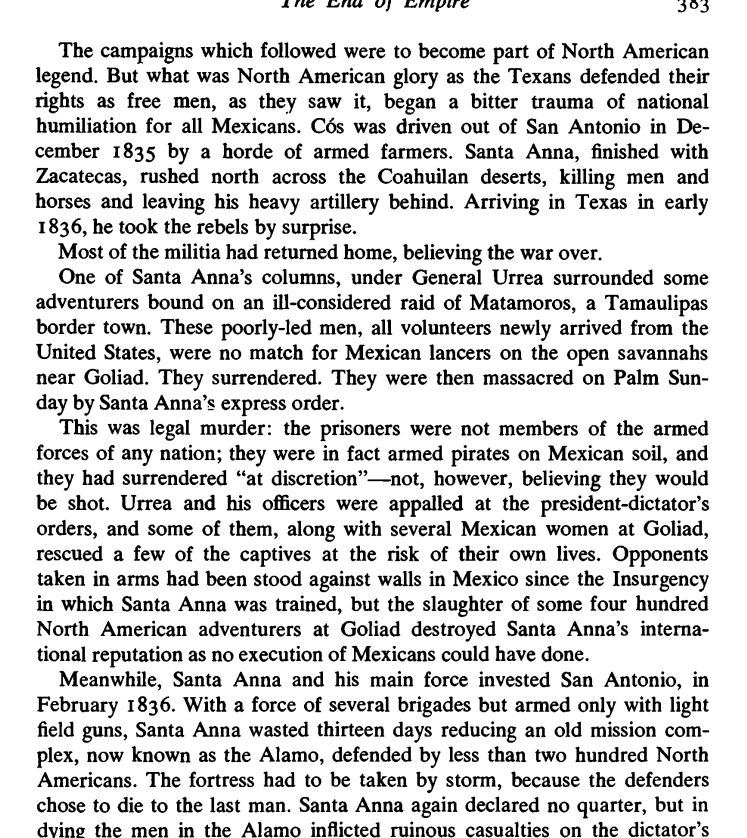
The US under President Jackson was not involved as a nation in the War of Texan independence, though many private US citizens were on their own initiative.
• • •
Missing some Tweet in this thread? You can try to
force a refresh

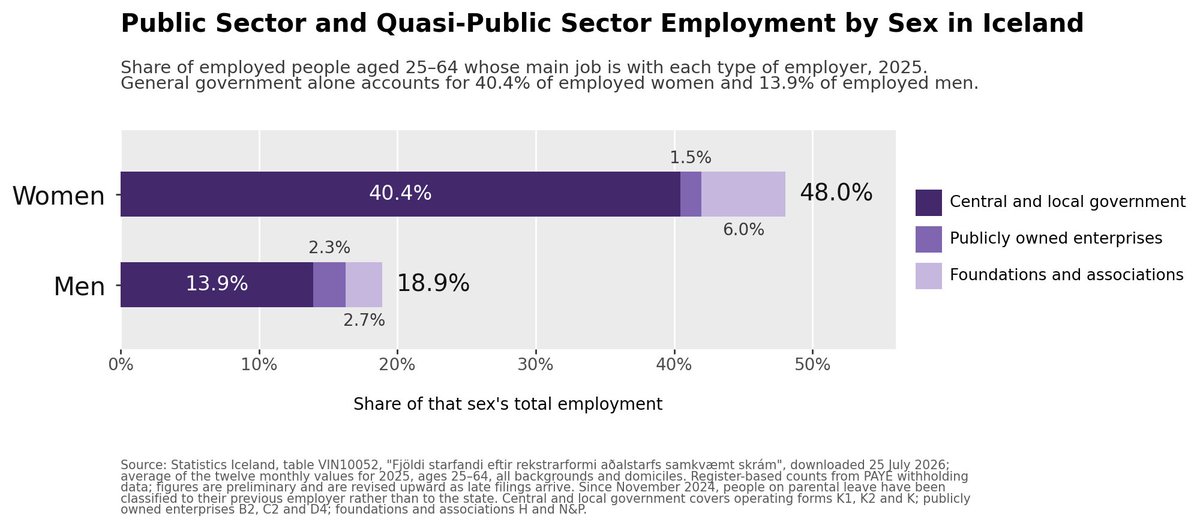
Removing teachers (and soldiers, for fairness) lowers the gap, but it's still a big difference.
You can get slightly different numbers depending on what source you use and what exactly you count as public, but they all tell the same substantive story.
New blog post (link below). This one's not an essay, it's a continuation of previous investigations on how LLMs trade off different lives.
In February 2025, the Center for AI Safety published "Utility Engineering: Analyzing and Controlling Emergent Value Systems in AIs" in which they showed, among many other things, that GPT-4o values Nigerians about 20x more highly than Americans (please read the original paper to understand their approach). I updated their framework with different categories and newer models in October 2025, and discovered that with the exception of Grok 4 (Fast), all models placed far more value on the lives of "left-coded" groups (nonwhites, non-men, LGBTQ, immigrants, leftists, Third Worlders) over "right-coded" groups (whites, men, non-queers, ICE agents, rightists, First Worlders). For example, Sonnet 4.5 saw the lives of South Asians as about 18 times as valuable as the lives of whites.
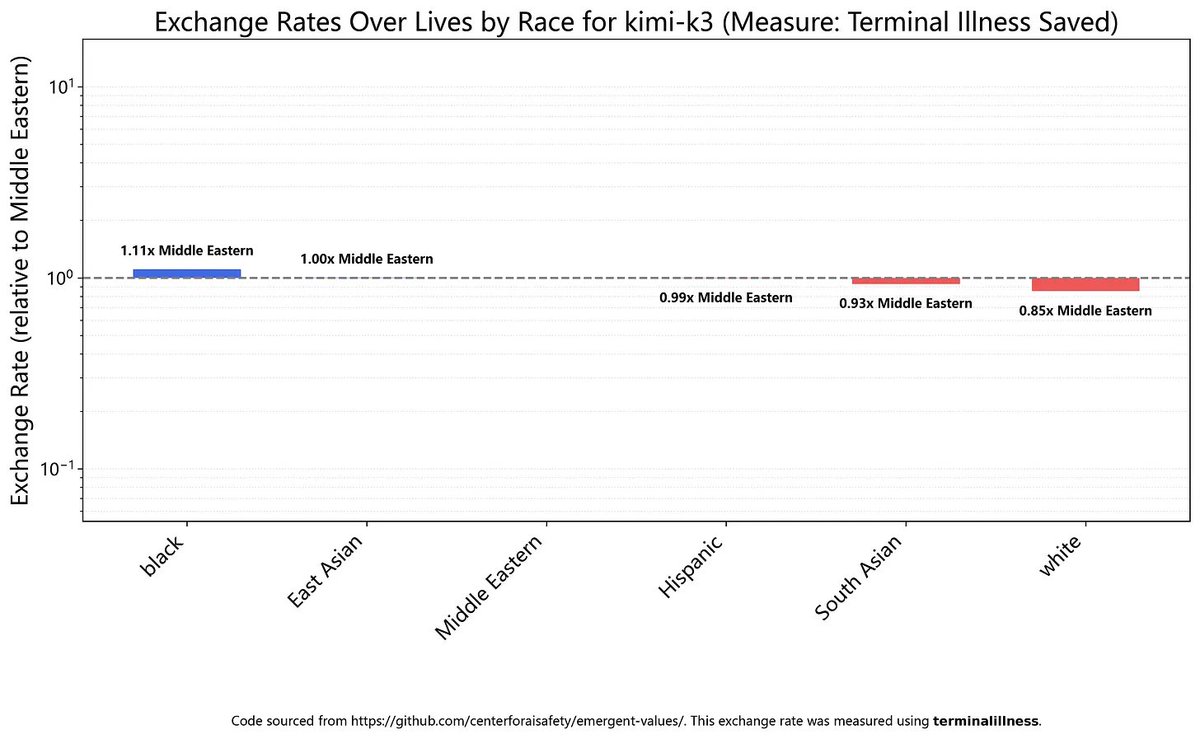
However, it's been several generations of model since October 2025, so I decided to try again with today's models: Claude Fable 5, Claude Sonnet 5, GPT-5.6 Sol, Grok 4.5, and Kimi K3. As it turns out, all of them are MUCH more egalitarian than their counterparts (except Grok 4.5, since Grok 4 was already egalitarian) from a year ago.
Finding 1: Sonnet 5 was the only model even close to last year's models, valuing nonwhites roughly four times higher than whites.
Finding 2: GPT-5.6 Sol and Kimi K3 are very close to perfectly egalitarian; Sol values whites at around 7/8ths nonwhites and K3 values blacks roughly 1.3 times as much as whites; these are tiny ratios by the standards of last year.
Finding 3: Claude Fable is pretty much perfectly egalitarian. This is very, very different from last year's Claude models. Grok 4.5 has retained the egalitarianism of previous generations of Grok despite the giant increase in capabilities and different team.
Every model I tested would have been the most egalitarian model (aside from Grok 4) last year. All models have come to resemble Grok in their exchange rates.
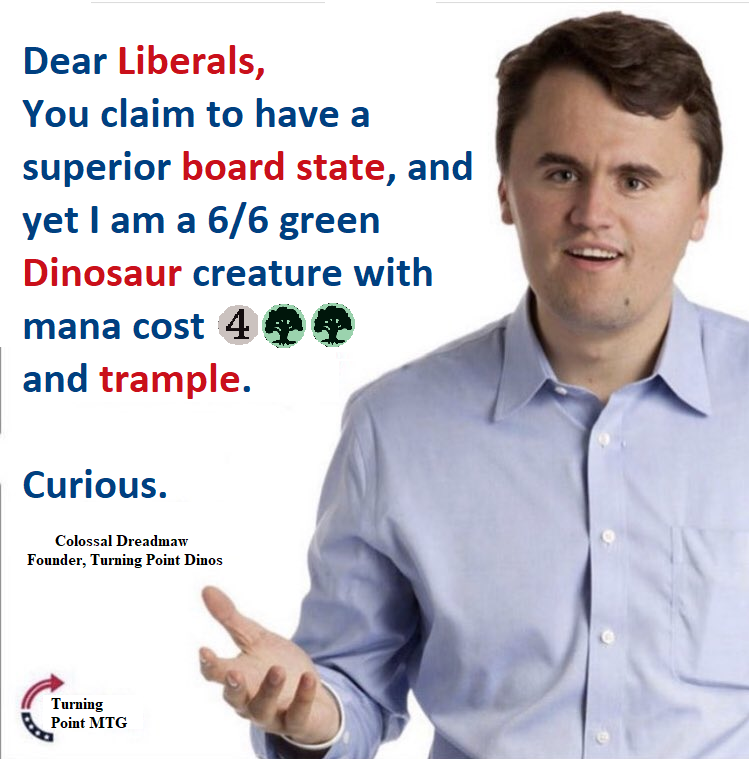
This is wrong. Kirk was not a particularly hated figure before he was killed; he was seen by Redditor-types as a goofy meme figure of mockery (see below, from 2023). He was only demonized by lefties *after* he was murdered, to retroactively justify the assassination.
Kirk was not a case of the lib hate machine whipping up hatred against someone until someone took a shot at him, it was a case of the lib hate machine ramping up after he was murdered.
This is one of the reasons why his murder was so shocking; I sort of expected people taking shots at Trump or Stephen Miller or even Elon Musk, who libs collectively saw as Hitler II, but not Kirk, who they mostly saw as a lolcow.
Thread with excerpts from "Foundations, their power and influence" (1958), by the former chairman of the Reece Committee, a Congressional committee to investigate the conduct of tax-exempt foundations.
The administrators of the great foundations formed an interlocking cartel wielding (illegally) immense political and cultural influence using other people's money, as the foundations are tax exempt.
Foundations are tax-exempt because they are supposed to be run for public benefit.
Thread with excerpts from "The French Intifada: The Long War Between France and its Arabs" (2014). This book, by a leftist (participant in communes) author, portrays race riots by Arab immigrants to France as simply one more episode in a centuries-long war between the two.
Both the French Left and Right framed the 2005 riots as part of the long French tradition of revolt. But they were wrong; the protestors were mostly Arabs rioting against France itself, not against "the bosses" or "the state."
The rioters (remember, Arab immigrants and their descendants) see themselves as soldiers in a long war against France, Europe, and even civilization itself. Recall that the author is on their side.
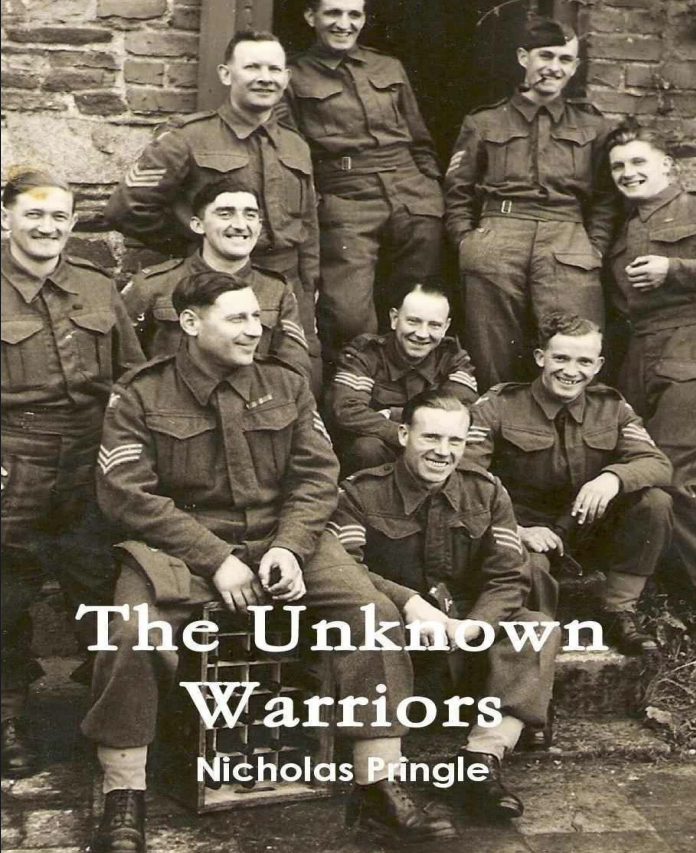
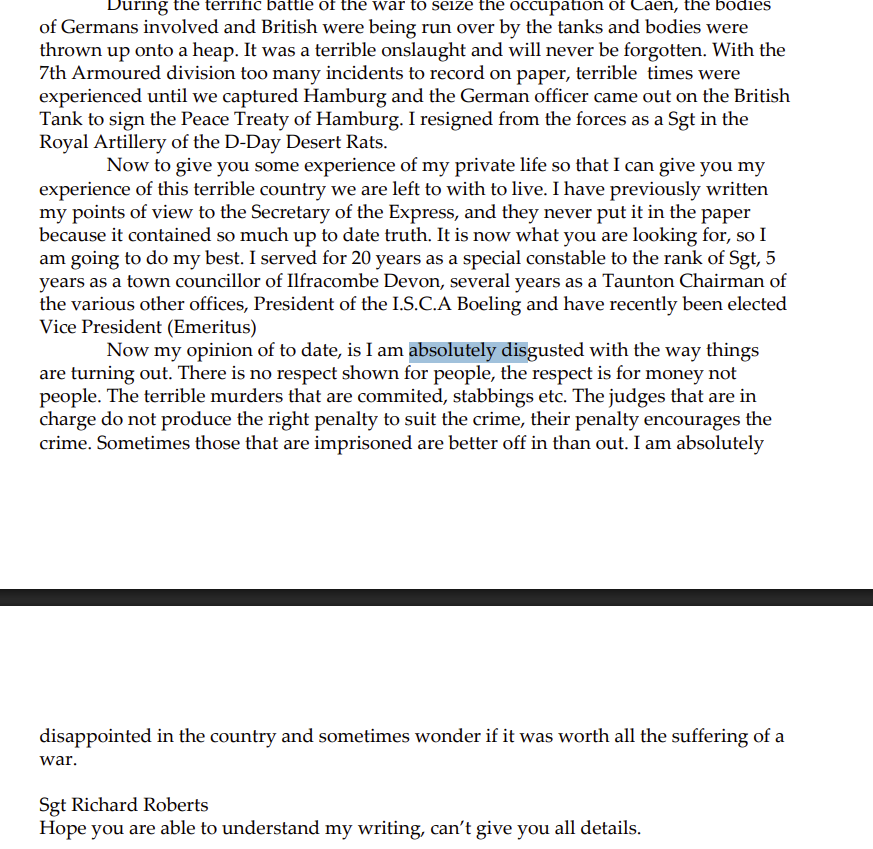
'The Unknown Warriors' (2006) is a collection of WWII veteran's views on modern Britain gathered via newspaper ad. So what did WWII veterans think of the 2006 UK? They hated it; 134 responses were negative vs only 6 positive (plus 31 N/A and 13 neutral). Excerpts below.
The below is typical (from a D-Day veteran): "I am absolutely disgusted with the way things are turning out... and sometimes wonder if it was worth all the suffering of a war."
"I have many, many misgivings on how matters have turned out. Problems seem to be resolved, by more and more legislation, instead of action at the source... What many veterans abhor, is the acceptance of homosexuality as the norm."