arctotherium Profile picture
Jun 21 20 tweets 8 min read Read on X
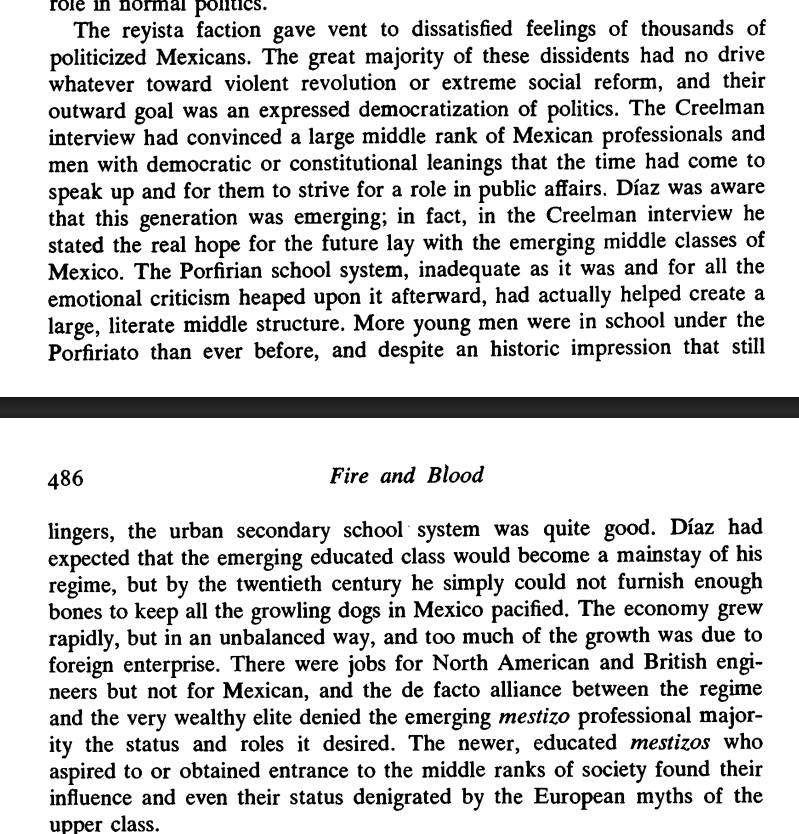
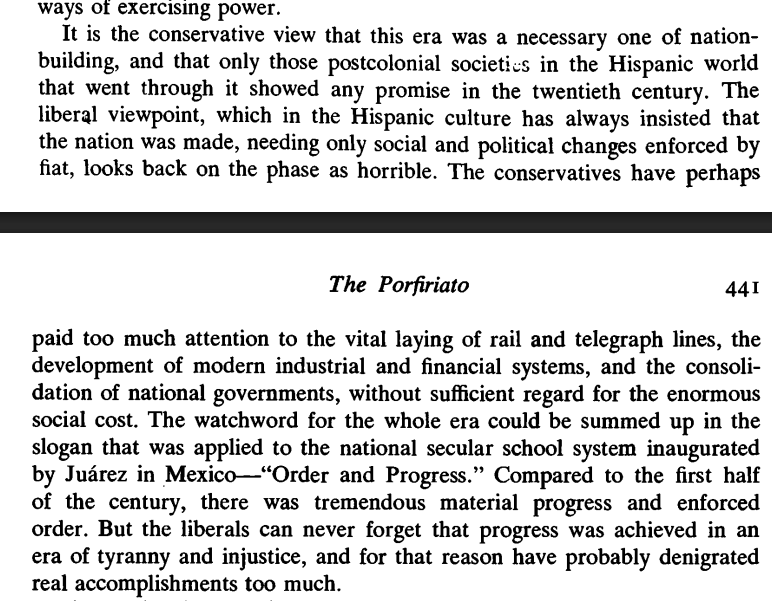
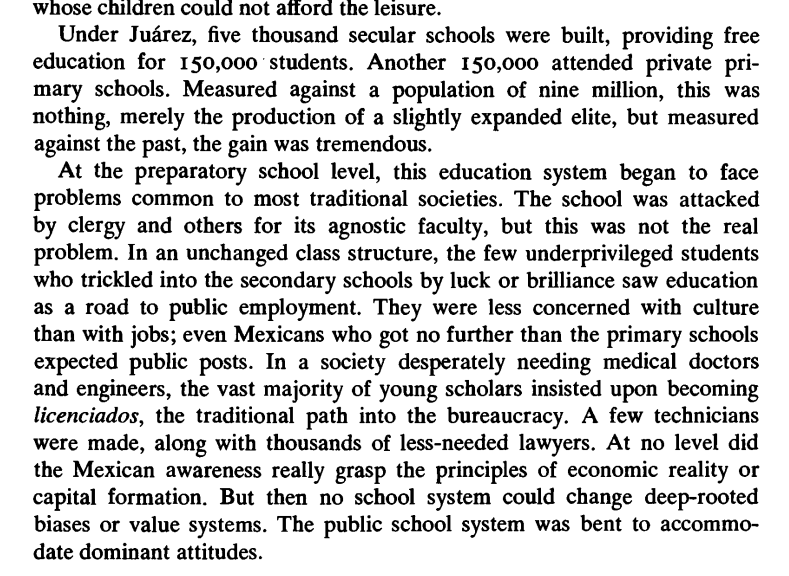
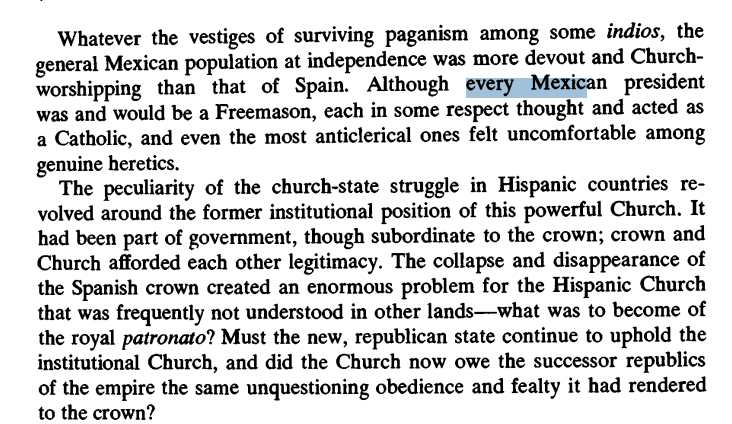
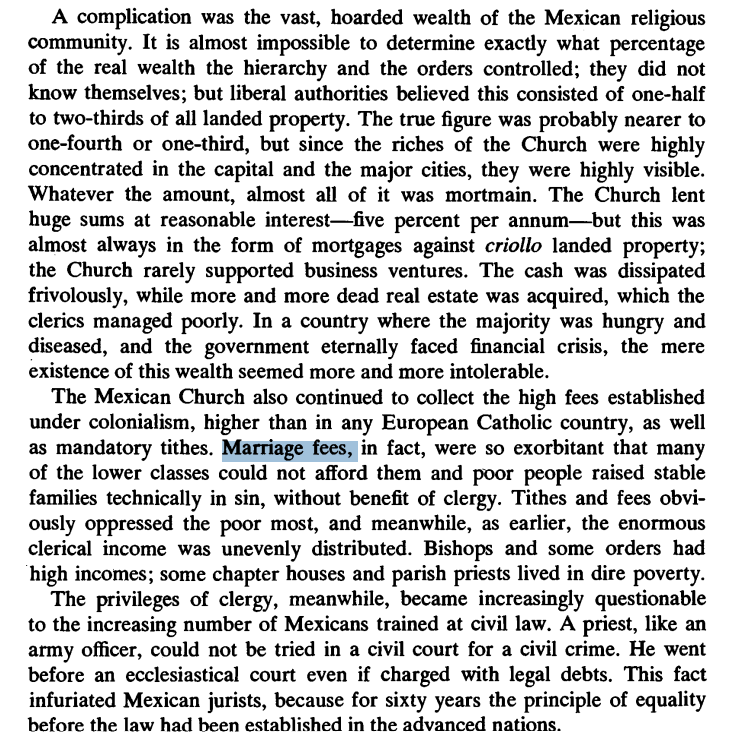
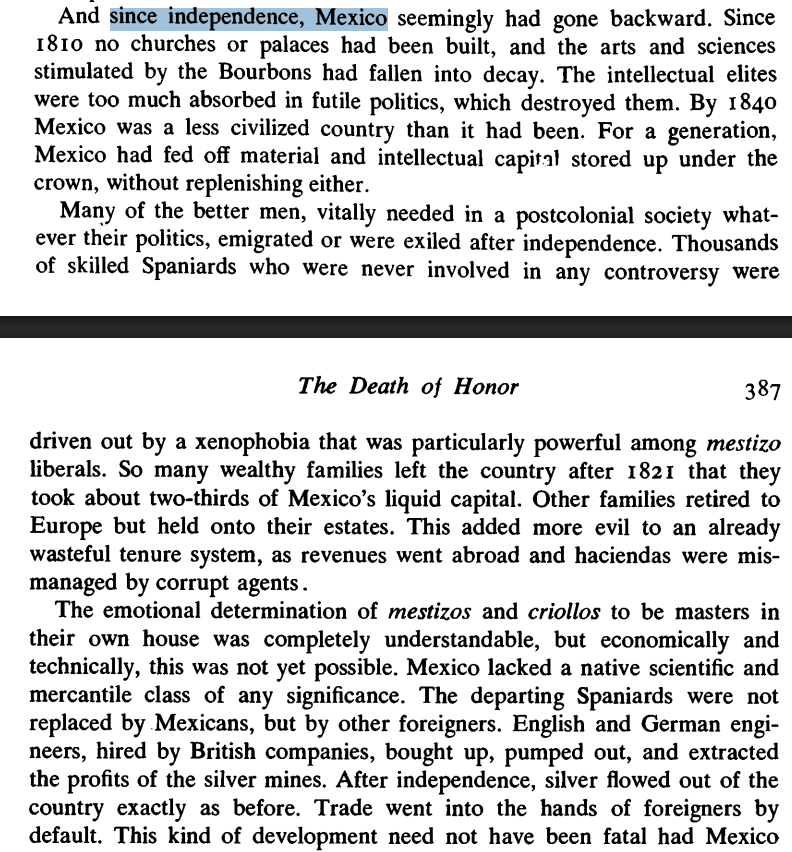
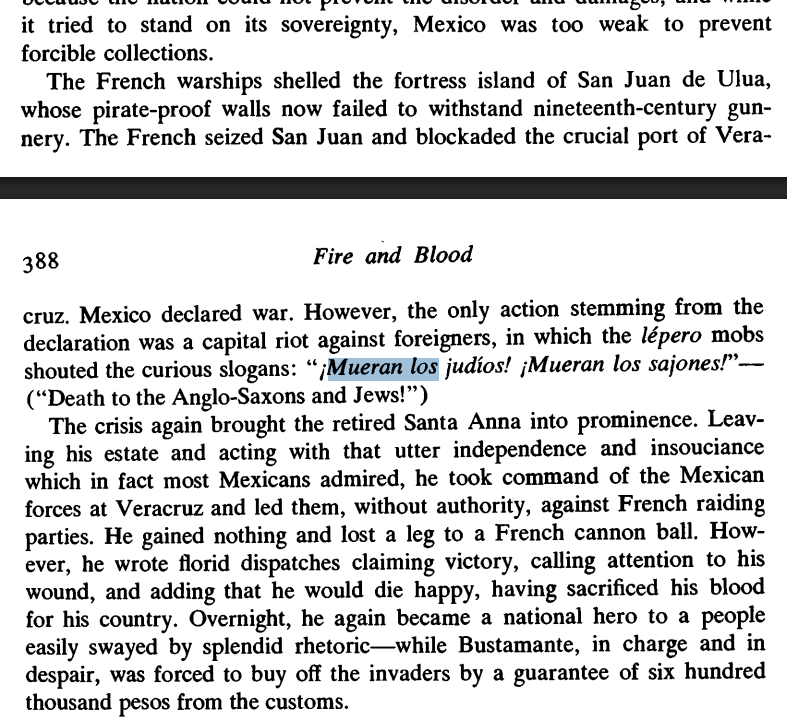
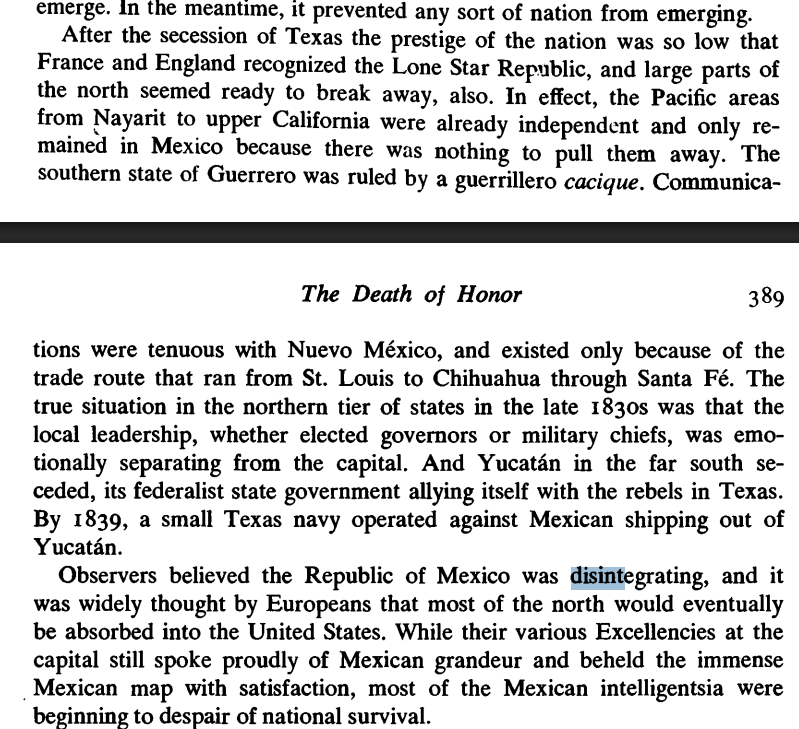
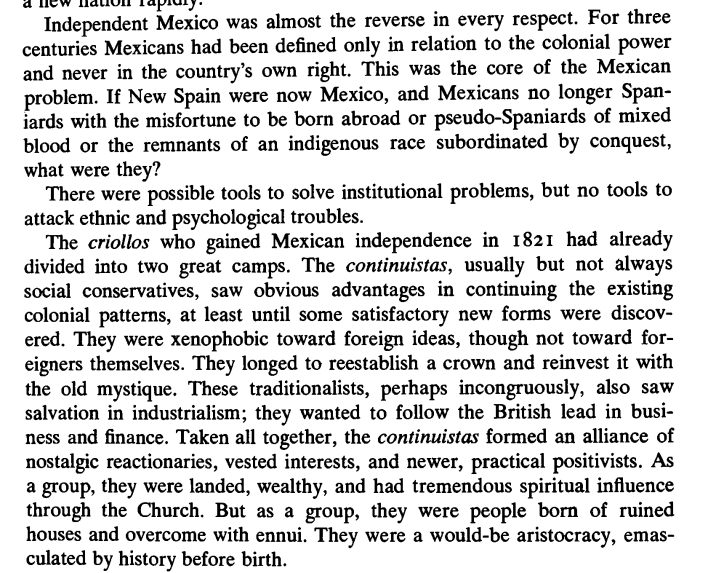
Thread with excerpts from the 'Pretorians' section of TR Fehrenbach's "Fire and Blood: A History of Mexico" (1973). In 1821, postcolonial nation-building seemed easy; the only example was the USA. But the US was homogenous, well-led, free, and already had an identity. Image
Mexico was the reverse, with no history of self-rule, the criollo/casta/indio split, and no great leadership. The two major factions were the 'continuistas' (conservatives) and the 'reformistas' (liberals). Image
Image
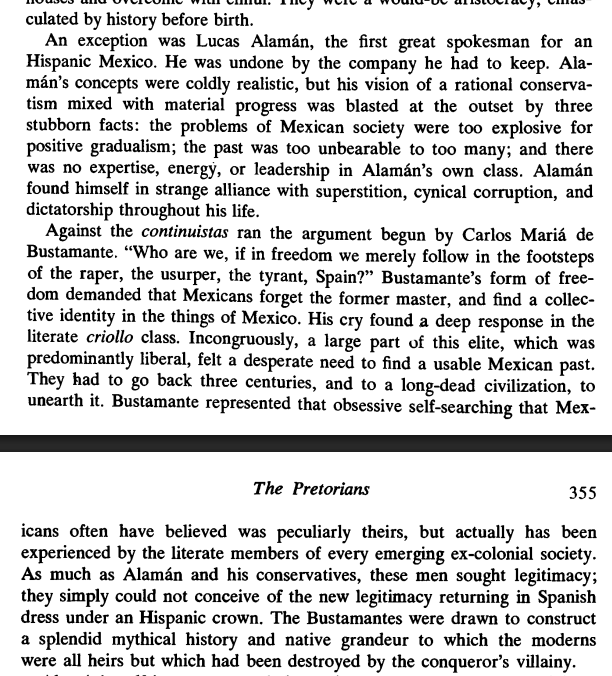
Mexico was the reverse, with no history of self-rule, the criollo/casta/indio split, and no great leadership. The two major factions were the 'continuistas' (conservatives) and the 'reformistas' (liberals). Image
Image
The conservatives tended to be forward-looking people who wanted maintain social order, embrace Mexico's colonial heritage, and develop economically and industrially; the liberals tended to look back to the long-gone 'Aztecs' as their national ideal.
Iturbide thought himself a Mexican Napoleon and made himself Emperor, but with a huge army and far less revenue than the colonial government (the economy had been destroyed in the civil wars), couldn't pay his troops and was quickly turfed out. Image
Image
Santa Anna issued a proclamation calling for a Republic, panicked and tried to flee to the US, but the army didn't fight for Iturbide, who left the country. He later returned and was promptly executed. Image
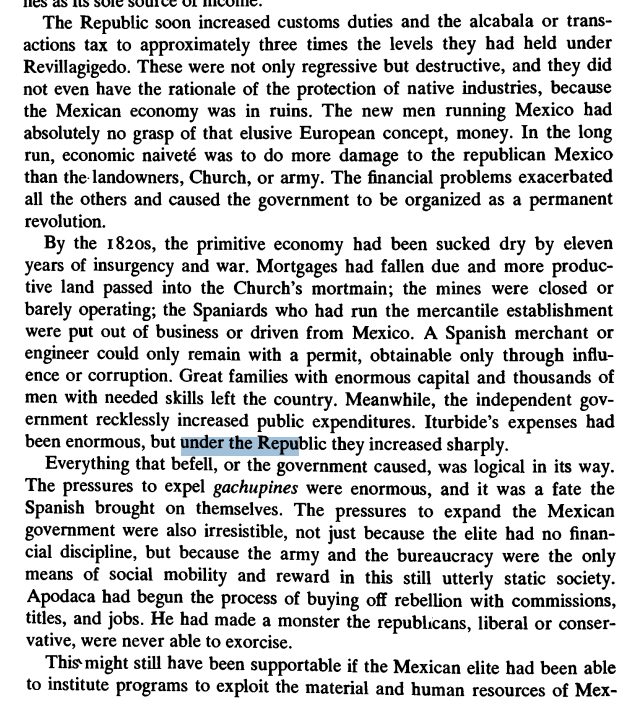
With a much lower revenue base and much higher expenses (everyone who was anyone wanted a government post) than New Spain, independent Mexico was perpetually bankrupt. Image
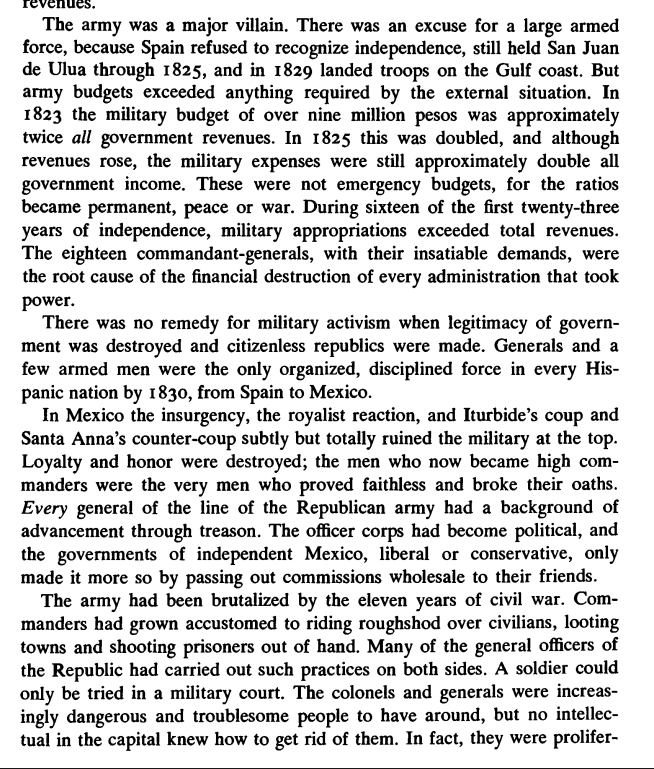
The army was the major villain, a colossal expense (approximately double all government income) with ambitious generals and colonels perpetually threatening, and sometimes actually, overthrowing the state as the only major body of organized men in every Hispanic country. Image
While coup and counter-coup played out and government after government went bankrupt (Mexican legislature was a joke), Santa Anna made himself a national hero by "repelling" a comic Spanish invasion force in 1829. Image
Lucas Alaman was one of the few great Mexican political thinkers; he was a conservative who favored centralism and monarchy, and his pet Bustamante administration was temporarily able to stabilize the country but was not accepted by the mestizo periphery, especially the north. Image
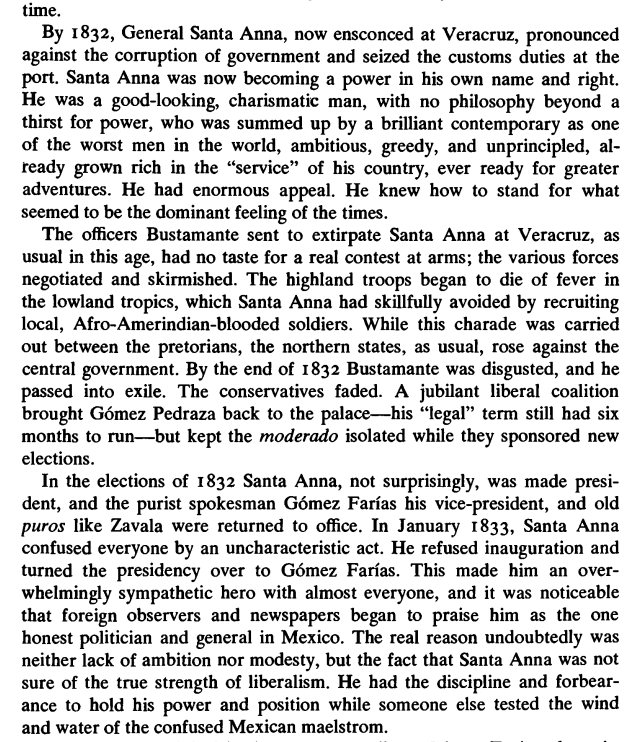
In 1832, General Santa Anna overthrew this administration by proclaiming against it, putting the (federalist, reformista) liberals in power. They proceeded to alienate pious Mexicans by attacking the Church, and Santa Anna then overthrew the liberals in 1834. Image
Image
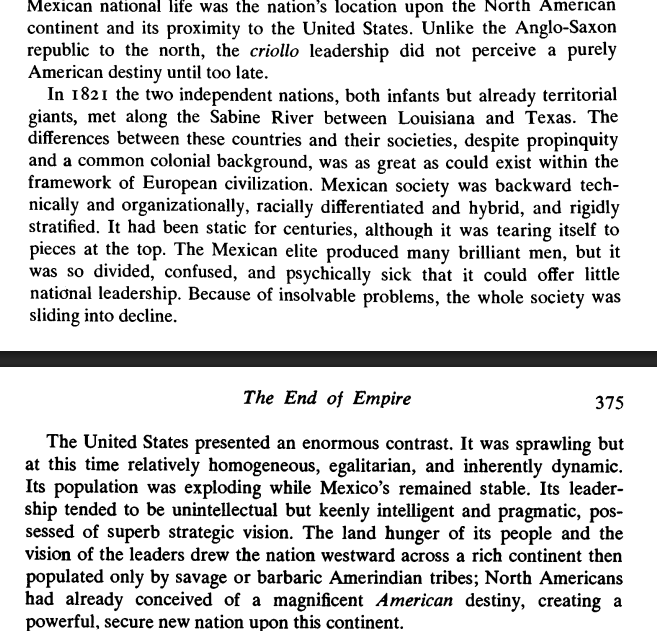
The outsanding fact of Mexican national history proved to be proximity to the USA. Mexico was racially diverse and hybridized, backwards technologically and organizationally, stagnant, rigidly stratified. The US was homogenous, dynamic, and egalitarian. Image
European observers thought it would take the US 1000 years to settle up to the Mississippi in 1783. Image
Given the actual weakness of the Spanish Empire above the Rio Bravo, the US respected the Spanish and succeeding Mexican flags; in every case American leaders offered to purchase these ~empty territories and couldn't understand why they were rebuffed for matters of pride. Image
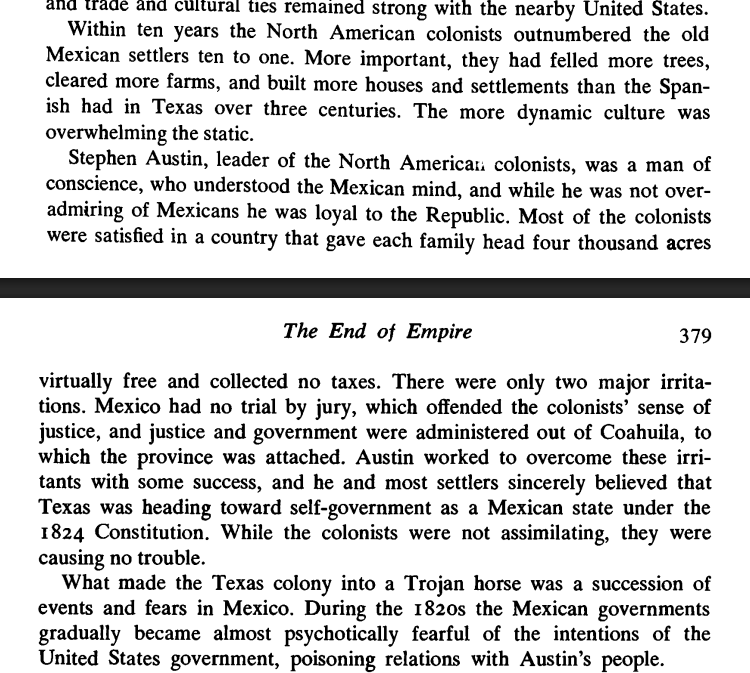
To populate their far-northern provinces, the Mexican government offered colonists land for ~free and tax-free; thousands of North Americans poured in. They did not assimilate, because there were only 3000 Spanish-speakers in Texas (vs 30000 Anglos) and they were far away. Image
Within 10 years the North American colonists outnumbered the Mexicans 10:1 and had felled more trees, cleared more farms, and built more houses and settlements than the Spanish had in Texas over three centuries. Image
The Mexican government tried to settle Spanish-speaking colonists in Texas, but failed because all they had to offer was land, and there were no Spanish-speakers who were both willing and able to be frontiersmen. Image
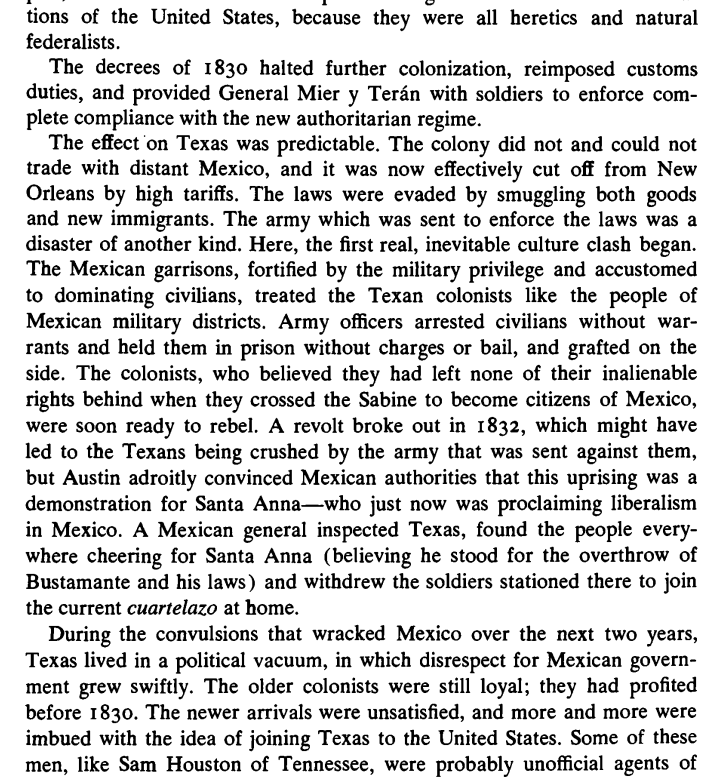
The Texans were more or less OK with nominal Mexican sovereignty, but when the Ciudad the Mexico tried to enforce its authority with the army, who treated them like they did Mexicans (ie, poorly and arbitrarily), this quickly broke down. Image
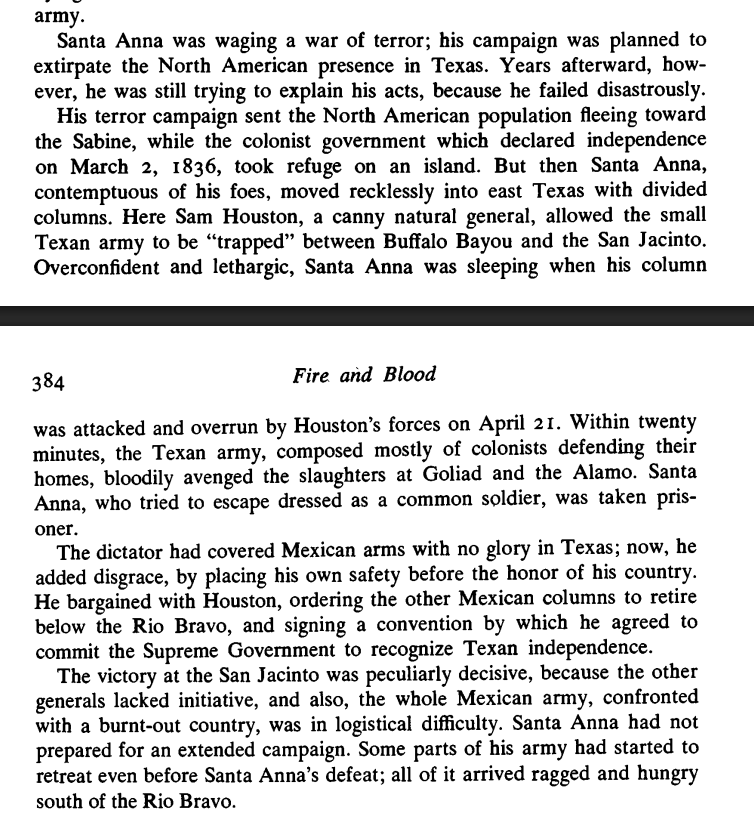
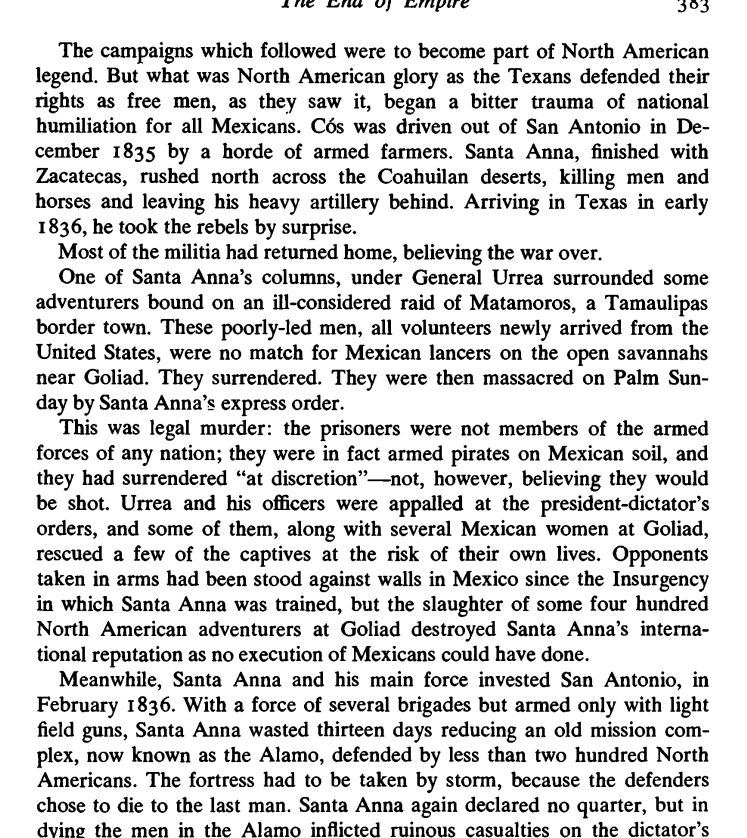
Like the Mexican wars of independence, the Texan war of independence was brutal, with the Mexicans massacring prisoners by the hundreds. Once Santa Anna was captured, the Mexicans gave up. Image
Image
The US under President Jackson was not involved as a nation in the War of Texan independence, though many private US citizens were on their own initiative. Image

• • •

Missing some Tweet in this thread? You can try to force a refresh

 

Keep Current with arctotherium

arctotherium Profile picture

Stay in touch and get notified when new unrolls are available from this author!

Read all threads

This Thread may be Removed Anytime!

PDF

Twitter may remove this content at anytime! Save it as PDF for later use!

Try unrolling a thread yourself!

how to unroll video
  1. Follow @ThreadReaderApp to mention us!

  2. From a Twitter thread mention us with a keyword "unroll"
@threadreaderapp unroll

Practice here first or read more on our help page!

More from @arctotherium42

Jun 21
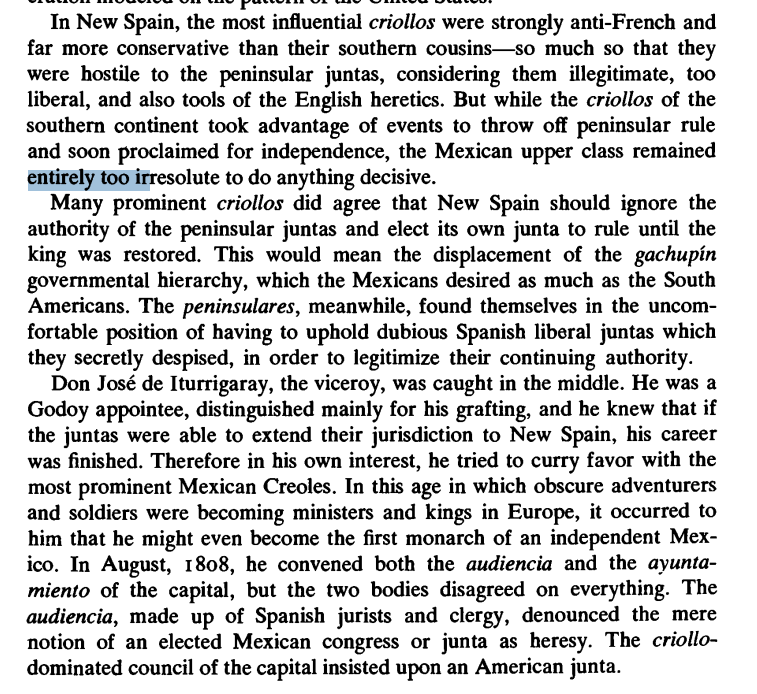
Excerpts from TR Fehrenbach's "Fire and Blood: A History of Mexico" (1973) on the Mexican War of Independence. The Mexican criollos were far less impressive than their South American counterparts, and produced no leaders equal to Bolivar or San Martin. Image
Where the South American criollos quickly declared independence upon the French conquest of Spain, the Mexican ones dithered. Acting quickly, the local peninsulares coup'd the government and the criollos accepted it. Image
Image
With the criollos basically accepting Spanish domination, leadership of the independence struggle passed to men like Miguel Hidalgo, who turned it from a (hopefully) bloodless coup to a social and race war. Image
Read 12 tweets
Jun 21
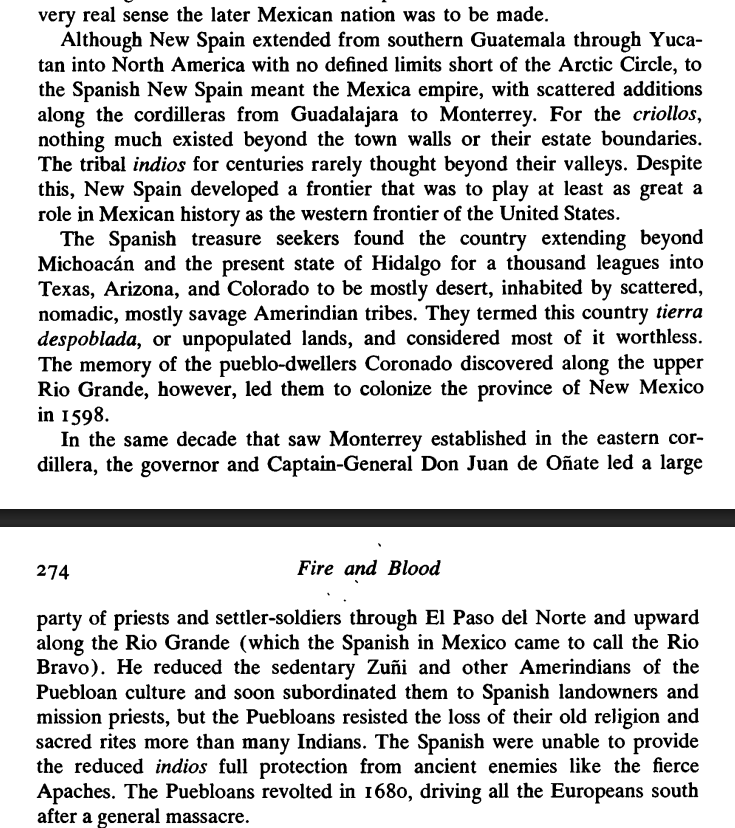
Thread with excerpts from the Colonial New Spain portion of TR Fehrenbach's 'Fire and Blood: A History of Mexico' (1973). His view is that New Spain would have remained permanent divided and stagnant if not for the northern frontier. Image
The true frontier of New Spain was not the thinly-populated and stagnant (almost identical when the Anglos showed up as in the 17th century) New Mexico, but much further to the south, in the arid regions only a little north of the Valley of Mexico. Image
Image
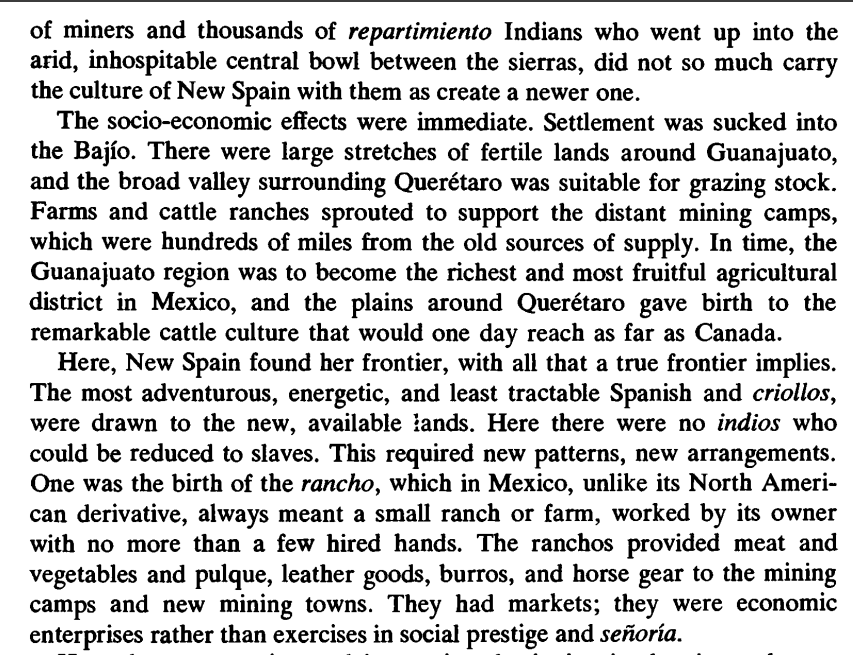
The frontier lacked civilized Indians who could be reduced to slaves, and was instead populated by energetic mestizos and criollos, working owned ranchos for a market rather than owning huge estates for prestige. Image
Read 16 tweets
Jun 20
A few excerpts from "Years of Peril and Ambition: US Foreign Relations 1776-1921." Several terms from the Treaty of Paris, especially that Britain would abandon its Great Lakes forts and the US would have the right to navigate the Mississippi, were not upheld. Image
Image
Americans who moved into Spanish Louisiana retained "allegiance to the United States and displayed open contempt for their nominal rulers." Imagine that. Image
An 1810, American immigrants to Spanish West Florida seized control of Baton Rouge, proclaimed an independent republic and requested annexation by the US, though this failed. Image
Image
Read 15 tweets
Jun 15
More excerpts on Colonial Mexico from TR Fehrenbach's "Fire and Blood" (1973). Fehrenbach saw the discovery of silver in Mexico, mostly in the arid north, as a disaster, as it led to Spain administering Mexico as a loot box rather than developing the productive economy. Image
Image
The thinly-populated, but silver-rich North became a military frontier. Image
The suspicious Spanish Crown gave those born in Spain, the peninsulares, a monopoly on offices (and commerce) in New Spain. As offices were the main route to upwards mobility, the local creoles resented this. Image
Read 22 tweets
Jun 15
Thread with excerpts from the colonial Mexico portion of "Fire and Blood: A History of Mexico" (1973). Image
The Catholic Monarchs who united Spain reined in the aristocracy, abolished serfdom, disempowered the Castilian parliaments, and ended all noble presumptions to royal powers and revenues, creating a new bureaucracy (with a new army) to run the state loyal to themselves. Image
Spain combined this modern bureaucratic state and army with maintenance of privileges for the old nobility and an almost medieval religious mindset. Image
Image
Read 25 tweets
Jun 14
Thread with excerpts from the Spanish Conquest section of T. R. Fehrenbach's "Fire and Blood: A History of Mexico" (1973). Image
According to the Mexic accounts, the years leading up to the arrival of Cortes were full of terrible omens. To avert the prophesized disaster, Montezuma (disastrously) greatly increased tribute from subject cities and even replaced the govt of his (now former) ally Texcoco. Image
Image
Image
Repartimiento and encomienda, systems by which Indians were 'entrusted' to a Spaniard and owed him labor for protection, were not at all unusual; most Eurasian farmers bore similar burdens and both were long-standing Iberian institutions. Image
Read 38 tweets

Did Thread Reader help you today?

Support us! We are indie developers!


This site is made by just two indie developers on a laptop doing marketing, support and development! Read more about the story.

Become a Premium Member ($3/month or $30/year) and get exclusive features!

Become Premium

Don't want to be a Premium member but still want to support us?

Make a small donation by buying us coffee ($5) or help with server cost ($10)

Donate via Paypal

Or Donate anonymously using crypto!

Ethereum

0xfe58350B80634f60Fa6Dc149a72b4DFbc17D341E copy

Bitcoin

3ATGMxNzCUFzxpMCHL5sWSt4DVtS8UqXpi copy

Thank you for your support!

Follow Us!

:(